If you have ever stared at a family tree and wondered what does 2nd cousin twice removed mean, you are not alone. The phrase sounds like a riddle, but it follows a simple system, and once you understand the two parts of it, the number and the “removed” part, you can work out almost any cousin relationship on sight. This guide explains that system step by step, with examples, a reference chart, and answers to the confusions that trip most people up.
Family relationships feel complicated because they combine two different measurements at once: how far apart two people are sideways across a family tree, and how far apart they are vertically between generations. Most everyday words, such as brother, aunt, or grandparent, describe only one direction. Cousin terms describe both directions at once, which is why they need numbers and extra words. The good news is that the system is completely regular, so learning it once unlocks every combination.
What Does 2nd Cousin Twice Removed Mean in Plain English
So, what does 2nd cousin twice removed mean in plain English? It means that two people share a great-grandparent as their common ancestor, and that they are two generations apart from each other. The “2nd” tells you how distant the shared ancestor is, and the “twice removed” tells you the generation gap. Put together, a second cousin twice removed is the grandchild of your second cousin, or, from the other direction, the second cousin of your grandparent. Both descriptions refer to the same relationship seen from opposite ends.
It helps to build the relationship in stages. Start with siblings, who share parents. Their children are first cousins, who share grandparents. The children of first cousins are second cousins, who share great-grandparents. That is the “2nd” part: second cousins are two steps sideways from each other through a shared great-grandparent. Now add the generation gap. If one second cousin has a child, that child is one generation below the second-cousin level, so the child is a second cousin once removed to the other second cousin. If that child then has a child of their own, that grandchild is two generations below, and therefore a second cousin twice removed.
What Does 2nd Cousin Twice Removed Mean on a Family Tree
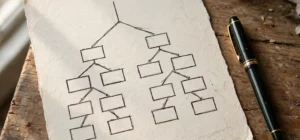
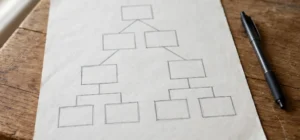
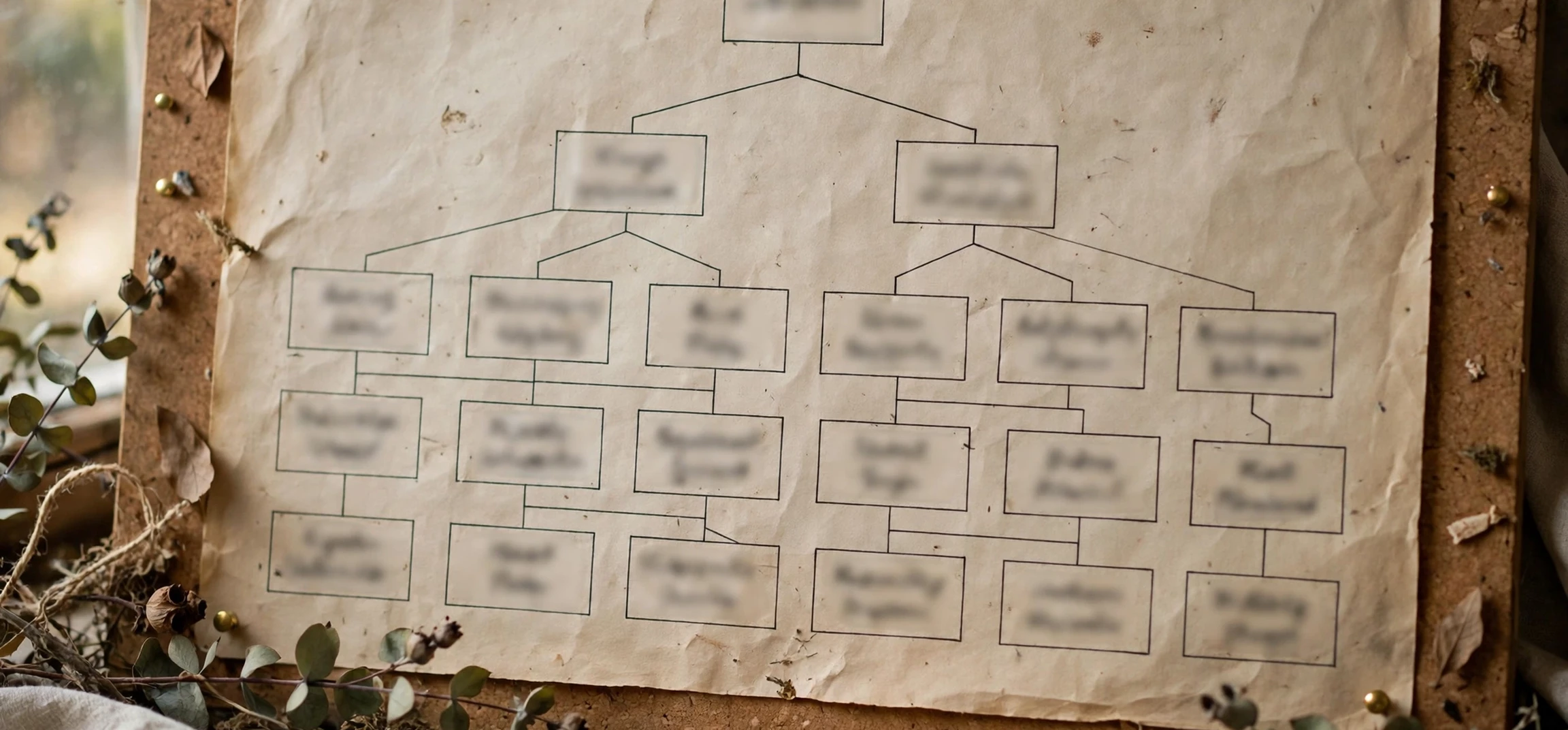
On a family tree, the relationship becomes visual. Find the shared great-grandparent at the top, then trace down one branch to the first person and down the other branch to the second person. Count the generations from the shared ancestor to each person. When both people are the same number of generations below the ancestor, they are plain cousins, and the number comes from how many generations back the ancestor sits. When the counts differ, the smaller count sets the cousin number, and the difference between the counts is the number of “removes”.
For a second cousin twice removed, the counts work like this. One person is three generations below the shared great-grandparent: great-grandparent, grandparent, parent, person. The other person is five generations below the same ancestor, because two extra generations have been added on their branch. The smaller count, three, gives the “second” part, since three generations below an ancestor means second cousins. The difference, five minus three, equals two, which gives the “twice removed” part. The same arithmetic works for every cousin relationship, which makes the system easy to check.
Try it with a concrete family. Imagine your great-grandparent had two children, your grandparent and their sibling. Your grandparent’s child is your parent, and you are the next generation down. On the other branch, your grandparent’s sibling had a child, who had a child, who is your second cousin. If your second cousin has a child, that child is your second cousin once removed. If that child grows up and has a child, that grandchild is your second cousin twice removed. The chain is long to describe but simple to follow once you see the generations stacking up.
Cousin Numbers Explained
The number in a cousin term tells you which ancestor you share. First cousins share grandparents, who are two generations back. Second cousins share great-grandparents, who are three generations back. Third cousins share great-great-grandparents, who are four generations back. The pattern continues neatly: each step up in cousin number moves the shared ancestor one generation further back. That is the whole rule, and it never changes.
It is worth distinguishing cousins from aunts, uncles, nieces, and nephews, because the boundary confuses many people. Your parent’s sibling is your aunt or uncle, not your cousin, because the relationship is a direct step down one branch rather than a sideways step across two branches. Your parent’s cousin, however, is your first cousin once removed, because you and that person share grandparents on one side but sit one generation apart. The system treats every relationship by the same two measurements, so once you grasp the method, even the trickier labels fall into place.
What Removed Means
“Removed” simply means a generation gap. Once removed means one generation apart. Twice removed means two generations apart. Three times removed means three generations apart, and so on. The word does not mean that someone has been removed from the family, which is a common misunderstanding. It is just the family-tree term for counting the vertical distance between two people who share a sideways relationship.
Direction matters for how the relationship feels, even though the term is the same from both sides. Your second cousin twice removed could be much younger than you, if they are the grandchild of your second cousin, or much older than you, if you are the grandchild of their second cousin. Genealogists sometimes add “up” or “down” to clarify, saying “twice removed upwards” or “twice removed downwards”, but in everyday use the plain term covers both directions. If age or direction matters in your conversation, add a short explanation, such as “my second cousin twice removed on my grandmother’s side, two generations below me”.
| Relationship | Shared ancestor | Generation gap |
|---|---|---|
| First cousin | Grandparent | None |
| First cousin once removed | Grandparent | One generation |
| Second cousin | Great-grandparent | None |
| Second cousin once removed | Great-grandparent | One generation |
| Second cousin twice removed | Great-grandparent | Two generations |
| Third cousin | Great-great-grandparent | None |
| Third cousin once removed | Great-great-grandparent | One generation |
Common Confusions About Cousin Terms
The most common confusion is between “second cousin” and “cousin twice removed”. These are different ideas. “Second” measures how far back the shared ancestor sits. “Twice removed” measures the generation gap. A second cousin twice removed combines both measurements, while a plain second cousin has no generation gap at all. Another confusion is between a first cousin once removed and a second cousin. Your parent’s first cousin is your first cousin once removed, not your second cousin, because the shared ancestor is still a grandparent, just seen from one generation lower.
People also sometimes use “cousin” loosely to mean any distant relative, and that is fine in conversation. In genealogy, though, precision matters, because a vague “cousin” could mean anything from a first cousin to a fifth cousin three times removed. If you are writing up family research, sharing results with relatives, or labelling a family tree, the precise term saves everyone a long explanation. If you are just chatting at a family gathering, “cousin” on its own is perfectly friendly and normal.
Family history enthusiasts may also enjoy our guide to family names and their stories, which explores how surnames and family labels have evolved alongside the relationships they describe.
How to Work Out Any Cousin Relationship
Here is a reliable four-step method you can use for any pair of relatives. First, find the most recent ancestor they share. Second, count the generations from that ancestor down to each person. Third, take the smaller count, subtract one, and that gives the cousin number: a smaller count of two means first cousins, three means second cousins, four means third cousins. Fourth, subtract the smaller count from the larger count, and that gives the number of removes. Work through the steps slowly the first few times, and they soon become automatic.
Test the method on a new example. Suppose two people share a great-great-grandparent, and one is four generations below that ancestor while the other is six generations below. The smaller count is four, so subtract one to get third cousins. The difference is two, so the relationship is third cousin twice removed. The method works in reverse too: if someone tells you a relationship, you can reconstruct the shared ancestor and the generation gap from the term alone, which is a useful check when reading other people’s family research.
What Does 2nd Cousin Twice Removed Mean in Real Families
Abstract rules are useful, but real families show why the question of what does 2nd cousin twice removed mean comes up so often. At large family gatherings, you may meet someone introduced simply as “a cousin”, and only later discover the precise relationship. A grandparent might point across the room and say, “That is your second cousin twice removed,” leaving you to wonder whether the person is older or younger than you and which branch of the family they belong to. Knowing what does 2nd cousin twice removed mean lets you place that person instantly: you share a great-grandparent, and two generations stand between your levels.
Genealogy websites and DNA testing have made this question even more common. A DNA match might be labelled as a predicted second cousin twice removed, and understanding what does 2nd cousin twice removed mean helps you judge whether that prediction fits your known tree. It also helps when reading old family letters or records, where relatives are often referred to by precise terms. If a letter mentions a second cousin twice removed, you can now work out which branch and which generation the writer meant. For more on how family labels work, see our guide to the meaning of the name Annalise, which shows how names and family history intertwine.
Frequently Asked Questions
What does 2nd cousin twice removed mean?
What does 2nd cousin twice removed mean, in short? It means two people share a great-grandparent and are two generations apart. One of them is the grandchild of the other’s second cousin, or the equivalent relationship seen from the other direction.
Is a second cousin twice removed a close relative?
Genealogically, it is a fairly distant relationship, sharing only a great-grandparent and separated by two generations. In everyday life, though, closeness depends on your family: some second cousins twice removed grow up as close as siblings, while others never meet.
What is the difference between a second cousin and a second cousin twice removed?
A second cousin shares your great-grandparent and sits in your own generation. A second cousin twice removed shares the same great-grandparent but sits two generations above or below you.
Can a second cousin twice removed be older than me?
Yes. The term covers both directions. If you are the grandchild of someone’s second cousin, your second cousin twice removed will be older than you, potentially by a large margin.
Conclusion
Understanding what does 2nd cousin twice removed mean comes down to two simple ideas: the number tells you the shared ancestor, and the “removed” tells you the generation gap. Second cousins share a great-grandparent, and twice removed adds two generations of distance. With the counting method in this guide, you can now work out any cousin relationship you meet, label your family tree with confidence, and explain the system to relatives who ask. Family trees stop looking like riddles once the pattern clicks, and this is one pattern that never changes.