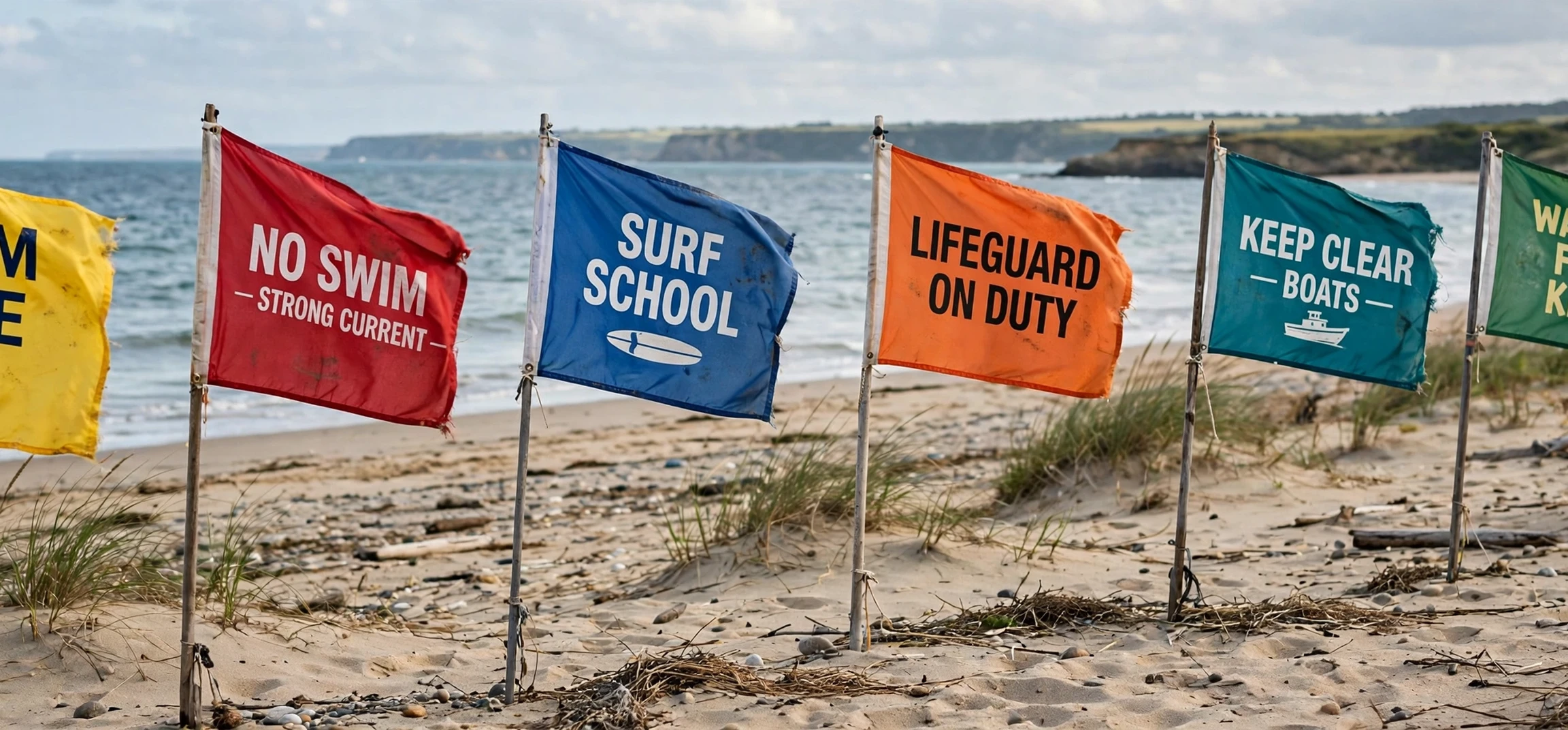
When you arrive at a guarded beach, one of the first things to check is the flag flying above the sand, because the answer to “what do the flag colors at beach locations mean” can shape your whole day in the water. Beach flags are a simple visual safety system: lifeguards use coloured flags to warn swimmers about water conditions, mark supervised swimming zones, and signal dangers such as strong currents, hazardous marine life, or water that is closed to swimming. The flag colors at beach sites are designed to be understood at a glance, even from a distance, so that families, children, and visitors who speak different languages can all grasp the basic message. This guide explains the most widely used flag colors at beach locations, what each one generally means, and the important limits of any general guide.
The single most important rule comes first, and it overrides everything else in this article: local systems vary, and the lifeguards on duty govern. A colour that means one thing at one beach may carry a slightly different meaning at another, and some beaches add extra flags, signs, or announcements for local hazards. Always read the signs at the beach entrance, ask a lifeguard if you are unsure, and follow their instructions even when they differ from a general guide you read online. The flag colors at beach guides are best used as background knowledge that helps you notice warnings and ask better questions, not as a replacement for the people watching the water in front of you.
What “flag colors at beach” Means at a Glance
The idea behind flag colors at beach safety systems is deliberately simple. Instead of expecting every visitor to read a long notice board before entering the water, lifeguards raise a flag whose colour signals the current assessment of conditions. Green generally suggests calmer conditions, yellow calls for caution, red warns of danger, and double red or a closed-beach flag means the water is off limits. Purple flags often warn of marine life, while black-and-white chequered flags mark zones for surfboards and watercraft, keeping them apart from swimmers. A red flag over a yellow flag, used in some systems, marks the supervised swimming area itself, with swimming recommended between those two flags.
That simplicity is the flag colors at beach system’s strength, and also its limit. A flag is a summary, not a full forecast. It cannot tell you the exact strength of a current at a particular spot, the precise location of a sandbank, or how conditions will change over the next hour. That is why flags are paired with signs, verbal warnings, whistles, and patrols. Think of the flag as the headline: it tells you whether to proceed, proceed carefully, or stay out, and the lifeguards provide the detail. If you cannot see a flag, cannot identify its colour, or arrive at an unguarded beach with no flags at all, treat the absence of information as a reason for extra caution, not as a sign that the water is safe.
What the Flag Colors at Beach Locations Mean
The following flag colors at beach meanings describe the most widely used conventions. They are general explanations for education, and you should always confirm the local system where you swim. Where a beach uses a different convention, the local version is the correct one for that beach.
Green Flag: Calm Conditions, Still Stay Alert
A green flag generally means that water conditions are considered calm and swimming is permitted under normal care. It does not mean the water is risk-free. Children still need supervision, weak swimmers still need care, and conditions can change with the tide, the wind, or an approaching weather change. Treat green as permission to enjoy the water sensibly, not as a guarantee. Stay within the supervised area, keep an eye on children at all times, and leave the water if you feel tired, cold, or unsure.
Yellow Flag: Caution, Moderate Hazards
A yellow flag is a call for caution. It generally signals moderate surf, currents, or other hazards that make swimming more demanding than usual. Strong swimmers may still enter the water, but weaker swimmers, children, and anyone using inflatables should be especially careful, and some may choose to stay in the shallows. If you are unsure about your ability in the current conditions, ask a lifeguard for advice before going in. Yellow is the flag most often underestimated, because the water can look inviting while still carrying a meaningful current beneath the surface.
Red Flag: Danger, High Hazard
A red flag warns of high hazard, such as strong surf or dangerous currents, and swimming is generally not advised. Some systems use a single red flag to mean that swimming is strongly discouraged or restricted, so check local signs for the exact rule. Do not assume that because other people are in the water, the warning does not apply to you. Experienced local swimmers, surfers, and rescue staff may be in the water for reasons that do not apply to a casual visitor. When a red flag is flying, the safest choice for most beachgoers is to stay out of the water and enjoy the beach from the sand.
Double Red Flag: Water Closed
Two red flags, or a specially marked closed-beach flag, generally mean the water is closed to the public. This is the strongest warning in the system, and it should be treated as an instruction, not a suggestion. Entering closed water puts the swimmer at risk and can also put rescuers at risk. If you see a double red flag, do not enter the water, keep children close, and follow any additional directions from lifeguards or beach staff. Conditions that lead to closure can include severe surf, dangerous currents, storms, or water quality problems, and the closure remains in place until lifeguards judge it safe to lift.
Purple Flag: Marine Life Warning
A purple flag generally warns of potentially hazardous marine life in the water, such as jellyfish, stingrays, or other stinging or biting creatures. It is often flown alongside another flag, so you may see purple together with yellow or green: the combination means that the general water conditions are described by one flag, while the marine life warning is added by the purple flag. If a purple flag is flying, shuffle your feet when wading in shallow water where stingrays may rest, avoid touching unfamiliar creatures, and ask lifeguards about recent sightings. If you are stung or bitten, seek lifeguard or first aid help promptly rather than trying to treat it alone.
Black and White Chequered Flags and Zoned Areas
Black-and-white chequered flags are commonly used to mark areas set aside for surfboards, kayaks, and other watercraft, keeping those faster-moving craft away from swimmers. Swimming in a craft zone is dangerous, and using a surfboard in a swimming zone creates a hazard for others. In some systems, a pair of red and yellow flags marks the supervised swimming zone itself: swim between those flags, where lifeguards are watching most closely. Learning which zone you are in is just as important as learning the colours, because the safest water is usually the water that lifeguards can see and reach most quickly.
Orange Windsock: Offshore Winds and Inflatables
An orange windsock or similar wind warning signals offshore winds, which blow from the land toward the sea. These winds are especially dangerous for inflatables, paddleboards, and light craft, because they can carry a person away from shore faster than they can paddle or swim back. If you see an offshore wind warning, do not use inflatables in the water, keep children and weak swimmers close to shore, and be aware that conditions can change quickly. Even strong swimmers can be caught out by a steady offshore wind combined with fatigue.
Flag Colors at Beach: Quick Reference Table
| Flag | General meaning | What to do |
|---|---|---|
| Green | Calm conditions, swimming permitted | Swim in the supervised area and stay alert |
| Yellow | Moderate hazard, caution required | Weak swimmers stay shallow or stay out; ask lifeguards |
| Red | High hazard, swimming not advised | Most visitors should stay out of the water |
| Double red | Water closed to the public | Do not enter the water; follow staff directions |
| Purple | Hazardous marine life present | Take extra care, ask about sightings, seek first aid if stung |
| Black and white chequered | Watercraft zone | Do not swim in craft zones; keep boards out of swim zones |
| Red and yellow pair | Supervised swimming area markers | Swim between the flags where lifeguards watch |
| Orange windsock | Offshore winds | Avoid inflatables and stay close to shore |
Remember that this table describes general conventions. Some beaches use additional flags for water quality, lightning, or specific local hazards, and a few use different colour combinations entirely. The notice board at the beach entrance usually explains the local system in full, and it is worth reading every time you visit a new beach, even if you have seen beach flags many times before.
Beach Safety Beyond the Flags
The flag colors at beach system is only one part of staying safe. The most reliable safety habits are simple and apply on every beach, flagged or not. Never swim alone, and never let children swim unsupervised, even in shallow water. Learn to recognise rip currents: a channel of choppy, discoloured water moving away from shore, often with a gap in the breaking waves. If you are caught in one, stay calm, do not fight directly against it, swim parallel to the shore until you are out of the pull, and then head back in; if you cannot escape, float, conserve energy, and signal for help. These are general educational points, and a lifeguard or local safety briefing will always be more specific to the beach you are on.
Other habits matter too. Check the weather and tide before you go, and leave the water during storms or when you hear thunder. Protect yourself from the sun with shade, clothing, and sunscreen, and drink water regularly, since dehydration and heat illness can arrive quietly on a hot beach day. Avoid alcohol before swimming, since it impairs judgement, coordination, and the body’s response to cold water. Keep the beach clean and respect wildlife, and teach children the flag meanings as a game before they enter the water, so that a yellow or red flag feels familiar rather than frightening. Colours can carry meaning far beyond the beach, and readers curious about how colours are used as symbols elsewhere may enjoy this site’s guides to the colors of the Italian flag and the colours of the Mexican flag, which show how the same idea of colour as communication appears in national symbols too.
Teaching Children the Flag Colors at Beach Safety Rules
Children learn flag colors at beach meanings best through short, repeated practice rather than a single lecture. Before a beach trip, show them the colours and ask them to repeat the simple version: green means go carefully, yellow means be careful, red means stay out, and double red means the water is closed. At the beach, make checking the flag the first activity, before unpacking toys or heading to the water. Praise children for noticing a flag change, and explain that lifeguards change flags because conditions change, not to spoil the fun. A child who understands the system becomes an extra pair of eyes for the whole family, and is more likely to accept a red flag without argument because the rule was learned in advance.
Parents and carers should also model the behaviour they want to see. If adults ignore a red flag, children learn that flags are optional. If adults ask a lifeguard a question, children learn that asking is normal and sensible. Set a clear meeting point in case anyone gets separated, agree on how far children may go into the water, and keep phones and distractions aside while children are swimming. Supervision means watching the water, not just being nearby, and on a busy beach it helps for adults to take turns as the designated watcher so that someone is always focused on the swimmers.
Frequently Asked Questions About Flag Colors at Beach
Do all beaches use the same flag colors?
Not exactly. The flag colors at beach conventions described here are widely used, but local systems vary, and some beaches add extra flags or use different combinations. Always read the local notice board and follow the lifeguards on duty, since their guidance governs at that beach.
What should I do if no flag is flying?
If no flag is visible, do not assume the water is safe. The beach may be unguarded, the flag may be hard to see, or conditions may not have been assessed. Swim only where lifeguards are present when possible, ask staff about conditions, and exercise extra caution, especially with children and weak swimmers.
Can I swim when a yellow flag is flying?
A yellow flag means caution, not closure, in most systems. Strong swimmers may enter with care, but weak swimmers and children should stay shallow or stay out. When in doubt, ask a lifeguard, who can advise based on the actual conditions and your ability.
What does a purple flag mean alongside another flag?
A purple flag flown with another flag adds a marine life warning to whatever the other flag says about general conditions. For example, purple with green generally means calm water plus a marine life warning, so you should still take care about creatures in the water even though the surf itself is calm.
Are beach flags the same as warning signs?
They work together. Flags give a quick summary of current conditions, while signs give detail about local hazards, rules, tides, and water quality. Read both, and treat any conflict by following the stricter warning and asking a lifeguard to clarify.
Conclusion: Reading “flag colors at beach” Before You Swim
The flag colors at beach safety systems exist for one reason: to give every visitor a fast, clear warning before entering the water. Green invites careful enjoyment, yellow demands caution, red warns of danger, double red closes the water, purple warns of marine life, and zoned flags keep swimmers and watercraft apart. Knowing these flag colors at beach meanings makes you a safer, more confident beachgoer, but the system only works when it is paired with local knowledge and respect for lifeguards. Check the flag colors at beach warning when you arrive, read the local signs, supervise children closely, and never hesitate to ask a lifeguard a question. A few seconds spent reading the flag colors at beach warnings at entrances can make the difference between a relaxing day and a dangerous one, and that small habit is worth building into every beach trip. For a practical packing note, beachgoers may also find this site’s swimsuit size guide useful when choosing comfortable swimwear for the whole family.



