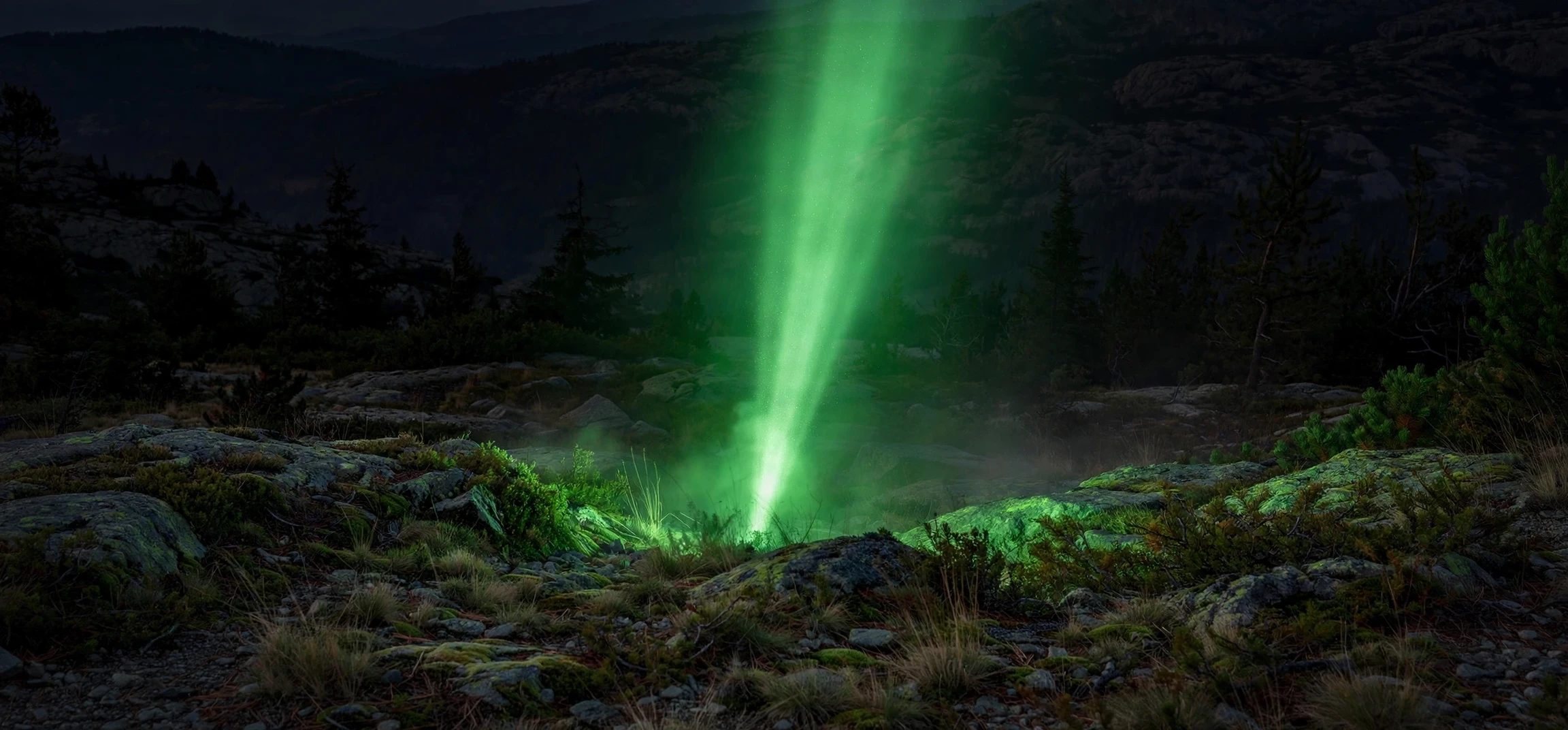
The green lightsaber meaning in Star Wars lore is closely tied to harmony, balance, and a deep connection to the living Force. In the fictional universe, a green blade most often belongs to a Jedi who values wisdom, negotiation, and understanding over aggression, and who seeks to resolve conflict through insight rather than through force of arms alone. This guide explains that meaning in full, looks at the Jedi most associated with green blades, compares green with other blade colours, and clears up common misunderstandings, all within the fictional story world and without treating invented lore as real-world fact.
Colour in Star Wars is never random decoration. From the first films onward, blade colour has helped viewers recognise character, allegiance, and approach at a glance. A red blade signals the dark side in the classic films, a blue blade often signals a guardian who acts in defence of others, and a green blade signals a different emphasis again: reflection, balance, and a strong bond with living things. That shorthand is part of why fans ask what a green blade means, and why the answer rewards a closer look at the stories behind it.
Table of Contents
- The Green Lightsaber Meaning in Jedi Lore
- Green Lightsaber Meaning for Luke and Other Jedi
- Green Versus Blue Lightsabers
- How Green Kyber Crystals Work in the Story
- Green Lightsabers in Films and Series
- Common Misconceptions About Green Blades
- Frequently Asked Questions
- Conclusion
The Green Lightsaber Meaning in Jedi Lore
Within Jedi tradition as presented in the films and related stories, green is linked to Jedi Consulars, a path that emphasises study, diplomacy, healing, and understanding of the Force. A Consular is often shown as a thinker first and a warrior second, someone who would rather prevent a battle than win one. That does not mean a green-bladed Jedi cannot fight. It means that fighting is not the first answer, and that the character is expected to bring patience and judgement to a crisis.
Balance is the second idea most often attached to green. A green blade suggests a Jedi who holds action and reflection in balance, and who is attuned to the living Force, the aspect of the Force connected to living beings, growth, and the natural world. That attunement fits characters who notice what others miss, who sense motives and emotions, and who understand that a conflict may have roots far from the battlefield. In story terms, green therefore signals a hero whose strength is insight as much as skill with a blade.
Harmony is a third idea, and it follows from the first two. A Jedi with a green blade is often presented as a peacemaker, a mediator, or a teacher. Such characters may guide others, settle disputes, or protect a community without seeking glory. Their victories are quieter than a dramatic duel, but in the story they matter just as much, because they prevent harm or restore trust. When viewers see a green blade, the story is often signalling that the character will try a thoughtful path before a violent one.
What Green Does Not Mean on Its Own
Colour alone does not fix a character’s morality or rank. A green blade does not automatically make a Jedi a master, a healer, or a pacifist, and a Jedi with a different colour is not less wise or less committed. Stories use colour as a hint, not as a rule that overrides character, choices, and actions. The most interesting green-bladed Jedi are interesting because of what they do, not merely because of the colour they carry.
It is also worth remembering that lore has developed across many films, series, books, and games over decades. Details have been refined, expanded, and sometimes adjusted. The broad association of green with wisdom, balance, and the living Force has stayed consistent, but finer claims about ranks, schools, or crystal types vary by source. A careful guide therefore focuses on the stable, widely shared meaning and treats narrower claims as story-specific detail rather than as universal law.
Green Lightsaber Meaning for Luke and Other Jedi
The most famous green blade belongs to Luke Skywalker, who carries a green lightsaber in Return of the Jedi. The change from his earlier blue blade marks a clear stage in his journey. By that point in the story, Luke is no longer a beginner learning to trust the Force. He has trained, faced loss, and learned restraint, and the green blade helps signal that growth. He still fights when he must, but his most important moments in that film involve calm, refusal to give in to anger, and a choice to spare an opponent rather than destroy him.
That choice is central to the green lightsaber meaning. Luke throws away his weapon rather than strike down his father in anger, and that act of restraint becomes the turning point of the story. The green blade therefore does more than look different on screen. It frames a hero who has learned that power must be guided by judgement, and that winning a duel is less important than refusing to become what he is fighting against.
Other well-known green-bladed Jedi reinforce the same themes in different ways. Yoda, the small and ancient teacher, carries a green blade and is presented throughout the saga as a voice of wisdom, patience, and deep knowledge of the Force. Qui-Gon Jinn, whose green blade appears in The Phantom Menace, is presented as an independent thinker who follows his understanding of the living Force even when it puts him at odds with the Jedi Council. Both characters act decisively when needed, yet both are remembered first for insight, teaching, and a willingness to question easy answers.
Later stories add further green-bladed Jedi, including characters in animated series who serve as teachers, guardians, and diplomats. Their blades do not make them identical. Each character has a distinct personality, history, and set of choices. The shared colour simply gives viewers a quick visual cue that these characters belong to a tradition that values reflection and balance, and that their stories are likely to turn on judgement as much as on combat.
Green Versus Blue Lightsabers
The classic contrast in the films is between green and blue. Blue is traditionally linked to Jedi Guardians, who focus on physical skill, protection, and direct action. A blue-bladed Jedi is often shown on the front line, defending others and meeting threats head on. Green, by contrast, is linked to Consulars, who focus on study, diplomacy, and the deeper mysteries of the Force. The contrast is one of emphasis, not of worth, and the saga needs both kinds of hero.
That contrast helps explain why a character might change blade colour across a story. A hero who begins as a guardian may grow into a more reflective role, and a new blade can mark that change. Conversely, a character who once relied on study may be called to act more directly. Blade colour is therefore a storytelling tool as well as a piece of lore. It lets filmmakers show growth without a long speech, because the audience can read the shift in a single image.
Other colours add further shades of meaning. Purple, famously carried by Mace Windu, is presented as rare and as suggesting a balance between light and dark tendencies held under strict discipline. Yellow is linked in some stories to temple guards and to sentinels who balance combat with practical skills. Red, in the classic films, is linked to the dark side and to synthetic or corrupted crystals in older lore. None of these associations should be treated as a simple ranking. Each colour tells a viewer something about approach, not about who is strongest.
| Blade colour | Common story association | Typical emphasis |
|---|---|---|
| Green | Wisdom, harmony, living Force | Reflection, diplomacy, balance |
| Blue | Guardianship, protection | Action, skill, defence of others |
| Purple | Rare balance under discipline | Control, intensity held in check |
| Red | Dark side in classic films | Aggression, domination, anger |
| Yellow | Sentinels and temple guards in some stories | Practical skill, watchfulness |
For more on how colour carries meaning in other contexts, see our guides to colour meanings, names of different blue colours, and what the colours of the Mexican flag mean, which show how a single colour can signal very different ideas in different settings.
How Green Kyber Crystals Work in the Story
In Star Wars lore, a lightsaber blade gets its colour from its kyber crystal, a crystal attuned to the Force. A Jedi traditionally finds or is called to a crystal during training, and the crystal then takes on a colour that reflects the bond between the Jedi and the Force. A green crystal therefore reflects a Jedi whose connection leans toward harmony, growth, and the living Force. The process is presented as personal and meaningful, not as a simple choice from a shelf.
The story also allows for change. A Jedi who builds a new lightsaber after loss, growth, or a major turning point may end up with a different colour, as Luke does when he constructs his green blade. That construction is itself a rite of passage in the story: building a lightsaber shows that a learner has become a Jedi in full, able to shape a tool that reflects personal understanding. The green blade that results is therefore a symbol of maturity as well as a weapon.
It is important to keep the fictional mechanics distinct from real-world production choices. On screen, green was also a practical choice, because a blue blade would have blended with the blue sky of a desert planet in Return of the Jedi. The production reason and the lore reason can both be true at once: filmmakers chose green so the blade would read clearly, and writers then gave that choice meaning within the story. Fans often enjoy both explanations, and neither cancels the other.
Later lore about crystals adds further layers, including stories of crystals that change colour when healed or reclaimed. Those stories reinforce the central idea that a blade reflects its bearer. A crystal is not merely a battery. In the fiction, it is a living link between the Jedi, the weapon, and the Force, and its colour is one visible sign of that link.
Green Lightsabers in Films and Series
Green blades appear across the saga in moments that reward attention. In the original trilogy, Luke’s green blade in the throne room scene is the most memorable example, because the scene turns on restraint rather than victory in combat. In the prequel trilogy, Yoda’s green blade in his duel shows that a small, elderly teacher can also be a formidable warrior when peace fails, a reminder that wisdom and strength are not opposites in this story world.
Animated series expand the picture. Characters who carry green blades often appear as mentors, mediators, or guardians of knowledge, and their episodes frequently focus on teaching, negotiation, or moral choice. Those stories give younger viewers a model of heroism that does not depend on winning every fight. A hero can be brave by speaking truthfully, by protecting someone weaker, or by refusing a cruel order, and a green blade can signal that kind of heroism.
Video games and books continue the tradition, letting players and readers choose or encounter green blades in their own journeys. In those stories, a green blade often suits a player who prefers exploration, dialogue, and Force abilities over pure combat. The choice is a matter of play style and story preference, not a claim about real life. That freedom is part of the appeal: the lore gives colour a meaning, and the audience can then use that meaning to shape a personal story.
Merchandise and fan culture have also kept the green blade prominent. Replica lightsabers, costumes, and fan art often feature green because it is instantly recognisable and because it carries the positive associations described above. When fans choose a green blade for a costume, they are usually signalling identification with wisdom, balance, and calm strength, the same qualities the films attach to Luke, Yoda, and Qui-Gon.
Common Misconceptions About Green Blades
One common misconception is that a green blade means a Jedi is weaker than a blue-bladed Jedi. The films contradict that idea directly. Yoda is one of the most powerful Jedi in the saga, and Luke’s green blade appears at the moment when he is most disciplined and most dangerous to the dark side, precisely because he refuses to fight on its terms. Strength in this story is measured by self-control as well as by skill, and green signals that fuller measure.
Another misconception is that only masters carry green blades. In fact, Jedi of various ranks and ages have carried green, and rank in the Order is a matter of training, responsibility, and recognition, not of blade colour alone. A young Jedi with a green blade is not automatically a master, and a master with a blue blade is not less wise. Colour is a hint about approach, not a badge of rank.
A third misconception treats blade colour as a fixed personality test, as if a fan could learn a fixed trait from a colour alone. The stories resist that reading. Characters grow, change blades, and surprise viewers, and the same colour can belong to very different people. The value of the green lightsaber meaning lies in the pattern it reveals across many stories, not in a rigid rule that applies to every single case without exception.
Finally, some viewers assume that green must mean something in the real world, such as a moral code to follow literally. It does not. Star Wars is fiction, and its colour symbolism works as storytelling, not as instruction for real life. The ideas behind green, such as patience, balance, and thinking before acting, are worth reflecting on, but they belong to ordinary judgement and character, not to any fictional crystal or blade.
Frequently Asked Questions
What does a green lightsaber mean?
In Star Wars lore, a green lightsaber usually means harmony, balance, and a strong connection to the living Force. It is linked to Jedi who value wisdom, diplomacy, and reflection alongside combat skill.
Who has a green lightsaber?
Well-known green-bladed Jedi include Luke Skywalker in Return of the Jedi, Yoda, and Qui-Gon Jinn. Other characters across films, series, books, and games also carry green blades.
Is green stronger than blue?
No. Colour does not rank power. Blue is linked to guardianship and direct action, while green is linked to wisdom and balance. Both kinds of Jedi are shown as powerful in different ways.
Why did Luke switch to a green lightsaber?
In the story, Luke builds a new lightsaber after becoming a more mature Jedi, and the green blade marks that growth. On screen, green also showed up clearly against the desert sky, a practical production reason.
Can a dark side user have a green lightsaber?
In classic films, dark side users are shown with red blades, while green is a Jedi colour. Later stories explore exceptions and unusual cases, but green remains firmly linked to the light side in the main films.
Conclusion
The green lightsaber meaning comes down to a simple but rich idea: a hero who leads with wisdom, seeks balance, and stays connected to living things. Luke’s green blade in Return of the Jedi, Yoda teaching and Yoda fighting, and Qui-Gon following his conscience all point to the same pattern, even though each character is distinct. Green does not mean weak, and it does not guarantee rank or virtue on its own. It signals an approach, one that values patience, insight, and restraint, and that treats a duel as a last resort rather than a first answer. That is why the colour has stayed memorable for decades, and why fans continue to ask what it means: it names a kind of heroism that is quieter than a battle cry, but no less powerful in the story.



