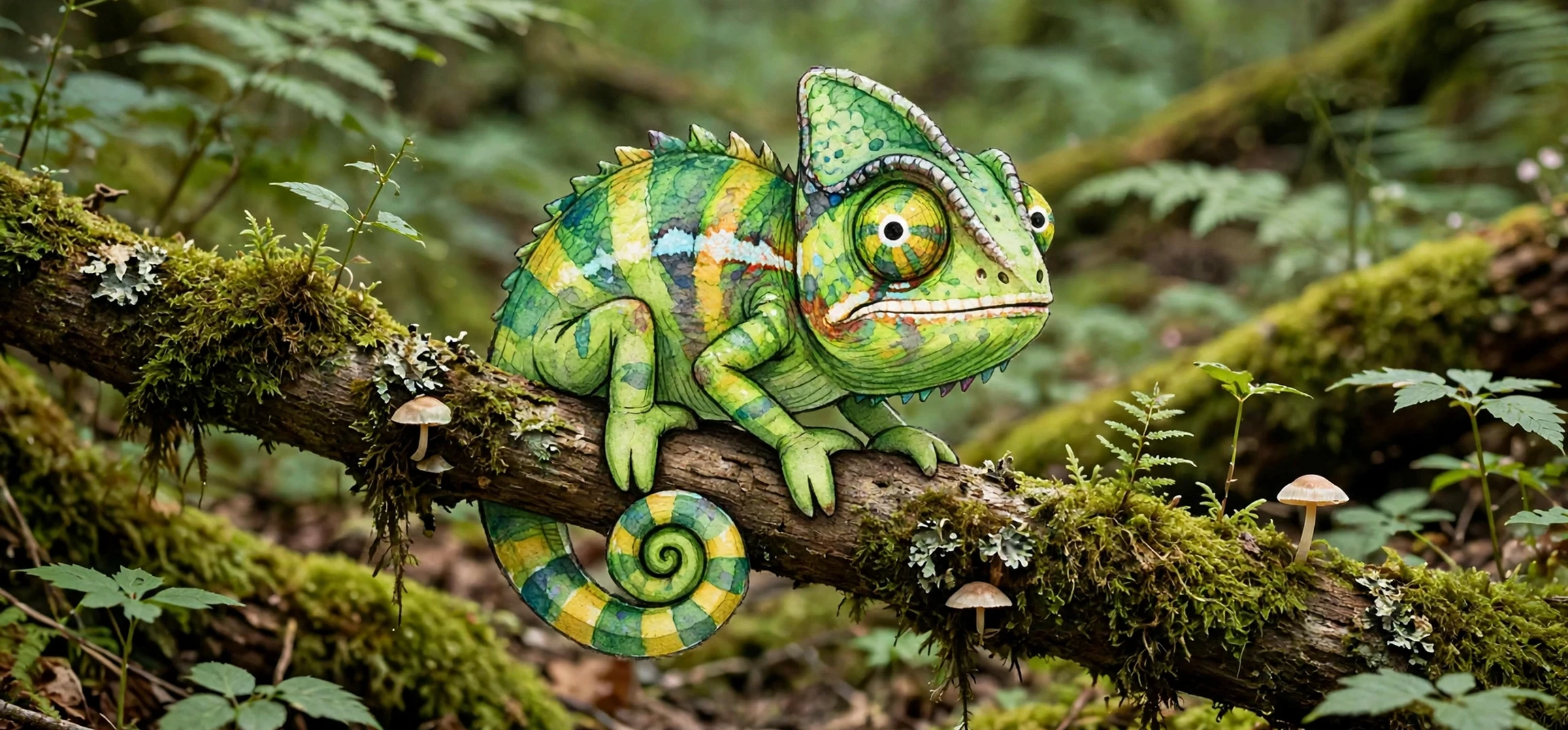
The rapunzel lizard name is Pascal, the small green chameleon who is Rapunzel’s closest companion in the animated film Tangled. Pascal is not a real animal and not a character based on a real person. He is a fictional chameleon created for the story, and his name, personality, and role are part of what makes Tangled memorable for many viewers. This guide explains who Pascal is, why he fits the story so well, what his character adds to Rapunzel’s journey, and how to tell him apart from other animal sidekicks in animated films.
Animal companions are a long tradition in animated storytelling. They give a hero someone to talk to, react to, and share feelings with, especially when the hero is isolated. In Tangled, that role matters more than usual, because Rapunzel spends most of her early life alone in a tower, with very few visitors. Pascal fills that gap. He is present in quiet moments, funny moments, and dangerous moments alike, and his reactions often tell the audience how Rapunzel feels before she says a word.
Table of Contents
- The Rapunzel Lizard Name in Tangled
- Why the Rapunzel Lizard Name Fits the Character
- Pascal’s Personality and Role in the Story
- Pascal and Rapunzel’s Friendship
- Pascal Compared With Other Animal Sidekicks
- Pascal in Later Tangled Stories
- Frequently Asked Questions
- Conclusion
The Rapunzel Lizard Name in Tangled
Pascal is introduced in Tangled as Rapunzel’s pet chameleon and best friend. He lives with her in the tower, shares her daily routines, and accompanies her when she finally leaves the tower to see the world. The film never treats him as a background decoration. From his first scenes, he is shown reacting, worrying, celebrating, and warning, and the audience quickly learns to read his expressions and colour changes as part of the storytelling.
The choice of a chameleon is clever for several reasons. Chameleons change colour, and Pascal’s colour changes become a visual language in the film. When he is calm, he is green. When he is frightened, excited, or trying to hide, his colour shifts, giving viewers an instant clue to his mood. That device works especially well in animation, where a small character who does not speak still needs to communicate clearly. Pascal’s colour becomes his voice, in a sense, and the animators use it with great care.
Pascal is also small, which creates both comedy and tenderness. Next to Rapunzel’s very long hair, the tower’s large rooms, and the wider world outside, Pascal looks tiny and vulnerable. Yet he is brave when it matters. He stands up to threats far larger than himself, protects Rapunzel, and refuses to leave her side. That contrast between size and courage is a classic storytelling device, and it makes Pascal easy to root for, especially for younger viewers who may themselves feel small in a large world.
Is Pascal a Lizard or a Chameleon?
Strictly speaking, a chameleon is a type of lizard, so both descriptions are understandable. Many viewers search for a lizard because Pascal looks like a small lizard at first glance, while more precise guides call him a chameleon because of his colour-changing skin, independently moving eyes, and curled tail. The film itself presents him as a chameleon, and that is the most accurate label. When people ask for the lizard in Tangled, Pascal is the character they mean, and when they ask for the chameleon, the answer is the same.
That distinction matters for clarity, but it should not become a barrier. Search terms often use everyday language, and everyday language calls many small reptiles lizards. A good guide therefore answers the question as asked, then adds the precise term, so that a reader learns both the name and the correct animal type. Pascal is the lizard character in Tangled, and more precisely, he is a chameleon.
Why the Rapunzel Lizard Name Fits the Character
The name Pascal suits the character for a few simple reasons. It is short, easy to remember, and easy for children to say, which matters for a character who appears in a family film and in later merchandise, books, and series. It also sounds gentle rather than fierce, which fits a small companion whose strength is loyalty and quick thinking rather than size or power. A name that sounded grand or threatening would have clashed with the character on screen.
Names in animated films also carry a practical job: they must be distinct from the other main names in the story. Rapunzel, Flynn, and Mother Gothel are all distinctive, and Pascal sits comfortably alongside them without confusion. The name does not rhyme with or echo the other names, so dialogue stays clear even in fast scenes. That clarity helps viewers of all ages follow the story, and it helps the character stand out in discussion, fan art, and retellings.
Beyond sound, the name fits Pascal’s role as a constant presence. Rapunzel’s life changes dramatically when she leaves the tower, meets new people, and discovers her true identity. Pascal is one of the few constants through that change. He was there before the adventure, he is there during it, and he is there after it. A short, warm name suits a character who represents home, familiarity, and steadfast friendship in a story about leaving home and finding a new one.
It is worth noting what the name does not do. It does not explain Pascal’s powers, because he has no magical powers in the film. His colour changing is a natural chameleon trait, presented in a lively animated way, not a spell. His courage comes from loyalty, not from magic. Keeping that distinction helps viewers enjoy the fantasy elements of Tangled, such as Rapunzel’s healing hair, without confusing them with Pascal’s ordinary, if exaggerated, animal traits.
Pascal’s Personality and Role in the Story
Pascal’s personality can be described in a few words: loyal, expressive, cautious, and brave when it counts. He is loyal because he never abandons Rapunzel, even when leaving the tower is frightening or when danger appears. He is expressive because his face, posture, and colour tell the audience what he thinks, even though he does not speak in words. He is cautious because he often senses danger before Rapunzel does, and his warnings, through gestures and reactions, add tension and humour. And he is brave because caution does not stop him from acting when Rapunzel needs help.
That combination makes Pascal more than comic relief, although he is often funny. His humour comes from his reactions: a sceptical look, a sudden colour change, a brave pose that is undercut by his tiny size. The humour never makes him foolish. Instead, it makes him relatable. Viewers recognise the feeling of being worried for a friend, of wanting to help but feeling small, and of finding courage anyway. Pascal embodies those feelings in a form that children can understand and adults can enjoy.
In plot terms, Pascal also serves as a witness. He sees things Rapunzel misses, reacts to characters Rapunzel trusts too quickly, and stays alert when others relax. That witness role is useful for the audience, because it creates dramatic irony: viewers may notice Pascal’s suspicion and wonder whether Rapunzel will notice the same danger in time. The device keeps tension alive without needing long explanations, and it gives the animators a silent character who can still drive a scene.
How Pascal Communicates Without Words
Silent or nearly silent characters are a test of animation skill, and Pascal passes that test well. His eyes move independently, like a real chameleon, which allows the animators to show him looking in two directions at once, a visual joke and a storytelling tool. His tail curls and uncurls, his body puffs up or flattens, and his colour shifts with mood. Together, those signals form a vocabulary that viewers learn quickly, often without realising they have learned it.
Rapunzel also talks to Pascal as if he understands her, and the film invites the audience to accept that understanding as part of their friendship. She confides in him, asks his opinion, and responds to his reactions as if they were answers. That back-and-forth turns a pet into a friend in the eyes of the audience. It also mirrors how many people talk to real pets, which adds warmth and familiarity to a fantasy story.
Pascal and Rapunzel’s Friendship
The friendship between Rapunzel and Pascal is the emotional centre of the early part of Tangled. Rapunzel is isolated, creative, and curious, and Pascal shares her daily life in the tower: painting, reading, cooking, and dreaming about the lights she sees once a year. Those shared routines show a bond built on time and trust, not on a single dramatic rescue. When Rapunzel finally decides to leave the tower, Pascal’s presence makes the decision feel both braver and sadder, because she is taking her home with her in a small, living form.
Pascal also helps Rapunzel grow. He encourages her curiosity by sharing her excitement, and he grounds her by reacting honestly when she is reckless or afraid. A friend who only agrees is less useful than a friend who also warns, and Pascal warns often. His scepticism about new acquaintances, his fear in dangerous places, and his joy in safe moments all help Rapunzel, and the audience, judge situations more clearly. The friendship is therefore not just decoration. It shapes how the heroine sees the world.
For viewers, the friendship offers a model of loyalty that is easy to grasp. Pascal does not leave when the adventure gets hard, does not seek reward, and does not change his allegiance when Rapunzel’s identity changes. He stays Pascal, and he stays with Rapunzel. That constancy is comforting in a story where almost everything else changes, from Rapunzel’s home to her understanding of her past. It is one reason Pascal remains popular long after the film ends.
The friendship also works because it is mutual. Rapunzel protects Pascal, carries him, and worries about him, just as he protects and worries about her. Neither character is merely a prop for the other. Their care runs in both directions, and that balance makes their scenes feel genuine even within a fairy-tale setting. A one-sided sidekick would be less memorable; a mutual friendship lasts.
Pascal Compared With Other Animal Sidekicks
Animated films are full of animal sidekicks, and comparing Pascal with a few others shows what makes him distinctive. Many sidekicks speak, sing, or provide long comic monologues. Pascal does none of those things in the main film, and his silence forces the animators to rely on visual storytelling. That choice makes him quieter than many peers, but also more expressive in a purely visual way.
Size is another difference. Some sidekicks are large and powerful, able to carry the hero or fight enemies directly. Pascal is tiny, so his help must be clever rather than forceful: hiding, distracting, warning, or slipping into places others cannot reach. That cleverness fits a story about a heroine who must outthink a controlling guardian rather than overpower her. Pascal’s small-scale solutions match Rapunzel’s own need to be resourceful.
A third difference is the colour-changing trait. Few sidekicks have a built-in mood indicator as clear as Pascal’s skin. That trait gives the filmmakers a shorthand for emotion that other films must convey through dialogue or music. It also gives viewers, especially younger viewers, a simple way to read a scene: green often means calm, while a sudden shift means alarm or excitement. The device is both a joke and a storytelling aid.
| Sidekick trait | Pascal in Tangled | Why it matters |
|---|---|---|
| Speech | Does not speak in words in the film | Forces visual, expressive storytelling |
| Size | Very small chameleon | Help must be clever, not forceful |
| Signature trait | Colour-changing skin | Instant mood and warning signals |
| Role | Best friend and constant companion | Emotional anchor through change |
For other animal character guides, see our articles on Jungle Book cartoon characters, cartoon dogs characters, and the cat name in Alice in Wonderland, which explore how animated animal companions shape their stories.
Pascal in Later Tangled Stories
After the film, Pascal continued to appear in Tangled-related stories, including a television series and short stories that follow Rapunzel’s life after the events of the film. In those stories, he remains her companion, and his role expands in small ways: he explores new places with her, meets new characters, and continues to react, warn, and comfort. The continuity matters for fans, because it confirms that Pascal was not a one-film device. He is part of Rapunzel’s world, not just part of one adventure.
Later stories also give Pascal more chances to be funny and brave in everyday situations, not only in crises. That everyday presence suits a companion character. A sidekick who only appears in danger can feel like a tool, while a sidekick who shares meals, jokes, and quiet moments feels like a friend. Pascal’s later appearances lean into that everyday friendship, which is one reason audiences continue to recognise and enjoy him.
Merchandise and fan culture have kept Pascal visible as well. Plush toys, figures, and artwork often feature him perched on Rapunzel’s shoulder or hidden in her hair, two of his most recognisable poses. Those images work because they capture his role in a single picture: close, watchful, and loyal. For a character who does not speak, that visual recognition is a strong measure of success.
Parents and educators sometimes use Pascal as a gentle way to talk about friendship, courage, and caring for animals. The lessons are simple and age-appropriate: a good friend stays close, speaks up through actions when words are hard, and helps even when help feels small. Those themes do not require any knowledge of the wider Tangled lore, which makes Pascal accessible to viewers who meet him for the first time in a short clip or a picture book.
Frequently Asked Questions
What is the rapunzel lizard name?
The rapunzel lizard name is Pascal. He is the chameleon companion of Rapunzel in the animated film Tangled.
Is Pascal a lizard or a chameleon?
Pascal is a chameleon, which is a type of lizard. Viewers often call him a lizard in everyday language, but chameleon is the more precise term.
Does Pascal speak in Tangled?
Pascal does not speak in words in the film. He communicates through expressions, gestures, movements, and changes in skin colour, and Rapunzel responds to him as a friend.
Why does Pascal change colour?
Pascal changes colour as a chameleon trait, used in the film to show mood, such as calm, fear, excitement, or an attempt to hide. It is a visual storytelling device as well as a natural chameleon feature.
Is Pascal based on a real animal or person?
No. Pascal is a fictional character created for Tangled. He is not based on a real person, and this guide discusses only the fictional character.
Conclusion
The rapunzel lizard name is Pascal, and that short answer opens a richer story. Pascal is Rapunzel’s chameleon companion in Tangled, a small, silent, colour-changing friend whose loyalty, caution, and courage help carry the film’s emotional core. He communicates without words, warns when danger approaches, celebrates when Rapunzel succeeds, and stays with her through every change in her life. Whether you call him a lizard in everyday language or a chameleon in precise terms, the character is the same: a tiny companion with a large presence, and one of the most memorable animal sidekicks in modern animation.



