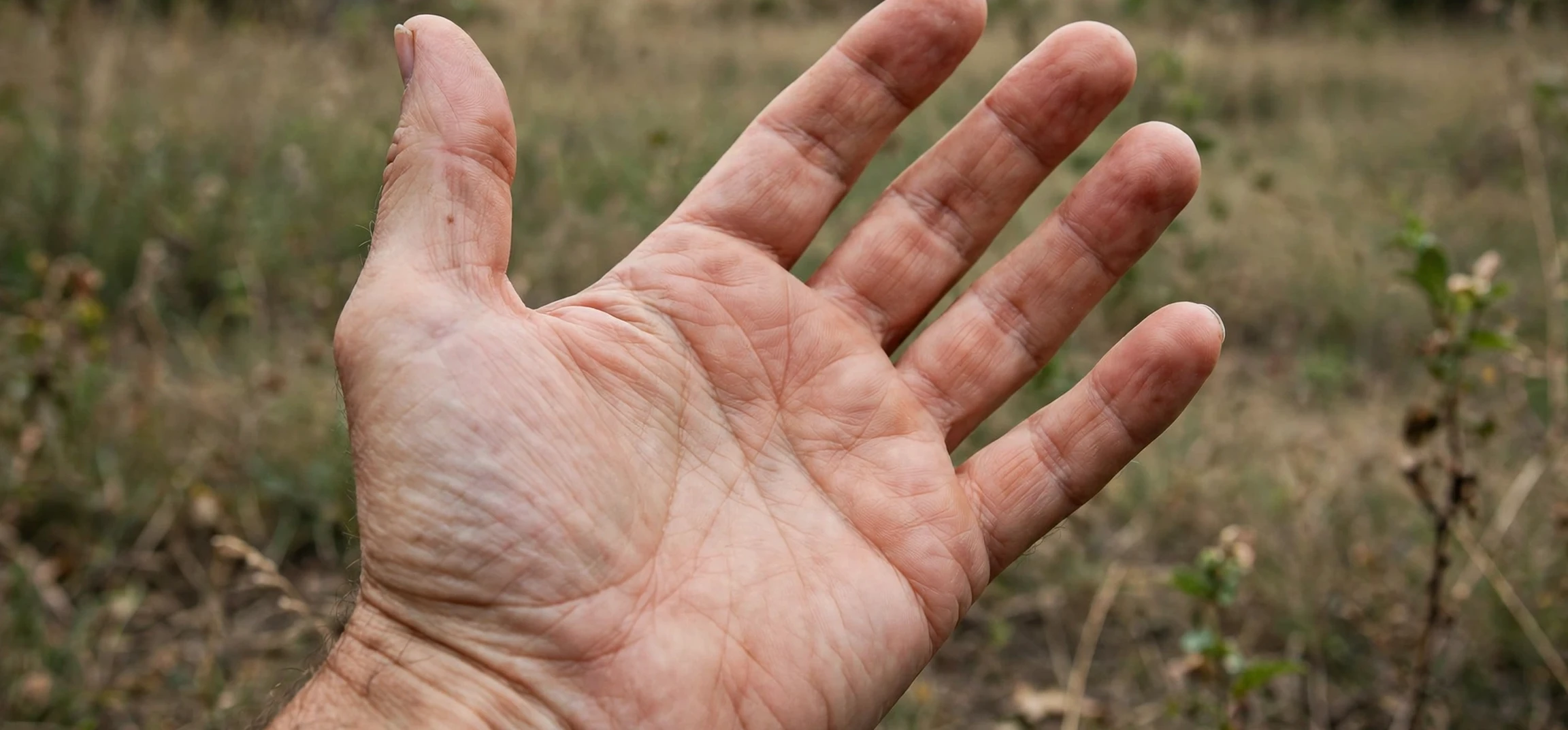
An itchy right palm has puzzled and fascinated people for centuries, and the phrase right palm itch meaning is one of the most searched ways people try to make sense of the sensation. In folklore from many parts of the world, an itching palm is said to be a sign, a hint about money, luck, or a change that may be on the way. This article explores the right palm itch meaning purely as folklore and cultural belief. Nothing here is presented as fact, and nothing here is medical advice. The meanings below come from old sayings, folk traditions, and modern retellings, and they differ from place to place, family to family, and even person to person. If you enjoy folklore, this guide will walk you through the most common versions of the belief, where they come from, and why they have lasted so long.
Folklore has a way of turning everyday experiences into stories. A sneeze, a ringing ear, a twitching eye, or an itchy palm all became, at some point in history, small omens that people tried to read. The palm was a natural focus for such beliefs because hands are central to work, trade, giving, and receiving. In societies where coins were counted by hand and deals were sealed with a handshake, it made sense that a tingling hand would become linked in the popular imagination with money changing hands. Over time, those associations hardened into sayings that grandparents passed down, and those sayings still circulate today in conversations, social media posts, and family jokes.
Right Palm Itch Meaning in Folklore and Tradition
The best-known version of the right palm itch meaning in English-speaking folklore is that an itchy right palm signals money coming in. The saying is often quoted in a simple form: right hand itches, money is on its way; left hand itches, money is going out. In this tradition, the right hand is the receiving hand for many right-handed people, so an itch there was read as a sign of incoming wealth, a pay rise, an unexpected gift, or a profitable deal. Of course, this is a belief, not a prediction. No folk saying can guarantee a financial outcome, and the charm of the tradition lies in its hopeful tone rather than any evidence behind it.
Other versions of the tradition flip the meaning depending on gender. In some folk accounts, an itchy right palm means money coming in for men but money going out for women, while the left palm carries the opposite meaning for each. In still other accounts, the meanings are reversed entirely, with the right palm signalling spending rather than receiving. These contradictions are worth noting because they show how folklore actually works. There is no single official version of the belief. Instead, there are many local variants, and which one a person grows up hearing depends on their region, their community, and their family. Anyone who presents one version as the only correct version is oversimplifying a rich and varied tradition.
Some folk remedies grew up alongside the belief. One old custom says that if your right palm itches, you should rub it on wood or scratch it against a wooden surface to make sure the good luck sticks. Another says you should avoid scratching it at all, because scratching might chase the luck away. A third tradition suggests closing the hand into a fist and putting it in a pocket, as if holding on to the money that is supposedly on its way. These little rituals are playful rather than serious, and they show how folklore turns a passing sensation into a small moment of hope or humour in an ordinary day.
Where the Money Belief May Have Come From
Historians of folklore often point out that many palm beliefs grew out of the practical world of trade. Before banknotes and digital payments, people handled coins constantly, and hands were the tools of earning and spending. An itch or tingle in a hand that had been working hard might have been noticed and remembered, and when a payment happened to follow soon after, the two events became linked in memory. Human minds are excellent at spotting patterns, even when the pattern is coincidence. Once a story like that is told a few times, it becomes a saying, and the saying outlives the original coincidence by generations.
Religious and cultural ideas also shaped the tradition. In many cultures, the right side has long been associated with favour, strength, and blessing. The right hand is the hand used for greetings, oaths, and giving in numerous traditions, so it is not surprising that an itch on the right palm picked up positive associations in those settings. At the same time, other cultures read the same sensation differently, which is a useful reminder that folklore is local. A belief that feels obvious in one community can feel completely unfamiliar in another, and both readings belong to the same broad family of palm folklore.
Right Palm Itch Meaning Across Different Cultures
Across different cultures, the right palm itch meaning takes on a surprising range of interpretations. In parts of South Asia, palm itching is sometimes linked with the flow of wealth, and the specific hand matters, though accounts differ on which hand means gain and which means loss. In some African and Caribbean folk traditions, an itchy palm is also read as a money sign, and the belief often travels with families who carry their sayings with them when they move. In parts of Eastern Europe, an itchy right palm has been described as a sign of an upcoming meeting, a handshake with someone important, or a financial change. In Latin American folk sayings, an itchy hand can be linked to money, to news, or to meeting someone new, depending on the local version.
What these traditions share is not a single meaning but a single habit: reading the body as a messenger. Folk cultures around the world have long treated small bodily sensations as signals worth noticing. A twitching eye, a ringing ear, hiccups, and an itchy palm all appear in omen traditions on several continents. The palm version survived particularly well because it connects to something everyone cares about, namely money and security, and because it is easy to remember and fun to repeat. When a friend mentions an itchy palm, someone nearby almost always knows the saying and repeats it, which keeps the tradition alive without any book or formal teaching.
Left Palm Versus Right Palm in Folk Sayings
Most folk sayings about palm itching come in pairs, with the left and right palms carrying opposite meanings. The most common English-language pairing says the right palm means money coming in and the left palm means money going out. A second common pairing reverses the two, often along gender lines, so that the meaning depends on whether the person is a man or a woman. A third pairing moves away from money altogether and says the right palm signals meeting someone new while the left palm signals saying goodbye, or that one palm means good news and the other means a surprise visitor. Readers who want to explore the other half of the pair can read our guide to the left hand palm itching belief and compare how the two sayings mirror each other.
The existence of opposite versions is not a flaw in the folklore. It is the folklore. Folk sayings are passed on by word of mouth, and every retelling is a chance for a detail to change. A saying that crosses from one town to another may swap hands. A saying translated into another language may swap meanings. Over decades and centuries, those small changes build up into the patchwork of versions we see today. That is why it is best to treat any single statement about palm itching as one version among many, rather than as a settled rule.
Common Variations of the Belief
Beyond the money reading, several other variations of the palm itching belief appear in folk collections. Some say an itchy right palm means you will soon shake hands with a stranger, which could lead to a new friendship, a business contact, or an unexpected opportunity. Others say it means you will receive a letter or a message with important news, a version that made more sense in times when letters were the main form of long-distance communication and has now been updated in retellings to cover phone calls and messages. Still others link an itchy palm to travel, suggesting a journey or a move may be approaching. Each variation reflects the hopes and worries of the people who told it.
Timing also appears in some versions. A few folk accounts claim that an itch in the morning means something different from an itch in the evening, or that an itch on a particular day of the week changes the reading. These elaborations are less widely known than the basic money saying, but they show how folklore grows. Once a core belief exists, storytellers add details that make it feel more specific and more personal. A belief that can be tailored to the day, the hour, or the person feels more meaningful, even though the added details are inventions of the storytelling tradition rather than discoveries about the world.
| Folk version | Where it is commonly heard | What it is said to mean |
|---|---|---|
| Right palm itches, money arrives | English-speaking folklore | Incoming money, a gift, or a pay rise |
| Right palm itches, money leaves | Some gender-based variants | Spending, a bill, or money going out |
| Right palm itches, a meeting follows | Parts of Eastern Europe | A handshake or meeting with someone new |
| Right palm itches, news is coming | Latin American folk sayings | A message or important news on the way |
| Rub the itch on wood | Old English custom | A ritual said to hold on to the good luck |
Why People Still Talk About Palm Itching Beliefs
There are several reasons why palm itching beliefs have survived into the age of search engines and smartphones. First, they are short, vivid, and easy to share. A saying that fits in one sentence travels well in conversation and in posts, and every share introduces it to new listeners. Second, they are hopeful. A belief that promises money coming in is pleasant to hear, and people enjoy repeating pleasant ideas, especially when money is tight. Third, they are harmless fun for most people. Treating an itchy palm as a joke about payday costs nothing and gives friends something to laugh about together.
Fourth, and perhaps most interesting, these beliefs satisfy a deep human desire to find meaning in small events. Life is full of uncertainty, and folk omens offer a simple story that makes an ordinary moment feel significant. Psychologists sometimes describe this as pattern-seeking: the mind notices a coincidence, such as an itch followed by a payment, and remembers it more vividly than all the times an itch was followed by nothing at all. Over a lifetime, a handful of memorable coincidences can feel like proof, even though the far larger number of unremarkable itches is forgotten. Understanding this does not spoil the folklore. It explains why folklore feels so convincing to the people who love it.
It is also worth remembering that folklore is not the same as health information. This article deliberately covers beliefs only. An itchy palm can have many ordinary, everyday causes, from dry skin to contact with an irritant, and this guide makes no claims about any of them. The beliefs described here belong to storytelling and tradition, not to diagnosis, and they should be enjoyed in that spirit. Anyone who notices persistent, painful, or worrying skin changes should speak to a clinician for proper advice rather than relying on a folk saying.
Frequently Asked Questions
What does an itchy right palm mean in folklore?
In the most common English-language folk saying, an itchy right palm is said to mean money is coming in, such as a payment, a gift, or a financial gain. Other versions reverse the meaning or link the itch to a meeting or news instead. These are beliefs, not facts, and the version you hear depends on local tradition.
Is the right palm meaning different for men and women?
In some folk accounts, yes. Certain traditions say the right palm means money arriving for men but money leaving for women, with the left palm carrying the opposite meaning. Other traditions do not make any gender distinction at all. There is no single agreed version, which is normal for folklore passed down by word of mouth.
Should you scratch an itchy right palm?
According to one old custom, you should not scratch it, because scratching might chase the luck away, while another custom says to rub it on wood to keep the luck. Both are folk rituals rather than rules, and neither has any proven effect. They are best enjoyed as charming traditions rather than instructions.
Where does the belief come from?
The belief most likely grew out of the world of manual trade, where hands handled coins every day, combined with the widespread cultural association of the right side with favour and blessing. Over generations, memorable coincidences hardened into sayings, and those sayings spread through families and communities.
Conclusion
The right palm itch meaning in folklore is, at its heart, a hopeful story about money, meetings, and good news. Its most famous version promises wealth on its way, but the tradition as a whole is far richer and more varied, with reversed meanings, gender-based variants, and readings that cover news, travel, and new acquaintances. None of these versions is a fact or a forecast. They are beliefs that have survived because they are short, hopeful, and fun to share, and because they turn an ordinary tingle into a small moment of anticipation. Enjoy the saying for what it is: a piece of living folklore. And if you enjoy exploring the meanings behind everyday sayings, you may also like our guides to number symbolism in folk belief and the meaning behind a classic folk-themed show, which explore how old ideas keep finding new audiences.



