If you searched for rhizome def, you are looking for a definition of rhizome, and this guide gives you the full version: the botanical meaning first, then the broader uses of the word in philosophy, culture, and everyday language. To be honest about the search term itself, “rhizome def” is simply shorthand for “rhizome definition”, the kind of abbreviated query people type when they want a quick answer. The word it points to, rhizome, is a real botanical term with a precise meaning, and it has also become a popular metaphor far beyond botany. Understanding both layers, the plant structure and the metaphor, explains why the word appears in gardening books, philosophy essays, and discussions of networks and organisations alike.
The short definition is this: a rhizome is a horizontal underground stem that sends out roots below and shoots above, allowing a plant to spread sideways and produce new growth at intervals along its length. That one sentence carries most of what you need for a basic understanding, but the full picture is richer. Rhizomes differ from roots, they store food, they help plants survive difficult seasons, and they explain why some plants are so hard to remove from a garden once established. This guide works through each of those points, gives familiar examples, and then explains how the botanical idea was borrowed as a way of thinking about knowledge, culture, and networks.
Rhizome Def: The Botanical Meaning
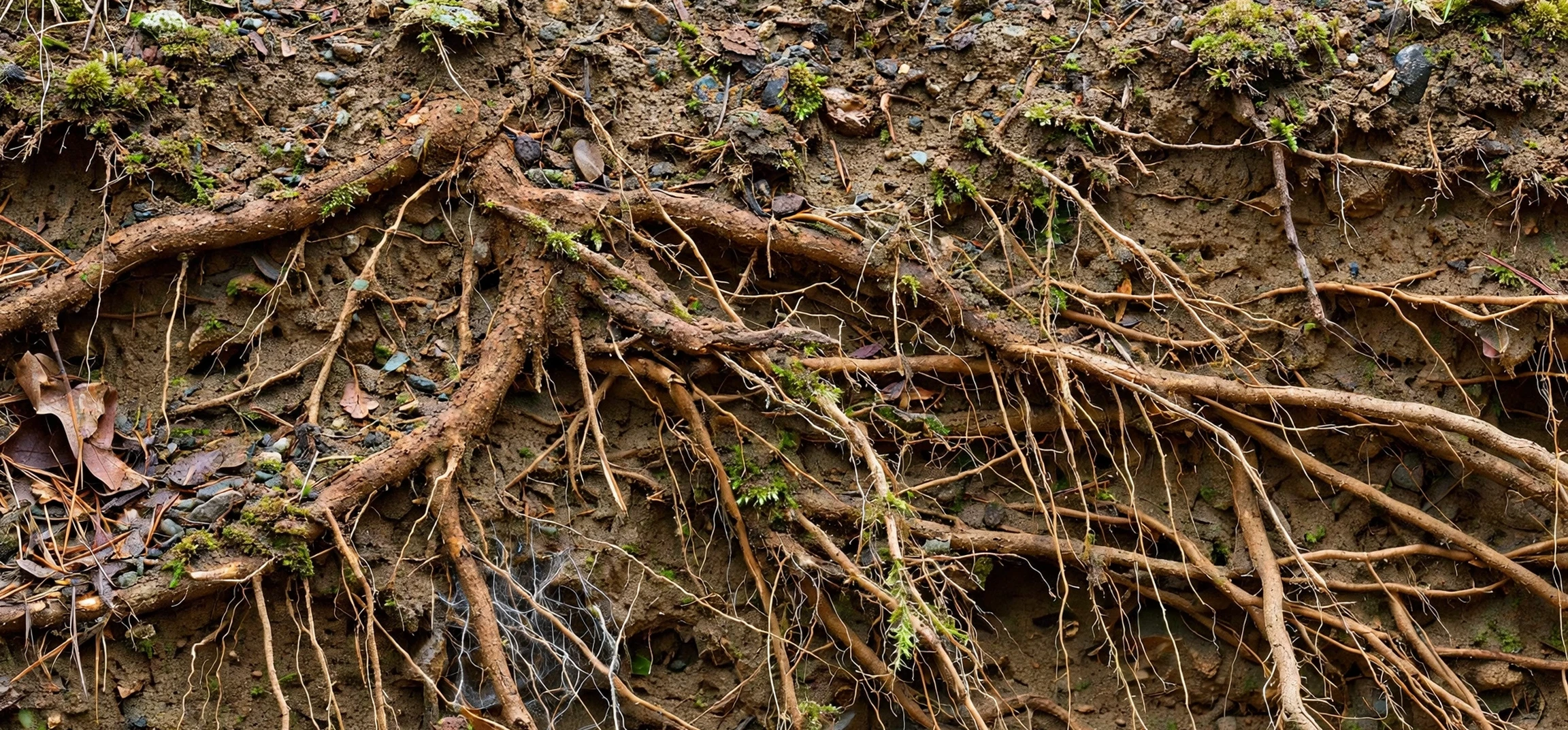
The rhizome def in botany is a modified stem that grows horizontally underground. Unlike a root, which mainly absorbs water and nutrients, a rhizome is a stem, and it carries the features of a stem: it has nodes, the points from which leaves, shoots, or roots grow, and it can produce new upright stems at intervals. From each node, roots grow downward into the soil while shoots grow upward toward the light. The result is a plant that does not just grow taller from one spot, but spreads outward, colonising new ground as the rhizome extends.
Rhizomes also function as storage organs. They hold starches and nutrients that the plant can draw on when conditions are poor, such as during winter or a dry season. When growth resumes, the stored energy fuels new shoots, sometimes before the plant has leaves to photosynthesise. This is one reason rhizomatous plants can seem to vanish in winter and return vigorously in spring: the living plant was never gone, it was waiting underground in its rhizome. Gardeners who grow ginger, iris, or bamboo are managing this storage system whether they think about it or not.
The distinction between rhizomes, roots, bulbs, and tubers is a common source of confusion, and it is worth getting straight. Roots anchor a plant and absorb water and minerals, but they do not normally produce new shoots. Bulbs, such as onions and tulips, are compact underground buds with fleshy leaves wrapped around a short stem. Tubers, such as potatoes, are swollen underground stems or roots that store food, but they are compact rather than elongated. A rhizome is elongated and horizontal, creeping through the soil and producing new plants along its length. That creeping habit is its defining feature.
Rhizome Def: Familiar Examples
Ginger is probably the most familiar rhizome, and the knobbly piece sold in shops is the underground stem itself, not a root. Its joints are the nodes, and given soil and warmth, a piece of ginger can sprout shoots from those nodes and grow into a new plant. Turmeric is another culinary rhizome, similar in structure and use. Both examples show how a botanical definition connects to everyday life: when you cook with ginger, you are handling a plant stem that evolved to spread and store energy underground.
In the garden, iris, lily of the valley, and many ornamental grasses spread by rhizomes, which is why they can form expanding clumps year after year. Bamboo is the most dramatic example: some bamboo species spread through vigorous underground rhizomes and can appear metres from the original planting, which is why gardeners contain bamboo with root barriers sunk into the soil. Grasses also use rhizomes, and that creeping growth is what lets a lawn fill in bare patches and recover from wear. In each case, the same structure serves the same purposes: spreading, storing, and surviving.
Rhizomes also matter in ecology. Plants that spread by rhizomes can stabilise soil, because their underground network binds the ground together and their shoots protect the surface. Coastal grasses with rhizomes help hold dunes in place, and wetland plants with rhizomes help hold riverbanks. At the same time, the very vigour that makes rhizomatous plants useful can make them invasive outside their native range, where they spread unchecked and outcompete local species. Gardeners and land managers therefore treat rhizomatous plants with respect: wonderful for ground cover in the right place, a long-term commitment in the wrong one.
Why rhizomes make some plants hard to remove
Anyone who has tried to clear a rhizomatous weed understands the storage-and-spreading combination from the other side. Cutting the visible shoots removes only the above-ground growth; the rhizome below survives, draws on stored energy, and sends up new shoots. Even a broken fragment of rhizome, if it contains a node, can regrow into a new plant. Effective removal therefore means removing the underground network as completely as possible, or exhausting it by repeatedly removing new shoots until the stored energy runs out. This is not a failure of gardening effort; it is the plant doing exactly what its structure evolved to do.
Rhizome Def: The Broader Uses of the Word
Beyond botany, rhizome became famous as a metaphor in philosophy, through the work of Gilles Deleuze and Félix Guattari, who used it to describe a way of organising thought and culture that has no single centre or hierarchy. A tree, in their contrast, has a trunk, branches, and a clear order from top to bottom. A rhizome has no centre: any point can connect to any other point, growth can start anywhere, and breaking one connection does not destroy the whole. The image captures systems that are decentralised, interconnected, and resilient, from the internet to social movements to the way ideas spread through a culture.
The metaphor has since travelled widely. In education, a rhizomatic approach to learning suggests that knowledge is not a ladder to climb in a fixed order, but a network to explore from many entry points. In organisational thinking, a rhizomatic structure means teams and projects that connect laterally rather than only through a chain of command. In cultural criticism, the term describes trends and memes that spread sideways through many small connections rather than being handed down from a single source. In each case, the botanical picture does real work: it helps the reader imagine a system without a centre, where growth happens at many points at once.
It is worth keeping the two meanings distinct, because confusion usually comes from mixing them. If a gardening book mentions rhizomes, it means underground stems. If a philosophy essay mentions rhizomatic thinking, it means a non-hierarchical network model borrowed from that botanical image. Neither use is wrong; they are the literal term and its metaphorical extension. When you meet the word in a new context, the quickest way to tell which meaning is intended is to ask whether the text is talking about plants or about organisation and ideas. The answer will almost always be clear from the surrounding sentences.
| Underground structure | What it is | Example |
|---|---|---|
| Rhizome | Horizontal underground stem with nodes | Ginger, iris, bamboo |
| Bulb | Compact underground bud with fleshy leaves | Onion, tulip |
| Tuber | Swollen underground stem or root for storage | Potato |
| Root | Underground organ for anchoring and absorption | Carrot, in the storage-root sense |
Rhizome Def in Gardening Practice
For gardeners, the practical implications of the rhizome def are straightforward. When planting a rhizomatous species, check whether it is described as clump-forming or running. Clump-forming types expand slowly and stay roughly where planted. Running types spread vigorously through long rhizomes and may need a barrier, a container, or a site where spread is welcome. Planting depth matters too: many rhizomes, including iris, prefer to sit near the soil surface rather than buried deeply, and planting them too deep can reduce flowering. Reading the plant label for rhizome habit saves years of corrective digging.
Propagation by rhizome division is one of the easiest ways to multiply plants. The method is simple in principle: lift a clump, cut the rhizome into sections, making sure each section has at least one growing point, and replant the sections. This is how gardeners share iris, ginger, and many grasses, and it is also how nurseries produce new stock. Division is best done when the plant is dormant or just starting growth, and the new sections should be watered well until established. The same resilience that makes rhizomes hard to eradicate makes them generous to propagate.
For related reading on this site, see a guide to bamboo, a planting guide for zone 9 gardens, and an explainer on technical meanings. Those pages cover plant and definition topics in general educational terms, and they pair well with the botanical background given here.
Rhizome Def FAQs
What is the simple rhizome def?
A rhizome is a horizontal underground stem that sends roots downward and shoots upward at intervals, allowing a plant to spread sideways and store food.
Is ginger a root or a rhizome?
Ginger is a rhizome, which is an underground stem, not a root. Its joints are stem nodes from which new shoots can grow.
What is the difference between a rhizome and a bulb?
A rhizome is an elongated, creeping underground stem, while a bulb is a compact underground bud with fleshy leaves wrapped around a short stem.
What does rhizomatic mean outside botany?
Outside botany, rhizomatic describes a decentralised, non-hierarchical network in which any point can connect to any other, borrowed as a metaphor from the plant structure.
Conclusion
The full rhizome def has two layers that fit together neatly. In botany, a rhizome is a horizontal underground stem with nodes, roots below, and shoots above, built for spreading, storing energy, and surviving hard seasons. That structure explains ginger in the kitchen, iris in the garden, bamboo that needs containing, and lawns that repair themselves. Beyond botany, the same image describes networks and ideas that grow without a centre, connecting laterally and recovering from breaks. Whether you met the word in a garden, a classroom, or a philosophy essay, the plant is the starting point, and the metaphor is the echo. Keep the two meanings separate, and the word becomes a precise tool rather than a puzzle.



