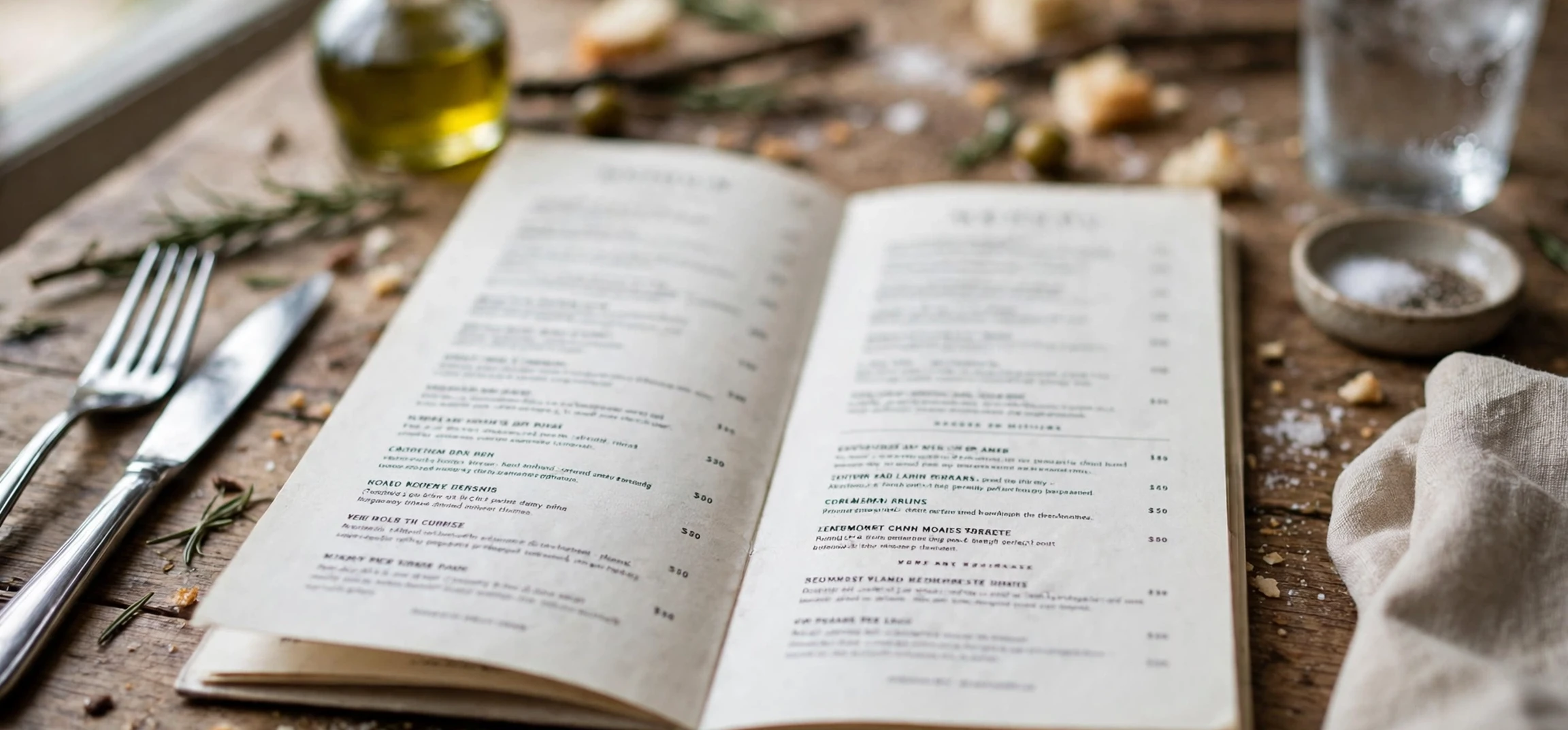
If you searched for “what does c a r t e mean”, you were almost certainly looking for the word “carte” — the letters spelled out one by one, as people often type when a word is unfamiliar or when a search engine keeps correcting them. The full phrase is “à la carte”, and this guide explains what “what does c a r t e mean” really points to, where the phrase comes from, and how it is used in restaurants, hotels, and beyond.
The short answer: “carte” is a French word meaning “card” or “menu”, and “à la carte” means ordering items individually from a menu, each priced separately, rather than choosing a fixed set meal at a single price. If you have ever chosen a starter, a main, and a dessert each with its own price, you have ordered à la carte.
What “What Does C A R T E Mean” Is Really Asking
Search engines sometimes struggle with spaced-out letters, accented characters, and foreign phrases, so people type “what does c a r t e mean” to force a literal match. The word itself, “carte”, comes from French, where it can mean a card, a map, or a menu. In the phrase “à la carte”, it means “according to the menu” — that is, you pick from the menu item by item, and each item carries its own price.
The accent on the “à” matters in French but is often dropped in English writing, so you will see both “à la carte” and “a la carte” in English menus and articles. They mean the same thing.
À La Carte Versus a Set Menu
The contrast that defines à la carte is the set menu, sometimes called a prix fixe menu or table d’hôte. A set menu offers a fixed number of courses at a single price: you might get a starter, a main, and a dessert for one combined amount, with limited choices within each course. À la carte is the opposite: every dish is listed and priced separately, and you build your own meal from whatever you like.
Neither is inherently better. A set menu suits diners who want simplicity and predictable cost, and it suits kitchens during busy services because it streamlines preparation. À la carte suits diners who want control — a light eater can order a single starter, a hungry diner can order three mains, and someone with dietary restrictions can pick exactly what works for them.
| Feature | À La Carte | Set Menu |
|---|---|---|
| Pricing | Each dish priced separately | One price for the whole meal |
| Choice | Full menu available | Limited choices per course |
| Total cost | Depends on what you order | Known in advance |
| Flexibility | High — order as much or as little as you like | Low — the courses are fixed |
| Best for | Pickiness, dietary needs, varied appetites | Simplicity, celebrations, busy services |
Why Restaurants Offer À La Carte
Restaurants offer à la carte service for several practical reasons. It lets them showcase a wider menu, because every dish can be offered without fitting it into a fixed sequence. It accommodates mixed groups, where one person wants a full three courses and another wants only a salad. And it gives the kitchen flexibility: dishes can be added or removed from the menu without redesigning a whole set sequence.
For diners, the main advantage is control over both choice and spending. You can keep a meal modest by ordering one dish, or build a feast by ordering across the menu. The main risk is the opposite: without a fixed price, the total can creep up, especially with drinks and extras, so it pays to glance at prices as you choose.
À La Carte Beyond Restaurants
The phrase has spread well beyond dining. In business, “à la carte pricing” means charging separately for each service or feature rather than bundling them into one package — software companies, for example, may let customers pay only for the modules they use. In travel, an à la carte fare means paying separately for luggage, seat selection, and meals rather than buying a bundled ticket. In each case the logic is the same as in the restaurant: pick individual items, pay for each one, skip what you do not want.
The phrase is also used figuratively to describe picking and choosing from a set of ideas or options, as in “an à la carte approach to the policy”. Here it simply means selective rather than all-or-nothing.
Common Mistakes and Misunderstandings
One common misunderstanding is that à la carte means expensive. It can be, if you order a lot, but a single à la carte dish can also be the cheapest option in the restaurant. Another is confusing à la carte with a buffet: a buffet is a fixed price for unlimited self-service, which is closer to a set menu in pricing logic, even though the food choice is wide.
People also sometimes misread the phrase as “a la cart” or “alacarte”. The correct spelling is “à la carte”, three words, from the French. If you are searching for it and getting poor results, try the accented spelling or the full phrase “what does à la carte mean”.
Frequently Asked Questions About “What Does C A R T E Mean”
What does “carte” mean on its own?
In French, “carte” means a card, a map, or a menu. In “à la carte” it refers to the menu.
Is à la carte the same as ordering off the menu?
Essentially, yes. Ordering à la carte means choosing individual dishes from the menu, each priced separately.
Why do people search for “what does c a r t e mean”?
Usually because the word is unfamiliar, the accent is hard to type, or a search engine keeps correcting the query. Spelling the letters out forces a literal search.
Does à la carte always cost more than a set menu?
Not necessarily. It depends on how much you order. A light à la carte meal can cost less than a set menu; a large one can cost more.
The History of “What Does C A R T E Mean” and À La Carte Dining
The phrase “à la carte” entered English from French dining culture in the nineteenth century, when restaurants began offering diners a choice of individually priced dishes rather than only a fixed meal at a fixed hour. Before that, the common model in many eating houses was table d’hôte: everyone ate the same meal, served at the same time, for the same price. À la carte dining was part of a broader shift towards restaurants as places of individual choice, where the diner rather than the kitchen decided what the meal would be.
That history explains why the phrase still carries a faint sense of luxury. In its early days, à la carte dining was associated with grand hotels and fine restaurants, where a long menu and individual pricing signalled quality and choice. Today the model is everywhere, from casual cafes to food halls, and the luxury association has faded, but the core idea — choose each item, pay for each item — has stayed exactly the same.
À La Carte Pricing in Modern Life
The à la carte idea has proved so useful that it has spread far beyond food. Airlines unbundle fares into seat, luggage, and meal charges. Software companies sell modules separately. Gyms offer classes as add-ons. In each case the trade-off mirrors the restaurant version: more choice and the ability to pay only for what you use, against a total that can exceed the bundled price if you select generously. Consumers who understand the model can compare a bundled price and an à la carte total honestly, rather than assuming one is always cheaper.
So when you next search for “what does c a r t e mean”, remember that you are asking about a small piece of French that changed how the world eats — and, increasingly, how it buys almost everything else.
Ordering À La Carte With Confidence
If you are new to à la carte dining, a few simple habits make it enjoyable rather than stressful. First, read the whole menu before ordering, including the prices, so you can build a meal that suits both your appetite and your budget. Second, remember that sides, sauces, and bread are often priced separately in à la carte restaurants, so ask if anything you assumed was included actually costs extra. Third, do not feel obliged to order a starter, a main, and a dessert: one well-chosen dish is a perfectly complete à la carte meal, and restaurants are used to it.
For groups, à la carte works best when everyone orders what they genuinely want rather than trying to match each other course for course. Sharing dishes is common and usually welcomed, and it lets the table sample more of the menu. If the bill is being split, à la carte can complicate the maths, so agree beforehand whether to split evenly or pay for what each person ordered. A little planning keeps the focus on the food, which is the point of the whole exercise.
So, “what does c a r t e mean” leads to a simple and useful answer: “carte” is the French word for menu, and “à la carte” means ordering each dish separately at its own price. Next time you see it on a menu, you will know exactly what kind of meal you are choosing. For more word and phrase explainers, see our guides on AMG meaning and the meaning of the name Blaise.



