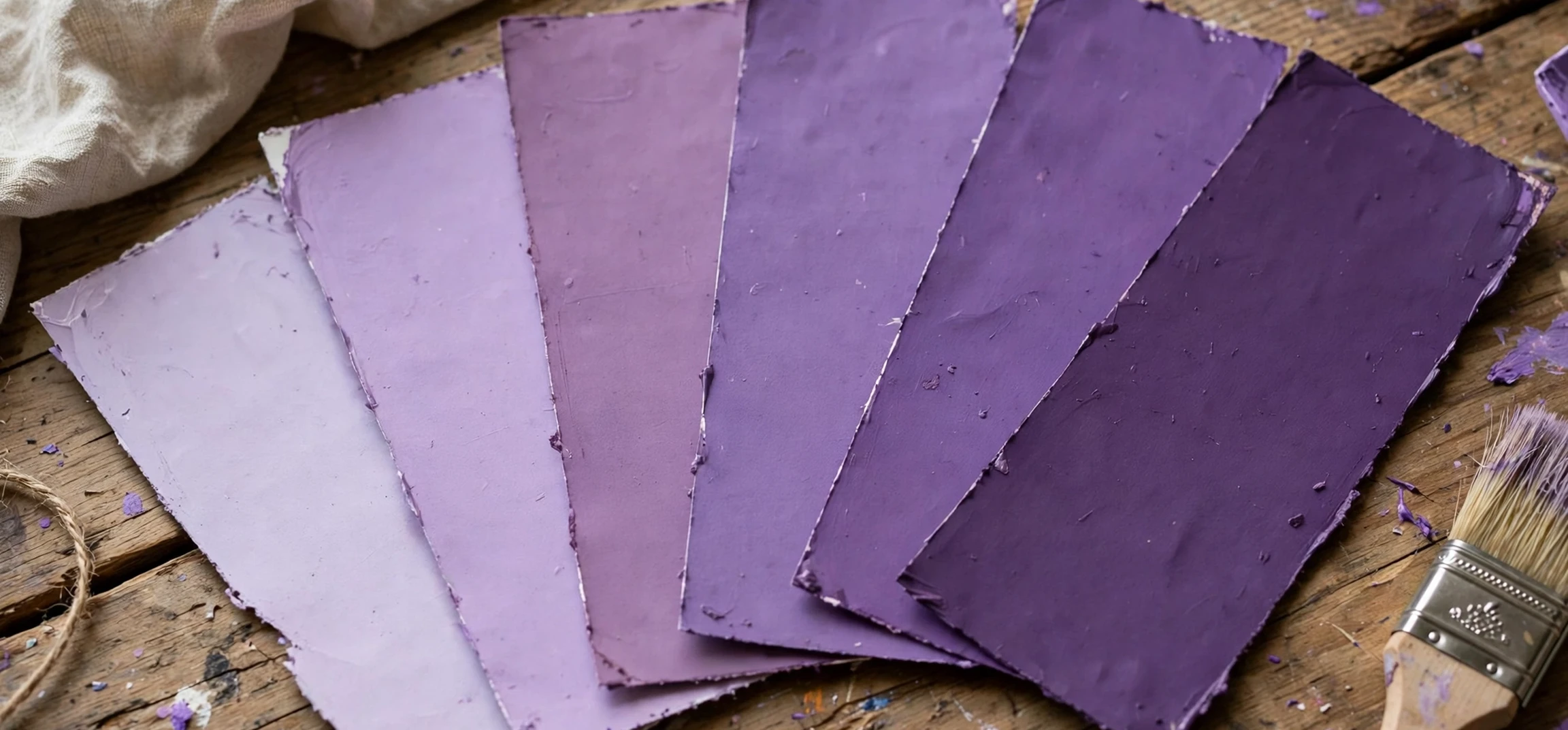
If you are looking for different names for purple, you will find far more variety than a single colour word suggests. Purple is not one shade, but a whole family of colours ranging from pale, airy lavenders to deep, dramatic plums and rich royal tones. Knowing the different names for purple helps whether you are choosing paint, planning a wedding palette, designing a website, picking an outfit, or simply trying to describe a colour accurately. This guide lists the most useful purple shades, explains how they differ, and shows how to pair them with confidence.
Purple has a long association with creativity, luxury, and calm, partly because purple dyes were once rare and expensive, and partly because the colour sits between the energy of red and the tranquillity of blue. That position on the colour spectrum is why purple shades can feel so different from one another. A shade with more red feels warm, bold, and romantic, while a shade with more blue feels cool, calm, and refined. Once you understand that balance, the long list of different names for purple becomes much easier to navigate, and you can pick a shade by feeling as well as by name. That balance is the key to choosing among the different names for purple without feeling overwhelmed by the list.
Different Names for Purple: Light and Soft Shades
Light purples are the gentlest members of the family, and they are popular for bedrooms, nurseries, spring fashion, and soft branding. Lavender is the most famous light purple, named after the lavender flower, with a soft, slightly grey-blue tone that feels calm and fresh. Lilac is similar but a little warmer and pinker, named after the lilac flower, and it works beautifully in floral arrangements and romantic design schemes. Lilac is one of the most searched different names for purple, and its warm pink tone explains its popularity. Wisteria is another floral light purple, a touch deeper than lilac, with a dreamy, slightly blue cast that suits gardens and watercolour palettes.
Other light purples worth knowing include periwinkle, a pale blue-purple that leans strongly towards blue, and mauve, a muted, greyish purple that feels sophisticated and understated. Thistle is a very pale, grey-lavender shade named after the thistle flower, while orchid is a brighter light purple with a pinkish glow, named after the orchid flower. Each of these shades has its own character, even though they sit close together on a colour chart. When you compare the different names for purple in this light range, think about whether you want warmth, coolness, or a grey, muted finish, because that choice will guide you to the right name.
Different Names for Purple: Medium and Classic Shades
Medium purples are the classic, instantly recognisable purples that most people picture when they hear the word purple. True purple itself is a balanced, vivid shade, sitting midway between red and blue, and it remains a favourite for branding, sports teams, and bold fashion. Violet is slightly bluer and often a little brighter than purple, named after the violet flower, and it has a fresh, lively quality that works well in spring and summer designs. Amethyst, named after the gemstone, is a medium purple with a clear, jewel-like glow, and it is a popular choice for jewellery-inspired palettes.
Other medium purples include iris, a rich blue-purple named after the iris flower, and heliotrope, a pinkish purple with a warm, floral feel. Royal purple, sometimes called royal, is a deep medium purple historically linked to nobility and ceremony, and it still carries a sense of grandeur in formal design. Medium purples are versatile because they are strong enough to stand out, but not so dark that they overwhelm a room or an outfit. They pair well with white, cream, gold, and soft grey, and they can anchor a palette without dominating it completely. Medium shades are the workhorses among the different names for purple, strong enough to anchor a room or outfit.
Purple Versus Violet: A Common Confusion
Many people use purple and violet as if they were the same colour, but there is a useful distinction. In everyday language, purple is the broad family name, covering the whole range from lavender to plum. Violet, in a stricter colour sense, is a spectral colour, a shade of blue-purple seen in rainbows, while purple is a mixed colour made by combining red and blue light or pigment. In design and fashion, the distinction is looser, and violet is often treated as a specific shade within the purple family, bluer and brighter than a balanced purple. Knowing the difference helps you describe colours more precisely, even if most listeners will understand either word. That distinction adds precision whenever you discuss the different names for purple with a designer or a painter.
Dark Purple Shades: Plum, Eggplant, and Burgundy Purples
Dark purples bring depth, drama, and warmth, and they are favourites for autumn fashion, evening wear, luxury packaging, and moody interiors. Plum is the best-known dark purple, a rich reddish purple named after the plum fruit, with a warm, inviting depth. Eggplant, also called aubergine in British English, is a very dark, almost black purple, named after the skin of the eggplant vegetable, and it adds sophistication without the heaviness of pure black. Burgundy purple shades lean further towards red, with a wine-like richness that suits formal occasions and classic design.
Other dark purples include grape, a deep reddish purple inspired by dark grapes, and mulberry, a dark purple-red named after the mulberry fruit, with a slightly berry-like warmth. Indigo sits at the darkest blue end of the purple family, a deep blue-purple that borders on navy, and it is prized for denim-inspired and nautical palettes. Byzantine purple, sometimes called Tyrian purple, recalls the historic dye made from sea snails, a deep, reddish purple that was once reserved for royalty because of its cost. When you explore the different names for purple in the dark range, consider lighting carefully, because dark purples can look almost black in a dim room and reveal their purple character only in good light. Lighting is worth testing before you commit to any of the dark different names for purple for a room.
| Shade name | Character | Best used for |
|---|---|---|
| Lavender | Soft, grey-blue, calming | Bedrooms, spring palettes, gentle branding |
| Lilac | Light, warm, pinkish | Weddings, florals, romantic design |
| Periwinkle | Pale, blue-leaning, fresh | Summer fashion, soft websites, nurseries |
| Violet | Bright, blue-purple, lively | Spring fashion, art, bold accents |
| Amethyst | Clear, jewel-like, medium | Jewellery palettes, elegant branding |
| Royal purple | Deep, grand, formal | Ceremony, luxury packaging, formal wear |
| Plum | Rich, warm, reddish | Autumn fashion, evening wear, rich interiors |
| Eggplant | Very dark, sophisticated | Formal interiors, evening fashion, accents |
| Mauve | Muted, greyish, understated | Vintage design, soft fashion, calm rooms |
| Magenta | Vivid, pink-purple, energetic | Bold branding, modern art, statement pieces |
Pink Purples, Red Purples, and Blue Purples
One of the easiest ways to organise the different names for purple is by undertone. Pink purples lean towards pink and red, and they feel playful, romantic, and energetic. Magenta is the boldest pink-purple, a vivid shade that commands attention in branding and modern art. Fuchsia, named after the fuchsia flower, is a bright pink-purple with a lively, fashionable edge, while orchid sits a little softer, with a floral pink glow. These shades pair well with white, black, and soft grey, and they work as accent colours when you want energy without a full red.
Red purples, such as plum, mulberry, and wine, feel warm, rich, and mature, and they suit autumn, evening wear, and classic interiors. Blue purples, such as violet, iris, periwinkle, and indigo, feel cool, calm, and refined, and they suit coastal palettes, professional branding, and serene rooms. If you are choosing between two similar purples, ask which undertone you want. That single question often resolves the choice faster than comparing dozens of swatches, because undertone determines how a purple will interact with the other colours around it. Undertone is the fastest filter for narrowing down the different names for purple to a shortlist.
How to Pair Purple Shades With Other Colours
Pairing purple well depends on the shade you choose. Light purples pair beautifully with white, cream, pale grey, and soft green, creating a fresh, airy feeling that suits bedrooms and spring designs. Medium purples pair well with gold, mustard, and warm neutrals, which bring out their richness and give a palette a luxurious feel. Dark purples pair well with cream, blush, and metallic gold or silver, which lighten the palette and prevent a room or outfit from feeling too heavy. For a modern, bold look, pair a vivid purple such as magenta with black and white, which lets the purple act as a striking accent. A single vivid shade often works better than mixing several different names for purple in one scheme.
It also helps to limit yourself to one or two purples in a single scheme, plus neutrals, rather than using five purples at once. Too many purples can blur together and lose their individual character, while a single well-chosen purple, supported by neutrals and one complementary accent, looks intentional and polished. If you are designing a website, test your purple on screens as well as on paper, because screen brightness can make a purple look lighter or bluer than it appears in print. For more colour-name guides in the same style, see our list of different blue colour names and our guide to analogous colours, which explains how neighbouring colours work together. Those guides extend this list of different names for purple into full palette planning.
Frequently Asked Questions About Purple Shades
What is the difference between lavender and lilac?
Lavender is a soft purple with a slightly grey-blue tone, named after the lavender flower. Lilac is a light purple with a slightly warmer, pinker tone, named after the lilac flower. They are close, but lavender leans cooler and lilac leans warmer.
What is the darkest purple called?
Eggplant, also called aubergine, is one of the darkest purples in common use, a very deep purple that can look almost black in low light. Indigo is also very dark, but it leans more towards blue, sitting at the blue edge of the purple family.
What is royal purple?
Royal purple is a deep, rich purple historically associated with nobility, ceremony, and luxury, because purple dye was once rare and costly. Today it is used for formal, grand, and luxurious design schemes.
Which purple shade is best for a bedroom?
Light purples such as lavender, lilac, and mauve are usually best for bedrooms, because they feel calm and restful. Pair them with white or cream bedding and soft lighting for a relaxing result, and save darker purples for accents such as cushions or artwork. That calm quality is why light shades lead most lists of different names for purple for bedrooms.
Conclusion
The different names for purple cover a wide and beautiful range, from soft lavender and lilac through classic violet and amethyst to deep plum, eggplant, and royal purple. By thinking about lightness, undertone, and the feeling you want, whether calm, romantic, grand, or bold, you can choose a purple shade with confidence instead of guessing from a long list. Start with one shade you love, pair it with neutrals and a single accent, and test it in real light before committing. With that approach, purple stops being a single vague colour and becomes a versatile family you can use well in design, fashion, and everyday life.