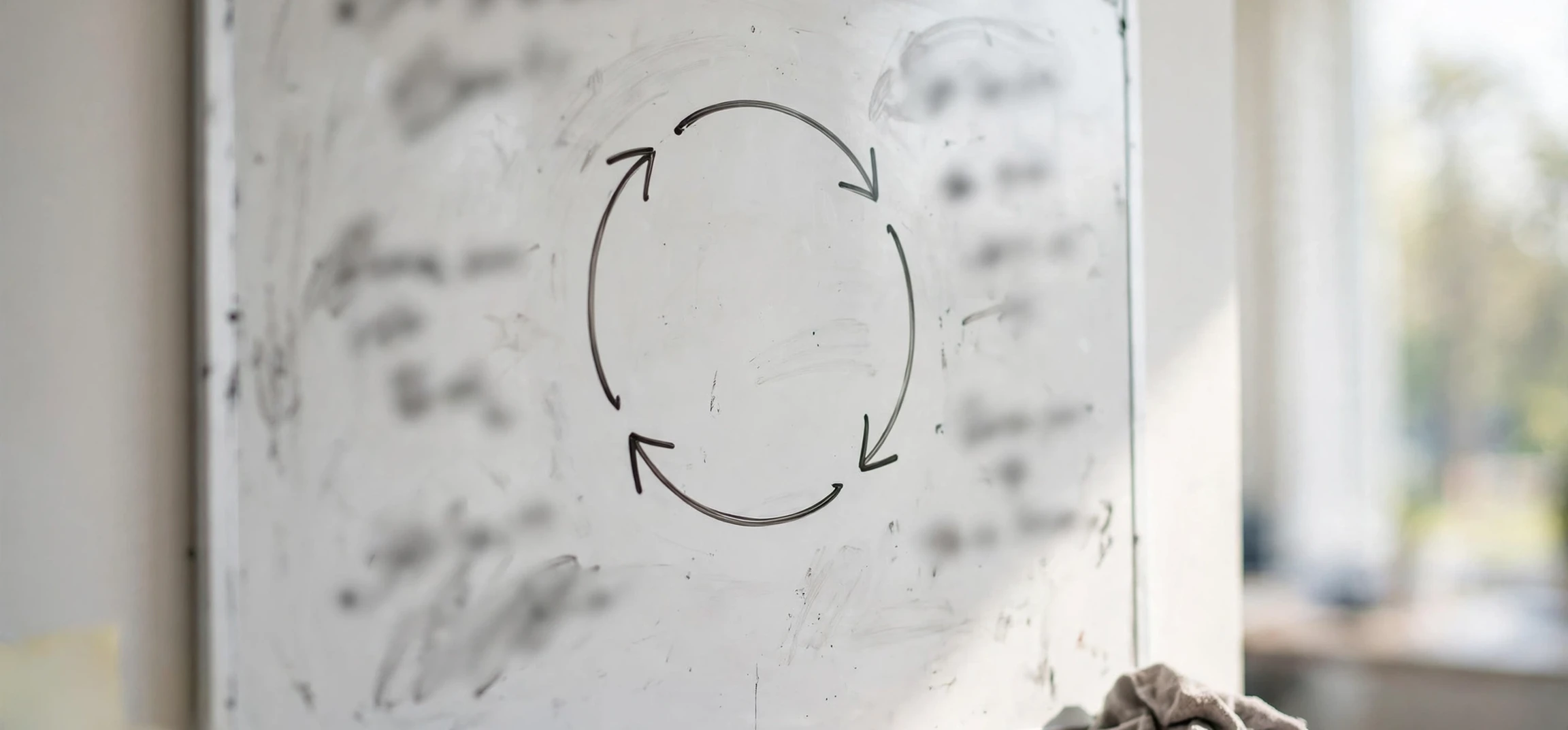
When people search for feedback loop define, they usually want a clear, plain-language explanation of a powerful idea that shows up in science, business, and everyday life. To feedback loop define in simple terms: a feedback loop is a cycle in which the output of a process is fed back into the process as input, changing what happens next. That cycle can strengthen a trend, balance a system, or keep it stable, depending on how the loop is built. Once you recognise feedback loops, you start to see them everywhere, from a thermostat in a home to a habit in daily life.
The idea is useful because it explains why small changes sometimes grow large, and why some systems settle calmly while others swing wildly. A loop is not a single cause and a single effect. It is a repeating relationship, where each round influences the next round. Understanding that repetition helps you predict behaviour, fix problems at their source, and design better routines, products, and policies. This guide will feedback loop define from several angles, with examples you can apply right away.
Feedback Loop Define: The Basic Idea
To feedback loop define step by step, imagine a simple cycle with four parts: an action, an output, a measurement or observation, and an adjustment. First, something happens. Second, that action produces a result. Third, the result is noticed or measured. Fourth, the measurement changes the next action. Then the cycle repeats. If the adjustment pushes the system further in the same direction, the loop is reinforcing. If the adjustment pulls the system back toward a target, the loop is balancing.
A thermostat is the classic balancing example. When a room gets too cold, the thermostat turns the heating on. As the room warms, the thermostat measures the change and turns the heating off or down. The output, room temperature, feeds back into the system and controls the next action. The result is a stable room temperature, not endless heating or endless cooling. The loop balances the system around a target, which is why balancing loops are also called negative feedback loops, even though there is nothing bad about them.
A reinforcing example works in the opposite way. When a song becomes popular, more people hear it, more people share it, and its popularity grows further. The output, popularity, feeds back as input, attention and sharing, which increases the output again. Reinforcing loops are also called positive feedback loops, even though the outcome is not always positive in everyday language. A reinforcing loop can build a helpful habit or amplify a harmful rumour, depending on what is being fed back.
Feedback Loop Define in Science and Nature
In science, to feedback loop define means to describe a cycle that regulates or amplifies a natural process. The human body uses balancing feedback loops constantly. When body temperature rises, sweating cools the skin, which lowers temperature back toward normal. When blood sugar rises after a meal, the body releases signals that help cells absorb sugar, bringing the level back down. These loops keep the body stable despite changing food, activity, and weather.
Nature also shows reinforcing loops. In a forest, more trees can mean more shade and moisture, which can help more seedlings survive, which can lead to more trees. In a warming climate, melting ice exposes darker ground or water, which absorbs more heat, which melts more ice. That second example shows why reinforcing loops deserve attention: once they start, they can accelerate a change unless a balancing loop intervenes. Scientists study both kinds of loops to understand stability, tipping points, and long-term change.
In engineering, feedback loops are designed on purpose. A cruise control system measures speed, compares it with the target speed, and adjusts the engine to close the gap. An autopilot system does the same with altitude and direction. A sound system with a microphone too close to a speaker shows the unwanted side: sound from the speaker enters the microphone, gets amplified, and comes out louder, creating a screech. That is a reinforcing loop with no balancing control, and the fix is to break the loop by moving the microphone or lowering the volume.
Feedback Loop Define in Business and Work
In business, to feedback loop define means to describe how customer reactions, sales data, or team results shape the next decision. A company launches a product, listens to customer feedback, fixes problems, and releases an improved version. Customers respond to the improvement, the company learns again, and the product keeps getting better. This is a balancing and learning loop when it corrects mistakes, and a reinforcing loop when good reviews attract more customers, who bring more reviews and more sales.
Workplaces use feedback loops in performance and training too. A manager observes work, gives clear feedback, the employee adjusts, and the next piece of work improves. If feedback is specific, timely, and focused on actions that can change, the loop helps learning. If feedback is vague, late, or only about blame, the loop breaks down, because the employee cannot tell what to adjust. The quality of the measurement and the adjustment decides whether the loop helps or harms.
Marketing shows both sides clearly. A helpful loop starts with a useful post, readers share it, new readers arrive, and the creator learns what topics help most. A harmful loop starts with sensational content, clicks reward it, the creator makes more of it, and quality falls while attention rises. The loop itself is neutral. What matters is what is being measured and rewarded. If a business measures only clicks, it will optimise for clicks. If it measures customer satisfaction and repeat use, it will optimise for lasting value.
Feedback Loop Define in Everyday Life
Everyday life is full of feedback loops, and recognising them can improve habits and relationships. A morning exercise habit is a reinforcing loop when it works well: exercise improves energy and mood, better energy makes the next workout easier, and the habit grows stronger. A late-night phone habit can be a reinforcing loop in the other direction: tiredness leads to scrolling, scrolling delays sleep, poor sleep increases tiredness, and the cycle repeats. Breaking that loop often means changing one link, such as charging the phone outside the bedroom.
Learning is a balancing loop when it is done well. You try a task, notice mistakes, adjust your method, and try again with a better result. Each round of practice feeds information back into the next round, so progress is steady rather than random. Studying without feedback, by contrast, can feel busy without improving results, because there is no measurement step to guide adjustment. Quick checks, quizzes, and honest review turn practice into a feedback loop.
Relationships also run on feedback loops. A kind, clear response encourages more open conversation, which builds trust, which makes the next conversation easier. A defensive response can do the opposite, encouraging withdrawal, which reduces understanding, which makes the next conversation harder. Noticing the loop gives you a choice: you can change your own response and shift the cycle, even if you cannot control the other person. Small, consistent changes in one link often change the whole pattern over time.
| Loop type | How it works | Example |
|---|---|---|
| Balancing loop | Output pulls the system back toward a target | Thermostat controlling room temperature |
| Reinforcing loop | Output pushes the system further in the same direction | A popular song gaining more listeners through sharing |
| Learning loop | Results guide adjustment and improvement | Practice, feedback, and revised practice |
| Broken loop | Measurement or adjustment is missing or ignored | Practice without review, or feedback never acted on |
How to Spot and Improve a Feedback Loop
To spot a loop, look for repetition and a link back to the start. Ask three questions. First, what is the output of this process. Second, does that output change the next round of the process. Third, does the change strengthen the trend or pull it back toward a target. If you can trace the output back to the input, you have found a loop. If the pattern repeats and grows or stabilises, the loop is active, not just a one-time cause and effect.
To improve a loop, fix the weakest link. Make measurement clearer, so you know what is actually happening. Make adjustment faster, so learning does not wait weeks. Make the target explicit, so balancing loops aim at the right goal. And check what is being rewarded, because a loop will optimise for its reward, whether that reward is helpful or not. For a related idea about audience reactions, see this guide to feedback and viewer responses, and for language clarity, see this guide to meaning in context.
Be careful with delays. Many loops fail because feedback arrives too late to guide action. A student who gets exam feedback months later cannot adjust study habits in time. A team that reviews sales only once a quarter cannot fix a weekly problem. Shortening the delay, even with a simple weekly check, often improves a loop more than adding complex tools. Fast, small feedback beats slow, perfect feedback in most everyday systems.
Feedback Loop Define: Designing Better Loops
When you design a routine or a system, to feedback loop define well means to plan the measurement step as carefully as the action step. Many plans fail because they describe what to do but never say how results will be checked. A clear loop names the action, the result to watch, how often to check it, and what change follows from what you learn. To feedback loop define in a plan, write those four parts down before you start, so the loop runs on purpose rather than by accident.
Design also means choosing limits for reinforcing loops. A helpful reinforcing loop, such as practice improving skill, still needs rest and review, or it can turn into burnout. A balancing loop needs a realistic target, or it will constantly correct toward a goal nobody can reach. To feedback loop define for real life, therefore, is not only to name the cycle but to set its target, its check interval, and its stopping rule. Those three choices turn a vague idea into a loop you can actually run and improve.
Two habits make any loop stronger. First, write the loop down, so you can see its links instead of guessing at them. Second, review it on a schedule, so a small drift is caught early. When you feedback loop define in writing, as a four-part cycle with the action, output, check, and adjustment named, the loop becomes a tool you can tune, not a pattern that happens to you. That written habit is what lets you feedback loop define consistently across projects, instead of reinventing the cycle each time.
Frequently Asked Questions
What does feedback loop define mean in one sentence
To feedback loop define in one sentence: it is a cycle where the output of a process feeds back as input and changes the next round of that process. That single idea explains both stable systems and runaway trends.
What is the difference between a positive and a negative feedback loop
A positive, or reinforcing, loop strengthens a change, pushing a system further in the same direction. A negative, or balancing, loop reduces a change, pulling a system back toward a target. The words positive and negative describe direction, not whether the outcome is good or bad.
Can a feedback loop be broken
Yes. You can break a loop by changing the measurement, changing the adjustment, removing the reward, or inserting a delay or a limit. For example, moving a microphone away from a speaker breaks an audio loop, and changing a habit trigger can break a daily behaviour loop.
Why do feedback loops matter for learning
Learning depends on feedback, because practice alone does not show what to change. When results are measured and used to adjust the next attempt, each round improves. Without that loop, effort can repeat the same mistakes.
Conclusion
To feedback loop define clearly is to see a cycle, not a straight line: action creates output, output is observed, observation guides adjustment, and adjustment shapes the next action. Balancing loops keep systems stable, reinforcing loops amplify change, and learning loops turn experience into improvement. Whether you are studying science, running a business, building a habit, or improving a relationship, look for the loop, check what is being measured and rewarded, and fix the weakest link. That habit of thinking in loops is one of the most practical tools for understanding a connected world.



