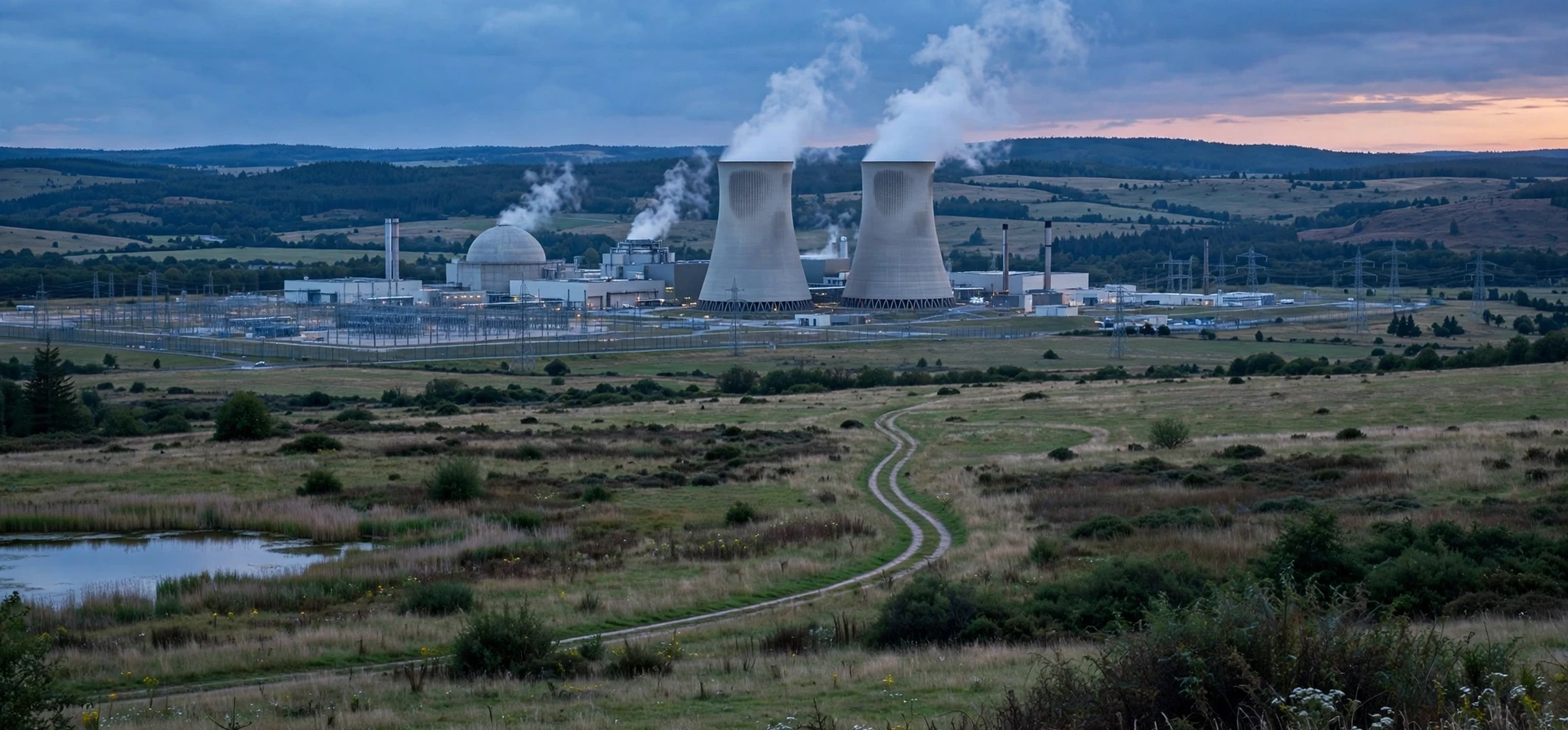
Searches for best uranium stocks 2025 have grown as readers try to understand how nuclear energy, uranium fuel, and electricity markets fit together. This guide does not rank companies, recommend purchases, or predict prices. Instead, it explains what people mean when they search for best uranium stocks 2025, how the uranium and nuclear sector is organised, and what educational questions a reader can ask before forming any view. It is general education only, not financial advice, and it contains no price targets, forecasts, or buy and sell recommendations.
That disclaimer matters because the phrase best uranium stocks 2025 sounds like a ranking, but a responsible educational guide cannot turn it into one. Companies differ in size, stage, geography, business model, and risk, and a company that suits one research question may be irrelevant to another. A miner, an explorer, a fuel processor, a reactor builder, and a utility that operates nuclear plants are all connected to nuclear energy, yet they face different costs, regulations, and timelines. Understanding those differences is more useful than a short list. Readers who search for best uranium stocks 2025 should therefore start with sector structure, not with a league table.
Best Uranium Stocks 2025: What the Search Really Means
When people type best uranium stocks 2025 into a search engine, they are usually asking several questions at once. They may want to know which kinds of companies are involved in uranium, how uranium becomes fuel, why nuclear power is discussed in energy debates, and what risks affect the sector. They may also be trying to learn vocabulary: terms such as mining, milling, conversion, enrichment, and fuel fabrication describe different steps in turning mined material into usable reactor fuel. A guide that answers those background questions gives a reader a stronger base than a list of names without context.
It is also important to recognise that best uranium stocks 2025 is a time-stamped search phrase. The year marks when the search was popular, not a guarantee that conditions in that year will repeat. Energy policy, reactor construction, mine supply, electricity demand, and commodity markets all change. A company discussed in one year may change strategy, merge, pause a project, or enter a new phase in a later year. Educational reading should therefore focus on durable concepts, such as how the fuel cycle works and what kinds of risk exist, rather than on a snapshot presented as permanent.
Another point is that best uranium stocks 2025 can mean different things to different readers. One reader may be interested in large, established producers. Another may be interested in early-stage exploration companies. A third may be interested in utilities with nuclear plants, or in companies that provide services to reactors. Those are different research topics, and they should not be merged into a single ranking. A clear educational approach separates them, explains each category, and leaves investment decisions to the reader, ideally with advice from a qualified financial adviser who knows their circumstances.
Best Uranium Stocks 2025: A Map of the Sector
The uranium and nuclear sector can be mapped in stages. The first stage is exploration and mining, where companies search for uranium deposits and, if a deposit proves viable, extract ore. Exploration is high-risk work: many prospects never become mines, and timelines can stretch over years. Mining itself involves geology, engineering, environmental management, worker safety, and local community relations. Those factors shape a project far more than a headline about a single drill result.
The second stage covers processing the mined material into fuel. Ore is milled, then converted and enriched, then fabricated into fuel assemblies for reactors. Each step is specialised, heavily regulated, and capital intensive. Some companies operate across several steps, while others focus on one. A reader studying best uranium stocks 2025 should ask where in this chain a company sits, because a company at the mining stage faces different risks from a company at the fuel fabrication stage.
The third stage is electricity generation. Utilities and power producers operate reactors, sell electricity, and manage long-lived assets with strict safety and regulatory oversight. Their economics depend on electricity prices, plant maintenance, regulatory decisions, and the age and type of reactors. A utility with nuclear plants is therefore not the same kind of exposure as a uranium miner, even though both are linked to nuclear energy. The fourth stage includes services, engineering, waste management, and decommissioning, which support reactors across their life cycle.
| Sector stage | What companies do | Key educational questions |
|---|---|---|
| Exploration | Search for uranium deposits and test their potential | What stage is the project at, and what remains unproven |
| Mining and milling | Extract ore and process it into concentrate | What are the operating, environmental, and community factors |
| Conversion and enrichment | Prepare material for fuel fabrication | How specialised and regulated is this step |
| Fuel fabrication | Make fuel assemblies for reactors | Which reactor types does the fuel serve |
| Power generation | Operate reactors and sell electricity | How do regulation and plant age affect operations |
| Services and decommissioning | Support, maintain, and eventually close plants | What long-term obligations exist |
Why Nuclear Energy Is Discussed in Energy Debates
Nuclear energy enters energy debates for several reasons, and a reader studying best uranium stocks 2025 will meet all of them. Supporters point to low-carbon electricity generation during operation, high energy density, and the ability to provide steady output. Critics point to waste management, construction cost and delay, safety concerns, and public acceptance. Policymakers weigh those arguments alongside other energy sources, grid needs, and climate goals. None of those arguments, on its own, tells a reader what will happen to any company.
Reactor technology also varies. Large traditional reactors, smaller modular designs, and research-stage concepts differ in size, cost, timeline, and regulatory path. A company linked to one technology may have little in common with a company linked to another. Readers should therefore ask which reactor types, if any, a company serves, and whether its business depends on new construction, existing plants, or both. That question alone separates many companies that are often grouped together under a broad nuclear label.
Geography matters as well. Uranium is mined in several countries, enriched and fabricated in others, and used in reactors around the world. Trade, transport, sanctions, and national policy can affect supply chains. A project in one region may face different permitting, infrastructure, and political conditions from a project elsewhere. Educational reading should note geography without making political predictions, and should treat official company reports and regulatory filings as primary sources for project-specific facts.
Risks and Questions for Educational Reading
Every stage of the uranium sector carries risk, and naming those risks is part of honest education. Exploration risk means a deposit may prove uneconomic. Construction risk means a mine or plant may cost more or take longer than planned. Commodity risk means uranium prices can move sharply, affecting miners differently from utilities. Regulatory risk means permits, safety rules, and policy can change. Market risk means a company share price can fall for reasons unrelated to its operations, such as broad market moves.
For readers, the useful habit is to turn a search for best uranium stocks 2025 into a checklist of questions. What does the company actually do. Where does it sit in the fuel cycle. What stage are its projects at. What are its main costs and obligations. What do its own reports say about risks. Who regulates its work. Those questions do not produce a ranking, but they produce understanding, which is the proper goal of an educational guide. They also help a reader spot promotional material that promises certainty where none exists.
It is equally important to check sources. Company announcements, investor presentations, and social media posts are written to present a company positively. Independent reporting, regulatory filings, and official energy statistics provide balance. A reader who relies only on promotional sources will get a one-sided view. A reader who compares several source types will see where claims agree, where they differ, and where information is missing. That comparison is a core skill for studying any sector, not only uranium.
For broader market education, readers may find this overview of average stock market returns over the last 30 years and this guide to day trading stock scanners useful as background on how market data and tools are discussed, without confusing tools with recommendations.
Educational readers who search for best uranium stocks 2025 should also ask how a company reports its reserves, resources, and project stage, because those disclosures separate proven operations from early prospects. A second useful question when studying best uranium stocks 2025 is whether revenue comes from mining, processing, services, or electricity, since each source behaves differently. A third question, often overlooked in searches for best uranium stocks 2025, is how long a project timeline runs, because mines and reactors are measured in years, not weeks.
Frequently Asked Questions About Uranium and Nuclear Stocks
Does uranium mean the same as nuclear power?
No. Uranium is a fuel material. Nuclear power is electricity generated in reactors, which use fuel assemblies made through several processing steps. Companies can be involved in one part of that chain without being involved in the others.
Why do people group so many companies together?
Because they share a theme: nuclear energy. Thematic grouping is useful for learning, but it hides differences in business model, stage, and risk. Always check what a specific company does before treating it as similar to another company in the same theme.
Is this guide a recommendation?
No. This guide is general education only. It does not recommend any company, rank companies as best, forecast prices, or advise buying or selling. For personal investment decisions, speak to a qualified financial adviser who understands your goals and circumstances.
Conclusion
Searches for best uranium stocks 2025 are best answered with education, not with a ranking. The sector spans exploration, mining, fuel processing, power generation, and services, and each stage carries different risks, timelines, and regulatory demands. Nuclear energy debates add policy and technology questions on top of those business questions. A reader who maps the sector, asks where a company sits in the fuel cycle, checks multiple sources, and avoids promotional certainty will understand the topic far better than a reader who memorises a list. That understanding is the real value of studying the sector, and it is the only outcome this guide aims to provide. For further market background, see volatility in stocks explained.



