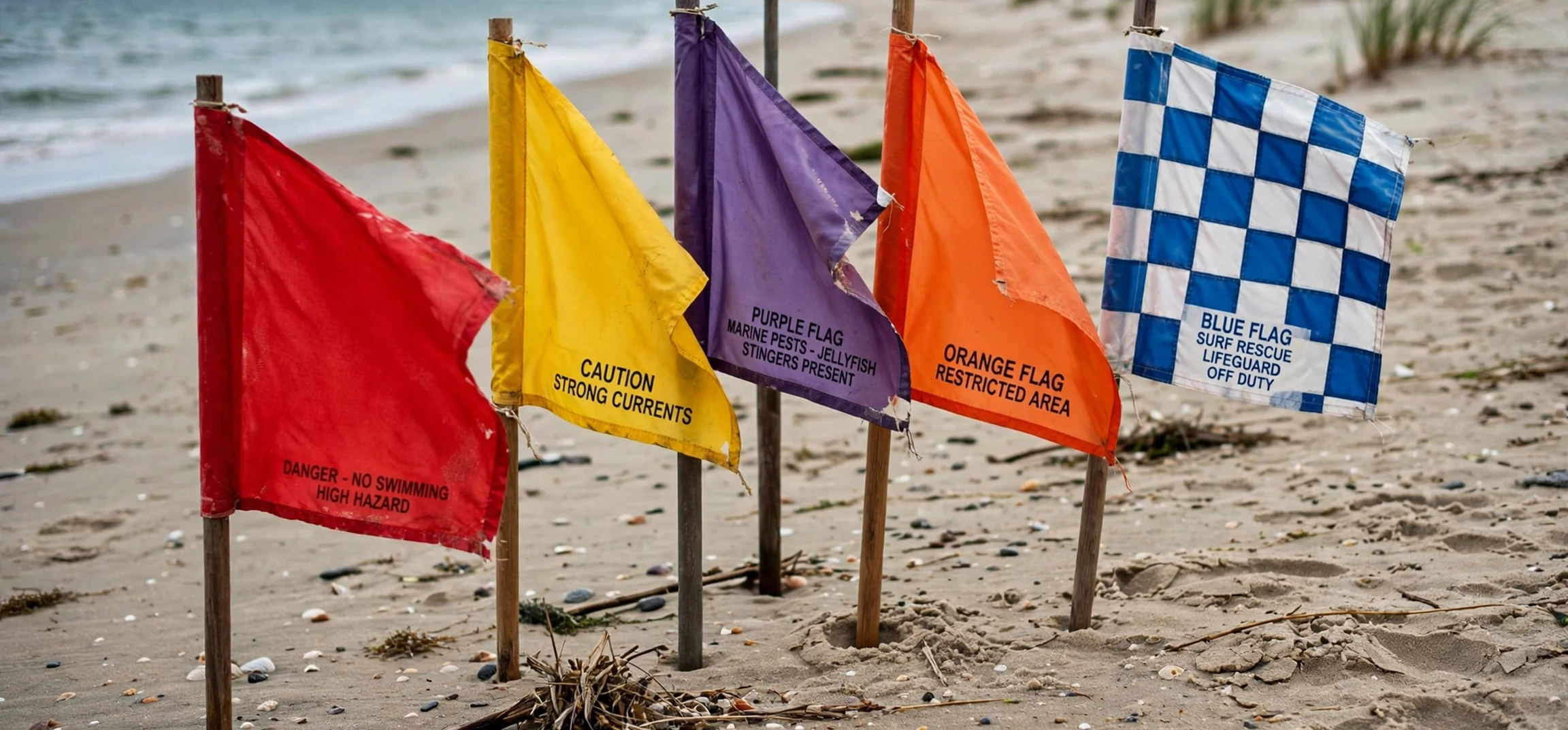
Before you step onto the sand, it helps to look up at the flagpole, because beach flag warning colors are a simple visual language that lifeguards use to tell swimmers about conditions. A coloured flag can mean calm water, a warning about currents, a hazard in the water, or a beach that is closed to swimming, and learning the general meaning of each colour makes a beach day safer and less stressful. The important caution is that flag systems vary by location and by country, so the same colour can carry a slightly different meaning from one beach to another. Always read the signs at the beach you are visiting and follow local lifeguard guidance, which overrides anything in a general guide.
This explainer covers the colours you are most likely to see, what they usually signal, and how to respond when you are unsure. It also explains why two flags are sometimes flown together, why a flag can change during the day, and what to do if there is no flag at all. The goal is not to replace lifeguard advice but to help you notice warnings early, ask better questions, and make calmer decisions with children, friends, and family. When beach flag warning colors are understood as a prompt to pay attention rather than as a guarantee, they become one of the most useful safety tools on any coastline.
Beach Flag Warning Colors: The Green Flag and Calm Conditions
In many beach flag systems, a green flag is the most reassuring signal, and it usually means that conditions are considered calm and that swimming is permitted under normal caution. It does not mean the water is risk-free, because tides, weather, and underwater hazards can still change quickly. Treat a green flag as permission to enjoy the water while staying alert, swimming near lifeguards, and keeping children within easy reach. If you are a weak swimmer, stay in shallow water even on a green-flag day, and avoid swimming alone. Calm on the surface can hide a current below, and a flag is a summary of conditions at the time it was raised, not a promise for the whole afternoon.
When you see green among the beach flag warning colors, take a moment to scan the beach as well. Look for the lifeguard station, the marked swimming area, and any signs about tides or recent conditions. Notice whether other swimmers are staying inside a defined zone, and follow that pattern rather than drifting far along the shore. If the wind picks up, if dark clouds gather, or if lifeguards move a flag, conditions may be changing even before the flag itself is replaced. Green is a good start to a beach day, and pairing it with ordinary caution keeps it that way for everyone in your group.
Yellow and Red Beach Flag Warning Colors Explained
Yellow is the colour most visitors meet on a breezy or choppy day, and in general beach flag warning colors use yellow to signal moderate hazards such as stronger surf, currents, or uneven conditions that call for extra care. Weak swimmers should be especially cautious under a yellow flag, and families may choose to paddle near the shore rather than swim out. Red usually signals a stronger warning, such as high surf, dangerous currents, or another serious hazard, and in many systems red means swimming is strongly discouraged or not permitted. The exact rule differs by beach, so read the local sign before deciding, and never treat a red flag as a challenge.
The practical difference between yellow and red is about the margin for error. Under yellow, a confident swimmer who stays near lifeguards and inside the marked area may still enjoy the water with care. Under red, that margin shrinks sharply, and even strong swimmers can be caught by a rip current or a sudden wave set. If you arrive to find a red flag, consider building sandcastles, walking the shoreline, or visiting a calmer part of the coast instead of entering the water. Lifeguards would rather answer a question about a flag than carry out a rescue, so asking what the flag means at that beach on that day is always a sensible move.
Double Red, Purple, and Other Beach Flag Warning Colors
Some beaches fly two red flags together to mark the highest level of danger, and a double red flag usually means the water is closed to swimming. Treat it as a clear instruction, not as advice to be weighed against your own confidence. A purple flag, where it is used, often warns about marine life such as jellyfish or other creatures that can sting or irritate, and it may be flown alongside another colour to add that warning to the surf condition. A black and white quartered flag, sometimes called a chequered flag, often marks a zone for surfboards or watercraft and means swimmers should stay out of that area. Again, local signs define the system in use, and a colour that means one thing in one country may mean something else in another.
Learning these less common signals matters because beach flag warning colors work as a set rather than as single colours. Two flags together combine their meanings, and a flag that changes during the day tells you that conditions have been reassessed. If you see a new flag go up, pause and work out what has changed. Perhaps the tide has turned, the wind has strengthened, or a hazard has been reported. Children should be told in simple terms what each flag means before they run toward the water, and adults should agree on a meeting point and a rule about staying within sight of the group. A few minutes of explanation at the start of the day prevents confusion later.
Why Beach Flag Warning Colors Vary by Location
Visitors are often surprised to learn that beach flag warning colors are not identical everywhere, and there are good reasons for the variation. Different countries have different coastlines, tides, and hazards, and local authorities design their systems around the risks they see most often. Some beaches add colours for local hazards, some use flags only in the main swimming season, and some rely on signs and verbal warnings instead of flags. A beach with a gentle slope and small waves may need a simpler system than a surf beach with strong rips, and a beach that hosts water sports needs flags that separate swimmers from boards and boats.
This variation is why the single most important habit is to check the local board on arrival. The board usually explains the flag in use that day, the swimming area, and any extra hazards such as rocks, sudden depth changes, or seasonal marine life. Photographing the board or noting its message helps the whole group remember the rules, especially when children ask to move to a new spot. If the board and a general guide seem to disagree, follow the board and the lifeguards, because they describe the beach in front of you. General knowledge helps you notice a warning, but local knowledge decides what to do about it.
What to Do When There Is No Flag or You Are Unsure
An unflagged beach is not automatically a safe beach, and the absence of beach flag warning colors usually means there is no lifeguard flag system in operation at that time. It may be outside patrol hours, outside the main season, or simply a beach without a flag programme. In that case, be more cautious, not less. Swim only where you can stand comfortably, stay with others, avoid unfamiliar water, and watch how waves behave for several minutes before entering. If the water looks rough, if there are warning signs, or if nobody else is swimming, those are signals in themselves, and choosing to stay on the sand is a reasonable decision.
If you are ever unsure about beach flag warning colors, the safest action is to ask. Lifeguards, beach staff, and local surf clubs can explain the system in a few sentences, and they can point out the safest entry point and the edges of the swimming area. Teach children to ask as well, and to return to an adult if a flag changes or if they feel a current pulling them. A swimmer caught in a current should stay calm, float, and signal for help rather than fighting directly against the pull, and companions on shore should alert a lifeguard immediately rather than entering dangerous water themselves. Knowing this plan in advance makes a frightening moment far more manageable.
Teaching Children and Groups About Beach Flag Warning Colors
Children remember beach flag warning colors best when the lesson is short, visual, and repeated at the beach itself. Point to the flag, name its colour, and say in one sentence what it means that day. Let children help spot the flag on arrival and again after lunch, so checking becomes part of the routine rather than a lecture. Agree on simple rules before anyone enters the water, such as staying between the flags, staying where an adult can see them, and leaving the water when a lifeguard whistles or a flag changes. Praise children who notice a change and report it, because that habit is exactly what keeps a group safe.
For larger groups, assign one adult to watch the water while others play, and rotate that role so nobody is distracted for too long. Keep a headcount habit, especially after swimming, and agree on a meeting point in case the group spreads along the shore. If the group includes visitors from another country, explain that beach flag warning colors may differ from the system they know at home, and walk them past the local sign together. A beach day should feel relaxed, and a little structure at the start is what makes that relaxation possible. Safety rules that are clear and shared do not spoil the fun; they protect it.
| Flag colour | Common general meaning | Sensible response |
|---|---|---|
| Green | Calm conditions in many systems | Swim with normal caution near lifeguards |
| Yellow | Moderate hazard or caution | Extra care, shallow water for weak swimmers |
| Red | High hazard warning | Strongly reconsider swimming, follow local rule |
| Double red | Water closed in many systems | Do not enter the water |
| Purple | Marine life warning where used | Ask lifeguards about the specific hazard |
Frequently Asked Questions
What does a green beach flag mean?
In many systems green means calm conditions and swimming is permitted, but it does not remove all risk. Stay near lifeguards and follow local signs.
What does a red beach flag mean?
Red usually signals high hazard or that swimming is discouraged or not permitted. Read the local sign and follow lifeguard instructions for that beach.
Do beach flag colours mean the same thing everywhere?
No. Flag systems vary by location and country, so always check the signs and lifeguard guidance at the beach you are visiting.
What should I do if there is no flag?
Treat an unflagged beach with extra caution, swim only in safe, familiar, shallow water with others, and ask local staff about conditions.
Conclusion
Beach flag warning colors are a quick, visible way to understand the sea before you enter it, but their real value comes from pairing general knowledge with local checks. Learn the common colours, read the sign at each beach, watch for changes during the day, and follow lifeguard guidance above any general guide. With those habits, a flag becomes more than a piece of cloth on a pole; it becomes the first step in a safer, calmer day by the water.
Related reading: an overview of the world oceans and a swimwear sizing guide.