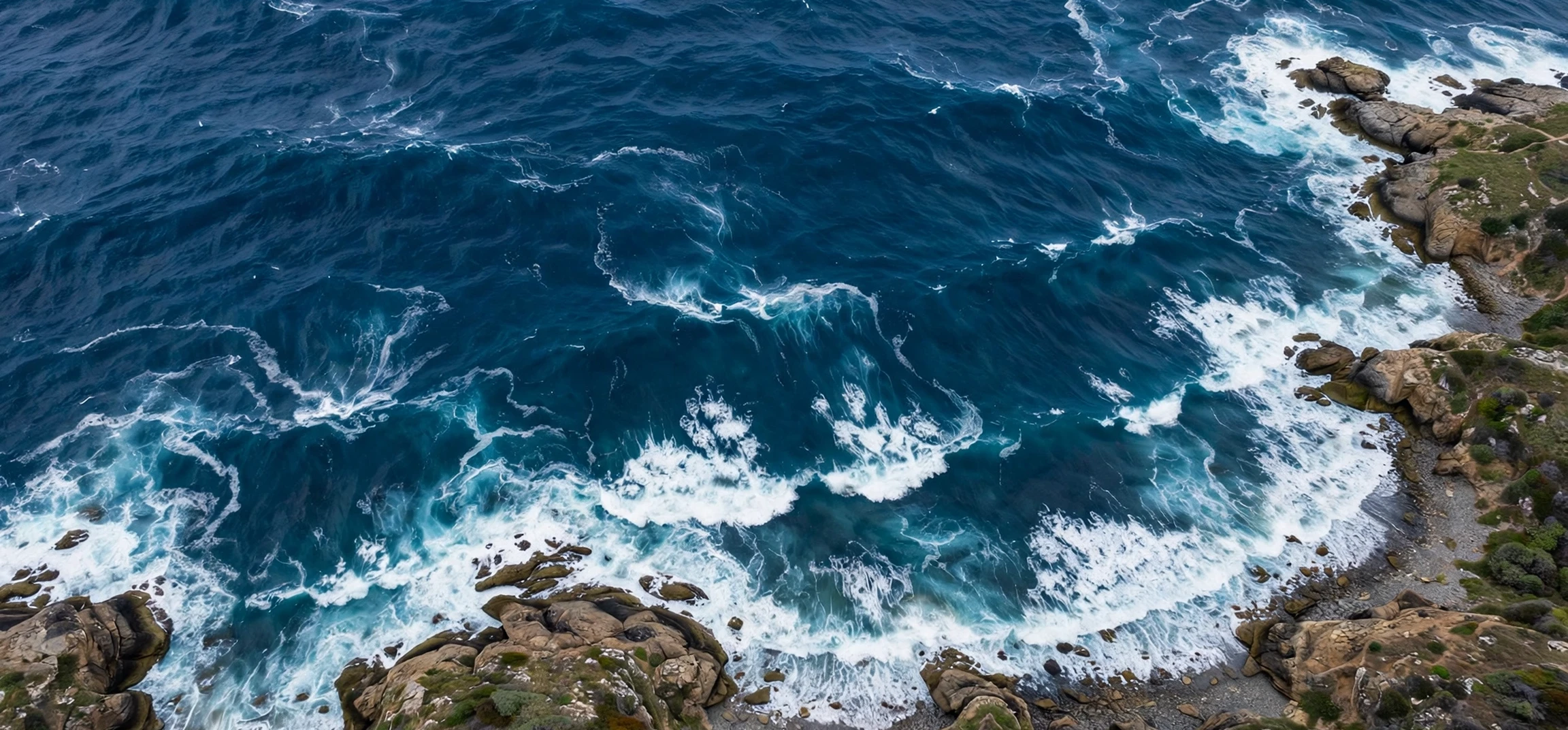
If you are looking for the name of the oceans, the standard school answer is refreshingly simple: there are five oceans — the Pacific, the Atlantic, the Indian, the Southern, and the Arctic. That list is used in most modern textbooks and atlases, and it is the answer most examinations expect. Behind that simple list, however, lies a more interesting story about how oceans are defined, why the count has changed over time, and why some maps still show four oceans instead of five. This guide gives you the five names clearly, describes each ocean, explains the Southern Ocean debate, and offers memory aids so you can recall the list with confidence.
First, a basic definition helps. An ocean is a very large body of salt water that covers a major part of the Earth’s surface. Oceans are not separated by walls; they flow into each other, and their boundaries are defined by a mixture of geography, currents, temperature, and convention. That is why ocean boundaries can look slightly different on different maps: cartographers must draw lines across continuous water, and they use continents, currents, and agreed conventions to decide where one ocean ends and another begins. The water itself does not care about the lines, but the lines help us talk, teach, and navigate.
Together, the oceans cover about seventy percent of the Earth’s surface, and they hold the overwhelming majority of its water. They regulate climate, carry heat around the planet, support an extraordinary range of life, and have shaped human history through trade, exploration, migration, and fishing. Knowing the name of the oceans is therefore not just a geography quiz answer; it is a starting point for understanding weather, climate, ecosystems, and the connected history of continents and peoples.
Name of the Oceans: The Five Oceans at a Glance
The five oceans, ordered by size from largest to smallest, are the Pacific Ocean, the Atlantic Ocean, the Indian Ocean, the Southern Ocean, and the Arctic Ocean. The Pacific is by far the largest, covering more area than all the Earth’s land combined. The Atlantic is the second largest and is famous for its central ridge and its role in transatlantic history. The Indian Ocean is the third largest and is bounded by Africa, Asia, and Australia. The Southern Ocean surrounds Antarctica, and the Arctic Ocean surrounds the North Pole region. The table below summarises them before each is described in more detail.
| Ocean | Size rank | Where it lies | What it is known for |
|---|---|---|---|
| Pacific Ocean | 1st (largest) | Between Asia, Australia, and the Americas | Largest ocean; Ring of Fire; deepest trench |
| Atlantic Ocean | 2nd | Between the Americas, Europe, and Africa | Mid-Atlantic Ridge; historic trade routes |
| Indian Ocean | 3rd | Between Africa, Asia, and Australia | Monsoon winds; warm waters; ancient trade |
| Southern Ocean | 4th | Surrounding Antarctica | Cold circumpolar current; unique wildlife |
| Arctic Ocean | 5th (smallest) | Around the North Pole | Sea ice; polar climate; northern seas |
That order — Pacific, Atlantic, Indian, Southern, Arctic — is a useful one to memorise, because it runs from largest to smallest and it matches the order used in many modern references. If you need a mnemonic, the initial letters P, A, I, S, A do not form a word, but the phrase “Pacific And Indian Seas Are” is sometimes used playfully by learners, even though it is not strictly accurate. A simpler memory aid is to learn the list in pairs: the two great oceans of the Americas’ coasts (Pacific and Atlantic), the ocean of the monsoon world (Indian), and the two polar oceans (Southern and Arctic). Grouping the names in that way makes the full list easier to recall under pressure.
The Pacific Ocean: The Largest Ocean
The Pacific Ocean is the largest ocean on Earth, and its scale is difficult to grasp. It stretches from the western coasts of the Americas across to Asia and Australia, and from the Arctic region in the north to the Southern Ocean in the south. Its area is greater than the combined area of all continents, and it contains the deepest known part of the ocean, the Mariana Trench. The name “Pacific” comes from a Latin word meaning peaceful, a name given by the explorer Ferdinand Magellan, who encountered relatively calm waters during his crossing, even though the Pacific is also home to powerful storms, tsunamis, and volcanic activity.
The Pacific is ringed by volcanoes and earthquake zones in a pattern often called the Ring of Fire, where tectonic plates meet and produce frequent geological activity. Its islands range from large nations such as Japan and New Zealand to tiny atolls scattered across vast distances, and its cultures have long traditions of ocean navigation using stars, winds, and currents. The Pacific also plays a huge role in global weather, because its surface temperatures influence rainfall and storm patterns far beyond its shores. Understanding the Pacific is therefore essential to understanding both geography and climate.
The Atlantic Ocean: The Second Largest Ocean
The Atlantic Ocean lies between the Americas to the west and Europe and Africa to the east, stretching from the Arctic in the north to the Southern Ocean in the south. It is the second largest ocean, and it is divided by the Mid-Atlantic Ridge, a long underwater mountain range where new ocean floor is formed as tectonic plates move apart. That ridge, and the matching coastlines of South America and Africa, provided early clues to the theory of continental drift, which explains how continents have moved over geological time.
Human history has made the Atlantic particularly famous. For centuries, it was the main route for trade, migration, and exploration between Europe, Africa, and the Americas, and its currents and winds shaped sailing routes. Today, it remains a vital corridor for shipping, undersea cables, and fisheries, and its northern and southern waters have very different characters, from the cold North Atlantic to the warmer tropical Atlantic. The Atlantic’s story shows how an ocean can be both a physical feature and a historical stage.
The Indian Ocean: The Third Largest Ocean
The Indian Ocean is bounded by Africa to the west, Asia to the north, and Australia to the east, and it is the third largest ocean. It is the only ocean named after a country, India, which reflects the importance of the Indian subcontinent to the region’s trade and geography. Its northern part is unusual because it is enclosed by land, which means its currents reverse with the seasons under the influence of the monsoon winds. That seasonal reversal has shaped sailing, fishing, and agriculture around its shores for thousands of years.
Ancient trade networks crossed the Indian Ocean long before European ships arrived, carrying spices, textiles, ceramics, and ideas between East Africa, Arabia, India, Southeast Asia, and China. Those networks made port cities around the ocean cosmopolitan centres, and their legacy is still visible in the languages, foods, and cultures of the region. Today, the Indian Ocean remains strategically and economically important, carrying a large share of world shipping, including energy supplies, and supporting fisheries that feed millions of people.
The Southern Ocean: The Ocean Around Antarctica
The Southern Ocean is the ocean that surrounds Antarctica, and it is the most recently recognised of the five in many modern lists. Its boundary is often defined by the Antarctic Circumpolar Current, a powerful current that flows around Antarctica and separates its cold waters from the warmer waters to the north, rather than by a coastline. Because its boundary is defined by a current, different authorities draw it slightly differently, and some older maps divide its waters among the Pacific, Atlantic, and Indian Oceans instead of naming a separate Southern Ocean.
That history explains why some people learned four oceans at school while others learned five. The Southern Ocean was recognised as a distinct ocean by many geographers and by the International Hydrographic Organization in its modern guidance, and it appears in most current textbooks, but the change took time to reach every classroom and atlas. If an older source lists only four oceans, it is not necessarily wrong by its own standards; it is simply using an older convention. For current school and general purposes, however, five is the standard answer, and the Southern Ocean should be included.
The Southern Ocean is ecologically distinctive. Its cold, nutrient-rich waters support krill, which in turn support whales, seals, penguins, and many seabirds. Its remoteness and harsh conditions have also made it important for climate science, because it absorbs heat and carbon dioxide and because changes in Antarctic ice affect sea levels worldwide. Protecting its ecosystems is a major focus of international conservation efforts, and its scientific importance continues to grow as climate research advances.
The Arctic Ocean: The Smallest Ocean
The Arctic Ocean is the smallest and shallowest of the five oceans, centred roughly on the North Pole and largely surrounded by the northern coasts of North America, Greenland, and Eurasia. Much of its surface is covered by sea ice for at least part of the year, though the extent of that ice varies seasonally and has changed in recent decades. Its waters connect to the Atlantic through passages around Greenland and to the Pacific through the narrow Bering Strait, and its climate is among the coldest on Earth.
Despite its harsh conditions, the Arctic Ocean supports specialised wildlife, including polar bears, seals, whales, and Arctic fish, and it has long been home to Indigenous peoples who have adapted to its environment. It has also attracted interest for shipping, as changing ice conditions have opened seasonal routes, and for scientific research into climate change, because the Arctic is warming faster than the global average. The Arctic Ocean is therefore not an empty polar wasteland, but a dynamic and sensitive part of the global ocean system.
How Oceans Differ From Seas
People often confuse oceans and seas, but the distinction is mainly one of size and convention. Seas are generally smaller bodies of salt water that are partly enclosed by land or defined by currents and geography within or beside an ocean. The Mediterranean Sea, the Caribbean Sea, and the South China Sea are examples: each is large and important, but each is considered a sea rather than an ocean because it is smaller and more enclosed than the oceans themselves. Some named seas, such as the Sargasso Sea, are defined by currents rather than by land, which shows that the distinction is conventional rather than purely physical.
That convention also explains why the name of the oceans list stays at five even though there are dozens of named seas. Oceans are the largest divisions of the world ocean, while seas are subdivisions within them. Learning the five oceans first, and then learning major seas as subdivisions, is the clearest way to build a mental map of the world’s waters. It also prevents the common error of counting a famous sea, such as the Mediterranean, as a sixth ocean.
Readers who enjoy building geographical knowledge may also like our science and nature guides, including our explanation of the science meaning of matter, our guide to fault science meaning, and our list of names of water dinosaurs. These are not ocean guides, but they use the same plain-language approach to scientific names and ideas, and they can help learners connect geography with the wider world of science.
Frequently Asked Questions: Name of the Oceans
What is the name of the oceans?
The name of the oceans in the standard modern list is: Pacific Ocean, Atlantic Ocean, Indian Ocean, Southern Ocean, and Arctic Ocean. That is five oceans in total.
Are there four or five oceans?
Modern textbooks generally list five oceans, including the Southern Ocean. Older sources sometimes list four, dividing the Southern Ocean’s waters among the Pacific, Atlantic, and Indian Oceans. Five is the current standard answer for most school and general purposes.
Which ocean is the largest?
The Pacific Ocean is the largest ocean, covering more area than all the Earth’s land combined. The Atlantic is second, followed by the Indian, Southern, and Arctic Oceans.
Which ocean is the smallest?
The Arctic Ocean is the smallest and shallowest ocean, centred on the North Pole and largely covered by sea ice for part of the year.
Why is the Southern Ocean sometimes left out?
The Southern Ocean’s boundary is defined by a current around Antarctica rather than by a coastline, so some older conventions did not treat it as separate. Modern recognition of its distinct current, temperature, and ecology has led most current lists to include it.
Conclusion: Name of the Oceans
The name of the oceans is easy to state and rewarding to understand: Pacific, Atlantic, Indian, Southern, and Arctic. That five-ocean list, ordered from largest to smallest, is the standard modern answer, and it provides a framework for learning about climate, ecosystems, trade, and history. The Pacific’s vast scale, the Atlantic’s ridge and historic routes, the Indian’s monsoon currents, the Southern’s circumpolar waters, and the Arctic’s sea ice each tell a different part of the story of a planet mostly covered by water. Remember the list, remember why the Southern Ocean was once debated, and remember that seas are subdivisions within oceans rather than additional oceans, and you will have a clear, confident grasp of the world’s oceans that will serve you in examinations, in travel, and in everyday reading about our planet.



