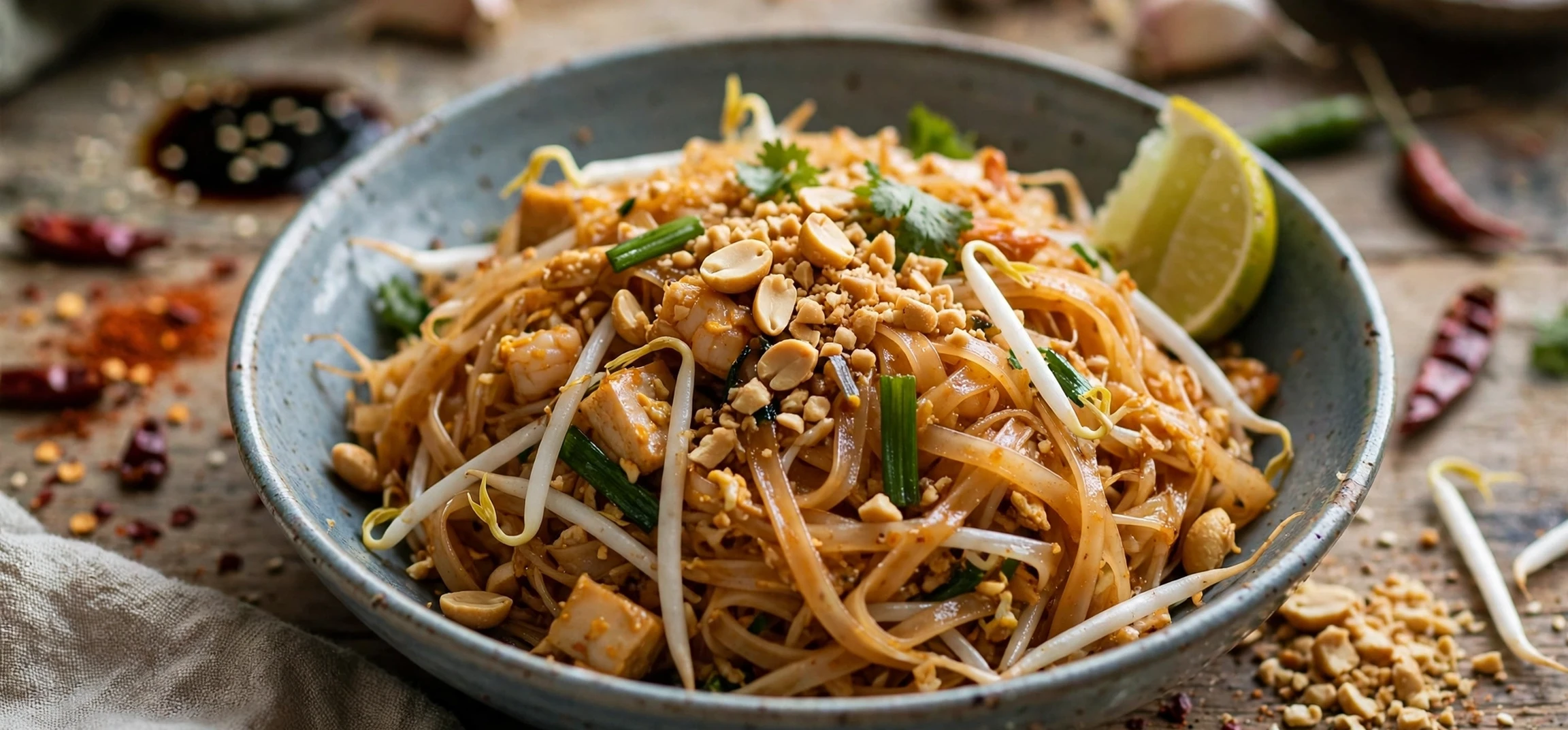
If you have ever scanned a Thai restaurant menu and wondered what to ask for, you have probably met one of Thai cooking’s most memorable dish names. The drunken noodles thai name is Pad Kee Mao, written in Thai as a phrase that literally means stir-fried drunkard style, and pronounced roughly pad kee mow. Despite the name, the dish is not made with alcohol and will not make you drunk. It is a fiery, savoury stir-fry of wide flat rice noodles with chilli, garlic, holy basil, vegetables, and a choice of protein, tossed in a dark, salty-sweet sauce. This guide explains what the name means, where it may have come from, how the dish differs from similar Thai noodles, and how to order it with confidence.
The name itself is part of the dish’s charm. Thai dish names often describe a cooking method, a key ingredient, or a story, and Pad Kee Mao does all three at once. Pad means stir-fried, kee mao refers to a drunkard, and the full name suggests food for, or in the style of, someone who has been drinking. That vivid label helps the dish stand out on a menu crowded with noodle soups, curries, and rice plates, and it gives first-time diners a story to remember long after the meal. Understanding the name also helps you avoid confusion with other Thai noodle dishes that look similar but taste quite different, and that is the main reason people search for the drunken noodles thai name before ordering.
Drunken Noodles Thai Name: What Pad Kee Mao Means
Breaking the name down makes it easy to remember. Pad is one of the most useful words in Thai cooking vocabulary, because it appears in many stir-fried dishes and always signals that ingredients are tossed quickly in a hot wok. Kee mao is the colourful part: it evokes a person who has had too much to drink, with all the boldness, hunger, and lack of restraint that image suggests. Put together, Pad Kee Mao promises a dish that is bold, spicy, and unsubtle, the kind of food that satisfies a strong appetite late at night.
Thai speakers will recognise the structure at once, because Thai dish names are often short and descriptive. A name may tell you the main protein, the sauce, or the cooking style in just a few syllables. Pad Kee Mao follows that pattern, but it adds humour: instead of naming an ingredient, it names a type of eater. That joke has travelled well, because English menus usually keep the Thai name alongside a translation, so diners in many countries learn to say Pad Kee Mao even if they speak no other Thai. Pronunciation varies by region, and restaurant staff are used to hearing many versions, so do not worry about perfection when you use the drunken noodles thai name at the counter.
It is worth noting that the dish contains no alcohol as a standard ingredient. The name is figurative, not a recipe instruction. Some restaurants may add a splash of rice wine or another ingredient to their sauce, but that is a chef’s variation, not the definition of the dish. If you avoid alcohol, you can ask the restaurant about its recipe, and most kitchens will be happy to explain. The heat, the basil, and the smoky wok flavour are what define the dish, not any drink.
Drunken Noodles Thai Name: Origin Stories and Legends
Like many beloved dishes, Pad Kee Mao comes with more than one origin story, and none can be proved beyond doubt. One popular tale says the dish was invented for late-night revellers who came home hungry and wanted something spicy, fast, and satisfying. The heat, the story goes, was strong enough to wake them up, or at least to match their mood. Another tale says a cook, after a long evening, threw together whatever was left in the kitchen, noodles, chilli, garlic, basil, and a splash of sauce, and created a new favourite by accident. A third explanation is simpler: the dish’s bold flavours were thought to pair well with drinks, making it a natural choice for social evenings.
Food historians treat these stories as folklore rather than fact, but they are useful because they capture something true about the dish: it is informal, adaptable, and made for appetite rather than ceremony. Unlike a royal court dish with strict rules, Pad Kee Mao invites variation. Different regions, restaurants, and home cooks adjust the spice level, the vegetables, and the protein, while keeping the core combination of wide noodles, basil, chilli, and savoury sauce. That flexibility is why the dish has spread so widely, and why no two versions taste exactly alike.
The dish also reflects a broader Thai cooking principle: balance. Even a fiery stir-fry is balanced with salty, sweet, and aromatic notes, so the heat does not overwhelm the other flavours. Fish sauce or soy sauce adds salt and depth, a little sugar rounds the edges, garlic adds pungency, and holy basil adds a peppery, almost minty aroma that sets the dish apart from other noodle stir-fries. When those elements are in balance, the result is rich and satisfying rather than simply hot.
Key Ingredients in a Classic Version
A classic version starts with wide, flat rice noodles, sometimes called sen yai, which are soft, chewy, and wide enough to carry sauce in every bite. The sauce typically combines soy sauces, fish sauce or a vegetarian alternative, oyster sauce, and a touch of sugar. Fresh chilli and garlic are pounded or chopped and fried first, to perfume the oil. Holy basil, which is more peppery than sweet basil, is added near the end so its aroma stays bright. Common additions include onion, bell pepper, carrot, baby corn, and Chinese broccoli, along with chicken, beef, pork, seafood, egg, or tofu as protein. The wok must be very hot, so the noodles pick up a slight smokiness known as wok hei, or breath of the wok.
Pad Kee Mao Versus Pad See Ew and Other Thai Noodles
New diners often confuse Pad Kee Mao with Pad See Ew, because both use wide flat rice noodles and a dark sauce. The difference is clear once you taste them side by side. Pad See Ew is sweeter, milder, and built around Chinese broccoli and egg, with a gentle soy flavour and little or no chilli heat. Pad Kee Mao is spicier, more aromatic, and more varied in its vegetables, with holy basil as its signature herb. If you want sweet and comforting, choose Pad See Ew; if you want fiery and fragrant, choose Pad Kee Mao.
Other Thai noodle dishes differ more obviously. Pad Thai uses thinner rice noodles, a tangy tamarind sauce, peanuts, and bean sprouts, giving it a sweet-sour profile quite unlike the savoury heat of Pad Kee Mao. Noodle soups, such as those served in a clear or tom yum broth, are eaten with a spoon and chopsticks and have a soupy, slurpable character. Glass noodle stir-fries use transparent mung bean noodles and a lighter texture. Learning these distinctions helps you order exactly what you want, and it turns a confusing menu into a set of clear choices.
| Dish | Noodles | Flavour profile | Signature note |
|---|---|---|---|
| Pad Kee Mao | Wide flat rice noodles | Spicy, savoury, aromatic | Holy basil and chilli heat |
| Pad See Ew | Wide flat rice noodles | Sweet, mild, soy-based | Chinese broccoli and egg |
| Pad Thai | Thin rice noodles | Sweet, sour, nutty | Tamarind, peanuts, bean sprouts |
| Rad Na | Wide flat rice noodles | Mild, gravy-like | Thick sauce over noodles |
The table is a handy menu shortcut. If a restaurant lists a dish as drunken noodles, check whether the description mentions basil and chilli: those two words confirm you are looking at Pad Kee Mao rather than a milder wide-noodle dish. If the description mentions only sweet soy and broccoli, you are likely looking at Pad See Ew under a different label. Menus vary, and some restaurants adapt names for local diners, so the description and a quick question to staff are your best guides.
How to Order Pad Kee Mao with Confidence
Ordering is simple once you know the name and a few options. Start by saying Pad Kee Mao, then choose your protein: chicken, beef, pork, prawns, mixed seafood, egg, or tofu are common choices. Next, choose your spice level. Thai restaurants are used to adjusting heat, and terms such as mild, medium, Thai spicy, or extra spicy help the kitchen match your taste. If you are unsure, start with medium and ask for chilli on the side, so you can add heat to taste. Mention any dietary needs clearly, such as vegetarian, gluten-free, or no fish sauce, because sauces vary by restaurant.
It also helps to know what to expect on the plate. A good Pad Kee Mao arrives steaming, with noodles that are separate rather than clumped, vegetables that still have bite, and a sauce that coats rather than drowns. The basil should smell fresh and peppery, and the chilli heat should build rather than overwhelm. If you are sharing, order one portion to taste first, since spice tolerance varies, and add a milder dish or plain rice for balance. For a broader food-guide context, see this healthy snack recipe guide and this home recipe guide, which show how recipe writing balances ingredients, method, and serving advice.
Cooking a Simplified Version at Home
Home cooks can make a simplified version with supermarket ingredients, although fresh holy basil and wide rice noodles are worth seeking out at an Asian grocery for the most authentic flavour. Soak or boil the noodles until just tender, then drain well. Fry garlic and chilli in a very hot wok, add protein and vegetables, then add noodles and sauce, tossing constantly so the sauce coats evenly. Add basil at the very end, off the heat or just before serving, to preserve its aroma. Taste and adjust: a little more soy for salt, a pinch of sugar for balance, or extra chilli for heat. The whole stir-fry takes only minutes once ingredients are prepared, which is why the dish suits busy weeknights.
Frequently Asked Questions
Does the dish contain alcohol?
No, not as a standard ingredient. The name is figurative, referring to a drunkard’s style of bold, spicy food. If you have dietary concerns, ask the restaurant about its specific sauce recipe, since individual kitchens vary.
Is it very spicy?
Traditionally, yes, it is one of the spicier Thai noodle dishes, but most restaurants will adjust the heat to your preference. Order mild or medium if you are new to Thai chilli, and ask for extra chilli on the side if you want more.
What is the difference from Pad See Ew?
Pad See Ew is sweeter and milder, with Chinese broccoli and egg as its hallmarks. The drunken noodle dish is spicier and more aromatic, with holy basil, chilli, and a wider mix of vegetables as its hallmarks.
Can it be made vegetarian?
Yes, in most restaurants. Choose tofu and vegetables, and ask for soy-based sauce instead of fish sauce and oyster sauce. Confirm with staff, since sauce recipes differ, and check that the noodles themselves suit your diet.
Conclusion
The Thai name for drunken noodles, Pad Kee Mao, is more than a label: it is a promise of bold, spicy, basil-scented comfort food, a hint at late-night folklore, and a practical tool for ordering. Once you know that pad means stir-fried and that the full name points to a drunkard’s hearty appetite, the menu stops being intimidating and starts being inviting. Taste it alongside Pad See Ew and Pad Thai, notice the basil and the heat that set it apart, and you will have a new favourite to ask for by name, wherever Thai food is served.