Walk down the soup aisle of any supermarket and you will see cartons labelled chicken stock and chicken broth sitting side by side, often at the same price, and it is no surprise that home cooks wonder whether there is any real difference at all. The difference between chicken broth and chicken stock is genuine, and it comes down to what goes into the pot, how long it simmers, and what the finished liquid is meant to do. In short, stock is made mostly from bones and is built for body, while broth is made mostly from meat and is built for flavour. Both are useful, both are delicious, and knowing which one you have will make your cooking noticeably better.
The confusion is understandable, because the two terms are used loosely in everyday speech, in older cookbooks, and even on product labels, where a carton marked stock may in practice be closer to broth. Professional cooks, however, keep the distinction sharp, because it changes how a sauce thickens, how a soup feels in the mouth, and how much salt a dish needs. This guide explains the stock-versus-broth distinction from the point of view of cooking definitions: what each one is, how each one is made, and how to tell them apart in your own kitchen.
The Difference Between Chicken Broth and Chicken Stock: Definitions
The distinction starts with the main ingredient. Chicken stock is made by simmering chicken bones, often with a little meat still attached, together with vegetables such as onion, carrot, and celery, and aromatics such as bay leaves, peppercorns, and parsley stems. The bones are the point: as they simmer for several hours, their collagen dissolves into gelatin, which gives stock its characteristic body and the wobbly, jelly-like set it develops in the fridge. Stock is traditionally left unseasoned or only very lightly salted, because it is an ingredient rather than a finished dish, and the cook will season the final recipe.
Chicken broth, by contrast, is made by simmering chicken meat, often a whole bird or meaty pieces, with vegetables and seasonings, for a shorter time, usually one to three hours. Because meat is the main ingredient, broth is lighter, clearer in flavour, and seasoned so that it tastes good on its own. It does not gel as firmly as stock when chilled, because it contains less collagen, and it is thinner in the mouth. If stock is a building block, broth is a finished flavour, and that single idea explains most of the practical differences that follow.
It helps to think of the two as answers to different questions. Stock answers the question, how do I give this sauce or braise richness and body? Broth answers the question, what can I serve as a light soup, or use as a gentle cooking liquid that already tastes good? Once you frame it that way, the choice in a recipe becomes much easier, and you will stop reaching for whichever carton happens to be nearest.
How Chicken Stock and Chicken Broth Are Made
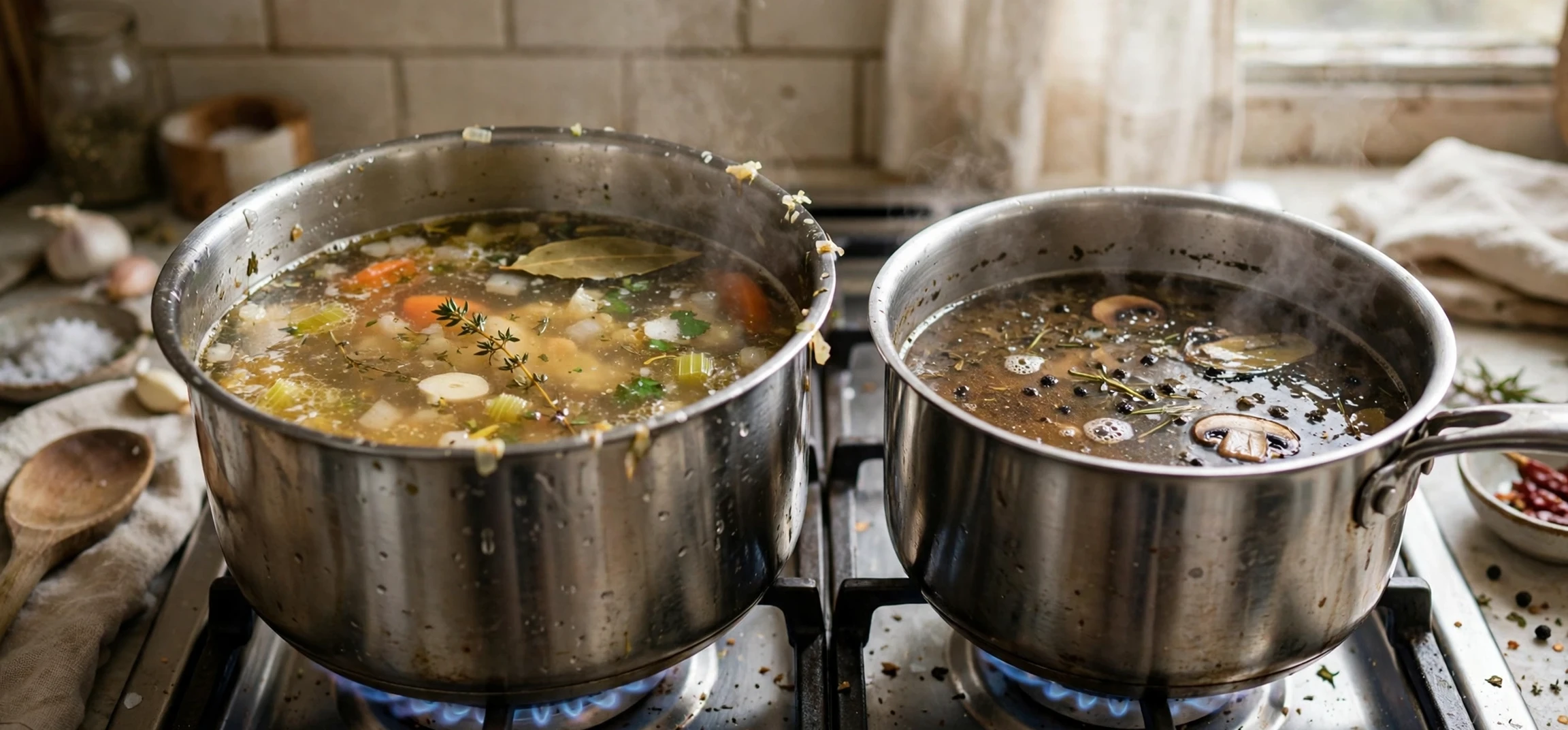
Making chicken stock at home is a slow, forgiving process. Start with a chicken carcass, backs, necks, wings, or any bones left from a roast, add roughly chopped onion, carrot, and celery, a bay leaf, a few peppercorns, and cold water to cover, and bring the pot barely to a simmer. The key word is barely: a rolling boil will cloud the stock and churn fat into it, while a gentle simmer, with small bubbles breaking the surface, keeps it clear and clean-tasting. Skim the foam that rises in the first half hour, then let the pot simmer quietly for four to six hours, topping up the water if the bones become exposed.
Broth is quicker and simpler. Place a whole chicken or meaty pieces in a pot with the same vegetables, cover with cold water, season lightly, and simmer for one to two hours, until the meat is tender and the liquid tastes good. Lift out the chicken, and you have two products at once: cooked meat for sandwiches, salads, or noodle soup, and a light, flavourful broth. Strain both stock and broth through a fine sieve or a cloth-lined colander, cool them quickly, and skim off the fat that solidifies on the surface if you want a cleaner result.
The difference in time is not arbitrary. Collagen needs hours to dissolve, which is why stock simmers for so long, while meat gives up its flavour much faster, which is why broth is done in a fraction of the time. A stock simmered for only an hour will be thin and disappointing, and a broth simmered for six hours will lose its fresh, chicken flavour and turn muddy. Time is an ingredient here, just as much as the bones or the meat.
Chicken Stock vs Chicken Broth: Side-by-Side Comparison
The table below summarises the defining differences, so you can check them at a glance the next time a recipe leaves you unsure.
| Feature | Chicken stock | Chicken broth |
|---|---|---|
| Main ingredient | Bones, with some meat attached | Meat, often a whole bird |
| Simmering time | 4 to 6 hours, sometimes longer | 1 to 3 hours |
| Seasoning | Usually unseasoned or lightly salted | Seasoned to taste good alone |
| Body and texture | Rich, coats the mouth, gels when chilled | Light, thin, stays liquid when chilled |
| Flavour | Deep, rounded, savoury background note | Fresh, direct chicken flavour |
| Best for | Sauces, braises, stews, risotto | Soups, noodle dishes, sipping |
| Colour | Often deeper gold, slightly cloudy | Usually paler, clearer |
One practical test works in any kitchen: chill a spoonful of each. Stock will set into a soft jelly, because of its gelatin, while broth will stay liquid or set only very lightly. That jelly is not a fault; it is the sign of a well-made stock, and it melts the moment it is heated, giving sauces a glossy, coating quality that broth cannot match. Cooks who prize that quality will always keep stock for dishes where texture matters.
The Difference Between Chicken Broth and Chicken Stock in Recipes
The distinction shows up most clearly when you follow a recipe. A sauce recipe that calls for stock wants the gelatin, because gelatin gives a pan sauce its shine and its ability to cling to meat or pasta. If you use broth instead, the sauce will taste fine but feel thin, and it may need reducing for much longer to reach the same consistency. A risotto made with stock will turn out creamier and more luxurious than one made with broth, for exactly the same reason.
Soup recipes, on the other hand, often prefer broth, because the soup itself provides the body through vegetables, noodles, rice, or beans, and what it needs from the liquid is clean chicken flavour rather than extra richness. Chicken noodle soup made with broth tastes bright and comforting, while the same soup made with a heavy stock can feel almost too rich. Neither choice is wrong, but they produce different bowls of soup, and knowing that lets you steer the result.
For braises and stews, stock is almost always the better choice. The long, slow cooking will extract flavour from the meat in the pot anyway, so what the liquid needs to contribute is body and depth, which is stock’s strength. For poaching, steaming, or cooking grains, broth is often better, because its seasoning means the finished dish needs less adjustment at the end. The rule of thumb is simple: stock builds dishes, broth finishes them.
Can You Swap Chicken Stock and Chicken Broth?
In everyday cooking, yes, with adjustments. If a recipe calls for stock and you only have broth, use the broth and reduce any added salt, since broth is already seasoned, and accept a slightly thinner result, or simmer the dish a little longer to concentrate it. If a recipe calls for broth and you only have stock, use the stock and season the finished dish a little more generously, since stock is usually unseasoned, and enjoy the extra body. For most weeknight soups and stews, the swap will pass unnoticed by everyone except the most attentive cook.
There are two situations where the swap matters more. The first is a sauce that depends on gelatin for its texture, such as a classic pan gravy or a glossy reduction, where broth will leave the sauce disappointingly thin. The second is a dish where salt control is critical, such as a long-simmered braise that will reduce a great deal, where a salted broth can become over-salted as the liquid evaporates. In those cases, it is worth using the right liquid, or at least tasting carefully as you go and adjusting.
Shop-bought cartons blur the line further, because manufacturers know that most shoppers want a liquid they can use straight from the carton, so many products labelled stock are in practice lightly seasoned and thin, much closer to broth. Read the label: a good stock lists chicken stock or chicken bones early, has a short ingredient list, and is low in salt, while a broth will list salt higher and may include flavourings. Taste a spoonful before cooking with a new brand, and let that guide your seasoning. For more kitchen language, see our guide to what braised means and our note on what all day means in a kitchen.
Frequently Asked Questions
Is chicken stock the same as chicken bone broth?
Not quite, although they are related. Bone broth is essentially a stock that is simmered for even longer, often twelve hours or more, and marketed as a drink rather than a cooking ingredient. It shares stock’s gelatin richness, but it is usually seasoned and sold ready to sip, which puts it closer to broth in how it is used.
Why does my stock gel in the fridge?
Gelling is a sign of success. Collagen from the bones has turned into gelatin, which sets when cold and melts when heated. A stock that gels will give sauces and soups a richer mouthfeel than one that stays liquid.
Can I make stock from a roast chicken carcass?
Absolutely, and it is the best way to start. A leftover roast carcass, plus any bones, skin, and pan juices, makes an excellent stock, and roasting the bones first adds a deeper colour and flavour. Break the carcass into pieces so it fits the pot, cover with cold water, and simmer gently.
How long do stock and broth keep?
Both keep for three to four days in the fridge, and for three to six months in the freezer. Freeze stock in litre containers, freezer bags laid flat, or ice-cube trays for small amounts to enrich sauces, and always label the container with the contents and the date.
Conclusion
The difference between chicken broth and chicken stock is not a fussy technicality; it is a practical distinction that shapes how your cooking turns out. Stock, made from bones over many hours, gives body, gelatin, and depth, and it belongs in sauces, braises, and stews. Broth, made from meat over a shorter time and seasoned to taste good alone, gives fresh flavour and lightness, and it belongs in soups, noodle dishes, and anywhere a clean chicken taste is the point. Keep both in your kitchen vocabulary, use stock when you want richness and broth when you want brightness, and taste as you go whenever you swap one for the other. The next time you stand in the soup aisle, you will know exactly which carton to reach for, and why.