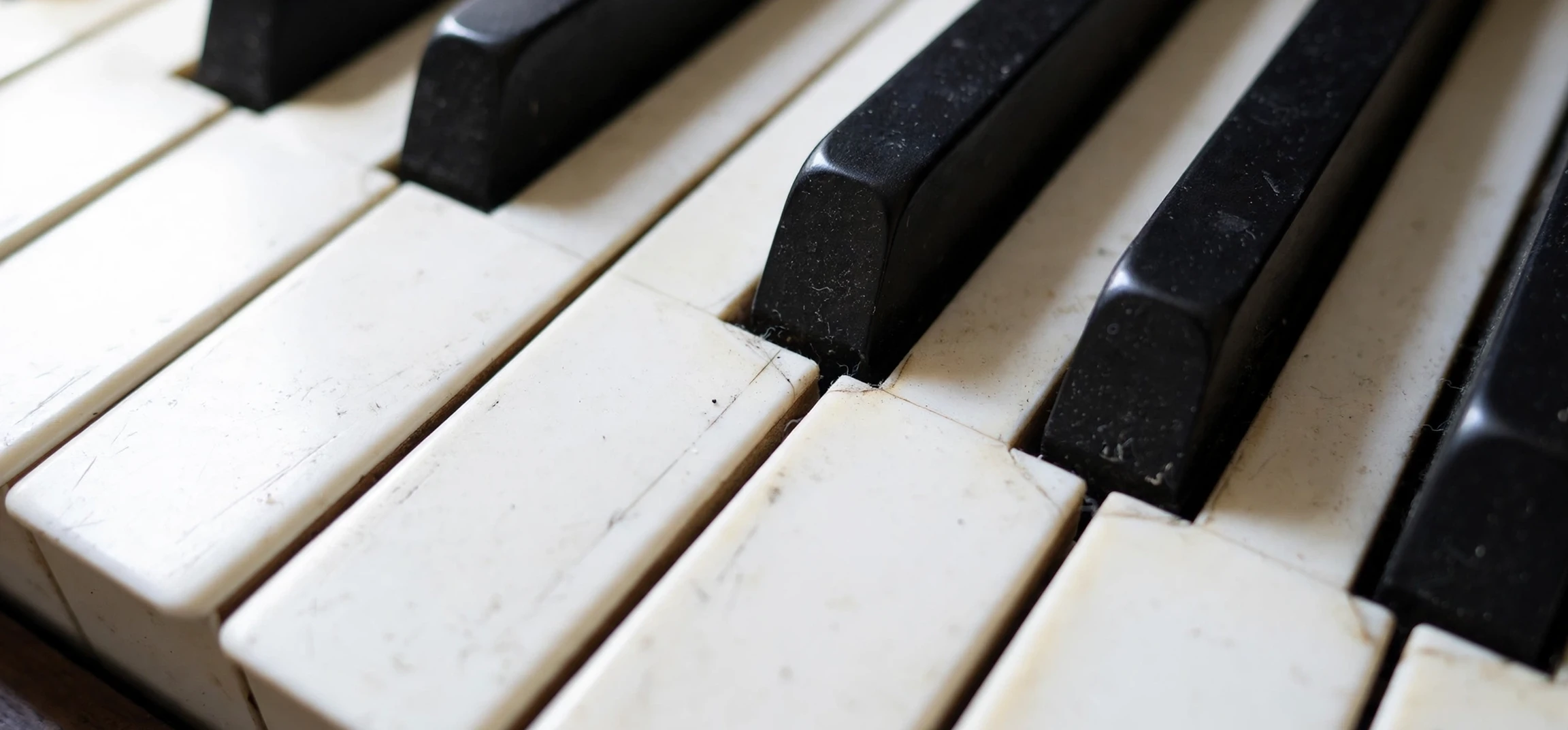
Learning how to read keys on piano starts with a simple idea: every key has a name, and those names repeat in the same order across the whole keyboard. Once you understand that repeating pattern, you can find any note, read simple sheet music with more confidence, and move around the keyboard without guessing. This beginner guide explains how to read keys on piano step by step, from the groups of black keys that act as landmarks to the white keys, the musical alphabet, octaves, and easy practice routines that build real fluency.
The piano keyboard can look overwhelming at first because it has so many keys, but it is really one pattern repeated many times. White keys and black keys follow a fixed arrangement, and the black keys fall into repeating groups of two and three. Those groups are your map. If you can spot a group of two black keys or a group of three black keys anywhere on the keyboard, you can name the white keys around them, and that skill is the foundation of how to read keys on piano.
How to Read Keys on Piano Using Black-Key Landmarks
Start by looking at the black keys. They are not placed randomly. They appear in a repeating pattern of two, then three, then two, then three, all the way across the keyboard. Find any group of two black keys first. The white key immediately to the left of that group is C. That single fact unlocks the whole keyboard, because every C sits in the same position relative to a group of two black keys.
Next, find a group of three black keys. The white key immediately to the left of that group is F. Between the C and the F you have already found, the white keys in order are C, D, and E. After F come G, A, and B, and then the pattern repeats with the next C. This sequence, C D E F G A B, is the musical alphabet, and it repeats in every octave. Learning how to read keys on piano means learning to see these landmarks instantly rather than counting keys one by one from the edge of the keyboard.
Finding C Every Time
Middle C is a useful reference point because so much beginner music centers on it, but it is not the only C. There are several C keys across a full keyboard, and each one sits just left of a group of two black keys. Practice by pointing to every C you can find, moving from left to right, and saying the letter aloud. Then do the same for F, which sits just left of every group of three black keys. Speed matters less than accuracy at first. Accuracy builds the habit that later becomes speed.
Finding D, E, G, A, and B
Once C and F are secure, the other white keys fall into place. D sits between the two black keys in a group of two. E sits just right of that group of two. G sits between the first and second black keys in a group of three. A sits between the second and third black keys in that group. B sits just right of the group of three, immediately before the next C. Say the full sequence slowly while touching each key: C, D, E, F, G, A, B, then the next C. Repeating this slowly, in both directions, is one of the fastest ways to make the layout permanent.
How to Read Keys on Piano: White Keys and Black Keys
White keys play the natural notes: the seven letters of the musical alphabet with no sharps or flats. Black keys play sharps and flats, which are notes raised or lowered by a half step. Each black key has two names, depending on direction. A black key just right of C is C sharp, and the same key just left of D is D flat. This dual naming surprises beginners, but it is normal in music. The key does not change; only the name used in a particular piece changes, based on the scale or key being used.
Think of sharps as moving one key to the right and flats as moving one key to the left, counting every key, black or white. From C, one key to the right is the black key C sharp. From D, one key to the left is the same black key, now called D flat. Understanding this relationship helps you read key signatures later, because a key signature simply tells you that certain notes are sharp or flat throughout a piece unless marked otherwise.
| White key | Black key to its right | Same black key from above |
|---|---|---|
| C | C sharp | D flat |
| D | D sharp | E flat |
| F | F sharp | G flat |
| G | G sharp | A flat |
| A | A sharp | B flat |
Notice that there is no black key between E and F, and none between B and C. Those pairs are already a half step apart on white keys alone. This is why the keyboard pattern looks uneven, and it is also why the groups of two and three black keys work so well as landmarks. Once you accept that E to F and B to C have no black key between them, the whole layout makes sense.
Octaves and Registers on the Keyboard
An octave is the distance from one note to the next note with the same letter, such as from one C to the next C. Each octave contains the same seven white keys and five black keys, just higher or lower in pitch. Moving right raises the pitch, and moving left lowers it. When you play the same letter in a higher octave, the note sounds brighter and higher, but it keeps the same name and the same role in the musical alphabet.
Beginners often ask which octave they are in, and the answer depends on context. Sheet music uses the staff to show pitch precisely, while the keyboard itself simply repeats the pattern. For now, focus on naming keys within one octave confidently before worrying about octave numbers. When you can name any white key in any octave by its black-key landmark, you have a skill that transfers to every part of the keyboard and to every piece you learn.
Hand position grows naturally from this knowledge. In many beginner pieces, the right hand covers five white keys in a row, such as C through G, with one finger per key. The left hand often plays lower notes that anchor the harmony. Knowing key names lets you place your hands deliberately instead of hunting for each note, which makes practice calmer and more musical.
From Key Names to Reading Sheet Music
Knowing how to read keys on piano is different from reading notes on a staff, but the two skills connect directly. On the treble staff, notes sit on lines and spaces, and each position corresponds to a key. Beginner methods often teach landmark notes on the staff first, such as treble G and bass F, then use steps and skips to work out neighboring notes. The same landmark logic you use on the keyboard applies on the page: learn a few fixed points well, then count steps from them.
A step moves to the very next line or space, which usually means the next letter in the musical alphabet. A skip jumps over one line or space, which usually means moving two letters ahead. If you know that a note is C and the next note steps up, you know the next note is D without memorizing a separate fact. This connection is why key-name fluency pays off so quickly: it turns reading music into a small, repeatable calculation instead of a long list of guesses.
Musical expression terms also become easier once key reading feels secure. For example, our guide to rubato meaning in music explains a flexible approach to tempo, and our guide to subito meaning in music explains a sudden change in a piece. Neither term changes a key name, but both show how reading extends beyond pitch into timing and feeling.
Practice Routines That Build Key Fluency
Short, regular practice beats long, infrequent sessions for key learning. Start each session by naming keys without playing: point to a key and say its name, or have a practice partner point while you answer. Then play the keys you named, listening to how each one sounds. This links the visual pattern, the letter name, and the sound into one memory.
Try these routines in rotation. First, find all the C keys from low to high, then from high to low. Second, play the musical alphabet slowly across one octave, then across two. Third, name black keys both ways, as a sharp from below and as a flat from above. Fourth, play simple five-note patterns and say each note name before you play it. Keep the tempo slow enough that you stay accurate, and only speed up when accuracy feels easy.
Common Beginner Mistakes
The most common mistake is counting from the far left edge of the keyboard for every note. That method is slow and breaks down on a full-size keyboard. Use the nearest group of black keys instead. Another mistake is confusing sharps and flats as different keys. They are the same physical key with two names, and the piece or scale decides which name to use. A third mistake is rushing. Playing fast with wrong notes builds the wrong habit, while playing slowly with correct names builds the right one.
A Simple Daily Drill
Spend a few minutes on landmarks, a few minutes on the musical alphabet in both directions, and a few minutes on a simple piece that uses the keys you just reviewed. End by finding five random keys and naming each one before you play it. This closing check tells you honestly whether the layout is sticking, and it gives you a clear target for the next session if some keys still feel uncertain.
Frequently Asked Questions About How to Read Keys on Piano
How many keys are on a standard piano?
A standard acoustic piano has eighty-eight keys, while many digital keyboards have fewer. The pattern you learn here works on any of them, because the groups of two and three black keys and the order C D E F G A B repeat in the same way no matter how many octaves the instrument covers.
How do I find middle C?
Middle C is the C near the center of the keyboard, usually just left of a group of two black keys close to the middle. On a full-size piano it sits near the center, and many beginner books mark it as a starting reference. If you can find any C, you can find middle C by counting C keys toward the center of your instrument.
Why does one black key have two names?
Each black key sits between two white keys, so it can be named as a sharp of the lower white key or a flat of the higher white key. The music you are playing determines which name fits the scale, key, or chord in use. Both names describe the same key and the same pitch.
How long does it take to learn the keys?
Most beginners can name white keys confidently within a few focused practice sessions, and black-key names follow soon after. Full fluency, meaning instant naming in any octave without counting, takes a few weeks of short daily practice for most learners. Regular review keeps the skill sharp as you move on to reading full pieces.
How to Read Keys on Piano in Real Songs
Once the landmarks feel familiar, the next step in how to read keys on piano is applying the skill inside real songs. Beginner songs often use a small set of keys, such as five white keys in a row, and each note in the piece corresponds to a key you can already name. Before playing, look through the piece and name every key it uses, working from the black-key landmarks rather than counting from the edge. This preview turns the first play-through into a review of known keys instead of a hunt for unknown ones.
A useful habit while learning how to read keys on piano is to say each note name just before you play it, even in pieces you half know by ear. Playing by ear is a fine skill, but it can hide gaps in key knowledge that appear later in harder pieces. Naming notes aloud keeps the reading skill honest: if you cannot name a key before playing it, that key needs more landmark practice. Over time, the naming becomes silent and instant, which is exactly what fluent reading feels like.
Another part of how to read keys on piano in songs is noticing patterns rather than treating every note as separate. Scales move stepwise through neighboring letters, chords stack every other letter, and repeated phrases reuse the same keys. When you recognize a scale pattern, you no longer read five separate notes; you read one familiar shape. When you recognize a chord shape, you read one hand position instead of three isolated keys. Pattern recognition is what makes experienced players look fast, but it is built from the same slow landmark work every beginner does.
Finally, practice how to read keys on piano across different octaves, not only in the middle of the keyboard. Play the same simple melody one octave higher and one octave lower, naming the keys each time. The letters stay the same while the pitch changes, and that exercise proves to your hands and ears that the pattern truly repeats. A player who can read keys in any octave is ready for a much wider range of music than a player who only knows the middle section.
Does knowing how to read keys on piano help with playing songs by ear?
Yes. When you know how to read keys on piano, playing by ear becomes easier because you can name the keys you hear and find them deliberately instead of searching. A player who understands how to read keys on piano can move between reading music and playing by ear, using each skill to strengthen the other.
How to Read Keys on Piano: Quick Review Drill
Use this quick drill to test yourself on how to read keys on piano. Cover the answers, point to a key, and check each result: first, how to read keys on piano from a group of two black keys means finding C on the left; second, how to read keys on piano from a group of three black keys means finding F on the left; third, how to read keys on piano across an octave means repeating C D E F G A B in order; fourth, how to read keys on piano for sharps and flats means naming each black key both ways. If you can answer all four prompts without counting from the edge, your map of how to read keys on piano is ready for harder pieces.
Conclusion
Learning how to read keys on piano comes down to landmarks, repetition, and patient practice. Use the groups of two and three black keys to find C and F, fill in the musical alphabet around them, learn the sharp and flat names of the black keys, and practice naming keys before you play them. With that foundation in how to read keys on piano, the keyboard stops looking like a wall of identical keys and starts looking like a clear, repeating map, and every piece you learn afterward becomes easier to read, play, and enjoy.