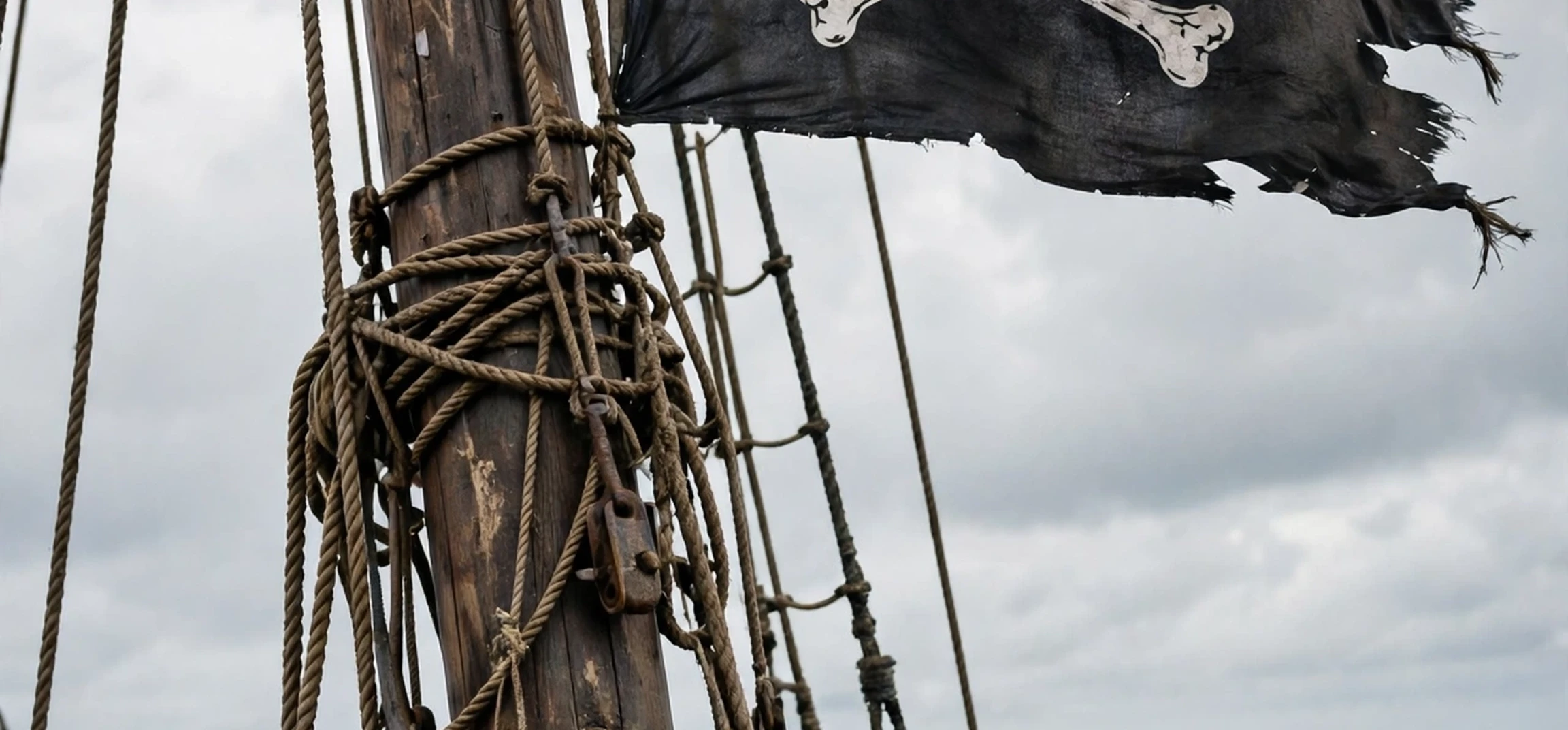
The meaning of pirate flags goes far beyond the famous skull and crossbones seen in films and cartoons. Historically, pirate flags were working signals at sea: they identified a ship, announced intent, frightened a target into surrender, and told a crew what kind of fight to expect. The meaning of pirate flags therefore depends on colour, symbols, layout, and context, because no single design ever spoke for every pirate, navy, or merchant crew. When you learn to read these banners, you can tell a warning from a threat, a joke from a boast, and a real historical flag from a modern invention.
This guide explains the most famous designs, the symbols that appear again and again, and the myths that popular culture has added over time. It also explains why the same image can carry a different message depending on where and when it was flown. If you are studying history, designing a costume, writing a story, or simply curious about the Jolly Roger, this plain-language guide will help you understand what each flag was really saying.
What Pirate Flags Meant at Sea
At sea, communication was difficult. Ships could not shout across open water, and a flag was one of the few messages that could be read from a distance. The meaning of pirate flags therefore began with practical signalling. A black flag often meant that a crew would show mercy if a target surrendered promptly, while a red flag was a much harder warning: it signalled that little or no quarter would be given if the target resisted. That colour code mattered because surrender could save lives, cargo, and time for both sides. That colour code is one of the first lessons in the meaning of pirate flags.
Pirates also used flags to create fear before a shot was fired. A frightening design could persuade a merchant captain to give up without a costly battle, which was useful for pirates who wanted cargo rather than a wreck. At the same time, pirates sometimes flew false colours, meaning the flag of a friendly nation, until they were close enough to attack. In that case, the first flag was a disguise and the pirate flag was the reveal. Reading a flag therefore required attention to timing as well as design.
The Jolly Roger Explained
The best-known pirate flag is the Jolly Roger, a white skull and crossbones on a black field. Its core message was simple: death, danger, and a crew that was prepared to fight. The skull reminded a target of mortality, while the crossbones suggested bones left after battle. Together, they said that resistance would be dangerous and that the approaching ship was not a lawful navy vessel or an ordinary merchantman. Anyone studying the meaning of pirate flags should compare black and red designs side by side.
The name Jolly Roger itself has a colourful history. Some writers link it to the French phrase for a pretty red flag, while others connect it to older names for rogues and outlaws. Whatever the exact origin, the design became a shared symbol rather than the property of one captain. Different crews adapted it, changed details, and added their own marks, which is why there are many versions of the Jolly Roger rather than one official pattern.
Why Black Was the Usual Background
Black worked well at sea because it stood out against sky, sails, and water, especially when a flag was large and raised high. It also carried cultural associations with death, mourning, and danger, which reinforced the message. A black flag did not automatically mean that everyone aboard would be killed. In many accounts, it was a demand for surrender, backed by a threat. The distinction matters because pirate crews often preferred a prize they could sell, use, or ransom over a destroyed ship. The skull alone does not complete the meaning of pirate flags, because context changes the message.
Why Red Flags Were More Serious
A red flag, sometimes called a bloody flag, was a stronger signal than a black one. It warned that the attacking crew would fight without mercy if the target refused to surrender. Red was already used in naval warfare as a signal for battle, so pirates borrowed a message that sailors understood. If you see a red pirate flag in a film, it is usually meant to raise the stakes, and that dramatic use has a real historical basis.
Symbols and the Meaning of Pirate Flags
The meaning of pirate flags becomes clearer when you break each design into parts. A skull usually stood for death. An hourglass warned that time was running out for the target. A skeleton holding a dart or spear suggested that death was active, not distant. A heart, especially a bleeding heart, could signal cruelty or a willingness to wound. A sword or cutlass pointed to combat, while a full skeleton dancing or holding a glass could mock death itself. A careful reading of the meaning of pirate flags also asks when the flag was raised.
Some symbols were personal. A captain might choose an image that reflected a nickname, a past victory, or a message to enemies. Others were borrowed from religious art, naval emblems, or the imagery of death found in churches and graveyards. That shared visual language helped sailors understand a flag quickly, even if they had never met the crew that flew it. It also explains why modern pirate flags still use the same small set of symbols.
| Symbol | Common meaning | Message to a target ship |
|---|---|---|
| Skull | Death | Resistance may be fatal. |
| Crossbones | Bones after battle | The crew is ready to fight. |
| Hourglass | Time running out | Surrender now, before it is too late. |
| Skeleton with a dart | Death striking | Attack is imminent. |
| Red field | No quarter | Expect little mercy if you resist. |
| Black field | Warning and demand | Surrender and you may be spared. |
Famous Pirate Flag Designs
Several captains are linked to distinctive flags, although historians warn that some designs were assigned to captains long after their careers ended. Edward Teach, better known as Blackbeard, is often linked to a flag showing a horned skeleton holding an hourglass in one hand and a spear pointed at a bleeding heart in the other. Whether he flew exactly that design or not, the image captures the message well: time is short, and the spear is ready. Museums and history books still debate details in the meaning of pirate flags.
Other famous designs include a skull above crossed swords, a skeleton holding a sword and a glass, and a skull with a single bone. Each variation changed the tone slightly. Crossed swords stressed battle. A glass in a skeleton hand could suggest celebration, defiance, or a toast to death. A single bone rather than crossbones could mark a particular crew or simply reflect the materials and skill available when the flag was made.
It is also important to remember that many pirates used plain black or plain red flags without any picture at all. A plain flag was cheaper, faster to make, and easier to read at a distance. A detailed design looked impressive in a museum or a film, but at sea a bold colour and a simple skull were often enough to deliver the warning. For a writer, the meaning of pirate flags offers a quick way to signal danger or defiance.
Meaning of Pirate Flags in Popular Culture
In modern culture, the meaning of pirate flags has shifted from a naval warning to a broad symbol of rebellion, adventure, humour, and independence. The Jolly Roger appears on clothing, party decorations, sports logos, and protest banners. In those settings, it rarely means a literal threat. Instead, it signals a playful outsider identity, a love of adventure stories, or a refusal to follow the rules.
Films and books have also simplified pirate flags. A single skull-and-crossbones design now stands for all pirates, even though historical crews used many designs. That simplification is useful for storytelling because audiences recognise the symbol instantly. It can also mislead viewers into thinking that every pirate flew the same flag, or that the flag always meant certain death. The historical picture is more varied and more interesting. Students often grasp the meaning of pirate flags faster when they sort symbols into a table.
Modern uses also raise questions about context. A Jolly Roger at a themed party is clearly a costume choice. The same symbol on a warning sign, a product, or a political banner may carry a different tone. As with historical flags, the audience, the place, and the intent matter. A symbol that is playful in one setting can look aggressive in another, so it is worth thinking about how it will be read.
How to Read a Pirate Flag
To read a pirate flag, start with the background colour. Black usually means a warning and a demand for surrender. Red usually means a harder threat and little mercy. Next, look at the central symbol. A skull alone is a general warning. Crossbones add the idea of battle and death. An hourglass adds urgency. A weapon adds a direct threat of violence. Finally, look for unusual details, because those often carry the personal message. The hourglass remains one of the clearest images in the meaning of pirate flags.
Also consider the ship and the situation. Was the flag raised after a chase, during a parley, or as a disguise was dropped? Was it flown alongside another flag? Was it raised at all, or was the pirate ship trying to stay hidden? These details change the message. A flag is not a sentence on its own; it is part of a larger conversation between two crews, conducted with sails, cannon, and signals.
For students and writers, a useful exercise is to compare two flags side by side and list what is the same and what is different. The shared parts usually carry the general pirate message, while the differences carry the personal or crew-specific message. That approach works for historical flags, film flags, and modern designs alike. Popular films simplified the meaning of pirate flags, but the historical variety is richer.
Common Myths About Pirate Flags
One common myth is that every pirate flew a Jolly Roger. In reality, many pirates flew no special flag, used a plain black or red flag, or flew a national flag as a disguise. Another myth is that a black flag always meant death for everyone aboard a captured ship. In practice, surrender often led to robbery, impressment, release, or ransom rather than massacre, although violence certainly happened and should not be romanticised.
A third myth is that pirate flags were standardised, like modern national flags. They were not. Designs were made by hand, changed over time, and copied imperfectly. That is why historians find conflicting descriptions of the same captain’s flag. A fourth myth is that the Jolly Roger was invented for films. It was not, but films did standardise one version and spread it worldwide, which makes the historical variety harder to see. Teachers can use the meaning of pirate flags to discuss how symbols communicate without words.
Finally, some people assume that pirate flags were only used by criminals. In the age of sail, the line between pirate, privateer, and naval raider could be blurry, and flags were used by many kinds of armed ships. The meaning of pirate flags therefore belongs to a wider story about signalling, warfare, and fear at sea, not only to one group of outlaws.
Using Pirate Flags Today
Today, pirate flags are popular for parties, classrooms, theatre, and creative projects. If you use one, choose a design that fits the tone you want. A classic skull and crossbones is instantly recognisable. A skeleton with an hourglass is more detailed and more dramatic. A plain black flag is subtler and can work well as a background for a display or a stage set. A plain flag still belongs in any honest account of the meaning of pirate flags.
For teaching, pirate flags are a useful way to discuss symbols, communication, and history. Ask learners what each symbol might mean before giving them the answer, and then compare their guesses with historical explanations. That activity shows how symbols work: they are not fixed codes, but messages that depend on shared knowledge. It also helps learners question film versions and look for evidence.
For creative writing, a flag can reveal character. A captain who flies a plain red flag is sending a different message from one who flies a joking skeleton. A crew that changes its flag during a story may be changing its identity, its leader, or its strategy. Small flag details can therefore do a lot of narrative work without a long explanation. The difference between warning and threat is central to the meaning of pirate flags.
Frequently Asked Questions
What did a black pirate flag mean?
A black pirate flag was generally a warning and a demand for surrender. It signalled that the attacking crew was a pirate crew and that resistance would be dangerous, but surrender might lead to mercy. It did not automatically mean that everyone aboard would be killed.
What did a red pirate flag mean?
A red pirate flag was a stronger warning than a black one. It signalled that little or no quarter would be given if the target resisted. In naval language, red was already associated with battle, so the message was widely understood. Collectors should check the source before repeating claims about the meaning of pirate flags.
Did all pirates use the same flag?
No. Pirates used plain flags, personal designs, and variations on the skull and crossbones. The idea of one universal pirate flag comes mainly from popular culture, which standardised the Jolly Roger for easy recognition.
Is the Jolly Roger still used today?
Yes, but mostly as a cultural symbol for adventure, rebellion, or humour. It appears in entertainment, fashion, and decoration. In those settings, it rarely carries the literal naval threat it carried centuries ago. Even today, the meaning of pirate flags shapes costumes, logos, and party decorations.
Conclusion
The meaning of pirate flags is a story about communication under pressure. Colour gave the first message, symbols added detail, and personal designs gave each crew a voice. Black warned, red threatened, skulls promised death, and hourglasses warned that time was short. Together, those elements could persuade a ship to surrender without a shot, which was often the outcome pirates wanted most.
Modern culture has kept the most famous design and softened its meaning, turning a naval warning into a symbol of adventure. That is fine for parties and stories, as long as we remember the history behind it. If you want to learn more about how flags carried messages at sea, explore our guides to national flag colours, including the colours of the Italian flag, the colours of the Mexican flag, and the United States flag with blue stripes. Each one shows how colour and design can speak without a single word. In short, the meaning of pirate flags is about signalling, fear, and identity at sea.