A guide to psilocybin mushrooms is an informational overview of a group of fungi that contain the naturally occurring compound psilocybin, how scientists classify them, what research has found so far, and how the law treats them in different places. This article is educational only. It does not provide instructions for growing, preparing, or using psilocybin mushrooms, and it does not encourage or recommend their use. If you are looking for a guide to psilocybin mushrooms because you are curious about the science, the history, or the legal debate, this page explains those topics in plain language, with a clear note on legal status and safety.
Psilocybin is a compound found in more than two hundred species of fungi around the world. When ingested, the body converts psilocybin into psilocin, which interacts with serotonin receptors in the brain. That interaction is the reason researchers study these fungi, and it is also the reason they can produce powerful changes in perception, mood, and thought. Those effects are unpredictable, vary greatly between people, and can be distressing. This guide therefore treats psilocybin mushrooms as a serious scientific and legal topic, not as a casual subject, and it avoids any detail that could be used as a practical how-to.
The word psychedelic comes from Greek roots meaning mind-manifesting. It was coined in the twentieth century to describe substances that alter consciousness in distinctive ways. Psilocybin mushrooms have been used in some Indigenous and religious traditions for centuries, and they became widely known in Western culture in the mid-twentieth century. Since then, they have moved through phases of scientific interest, prohibition, and renewed research. Understanding that journey helps explain why a guide to psilocybin mushrooms today must cover botany, neuroscience, medicine, culture, and law together.
What Are Psilocybin Mushrooms
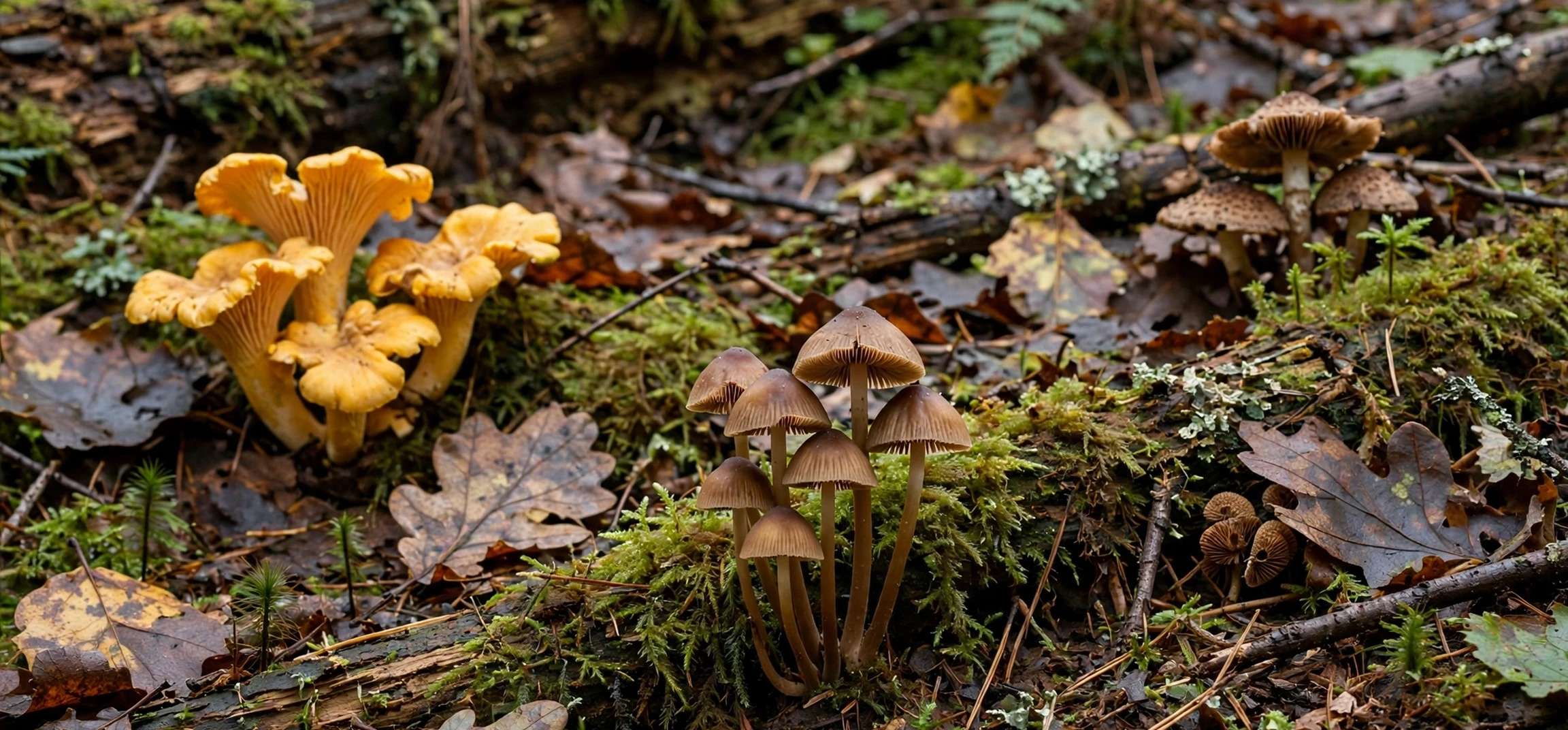
Psilocybin mushrooms are fungi whose fruiting bodies contain psilocybin and, usually, smaller amounts of psilocin and related compounds. The best-known species include Psilocybe cubensis, Psilocybe semilanceata, and Psilocybe cyanescens, among many others. They grow in varied habitats, from grasslands to woodlands, depending on species and climate. Identification by appearance alone is extremely unreliable, and many toxic mushrooms look similar to psilocybin-containing species. For that reason, this guide gives no identification key and no foraging advice. Mistaking a poisonous mushroom for another species can cause severe illness or death, and no photograph or description in a general article can make wild identification safe.
Scientists classify these fungi by their genetics, spore characteristics, and chemical profile, not by folk names. Common names vary by region and are often misleading. A single common name may be applied to several different species, and a single species may have many common names. That confusion is one reason researchers insist on Latin scientific names in published work. It is also a reason general readers should be cautious about any source that promises easy identification from a picture or a short description.
A guide to psilocybin mushrooms and the Science of How They Work
Modern neuroscience research on psilocybin focuses on the serotonin system, especially the 5-HT2A receptor. When psilocin binds to these receptors, brain networks that normally work separately can become more interconnected, while the brain default mode network, which is associated with self-referential thinking, shows reduced activity in imaging studies. Researchers have proposed that this temporary reorganisation may help explain reported changes in perception and in rigid patterns of thought. These findings are preliminary, come from controlled laboratory and clinical settings, and do not show that similar effects occur safely outside those settings.
It is important to distinguish between a laboratory study and everyday experience. Clinical trials use screened volunteers, measured doses prepared to pharmaceutical standards, medical supervision, psychological support before and after sessions, and strict exclusion criteria for people with certain psychiatric histories. None of those safeguards apply to uncontrolled use. Effects outside a trial can include anxiety, confusion, paranoia, nausea, raised heart rate, and, in rare cases, prolonged psychological distress. People with a personal or family history of psychosis are generally excluded from trials because of concern about risk, and researchers advise particular caution in those cases.
A guide to psilocybin mushrooms should also be clear about what research has not shown. Psilocybin is not an approved general treatment, it is not a cure for depression or anxiety, and it is not risk-free because it occurs in nature. Natural does not mean safe. Many naturally occurring substances are toxic, and potency varies widely between species, specimens, and batches. Clinical research is ongoing, and regulators have not reached the same conclusions everywhere, which is why the legal picture is so uneven.
A guide to psilocybin mushrooms and Modern Clinical Research
In the twenty-first century, research institutions in the United States, the United Kingdom, and elsewhere have conducted small, carefully controlled trials of psilocybin-assisted therapy for conditions such as treatment-resistant depression, anxiety related to serious illness, and substance-use disorders. Some trials reported meaningful symptom reductions for some participants, and those results attracted wide media attention. Larger trials are now under way to test whether the early findings hold up, how long benefits last, and which patients, if any, might benefit most.
Researchers emphasise several limits. Trial samples have been small, participants received extensive psychological support alongside the compound, and long-term safety data remain limited. Placebo effects, expectancy, and the therapeutic relationship all play a role in outcomes, and scientists are still working out how much of any benefit comes from the drug itself versus the surrounding therapy. Regulators therefore treat psilocybin as an investigational compound in most jurisdictions, even where trial results are promising. A guide to psilocybin mushrooms that promised a treatment outcome would mislead readers, so this article reports the research as encouraging but incomplete.
Public interest has also raised concerns about commercial hype. Some companies and clinics market unproven services, retreats, or products using language borrowed from clinical trials. Readers should be sceptical of claims that a single experience will heal trauma, cure addiction, or transform a life. Genuine research is slow, peer-reviewed, and cautious. If a claim sounds certain, absolute, or too good to be true, it is unlikely to reflect the current state of the science.
History and Cultural Background
Archaeological and historical evidence suggests that some Indigenous peoples in Mexico and Central America used psilocybin-containing fungi in religious and healing ceremonies long before European contact. Spanish colonial records mention sacred mushrooms, often in disapproving terms, and the practices survived in some communities despite suppression. In the twentieth century, Western researchers, including ethnomycologist R. Gordon Wasson, publicised these traditions, which helped spark wider scientific and popular interest.
The 1960s counterculture adopted psychedelic substances as symbols of rebellion and exploration, which in turn led to stricter laws in many countries. By the 1970s, psilocybin was placed in the most restrictive legal categories in the United States and in international drug treaties. Research largely stopped for decades, not because scientists lost interest, but because funding and regulatory barriers made trials extremely difficult. The revival of research in the 2000s is sometimes called a psychedelic renaissance, though researchers caution that the term overstates how settled the science is.
Cultural discussion today is broader than it was in the 1960s. It includes Indigenous rights, because communities whose traditions involved these fungi have raised concerns about appropriation and commercialisation. It includes mental health policy, because advocates argue that restrictive laws block research. And it includes public health, because health authorities worry about misinformation. A balanced guide to psilocybin mushrooms must hold those perspectives together rather than choosing only one.
Legal Status Around the World
Legal status is one of the most important sections of any guide to psilocybin mushrooms, and it is also the most variable. Under the United Nations Convention on Psychotropic Substances of 1971, psilocybin and psilocin are listed as controlled substances, but the treaty treatment of the mushrooms themselves has been interpreted differently by different countries. National laws therefore differ sharply, and local laws can differ further within a country.
In the United States, psilocybin remains a Schedule I controlled substance under federal law, meaning the federal government classifies it as having a high potential for abuse and no currently accepted medical use at the federal level. At the same time, a small number of states and cities have changed their own laws. Oregon created a regulated, supervised service programme, and Colorado voters approved a regulated model for certain natural medicines. Several cities have deprioritised enforcement for personal possession. These state and local changes do not change federal law, and they do not make psilocybin legal everywhere in those states. The details, including age limits, supervised settings, and what is still prohibited, vary and continue to change.
Outside the United States, the picture is equally mixed. The Netherlands tolerates the sale of psilocybin-containing truffles under specific rules, while mushrooms themselves are prohibited. Jamaica and Brazil have more permissive approaches in practice, though the legal details are complex. In the United Kingdom, Australia, and most of the European Union, psilocybin remains a controlled substance, with limited exceptions for approved research and, in Australia, for specially authorised psychiatric use under strict conditions. Readers must check the law in their own jurisdiction before acting on any general information, and this article is not legal advice.
| Place | General Position | Important Note |
|---|---|---|
| United States (federal) | Schedule I controlled substance | State and city reforms do not override federal law |
| Oregon and Colorado | Regulated supervised service models | Services are licensed and supervised, not open retail sale |
| Netherlands | Truffles tolerated under rules, mushrooms banned | The distinction is specific to Dutch policy |
| United Kingdom | Controlled substance, research licences only | Possession and supply remain offences |
| Australia | Controlled, with authorised psychiatric exception | Exception applies only through approved prescribers |
| Research settings worldwide | Trials under ethics and regulatory approval | Trial participation is screened and supervised |
Risks, Safety, and Harm Reduction Information
Because this is an informational guide, the safety section focuses on general knowledge rather than instructions. The main risks reported in the literature include acute anxiety and panic, confusion, nausea, increased blood pressure and heart rate, and, uncommonly, a prolonged period of distress after the experience. The risk of a difficult psychological experience rises with higher doses, unfamiliar settings, existing mental health conditions, and use alongside other substances or medications. Interactions with psychiatric medicines are a particular concern, and people taking such medicines should discuss any question with a qualified clinician rather than relying on internet sources.
Another major risk is misidentification. Wild mushrooms that contain toxins can cause liver failure, kidney damage, or death, and some toxic species resemble psilocybin-containing species closely enough to fool non-experts. There is no safe home test that replaces expert identification, and cooking does not reliably make a toxic mushroom safe. For that reason, foraging for psychoactive fungi is dangerous, and this guide provides no guidance that could facilitate it.
Anyone experiencing severe distress, chest pain, breathing difficulty, or a mental health crisis should seek emergency help immediately and tell responders honestly what has happened so that care can be appropriate. Readers who are struggling with mental health should consider speaking with a licensed clinician, a doctor, or a trusted health service. Information in an article is not a substitute for professional care, and self-treatment with a controlled substance is not a safe alternative to evidence-based treatment.
Common Myths and Misunderstandings
Myth: Natural mushrooms are automatically safe
Nature produces many potent toxins. Potency in fungi varies, identification is difficult, and effects are unpredictable. The natural origin of psilocybin says nothing about its safety in any given situation.
Myth: Research proves psilocybin cures depression
Trials show promise for some participants under controlled conditions, but results are preliminary, samples are small, and regulators have not approved psilocybin as a general treatment in most countries. Larger trials are still needed.
Myth: Decriminalisation means legalisation
Decriminalisation usually means a jurisdiction has reduced penalties or deprioritised enforcement. It does not necessarily create a legal market, allow commercial sale, or protect supply. Legalisation and regulation are separate, stricter steps.
Myth: A guide to psilocybin mushrooms must include how-to details
A responsible guide can explain science, history, and law completely without instructions for obtaining, growing, preparing, or using the substance. Omitting how-to detail is a safety and legal choice, not a gap in coverage.
Frequently Asked Questions
What is a guide to psilocybin mushrooms for?
A guide to psilocybin mushrooms is for education: learning what these fungi are, what research says, how cultures have regarded them, and how the law treats them. It is not a manual for use, and this article deliberately contains no practical instructions.
Is psilocybin legal?
It depends on where you are. In many countries it remains a controlled substance. A few states, cities, and countries have reformed their laws in limited ways, but those reforms vary greatly and do not make psilocybin legal everywhere. Always check current local law, and treat this article as general information, not legal advice.
Has research found medical benefits?
Controlled trials have reported promising results for some participants with certain conditions, especially when psilocybin was combined with psychological support. The evidence is still early, and benefits, risks, and suitable patient groups are not yet established. No general medical claim should be drawn from early trials alone.
Why is identification so dangerous?
Many toxic mushrooms look similar to psilocybin-containing species, potency varies, and mistakes can be fatal. No general article, photograph, or online description can make wild identification safe, which is why this guide gives no identification advice.
Further Reading on Related Guides
Readers interested in how guides are structured and how scientific topics are explained for general audiences may find a guide to writing clear, well-structured guides useful, along with historical background on law and rights in the United States and an explainer on how meanings and symbols are interpreted. Those internal guides show how complex topics can be presented accurately without sensationalism.
Why Readers Look for a guide to psilocybin mushrooms
People look for a guide to psilocybin mushrooms for many reasons: curiosity about science, questions about mental health research, interest in history, or confusion about the law. A good guide to psilocybin mushrooms should answer those questions honestly, separating early evidence from proven treatment and separating state reforms from federal law. This guide to psilocybin mushrooms has aimed to do that, explaining what researchers know, what they do not yet know, and why legal status varies so much. Readers who finish a guide to psilocybin mushrooms should feel better informed, more cautious about hype, and clearer about where to find reliable sources, including peer-reviewed studies and official health guidance.
Conclusion
A guide to psilocybin mushrooms, done responsibly, covers four things: what these fungi are, what science has and has not shown, how cultures and laws have treated them, and what risks readers should understand. The science is genuinely interesting, and the renewed research deserves careful attention. At the same time, the risks are real, the law is unsettled and varies by place, and the evidence for medical use remains early. Readers who keep those facts together will be better equipped to follow future research, to understand policy debates, and to avoid misinformation.
If your interest is academic, medical, or journalistic, the best next step is to read peer-reviewed research, official regulatory statements, and reputable health sources, and to discuss any personal health question with a qualified professional. This guide to psilocybin mushrooms has aimed to give you that foundation without instructions for use, without hype, and without pretending that unsettled questions are settled. The field will continue to change as larger trials report and as laws evolve, and future guides will need to update their conclusions as the evidence does.