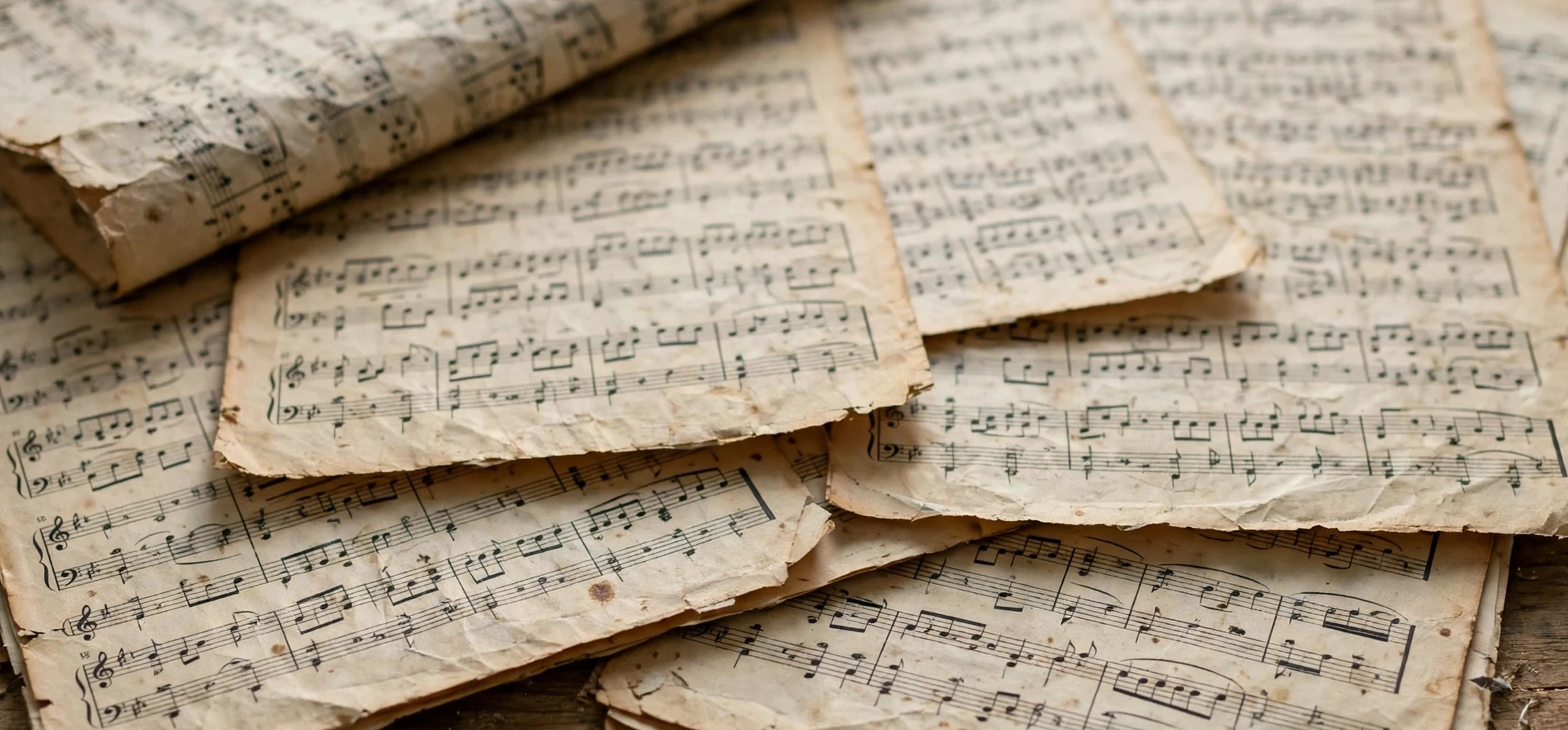
Every piece of written music is full of small marks that tell musicians what to play, how loudly to play it, and how the notes should feel, and each symbol in music has a name, a job, and a history. If you have ever stared at a score and wondered what the curly sign at the start of the staff means, why some notes have dots after them, or what the difference is between a sharp and a natural, this guide is for you. It explains the most important music symbols and their names in plain language, shows how they work together on the staff, and helps you read a score with far more confidence, whether you sing, play an instrument, or simply want to understand the music you love.
Learning music symbols is a little like learning road signs. At first, every mark looks mysterious, but once you know a handful of the most common ones, whole pages of music start to make sense. A symbol in music is never decoration. Each one is an instruction from the composer to the performer, and missing one can change the sound completely. This guide moves from the basics, the staff and clefs, through rhythm, pitch, dynamics, tempo, and expression marks, and finishes with a quick-reference table and answers to the questions beginners ask most often.
The Staff and Clefs: Every Symbol in Music Starts Here
All Western music notation is built on the staff, a set of five horizontal lines with four spaces between them. Notes sit on the lines and in the spaces, and their vertical position tells you their pitch: higher on the staff means higher in sound. The staff alone, however, does not tell you which line is which note. That job belongs to the clef, the symbol at the very beginning of each staff. The two clefs you will meet most often are the treble clef and the bass clef.
The treble clef, also called the G clef, curls around the second line from the bottom, marking that line as the note G. It is used for higher instruments and voices, such as the violin, flute, trumpet, and soprano voice, and for the right hand of the piano. The bass clef, also called the F clef, has two dots that straddle the fourth line from the bottom, marking that line as the note F. It is used for lower instruments and voices, such as the cello, bassoon, trombone, and bass voice, and for the left hand of the piano. Piano music uses both clefs at once, joined by a brace into the grand staff, so a pianist reads two staves together.
There are other clefs too, though beginners meet them less often. The alto clef, used mainly by the viola, centres on the middle line as middle C. The tenor clef is used by higher passages for cello, bassoon, and trombone. You do not need to memorise every clef at once. Start with treble and bass, and learn the others only when an instrument you play requires them. The key point is that a clef is not just a pretty symbol at the start of the line; it is the key that unlocks every note that follows it, and it is the first symbol in music most students learn to read fluently.
Rhythm Symbols: Note Values and Rests
If pitch is which note to play, rhythm is when to play it and for how long. The basic note values form a simple family. A semibreve, also called a whole note, lasts four beats in common time. A minim, or half note, lasts two beats. A crotchet, or quarter note, lasts one beat. A quaver, or eighth note, lasts half a beat, and a semiquaver, or sixteenth note, lasts a quarter of a beat. Each shorter value is half the length of the one before it, which makes the system beautifully logical once you see the pattern.
Notes are recognised by their appearance. A semibreve is an open note head with no stem. A minim adds a stem to the open note head. A crotchet fills the note head in black but keeps the stem. A quaver adds a single flag or a beam joining it to a neighbouring quaver, and a semiquaver adds a double flag or double beam. Beams group shorter notes together by beat, which makes rhythm much easier to read at speed, because you can see the beat structure at a glance instead of counting flags one by one.
Every note value has a matching rest, a symbol for silence of the same length. A semibreve rest hangs from a line, a minim rest sits on a line, and crotchet, quaver, and semiquaver rests have their own distinctive shapes. Rests are just as important as notes, because silence is part of music. A well-placed rest creates breathing space, surprise, and emphasis, and a musician who ignores rests will play a piece that sounds rushed and shapeless. A rest deserves as much attention as any other symbol in music on the page. Two small additions extend note values: a dot after a note increases its length by half, so a dotted crotchet lasts one and a half beats, and a tie, a curved line joining two notes of the same pitch, combines their values into one longer sound.
Pitch Symbols: Sharps, Flats, and Naturals
Accidentals are the symbols that raise or lower a note’s pitch, and they are essential to every symbol in music that deals with tuning and key. A sharp sign raises a note by a semitone, the smallest step in Western music. A flat sign lowers a note by a semitone. A natural sign cancels a previous sharp or flat, returning the note to its plain pitch. Accidentals placed before a note apply to that note for the rest of the bar, which is a rule beginners often forget, leading to wrong notes later in the same bar.
The key signature is a group of sharps or flats placed right after the clef at the start of every line. It tells you that certain notes are always sharpened or flattened throughout the piece, unless cancelled by a natural. The key signature is how a piece declares its key: a piece with no sharps or flats is in C major or A minor, while a piece with one sharp is in G major or E minor, and so on. Learning key signatures takes time, but you do not need to learn them all at once. Each key signature is a symbol in music that saves the composer from writing the same accidental before every affected note. The circle of fifths, a diagram that orders keys by their sharps and flats, is the standard way to learn them gradually, one key at a time.
Two further pitch symbols are worth knowing early. The octave sign, written as 8va with a dotted line, tells the player to play the notes an octave higher than written, which keeps very high passages readable without endless ledger lines above the staff. Similarly, 8vb indicates an octave lower. Ledger lines themselves are the short extra lines added above or below the staff for notes that fall outside its five lines. They look intimidating at first, but they follow the same spacing as the staff, so you can count outwards from the nearest staff line to find the note.
Dynamics and Tempo Symbols
Dynamics tell musicians how loudly or softly to play, and they use Italian words abbreviated to letters. The most common are pp (pianissimo, very soft), p (piano, soft), mp (mezzo-piano, moderately soft), mf (mezzo-forte, moderately loud), f (forte, loud), and ff (fortissimo, very loud). A symbol in music that changes volume gradually is the hairpin: a widening wedge means crescendo, getting louder, and a narrowing wedge means diminuendo or decrescendo, getting softer. The written words cresc. and dim. mean the same thing and are often used for longer gradual changes.
Tempo marks tell musicians how fast to play. They are usually Italian words placed above the staff at the start of a piece or section. Largo means very slow and broad, adagio means slow, andante means at a walking pace, moderato means moderately, allegro means fast and lively, and presto means very fast. A metronome mark, such as a crotchet equals 120, gives an exact speed in beats per minute and removes all guesswork. Changes of tempo have their own marks: accelerando means gradually faster, ritardando means gradually slower, and a tempo means return to the original speed. Expression marks sit alongside tempo and dynamics, telling the performer about character as well as speed: dolce means sweetly, espressivo means expressively, and con brio means with vigour.
Tempo and dynamics work together to create the emotional shape of a piece. Together they show that a symbol in music can carry feeling as well as information. The same melody played slowly and softly sounds tender, while the same melody played fast and loudly sounds triumphant. This is why composers mark their scores so carefully, and why performers study the marks rather than just the notes. A useful next step after dynamics is exploring expressive timing in more depth, for example through this explanation of rubato in music, where tempo is stretched and pulled for expressive effect.
Articulation: A Symbol in Music for How Notes Sound
Articulation marks tell musicians how each note should be attacked and released, which is what makes a performance sound crisp, smooth, or punchy. A dot above or below a note means staccato: play the note short and detached. A curved line over a group of different notes means legato: play them smoothly connected, with no gaps between them. An accent mark, a small wedge above or below a note, means stress that note more than its neighbours. A tenuto line, a short horizontal stroke, means hold the note for its full value with a slight emphasis.
Two curved lines look similar but do very different jobs, and confusing them is a classic beginner error. A tie joins two notes of the same pitch into one longer note, as described earlier. A slur joins notes of different pitches and means play them smoothly connected, often in a single breath or bow stroke. The difference is pitch: same pitch means tie, different pitches means slur. Confusing the two is a common early error, because each symbol in music here looks like a curve but means something different. Phrasing marks, longer slurs that span a whole musical phrase, show the shape of a melody the way punctuation shows the shape of a sentence, and they help performers breathe and bow in sensible places.
Repeat signs are among the most practical symbols in music. A pair of thick and thin bar lines with two dots means repeat the section between them, saving the composer from writing the same passage twice. First and second time endings, marked with brackets labelled 1 and 2, tell the player which ending to use on each pass through the repeat. The symbols D.C. al Fine and D.S. al Coda send the player back to the start or to a sign, and then on to a finishing point or coda section. These road-map symbols can look confusing on first sight, but they follow a simple logic: play through, jump back as instructed, and stop where told.
Ornaments and Advanced Symbols
Ornaments are small decorations added to notes, and they give music its sparkle and period character. A trill, marked with “tr” and a wavy line, means alternate rapidly between the written note and the note above it. A mordent, a short squiggle above the note, means alternate once with the neighbouring note, upwards for an upper mordent and downwards for a lower mordent. A turn, a sideways S shape, means play the note above, the note itself, the note below, and the note itself again in quick succession. A grace note, a small note printed before a main note, is played very quickly and does not count towards the bar’s beat total.
Other symbols you will meet as you progress include the fermata, a dot under a semicircle, which means hold the note longer than its written value, at the performer’s discretion. The breath mark, a small comma-like sign, tells singers and wind players where to breathe. The pedal marks in piano music show when to press and release the sustain pedal, which lets notes ring on after the keys are released. None of these needs to be learned on day one, but recognising them when they appear will stop them from feeling like mysterious interruptions in an otherwise readable score. Each one is a symbol in music with a precise, learnable meaning.
It is also worth remembering that music symbols are not limited to classical scores. Pop, rock, and film music use chord symbols, such as Cmaj7 or G7, written above the staff, which tell guitarists and keyboard players which harmony to play without writing out every note. Tab notation for guitar replaces the staff with six lines representing strings, with numbers showing which fret to press. These systems are different from standard notation, but they share the same purpose: turning musical ideas into instructions a performer can follow. For sudden changes of character, see this note on subito in music, a mark that means an abrupt, immediate change.
| Symbol name | What it looks like | What it means |
|---|---|---|
| Treble clef (G clef) | Ornate curl around the second line | Marks that line as G; used for higher voices |
| Bass clef (F clef) | Curve with two dots around the fourth line | Marks that line as F; used for lower voices |
| Sharp | Hash-like sign before a note | Raise the note by one semitone |
| Flat | Lowercase b shape before a note | Lower the note by one semitone |
| Natural | Square-ish sign before a note | Cancel a previous sharp or flat |
| Staccato dot | Dot above or below a note | Play the note short and detached |
| Fermata | Dot under a semicircle | Hold the note longer than written |
| Crescendo hairpin | Widening wedge | Gradually get louder |
Frequently Asked Questions
What is the most important symbol in music to learn first?
The clef, because it tells you which notes the lines and spaces represent. Without the clef, the rest of the staff is meaningless. Learn the treble clef first if you play a higher instrument, and the bass clef first if you play a lower one.
How long does it take to learn to read music symbols?
Most beginners can recognise the common symbols within a few weeks of regular practice, and read simple scores fluently within a few months. Each new symbol in music you learn makes the next score a little easier to read. The key is steady, short practice rather than occasional long sessions, and reading real pieces rather than only drilling symbols in isolation.
Do I need to learn Italian to understand music symbols?
No. You only need to learn a small set of Italian words for tempo, dynamics, and expression, and they are used the same way in every country. A short glossary kept beside your practice space is enough for most players. Theme music is a fun place to spot these marks in action, as in this TV show theme music compilation.
What is the difference between a tie and a slur?
A tie joins two notes of the same pitch into one longer sound. A slur joins notes of different pitches and means play them smoothly connected. Same pitch means tie; different pitches means slur.
Are music symbols the same all over the world?
Standard Western notation is used internationally, so a score printed in one country can be read in another. Note names for rhythm values differ between American and British English, for example quarter note versus crotchet, but the symbols themselves are the same.
Conclusion
A symbol in music is an instruction, a shortcut, and a piece of history all at once. The clef tells you where you are, the note values tell you when to play, the accidentals tell you which pitch to choose, the dynamics and tempo marks tell you how it should feel, and the articulation and ornament marks tell you how each note should sound. No one learns all of these in a single sitting, and no one needs to. Start with the staff, the two main clefs, and the basic note values, then add dynamics, accidentals, and articulation as your playing grows, and treat every new symbol in music as one more instruction you can now follow. Before long, the page that once looked like a forest of mysterious marks will read like a clear set of directions, and you will hear the music in your head before you play a single note.