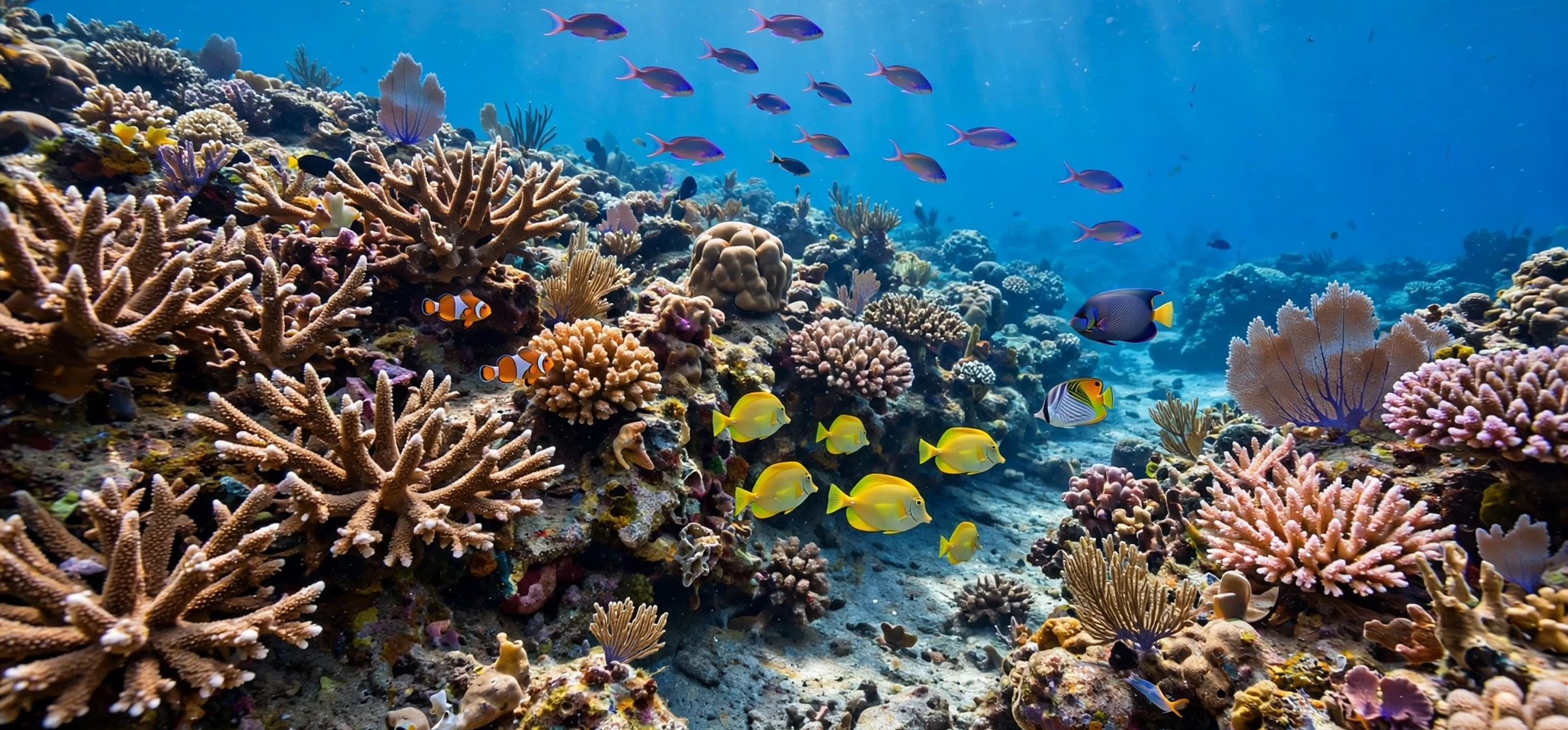
If you are looking for nemo fish names, you probably want more than just the title character. Finding Nemo is full of memorable fish, each with a distinct species, personality, and role in the story, from a forgetful blue tang to a vegetarian shark, a laid-back turtle, and a whole tank of aquarium characters. This complete guide lists the nemo fish names you need, explains which real species each character is based on, and clears up common confusions, such as the difference between Nemo, Marlin, and Dory, and who the other fish in the tank actually are.
Finding Nemo, released by Pixar in 2003, follows Marlin, a cautious clownfish father, on a journey across the ocean to find his son Nemo, who has been captured by a diver and placed in a dentist’s fish tank in Sydney. Along the way, Marlin meets Dory, a regal blue tang with short-term memory loss, and a cast of sea creatures who help, hinder, or simply steal scenes. The sequel, Finding Dory, later shifts focus to Dory’s own family and past, adding even more nemo fish names to the franchise. This guide covers the main film first, then the key additions, so you can identify every major character with confidence.
Nemo Fish Names: The Main Characters
The three names most people search for under nemo fish names are Nemo, Marlin, and Dory, and they are easy to confuse if you only remember colours. Nemo is a young clownfish, orange with white stripes, and one smaller fin, which the film calls his lucky fin. Marlin is his father, also a clownfish, slightly larger and more anxious, whose overprotectiveness drives much of the story. Dory is not a clownfish at all. She is a regal blue tang, also called a palette surgeonfish, royal blue tang, or hippo tang, with a bright blue body, black markings, and a yellow tail.
That species distinction matters, because Dory’s appearance is completely different from the clownfish family. Clownfish, also called anemonefish, live among sea anemones and are famously orange and white. Blue tangs live on coral reefs in the Indo-Pacific, grow larger than clownfish, and are known for their vivid blue colour and a sharp spine near the tail, which gives surgeonfish their name. In the film, Dory’s forgetfulness is played for comedy, but it also makes her a loyal, optimistic companion who keeps Marlin moving when he wants to give up.
Other central fish include Coral, Marlin’s partner and Nemo’s mother, who appears at the start of the film, also a clownfish. The opening tragedy, in which Coral and most of their eggs are lost, explains Marlin’s fear and his determination to protect his one surviving son. Understanding Coral’s brief role helps the whole story make sense: Marlin is not simply overprotective by nature, he is a grieving parent trying to keep his last child safe.
Nemo Fish Names in the Tank Gang
Once Nemo reaches the dentist’s aquarium in Sydney, he meets the Tank Gang, a group of aquarium fish who have their own plan to escape to the ocean. Their nemo fish names are among the most searched in the film, because each character has a distinct look and a memorable line. Gill is the leader, a moorish idol with a scarred fin, who has tried to escape many times. Bloat is a pufferfish who inflates when startled or excited. Bubbles is a yellow tang obsessed with bubbles. Deb is a black-and-white humbug damselfish who believes she has a twin sister, Flo, reflected in the glass.
Peach is a pink starfish, not a fish at all, but a key Tank Gang member who watches the dentist’s office from the tank glass and reports what is happening outside. Jacques is a French-accented cleaner shrimp who keeps the tank spotless. Gurgle is a royal gramma, a small purple-and-yellow fish who is anxious about germs and tank cleanliness. Each Tank Gang member plays a role in Nemo’s escape plan, and each one reflects a different personality: leadership, anxiety, optimism, obsession, and loyalty. The gang’s famous initiation, in which Nemo must swim through a ring of fire, is actually a test of courage involving the tank’s bubbling volcano ornament, not real fire.
The dentist himself, Philip Sherman, is a human character, not a fish, but he is central to the Tank Gang story because his niece Darla is due to receive Nemo as a gift. Darla, also human, is infamous in the film for shaking fish bags and for a history of fish not surviving her care, which gives Nemo’s escape its urgency. The Tank Gang’s plan, involving jamming the tank filter so the dentist must clean it by hand, is a clever piece of aquarium logic that children and adults alike remember long after watching.
Nemo Fish Names: Sharks, Turtles, and Ocean Friends
Outside the tank, Marlin and Dory meet some of the film’s most beloved non-clownfish characters. Bruce is a great white shark who leads a support group for fish-eating sharks trying to eat only fish-free food, with the motto fish are friends, not food. His friends are Anchor, a hammerhead shark, and Chum, a mako shark. The joke works because the sharks are genuinely trying to be vegetarian, at least until the smell of blood triggers their instincts, leading to a chaotic chase through a sunken submarine and a minefield.
Crush is a green sea turtle, a surfer-dude character who rides the East Australian Current with his son Squirt. Crush and Squirt are sea turtles, not fish, but they are essential to the nemo fish names conversation because many viewers list them alongside the fish characters. The East Australian Current sequence, with turtles surfing a fast-moving ocean highway, is one of the film’s most visually memorable scenes, and Crush’s laid-back wisdom, go with the flow, becomes a theme for Marlin, who must learn to trust Nemo and let go of constant fear.
Other ocean characters include Nigel, a brown pelican who helps Marlin and Dory reach the dentist’s office, and who is a bird, not a fish. Mr. Ray is a spotted eagle ray who teaches Nemo’s class about the ocean. The seagulls, famous for their repeated cry of mine, mine, mine, are also birds, and they provide comic relief at Sydney Harbour. A jellyfish forest, a whale, and a school of moonfish, who form shapes including an arrow and other images to guide Marlin, all add to the ocean world. The moonfish school is a particularly clever detail, because real schooling fish do move in coordinated patterns, even if they do not spell out directions.
Complete Table of Finding Nemo Fish
The table below brings the main nemo fish names together in one place, with species and role, so you can settle arguments, complete quizzes, or help children identify characters while watching.
| Character | Species | Role in the film |
|---|---|---|
| Nemo | Clownfish | Young son captured and taken to Sydney |
| Marlin | Clownfish | Nemo’s father, searching across the ocean |
| Coral | Clownfish | Marlin’s partner, Nemo’s mother |
| Dory | Regal blue tang | Forgetful companion who helps Marlin |
| Gill | Moorish idol | Leader of the Tank Gang |
| Bloat | Pufferfish | Tank Gang member who inflates |
| Bubbles | Yellow tang | Tank Gang member obsessed with bubbles |
| Deb and Flo | Humbug damselfish | Tank Gang member and her reflection |
| Gurgle | Royal gramma | Anxious Tank Gang member |
| Bruce | Great white shark | Shark support group leader |
| Anchor | Hammerhead shark | Bruce’s shark friend |
| Chum | Mako shark | Bruce’s shark friend |
| Mr. Ray | Spotted eagle ray | Nemo’s school teacher |
Characters who are not fish, but who are often listed with them, include Peach the starfish, Jacques the cleaner shrimp, Crush and Squirt the sea turtles, Nigel the pelican, and Darla the human niece. Keeping that distinction clear makes quizzes and school projects more accurate, and it helps children learn real ocean biology alongside the film’s story.
Nemo Fish Names in Finding Dory
Finding Dory, the 2016 sequel, adds a new set of nemo fish names centred on Dory’s family and the Marine Life Institute, an aquarium and rehabilitation centre in California. Dory’s parents are Jenny and Charlie, both regal blue tangs like Dory, who have been searching for their daughter for years. Their reunion is the emotional core of the sequel, and it reframes Dory’s memory loss not as a joke, but as a condition her family learned to support with love and practical strategies, such as following shells laid as a trail home.
New friends include Hank, a seven-armed octopus, technically a septopus in the film’s joke, who wants a quiet life in a Cleveland aquarium and helps Dory navigate the institute in exchange for her tag. Destiny is a whale shark with poor eyesight who was Dory’s childhood friend. Bailey is a beluga whale who believes he has lost his echolocation ability. Becky is a loon who helps transport Marlin and Nemo in a bucket. Gerald is a sea lion who struggles to get a spot on a rock with other sea lions. Each new character expands the ocean world while keeping the focus on friendship, disability, and family, themes that made the first film resonate with both children and adults.
Marlin and Nemo return in Finding Dory, with Marlin now learning to trust Dory’s instincts rather than only his own caution. That role reversal is a satisfying payoff to the first film: the anxious father who once needed Dory’s optimism now must believe in her when she is lost, and Nemo, now more confident, helps his father stay calm. Together, the two films form a complete family story about letting go, finding home, and accepting differences.
Real Species Behind the Characters
Pixar based its characters on real reef species, with some artistic licence for colour, size, and personality. Real clownfish do live among anemones, protected by a mucus coating that prevents stings, and they are sequential hermaphrodites, a biological detail the films wisely do not explore in a children’s story. Real blue tangs are indeed bright blue with a yellow tail, and they can be territorial and active on reefs. Real pufferfish do inflate by swallowing water or air, and real yellow tangs are popular aquarium fish known for their vivid colour.
Real moorish idols, like Gill, are striking black, white, and yellow fish that are difficult to keep in home aquariums, which fits Gill’s wild, escape-minded character. Real hammerhead, mako, and great white sharks are powerful predators, which makes their vegetarian support group in the film especially funny. Real sea turtles do migrate long distances and ride ocean currents, although not quite in the surfing style Crush enjoys. Learning these real facts adds a second layer to watching: children can enjoy the story while also learning that clownfish, tangs, sharks, and turtles are real animals with real habitats that deserve protection.
That conservation message is part of why Finding Nemo remains popular in schools and aquariums. The film encourages viewers to appreciate ocean life, to avoid capturing wild fish irresponsibly, and to support reef conservation. If a child falls in love with Dory or Nemo and wants a pet, the responsible answer is to research the species, its tank size, diet, lifespan, and wild population, and to choose captive-bred fish from reputable sources where available, rather than assuming a film character makes an easy pet. A related guide to Finding Nemo’s dad on this site answers the single most common follow-up question in one place, while this guide covers the full cast.
Nemo Fish Names: Search Summary
If you arrived here by searching for nemo fish names, the complete answer starts with Nemo and Marlin, both clownfish, and Dory, a regal blue tang. The full list of nemo fish names also includes the Tank Gang, the sharks, and the ocean teachers and friends who make the film memorable. Readers who search for nemo fish names often want a quiz-ready list, and the table above gives that list with species and roles. When you share nemo fish names with children, it helps to note which characters are fish and which are turtles, starfish, shrimp, or birds, because that detail makes the nemo fish names list both fun and accurate. Keep this guide handy for your next rewatch, and every character will be easy to name.
Frequently Asked Questions
What are the main nemo fish names?
The main nemo fish names are Nemo and Marlin, both clownfish, and Dory, a regal blue tang. The Tank Gang adds Gill, Bloat, Bubbles, Deb, and Gurgle, among others.
What kind of fish is Dory?
Dory is a regal blue tang, also called a palette surgeonfish or royal blue tang. She is not a clownfish, despite often being grouped with Nemo and Marlin.
What kind of fish is Nemo?
Nemo is a clownfish, also called an anemonefish, orange with white stripes, like his father Marlin and his mother Coral.
Who are the sharks in Finding Nemo?
Bruce is a great white shark, Anchor is a hammerhead shark, and Chum is a mako shark. Together they form a support group with the motto fish are friends, not food.
Conclusion
The full list of nemo fish names goes far beyond the title character. Nemo, Marlin, and Coral are clownfish. Dory is a regal blue tang. Gill, Bloat, Bubbles, Deb, and Gurgle lead the Tank Gang, joined by starfish Peach and shrimp Jacques. Bruce, Anchor, and Chum bring shark comedy, Crush and Squirt bring turtle wisdom, and Mr. Ray brings classroom charm. Finding Dory then adds Jenny, Charlie, Hank, Destiny, and Bailey to the family. Whether you are settling a quiz, helping a child identify characters, or revisiting a beloved film as an adult, this guide gives you the names, species, and roles in one clear place. For more ocean background, see this guide to the world’s oceans on this site, and enjoy your next rewatch with every character recognised, from the smallest clownfish to the largest shark.



