Behind the address for prime minister of england stands nearly three centuries of political history compressed into one terraced house. 10 Downing Street, London SW1A 2AA, has been the official home of Britain’s prime minister since 1735, surviving war, fire risk, rebuilding and the arrival of television cameras at its door. This article tells the story of the house itself: the speculator who built the street, the first prime minister who made it an official residence, the extensions that turned a modest home into a hidden complex, and the rituals that made a plain black door into a global symbol of power.
A note on the wording first. People search for the address for prime minister of england because England is the name they know, but the role served at this address is Prime Minister of the United Kingdom of Great Britain and Northern Ireland. The distinction matters in the history too: the house has hosted leaders governing a changing country, from a Georgian kingdom to a modern multinational state. Reading the building’s story in order shows how the office grew up inside it, room by room and crisis by crisis, until house and job became impossible to picture separately in the public imagination.
A Speculator’s Street: The 1680s
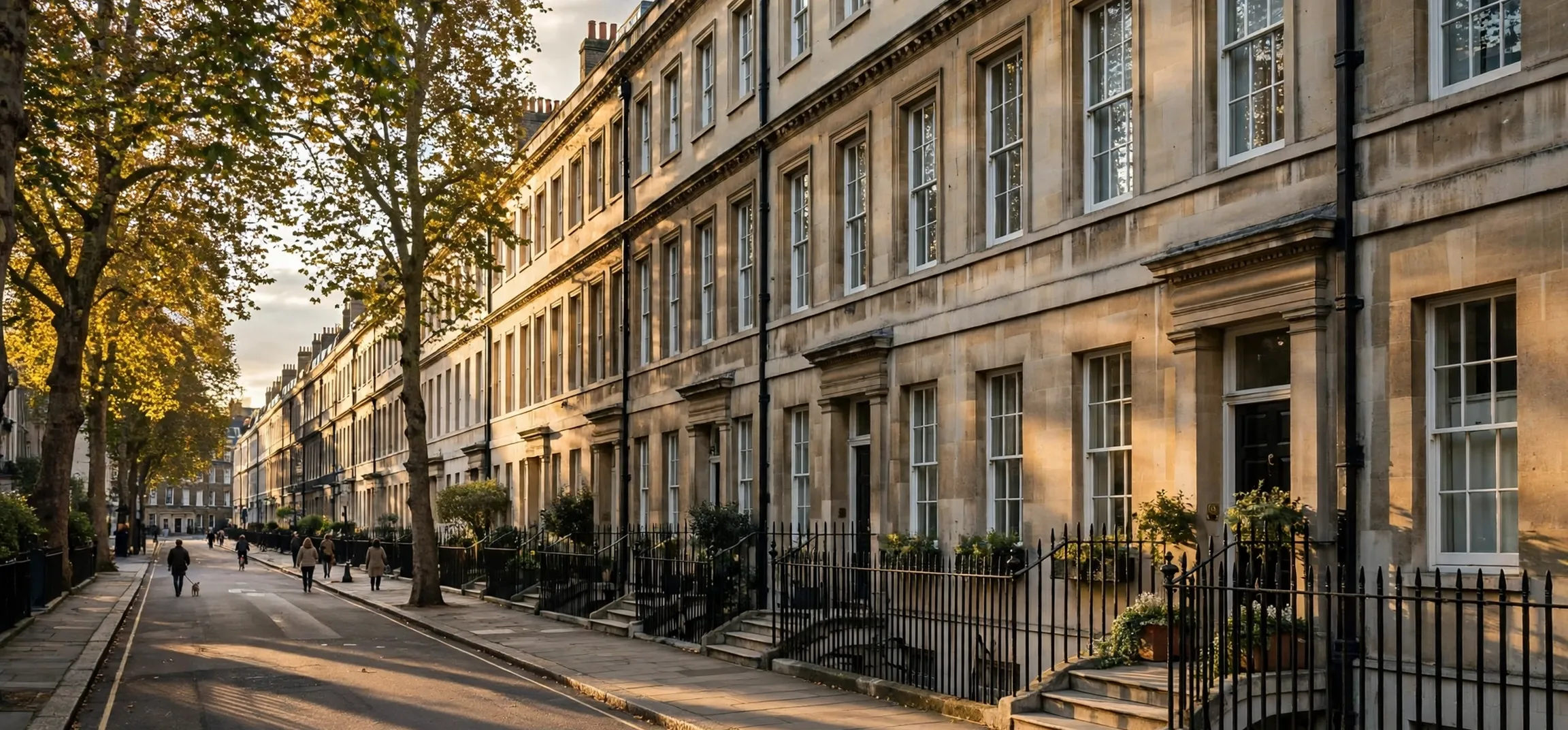
Downing Street was a property scheme. Sir George Downing, a soldier, diplomat and treasury official who had served both Cromwell and Charles II, obtained the land in Westminster in the 1680s and built a row of terraced houses quickly and cheaply to rent to the well-connected. Contemporaries complained the construction was shoddy, with shallow foundations and façades grander than the structures behind them, a judgement later builders confirmed whenever they opened the walls. The street took his name, little knowing it would outlast almost every other association with him. At this stage the address for prime minister of england existed only as ordinary housing a short walk from the palace and Parliament.
The site itself was older still in government use. The plot had held a mansion used by courtiers and officials, and its position, between Whitehall and St James’s Park, placed it at the centre of power long before number 10 did. Location is the thread that runs through the whole story: monarchs, ministers and officials all needed to be within a few streets of each other in an age of foot messengers. Downing’s cheap terrace happened to stand on some of the most politically valuable ground in the country, which is why, fifty years after it was built, the Crown looked at this particular row when a house was needed for a rising statesman.
Walpole Makes the Address for Prime Minister of England Official
In 1732, George II offered the Downing Street property to Robert Walpole, the king’s chief minister and the man history counts as the first prime minister. Walpole accepted on one famous condition: the house should go not to him personally but to the office, as a residence for future First Lords of the Treasury. That decision is the founding act behind the address for prime minister of england as an institution rather than a perk. Before moving in, Walpole had the property enlarged by linking the Downing Street house to a much larger building behind it, the first of many expansions that would let the site grow while keeping its modest face to the street.
The letterbox on the famous door still carries the title First Lord of the Treasury, because the premiership grew out of that treasury role and the titles remain joined. Early occupants did not always live there; some preferred their own grander houses and used number 10 for work or not at all. Through the eighteenth and nineteenth centuries the house’s status rose and dipped with fashion, and at times it was even proposed for other uses. What kept it alive was the logic Walpole created: a state-owned home beside Parliament for the head of the government, whoever they were, ready on the day each new leader took office.
| Era | What happened at number 10 |
|---|---|
| 1680s | Sir George Downing builds the street as a rental scheme |
| 1730s | Walpole makes it the official residence of the office |
| 1960s | Major reconstruction behind the preserved façade |
| 1989–91 | Gates installed; mortar attack prompts heavier security |
The House Grows Behind Its Façade
By the twentieth century the address for prime minister of england hid a complex far bigger than its terrace front suggests. Number 10 connects internally with number 11, the Chancellor’s residence, and with a large house on Horse Guards Road behind, forming a combined complex of roughly a hundred rooms: offices, the Cabinet Room, state dining rooms, kitchens, and the private flat above the shops, as residents joke. Post-war surveys found the building in worrying structural condition, and a major reconstruction around 1960 rebuilt much of it behind the preserved façade, adding steel and modern services while recreating the historic rooms, including the Cabinet Room with its long table and the prime minister’s chair placed, traditionally, before the fireplace.
That reconstruction explains a paradox visitors feel: the house looks small and is not. The black door opens onto an entrance hall far grander than the street promises, with a staircase lined by portraits of past prime ministers ascending in order. State rooms used for receiving presidents and monarchs sit in the extended rear. The garden, hidden completely from public view, has hosted press conferences, diplomatic photographs and, in one famous era, a rose garden announcement of a coalition government. Understanding this hidden scale reframes the address for prime minister of england from a house into a campus wearing a house as its mask, a very British architectural arrangement.
Address for Prime Minister of England in War and Media
The building’s hardest test came in the Second World War, when bombing damaged nearby streets and parts of the complex, and the war cabinet often worked from underground rooms for safety. Churchill used number 10 as his base while famously also directing the war from the bunker complex a few streets away. The address for prime minister of england thus carries wartime associations that still shape its image: continuity under attack. Post-war, another force changed it: television. The door became a stage set for national announcements, resignations and arrivals, with new prime ministers traditionally speaking to the country from a lectern placed in the street itself, a ritual now so fixed that the lectern’s appearance signals breaking news before a word is spoken.
Security changed the street’s relationship with the public in the same era. Until the late 1980s, tourists could stroll down Downing Street and stand at the door. Terrorist threats, including a mortar attack on the building in 1991 that exploded in the garden during a cabinet meeting, ended that openness; gates at both ends now keep the public on Whitehall. The house adapted with blast-resistant windows and the famous door replaced by a steel replica, the wooden original retired to a museum. The address for prime minister of england therefore exists in two forms today: a working, heavily protected building, and a public image of it, the black door and white window frames, reproduced on every news bulletin as shorthand for the whole of British government.
Rituals, Residents and the Modern Office
Life at the address follows rituals that new arrivals inherit. The prime minister’s working week centres on the Cabinet Room’s Tuesday meetings, questions in Parliament on Wednesdays, and the constant flow of officials through the connecting corridors to the Cabinet Office next door, linked by a passage so leaders can reach the machinery of government without going outside. The private flat above, traditionally at number 10 but sometimes swapped with the larger number 11 flat depending on family needs, keeps the job residential in a way few world leaders experience: the commute is a staircase. That intimacy between home and office is the defining feature the address for prime minister of england imposes on everyone who holds the job.
Roughly sixty people have held the premiership, and the house keeps their traces: the portrait staircase, gifts and furniture accumulated by the state, and stories attached to rooms. Yet the building belongs to none of them, exactly as Walpole intended. On election day the transition can be brutally fast: one family’s belongings leave by the back while the new leader speaks at the front door. Few workplaces on Earth dramatise democratic change so visibly in a single afternoon. That, in the end, is why the address for prime minister of england endures in the imagination: not marble or size, but the sight of power changing hands at an ordinary-looking door, on an ordinary-sized street, in the middle of a working city.
Frequently Asked Questions
When did the address for prime minister of england become official? In the 1730s, when Robert Walpole accepted the house on condition it belonged to the office of First Lord of the Treasury rather than to him personally. Prime ministers have used it ever since.
Is the house really as small as it looks? No. The terrace front hides a complex of around a hundred rooms, joined to the house behind and to number 11, with state rooms, offices and the Cabinet Room inside.
Can the public still walk down Downing Street? Not since gates were installed in the late 1980s for security. The street is viewed from Whitehall, and the door is seen at a distance through the gates.
Why is the door opened only from inside? The modern steel door has no external keyhole and is opened by staff on duty inside, a security arrangement that has become one of the building’s famous quirks.
Conclusion
Three centuries, one address: a speculator’s terrace turned into the stage set of British democracy. If this history whets your appetite, continue with our notes on the name of the British flag, most common UK last names, and British most popular names.