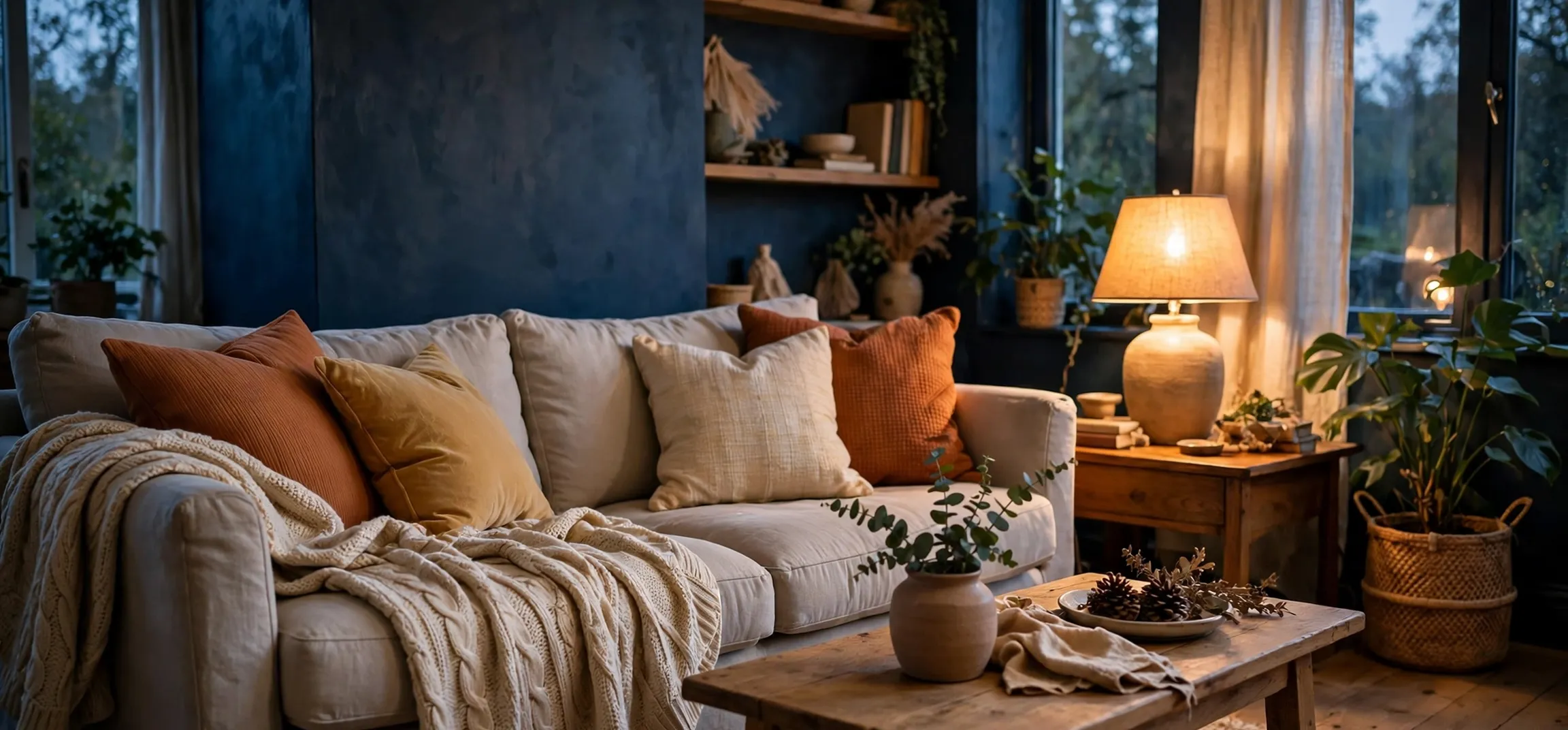
A shade of dark blue might sound like a cold choice for a home or a wardrobe, but used well it is one of the coziest colors you can pick. Think of a deep blue sofa with a soft throw over one arm, a navy sweater worn on a slow evening, or a bedroom wall that makes the bed feel like a quiet harbor. A shade of dark blue works like a warm embrace when it is balanced with texture, soft light and the right companion colors, and that balance is exactly what this guide is about.
Instead of listing color names for their own sake, this article looks at how dark blue behaves in real rooms and real outfits. You will see which shades feel restful, which feel rich and cocooning, how to pair dark blue with warm materials, and how to avoid the one mistake that makes it feel chilly: using it flat, glossy and alone. With a few simple styling habits, any shade of dark blue can become the warm heart of a space or a look.
Why a Shade of Dark Blue Can Feel Warm and Cozy
Cozy is not really about temperature on a thermometer. It is about how enclosed, soft and settled a space or an outfit feels. Dark colors absorb light and pull the edges of a room visually closer, which is why a dark blue wall can make a large, echoing room feel snug instead of empty. A deep shade of dark blue also quiets visual noise. Patterns calm down against it, clutter reads less loudly, and the eye rests, in much the same way a room feels calmer at dusk.
The undertone decides whether that calm feels warm or cool. Blues with a hint of green, such as peacock blue, feel fresh and are best warmed up with wood and warm lighting. Blues with a hint of purple or grey, such as indigo and a muted navy, tend to feel softer and more enveloping. If cozy is the goal, lean toward those softer, slightly muted shades, and save the brightest cobalt-style blues for small accents where a little sparkle is welcome.
Light and Texture Do the Warming
No dark color feels cozy under harsh, flat light. Warm-toned bulbs, lamps at different heights, and natural materials do most of the warming work: wool, linen, velvet, brushed cotton, leather and unfinished wood all soften the surface of dark blue. A navy velvet cushion feels luxurious and warm, while the same color in a shiny, smooth finish can feel formal and cold. When you plan a shade of dark blue for a room or an outfit, plan the textures beside it at the same time.
Using a Shade of Dark Blue in Home Decor
Dark blue is unusually flexible at home because it can be the main color, the supporting color or the accent, and it suits rooms where people relax. The table below matches popular dark blue shades with the rooms and pairings where they tend to feel most comfortable.
| Dark blue shade | Best rooms | Warm pairings that suit it |
|---|---|---|
| Navy blue | Living rooms, hallways, home offices | Warm wood, cream textiles, brass lamps |
| Midnight blue | Bedrooms, reading corners | Soft white bedding, amber light, dark timber |
| Indigo | Bedrooms, dining rooms | Natural linen, woven rugs, candlelight tones |
| Peacock blue | Living rooms, bathrooms | Copper fittings, warm grey, houseplants |
| Steel blue | Kitchens, small apartments | Light oak, warm white, brushed metal |
| Sapphire blue | Accent chairs, cushions, throws | Mustard, rust and other warm accent colors |
For walls, many people start with a single feature wall behind a sofa or bed rather than painting all four walls at once. That gives the room depth while keeping plenty of lighter surface for daylight to bounce around. If a full wall feels like too big a step, try the color lower down: kitchen cabinets, a painted bookcase, a front door or a set of dining chairs can carry a strong shade of dark blue without changing the whole feel of the house.
Small Rooms, Rentals and Low-Commitment Ideas
Dark blue is often wrongly ruled out for small rooms. A small room painted a deep, soft blue can actually feel intentional and cocooning, like a den, especially when the ceiling and trim stay light and the lighting is warm. For renters or anyone not ready to paint, the same effect comes from textiles: a dark blue duvet set, curtains, a rug, cushion covers and a throw can be layered in an afternoon and removed just as easily. Start with the largest textile, usually bedding or a rug, then repeat the color in two or three smaller places so the scheme looks planned.
Wearing a Shade of Dark Blue in Fashion
In a wardrobe, dark blue earns its cozy reputation through knitwear, denim and layering. A navy or indigo sweater over a soft shirt, dark denim with warm brown boots, or a midnight blue coat with a knitted scarf all use the same recipe as a cozy room: a deep base color, soft textures on top, and warm accents beside it. A shade of dark blue also flatters a wide range of skin tones and pairs with almost every other wardrobe color, which is why it works so well as the base of a capsule wardrobe.
For smarter outfits, midnight blue is a gentle alternative to black for evening wear, and it often photographs more softly. Navy tailoring with warm-toned accessories, such as tan leather, gold jewelry or a burgundy scarf, feels polished without feeling severe. For casual days, indigo denim is the easiest dark blue of all: it carries texture naturally, fades in a way that adds character, and sits comfortably with cream, grey, olive, rust and warm browns.
Pairings That Warm Dark Blue Up
Some pairings reliably make dark blue feel warmer. Cream and warm white soften it more gently than a bright, blue-toned white. Camel, tan and cognac leather add an autumn feel. Rust, mustard and terracotta bring out the richness in navy and indigo. Warm metals, especially brass and copper, add glow in both rooms and outfits, through lamps, frames, buttons or jewelry. Even a small amount of one of these partners is enough to shift a shade of dark blue from formal to inviting.
Dark blue also adapts well to the seasons, which helps a room or wardrobe built around it stay interesting all year. In colder months, lean into the cocooning side of a shade of dark blue with heavier throws, thicker curtains, chunkier knits and warmer, lower lighting. In warmer months, lighten the same base with cream linen, pale cushions, bare wood and brighter daylight, and the blue starts to feel cool and restful instead of heavy. The base color never changes, only the layers around it, which is a practical reason dark blue is such a good long-term choice: one well-chosen shade can carry a home or a wardrobe through the whole calendar without ever needing to be replaced.
Styling Mistakes That Make a Shade of Dark Blue Feel Cold
The most common mistake is pairing dark blue with only cool, hard surfaces: grey laminate, chrome, glass and bright white light will push any blue toward chilly. The fix is rarely to abandon the color; adding one warm material and one warm light source usually changes the whole mood. A second mistake is using a shade of dark blue that is too bright for a restful job. Vivid, electric blues are exciting in small doses, but in a bedroom or a quiet reading corner a muted, grey-softened blue will almost always feel calmer.
A third mistake is stopping halfway. One lone dark blue object in an otherwise pale room can look accidental, like it belongs to a different scheme. Repeating the color in at least three places, in different textures, ties the room or outfit together. Finally, test before you commit. Fabric swatches, tester pots and trying an outfit in daylight all reveal the true undertone of a shade of dark blue far better than a screen or a shop light, and they cost very little compared with repainting a wall or replacing a sofa.
Frequently Asked Questions About Cozy Dark Blue Styling
Does dark blue make a room look smaller? It can make walls feel closer, which many people experience as cozier rather than cramped. Keeping the ceiling light, using warm lighting and leaving some pale surfaces in the room stops the effect from feeling heavy, and mirrors or glass-fronted cabinets can add a sense of depth.
What is the warmest dark blue for a bedroom? Muted, slightly purple-leaning shades such as indigo and soft midnight blue are usually described as the warmest and most restful. Paired with warm white or cream bedding, natural wood and low, warm lamplight, they create a calm, enclosed feeling that suits sleep.
Can dark blue work in a small wardrobe? Yes. Dark blue is one of the easiest base colors for a small wardrobe because trousers, knitwear, coats and denim in navy or indigo all mix with each other and with most accent colors. Adding warm accessories in tan, rust or gold keeps repeated outfits from looking flat.
How do I test a dark blue before painting? Paint a large swatch on the wall you plan to use, or on a big sheet of card you can move around, and look at it in morning, afternoon and evening light. Live with it for at least a day, and hold your fabrics and furniture finishes next to it, because neighboring colors change how the blue reads.
Conclusion
Cozy dark blue is not a special product you buy; it is a result you build. Pick a soft, muted shade of dark blue, surround it with warm light and natural texture, repeat it in a few places, and add one warm accent color to keep it glowing. Done that way, dark blue gives a home the feeling of a quiet evening and a wardrobe the feeling of a favorite sweater: calm, deep and easy to live with every day.
To keep exploring color at home, see how green color shades and their names compare, learn the idea behind the meaning of analogous colors, and browse softer options in names of pink color shades.