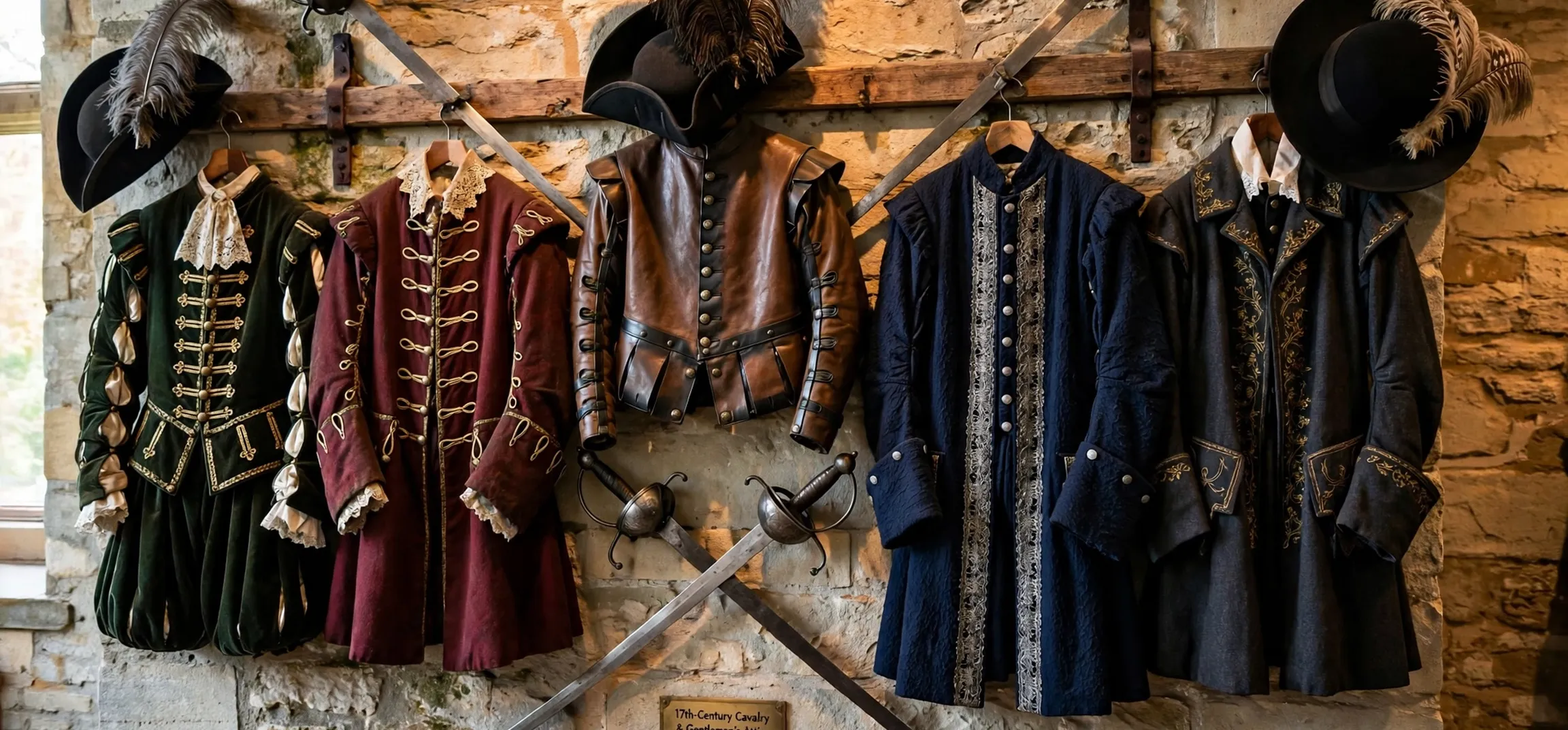
If you are looking for the Musketeers TV show, you are most likely thinking of the BBC swashbuckling drama that reimagined Alexandre Dumas’s classic tale of loyalty, swordplay, and intrigue in seventeenth-century Paris. This guide to the Musketeers TV show explains what the series is, who its central characters are, how its story is structured, and how to watch it in the best order, whether you are discovering it for the first time or returning to it after enjoying another period drama. It is written for new viewers, so it keeps major plot twists vague while giving you enough context to enjoy the first episodes with confidence.
The appeal of the Musketeers TV show is easy to understand. It takes a story that most people already half-know — brave swordsmen, a young recruit, a scheming cardinal, and a queen in danger — and turns it into a fast, colourful television adventure. The series balances action with character drama: duels and chases sit alongside questions about honour, friendship, and duty. That balance is why it works for viewers who love period detail, for viewers who love adventure, and for viewers who simply enjoy a strong ensemble cast. You do not need to have read the novel to follow it, although knowing the basic premise will make the first episode feel immediately familiar.
It helps to be clear about which production this guide covers. The name “Musketeers” has been used for many films, stage versions, and animated retellings over the years, so searches for the Musketeers TV show can return a confusing mix. The BBC television drama is a live-action series made for a mainstream evening audience, with a continuing cast and storylines that run across episodes and series. If a listing you find describes a cartoon, a single film, or a very different cast and setting, it is probably a different adaptation, and this guide will help you tell the difference.
What Is the Musketeers TV Show?
The Musketeers TV show is a period adventure drama set in Paris in the 1630s, when the King’s Musketeers were the elite soldiers guarding the French court. The central idea comes from Dumas’s novel The Three Musketeers: a young man from the country arrives in Paris hoping to become a Musketeer, and instead finds himself drawn into the lives of three experienced soldiers whose motto, “all for one and one for all”, is both a promise and a test. The series keeps that famous spirit while building its own television stories, so each episode can offer a self-contained adventure as well as a step forward in the larger character arcs.
Paris itself is almost a character in the Musketeers TV show. The court, the streets, the taverns, and the training grounds each create a different kind of scene, and the contrast between courtly manners and street-level danger is central to the drama. A character who is polished and controlled in front of the king may be reckless and impulsive in a backstreet confrontation, and that contrast gives the series much of its energy. The production design leans into colour and texture — uniforms, swords, horses, and candlelit rooms — without losing sight of the human stories underneath.
For new viewers, the tone is an important thing to get right. The Musketeers TV show is adventurous and often light-hearted, but it is not a children’s programme and it is not pure comedy. Characters are injured, loyalties are tested, and decisions have consequences that carry into later episodes. At the same time, the series keeps a sense of fun: witty dialogue, daring rescues, and a clear affection for its heroes. That mixture of adventure and consequence is what keeps a long series watchable rather than repetitive.
The Musketeers TV Show Main Characters
At the heart of the Musketeers TV show are four men whose friendship holds the series together. Athos is the thoughtful, world-weary leader of the group, a man whose past shapes his present choices. Porthos is warm, strong, and loyal, with a humour that lightens even tense scenes. Aramis is charming, romantic, and skilled, often the one who sees the human side of a conflict first. D’Artagnan, the young newcomer, brings energy, ambition, and a tendency to act before he thinks, which is both his greatest strength and his greatest weakness. Together they form a believable unit, not because they always agree, but because they trust one another when it matters.
Around them is a court full of powerful and dangerous figures. The king and queen represent the institution the Musketeers serve, but serving the crown is rarely simple. Political rivals, spies, and ambitious courtiers create threats that cannot be solved with a sword alone, and the Musketeers often have to decide between obeying an order and doing what they believe is right. That tension is one of the series’ most reliable sources of drama, because it forces honourable characters into genuinely difficult positions rather than easy victories.
The series also gives meaningful space to the women of the court and the city, who are far from passive bystanders. They scheme, they negotiate, they protect their own interests, and they influence events in ways the Musketeers do not always see coming. If you enjoy period drama for its court intrigue as much as for its action, the Musketeers TV show offers plenty to follow on that front. Paying attention to the court scenes, not just the duels, will make the larger story much richer.
Why the Ensemble Works
Ensemble drama succeeds when each character has a distinct voice and a distinct weakness, and the Musketeers TV show understands that well. Athos’s restraint contrasts with d’Artagnan’s impulsiveness, Porthos’s warmth contrasts with the colder world of the court, and Aramis’s charm contrasts with the violence that his life often requires. Because the four leads are so different, the series can shift tone from episode to episode — a tense political episode, a lighter adventure, a personal story — without feeling as though it has changed shows. The friendship is the constant, and the variety comes from the situations that test it.
How the Musketeers TV Show Is Structured
The Musketeers TV show follows a structure that will feel familiar to fans of modern adventure drama. Individual episodes usually present a clear mission or problem: a conspiracy to uncover, a person to protect, a secret to keep, or a wrong to put right. Within that episode, there is room for action, investigation, and character moments. Across a series, however, larger threads develop: rivalries deepen, secrets from the past return, and relationships change. Watching in order matters, because a decision made in one episode can echo several episodes later, even when the next episode appears to start a fresh story.
The series ran for three series, which gives it a satisfying shape for a viewing project. The first series establishes the world and the central friendship, introducing viewers to Paris, the court, and the Musketeers’ way of life. Later series build on that foundation, raising the stakes and testing the characters in new ways. That progression means the show rewards viewers who stay with it: characters you meet early on return with more depth, and early choices acquire new meaning as the story develops. It also means that starting in the middle is possible but not ideal, since you will miss the groundwork that makes later episodes land.
Episode length follows the standard pattern for a BBC evening drama, with each episode long enough to develop a full adventure without rushing. That makes the Musketeers TV show well suited to a regular viewing habit — one or two episodes at a time — rather than a hurried marathon. A slower pace lets you enjoy the production design, the dialogue, and the small character beats that are easy to miss when episodes blur together. If you do prefer to binge, take a short break between series to let the storylines settle before starting the next chapter.
| Viewing stage | What to look for | Tip for new viewers |
|---|---|---|
| Opening episodes | The world of Paris, the court, and the Musketeers’ code | Watch in order and note who each character trusts |
| Mid-series episodes | Recurring threats and deepening friendships | Watch for decisions that return in later episodes |
| Later series | Higher stakes and long-running consequences | Avoid plot summaries that spoil major turns |
| Rewatching | Early clues and character details | Look for scenes that play differently once you know the outcome |
The Musketeers TV Show and the Novel
Viewers often ask how closely the Musketeers TV show follows Dumas’s novel, and the honest answer is that it borrows the spirit, the characters, and the central situations, while telling its own television stories. That is a common and sensible approach for a long-running series: a single novel cannot supply several series of episodes without invention, and a television audience needs weekly stories with clear momentum. The result is a series that feels faithful to the idea of the Musketeers — loyalty, courage, romance, and intrigue — without being a page-by-page adaptation.
If you have read the novel, you will recognise names, relationships, and famous moments, but you should expect surprises. Characters may be given new backstories, familiar villains may appear in new contexts, and storylines may combine elements from different parts of the book. If you have not read the novel, none of that matters: the series explains everything you need as it goes. Either way, the show is best judged as its own work. Readers who demand strict fidelity will be disappointed by any adaptation, while viewers who accept the series on its own terms will find a great deal to enjoy.
For those who do want to explore further, the novel remains an excellent companion, but it works best after you have finished the series, or alongside it at a relaxed pace. Reading Dumas after watching gives you a second version of the same world to compare, and the differences become interesting rather than frustrating. The same advice applies to other film and stage versions: enjoy them as interpretations, not as competitors for the title of the “correct” Musketeers.
Where to Watch the Musketeers TV Show
Availability for the Musketeers TV show varies by country and changes over time, as with most BBC drama. The most reliable first step is to check the broadcaster’s own streaming service in your region, then the major subscription services you already use, searching by the exact title. Because the series title is short and shared with other adaptations, add a distinguishing word to your search, such as the broadcaster’s name or the word “series”, to filter out unrelated films and cartoons. Checking a reputable streaming search tool for your region is also helpful, since it can show several services at once.
Box sets and digital purchase remain a dependable option for viewers who want to watch the whole run without worrying about a title leaving a service mid-series. A complete set also makes rewatching easier, and it is often the simplest way to be certain you have every episode in the correct order. As with any series, use legitimate sources, which give you reliable subtitles, consistent picture quality, and the correct episode order. If a service in your region does not currently carry the Musketeers TV show, keep it on a watchlist and check again periodically, since catalogue rights rotate regularly. Fans of period and adventure television may also enjoy these related guides: Airwolf TV show retro classic, Bewitched TV show cast members, and Chuck TV show cast nostalgia trip.
Frequently Asked Questions About the Musketeers TV Show
Do I need to have read the novel to enjoy the Musketeers TV show?
No. The series introduces its world, characters, and conflicts as it goes, so new viewers can follow it comfortably. Knowing the basic premise helps, but detailed knowledge of the novel is not required.
Where should I start watching the Musketeers TV show?
Start at the first episode of the first series and watch in order. The series builds character relationships and long-running storylines across episodes, so starting at the beginning gives you the full effect.
Is the Musketeers TV show suitable for family viewing?
It is an adventurous mainstream drama with swordplay and political intrigue, and some storylines deal with serious themes. Parents should check the age guidance on their local service and, if in doubt, watch an episode first to judge its suitability for younger viewers.
How many series of the Musketeers TV show are there?
The BBC drama ran for three series, which together form a complete viewing project with a clear beginning, development, and conclusion. Watching all three in order gives the most satisfying experience.
Conclusion: Why the Musketeers TV Show Still Works
The Musketeers TV show still works because its ingredients are timeless: a loyal friendship tested by danger, a vivid historical setting, and stories that mix action with genuine moral choices. It does not rely on a single hero or a single trick; it relies on an ensemble, a world, and a code of honour that the characters must live up to even when doing so is costly. For a new viewer, that makes it an ideal period adventure to discover: colourful enough to enjoy casually, substantial enough to reward careful watching, and complete enough to finish with satisfaction. Start at the beginning, watch in order, enjoy the court intrigue as much as the swordplay, and let the motto “all for one and one for all” do what it has done for generations of readers and viewers — pull you into the story and keep you there until the final episode.



