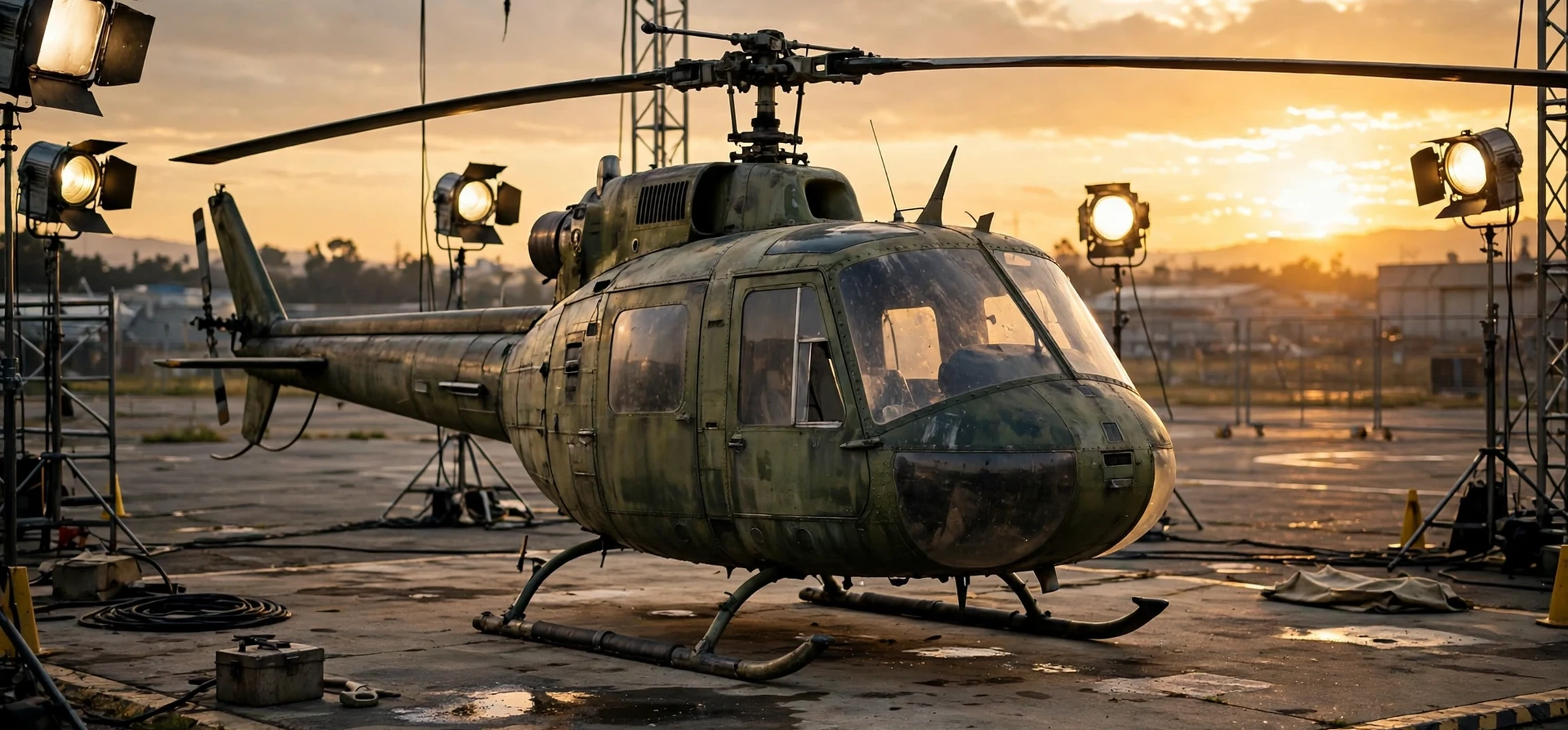
Airwolf TV show retro classic is a phrase that instantly brings back the sound of a helicopter, the glow of 1980s television, and an era when action series ruled prime time. Airwolf was an American television series that aired in the mid-1980s, centred on a high-tech military helicopter and the people who flew it on secret missions. With its dramatic theme music, impressive aerial photography, and a mix of adventure, espionage, and drama, it became one of the most memorable shows of its decade and remains a favourite among retro television fans today.
For viewers who grew up in the 1980s, Airwolf is nostalgia in its purest form: Saturday-evening excitement, a mysterious hero, a high-tech machine, and stories that balanced action with character. For younger viewers discovering it now through streaming, reruns, and online clips, it is a fascinating window into how television was made before computer-generated effects dominated the screen. Real helicopters, real locations, and practical stunts give the show a physical feel that still impresses.
This guide explains Airwolf in plain language: what the show was about, who the main characters were, why the helicopter itself became a star, how the series changed over its run, and why it still matters as a retro classic. You will also find a season overview, a look at its music and production, and answers to frequently asked questions for new viewers.
What Is Airwolf?
Airwolf is an action-adventure television series created by Donald P. Bellisario, who also created other hit shows of the era. It premiered on CBS in January 1984 and ran for four seasons, with the first three on CBS and the fourth in first-run syndication with a largely new cast. The premise was built around a single extraordinary machine: Airwolf, a heavily modified Bell 222 helicopter equipped with advanced weapons, stealth capabilities, and supersonic speed in the fictional world of the show.
The helicopter had been built as a secret military project, but its test pilot stole it and hid it. The government agency that built it wanted it back, but the pilot agreed to fly secret missions for them in exchange for help finding his missing brother. That bargain drove the series: each week brought a new mission, a new danger, and a step closer, or further away, from the hero’s personal quest.
The Premise in Simple Terms
Think of Airwolf as a mix of a spy thriller and a western. The hero is a loner with a code of honour, living in a remote cabin with his dog, playing the cello, and avoiding the modern world when he is not flying. When duty calls, he climbs into the most powerful helicopter ever built and takes on enemies that ordinary forces cannot handle. The contrast between quiet personal life and explosive missions is central to the show’s appeal.
Why a Helicopter Became the Star
Television in the early 1980s loved high-tech vehicles. Shows built around cars, motorcycles, and aircraft gave audiences a machine to admire and a toy to buy. Airwolf stood out because its machine was not just transport; it was a character in itself. The helicopter’s sleek black paint, retractable weapons, and distinctive rotor sound made it instantly recognisable. Aerial sequences, filmed with real helicopters and skilled pilots, gave the show a spectacle that studio-bound dramas could not match.
Main Characters
The original cast gave Airwolf its heart. Stringfellow Hawke, played by Jan-Michael Vincent, was the pilot: a former military pilot, haunted by the loss of his brother in Vietnam, who lived a solitary life but could not refuse a mission that mattered. Dominic Santini, played by Ernest Borgnine, was his friend, mentor, and co-pilot, a warm, funny, and loyal presence who ran an air charter service and grounded the show’s wilder ideas in practical reality.
Michael Coldsmith Briggs III, known as Archangel, played by Alex Cord, represented the government agency known as the Firm. Dressed in white, often with an eye patch, Archangel was the link between Hawke and official missions, offering deals, information, and moral ambiguity in equal measure. Caitlin O’Shannessy, played by Jean Bruce Scott, joined in the second season as a helicopter pilot who became part of the team, adding skill and a new dynamic to the crew.
Hawke and Santini: The Core Partnership
The friendship between Hawke and Santini is the emotional centre of the early seasons. Santini treats Hawke almost like a son, worries about him, teases him, and flies beside him when danger is greatest. Hawke, in turn, trusts Santini more than anyone else. Their banter, loyalty, and shared history give the action meaning: viewers care about the missions because they care about these two men returning home safely.
Archangel and the Firm
Archangel is deliberately ambiguous. He is not a villain, but he is not fully trustworthy either. He works for a secret agency, keeps secrets from Hawke, and sometimes uses the hero for purposes Hawke would not approve of if he knew the full story. That tension creates many of the show’s best plots: Hawke must decide whether to trust the mission, the agency, or his own judgment. It also reflects 1980s anxieties about secret power and government accountability.
Seasons Overview
The first season, in 1984, established the premise with a feature-length pilot and a run of mission stories. Production values were high, aerial footage was extensive, and the show quickly found an audience. The second season continued the formula, added Caitlin to the cast, and deepened the search for Hawke’s brother. The third season maintained the action but faced rising costs and cast changes, as expensive helicopter filming and location work strained budgets.
The fourth season, produced for syndication in 1987, was a major change. With a new cast led by Barry Van Dyke as Saint John Hawke, the brother Hawke had been searching for, and a lower budget, the show shifted toward more conventional action stories. Many long-time fans regard the first three seasons as the true Airwolf, while the fourth is seen as a separate chapter. Understanding this split helps new viewers set expectations: start with the early seasons for the classic experience.
The Pilot Episode
The pilot, also known as Shadow of the Hawke, sets up everything: the theft of Airwolf, the deal with the Firm, the hidden desert base known as the Lair, and Hawke’s personal mission. It is longer than a normal episode and works well as a standalone introduction. If you are new to the show, watching the pilot first gives you the characters, the machine, and the stakes in one sitting.
Standout Episodes and Story Types
Typical Airwolf stories include rescuing hostages, stopping weapons deals, protecting witnesses, and confronting enemy agents. Some episodes focus on Hawke’s past and his brother, others on Santini’s family or Caitlin’s skills, and a few on the moral cost of secret missions. The best episodes balance a thrilling aerial climax with a quiet character scene, such as Hawke playing cello alone at his cabin after a mission.
Music, Production, and the Helicopter
The Airwolf theme, composed by Sylvester Levay, is one of the most recognisable television themes of the 1980s. Its driving synthesizer melody, dramatic brass, and helicopter sound effects create instant excitement, and it remains popular in retro playlists and online videos. Good theme music was essential in that era: it told viewers within seconds that adventure was about to begin.
Production was ambitious and expensive. Real Bell 222 helicopters were modified for filming, with additional mock-ups for close-ups of weapons and interiors. Aerial sequences required skilled stunt pilots, careful planning, and favourable weather. Ground scenes were filmed in California locations that could stand in for deserts, mountains, and foreign countries. The cost of all this eventually contributed to the show’s changes, but it also gave Airwolf a visual quality that still holds up.
The Real Helicopter Behind Airwolf
The fictional Airwolf was based on a Bell 222, a civilian twin-engine helicopter known for its smooth lines. For the show, it was painted glossy black with grey undersides, fitted with fictional modifications, and filmed to look faster and more agile than a real helicopter of its type. Fans still recognise a Bell 222 instantly because of the show, and surviving filming helicopters and replicas remain popular at air shows and museums.
Practical Effects Before CGI
Before computer-generated imagery became standard, shows like Airwolf relied on real flying, models, camera tricks, and editing to create action. Explosions were practical, chases were filmed with real vehicles, and aerial battles used careful choreography between helicopters and camera aircraft. That physical approach gives the action weight: you can feel the speed, the wind, and the risk in a way that purely digital effects sometimes lack.
Airwolf Seasons at a Glance
| Season | Years | Network | Notes |
|---|---|---|---|
| Season 1 | 1984 | CBS | Pilot and establishment of the premise |
| Season 2 | 1984 to 1985 | CBS | Caitlin joins the team |
| Season 3 | 1985 to 1986 | CBS | Classic cast, rising production costs |
| Season 4 | 1987 | Syndication | New cast and lower budget |
For more retro and how-to guides, see Ploomes Org, Picture In Picture With Subtitles Quick Access, and Meaning Of A Partnership Zero Cost.
Why Airwolf Still Matters as a Retro Classic
Airwolf matters for several reasons. First, it captures 1980s television at its most ambitious: high-concept premises, star vehicles, memorable music, and a belief that audiences wanted spectacle every week. Second, it shows how a machine can become a cultural icon, influencing toys, model kits, video games, and later series that centred on advanced vehicles. Third, it remains a case study in how budgets, cast changes, and network decisions shape a show’s life.
Retro fandom keeps Airwolf alive. Fans share clips, discuss episodes, build models, and introduce the show to new viewers. Streaming and home video releases have made the early seasons accessible again, and the theme music continues to introduce the show to people who have never seen a full episode. For television historians, Airwolf is also a useful example of Cold War-era storytelling, where secret missions, advanced technology, and personal loyalty were central themes.
Influence on Later Shows
Later action series borrowed from Airwolf’s formula: a unique vehicle, a loner hero with a personal quest, a shadowy agency, and a mix of weekly missions and longer story arcs. While no later show copied Airwolf directly, its success helped prove that audiences would follow a high-tech premise week after week, provided the characters were strong enough to carry the spectacle.
Watching Airwolf Today
New viewers should start with the pilot and the first season, watch for the Hawke and Santini relationship, and enjoy the aerial sequences for what they are: real flying filmed with great skill. Expect 1980s pacing, dialogue, and fashion, and enjoy them as part of the charm. Some effects will look dated, but the core appeal — a hero, a friend, a mission, and an extraordinary machine — remains timeless.
Frequently Asked Questions
What is Airwolf about?
Airwolf is about a pilot who hides a stolen, high-tech military helicopter and flies secret missions for a government agency in exchange for help finding his missing brother.
When did Airwolf air?
It premiered on CBS in January 1984, ran for three seasons there, and returned for a fourth syndicated season in 1987 with a largely new cast.
Was Airwolf a real helicopter?
The fictional Airwolf was based on a real Bell 222 helicopter, modified for filming with a distinctive black paint scheme and fictional weapons and systems.
Where should a new viewer start?
Start with the feature-length pilot, then watch season one in order to meet Hawke, Santini, and Archangel and understand the central bargain.
Conclusion
Airwolf TV show retro classic is more than nostalgia for a helicopter. It is a reminder of a time when television aimed for weekly spectacle, when theme music could become a hit in its own right, and when a simple premise — a loner, a friend, a secret machine, and a mission — could carry a series into popular culture. The early seasons, with Jan-Michael Vincent and Ernest Borgnine at their centre, remain the definitive Airwolf experience: thrilling in the air, warm on the ground, and unmistakably 1980s. Whether you are revisiting the show or discovering it for the first time, start with the pilot, listen for that theme, and enjoy one of the most distinctive action series television has ever produced.



