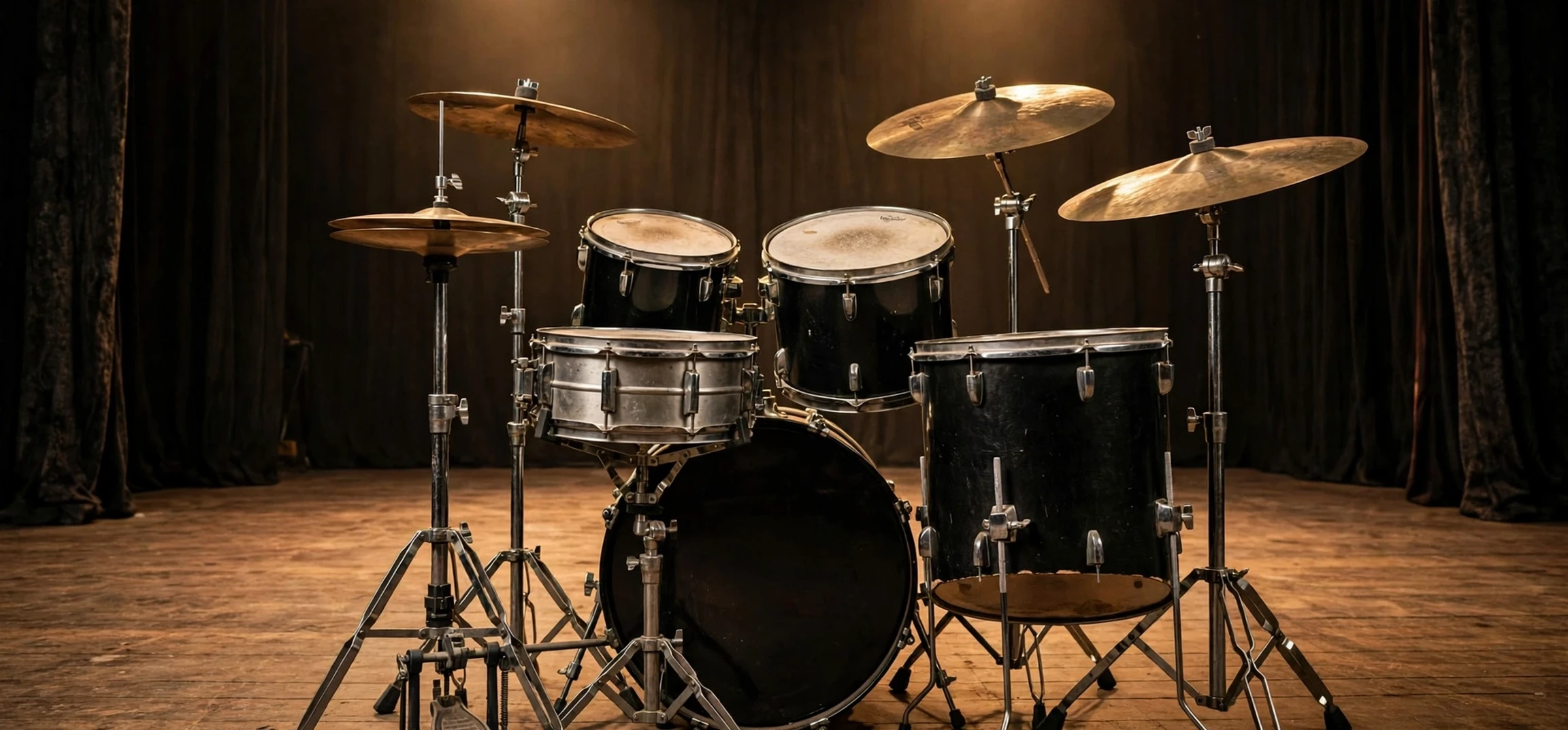
If you searched for part of the drums, you are probably looking for the names of the individual pieces that make up a drum kit, or for the name of one particular component you have seen, heard, or been asked about. A drum kit is not a single instrument but a collection of drums and cymbals arranged around a seated player, and each part of the drums has its own name, sound, and job in a piece of music. This guide names every major part, explains what it does, and shows how the parts work together, so that whether you are a beginner drummer, a music student, or simply curious, you can talk about a kit with confidence.
The word “drums” itself is worth clarifying at the start. In everyday speech, people say “drums” to mean the whole kit, but strictly speaking, a drum is a single membranophone, an instrument that makes sound when a stretched membrane is struck. A drum kit combines several drums of different sizes with cymbals and hardware, and the player uses sticks, pedals, and sometimes brushes to play them. Once you understand that distinction, the names of the parts fall into place much more easily.
What “Part of the Drums” Means
The search phrase part of the drums is a general one, and it can point to several different questions. Sometimes a person wants a labelled diagram of a kit. Sometimes they have heard a specific sound, such as a sharp crack or a shimmering wash, and want to know which piece produced it. Sometimes a music exam, a quiz, or a school assignment asks them to name a part, and they need a clear answer quickly. This article covers all three needs: it gives the full vocabulary, describes the sound of each part, and explains how drummers choose between parts while playing.
It helps to think of a drum kit in four groups: the drums themselves, the cymbals, the hardware that holds everything together, and the playing tools such as sticks and pedals. Most questions about a part of the drums concern one of the first two groups, because those are the parts that actually produce sound. The hardware matters too, though, because a well-set-up kit lets the drummer reach every part comfortably, and a poorly set-up kit makes even simple patterns feel awkward.
Drum kits also vary. A basic beginner kit might have five drums and two or three cymbals, while a large professional kit might add extra toms, additional cymbals, and electronic pads. The core parts described here appear on almost every acoustic kit, so learning them gives you a foundation that applies whether you are looking at a small practice kit or a large stage set-up.
The Drums Themselves: Every Part of the Drums That Is a Drum
The bass drum, also called the kick drum, is the largest drum in the kit and sits on the floor in front of the drummer. It is played with a foot pedal rather than a stick, which frees the drummer’s hands for other parts. Its sound is low, deep, and punchy, and it usually marks the main beats of a song, giving music its sense of weight and drive. In rock and pop, the bass drum pattern is often the first thing listeners feel, even before they consciously notice it.
The snare drum sits on a stand between the drummer’s knees and is the most distinctive voice in the kit. It has wires, called snares, stretched across its bottom head, and those wires vibrate when the drum is struck, producing a sharp, cracking sound with a slight buzz. The snare usually plays on the backbeat, the second and fourth beats of a bar in common time, and it is the drum most associated with marching bands, pop choruses, and dramatic fills.
Tom-toms, usually shortened to toms, are the melodic drums of the kit. A standard kit has a rack tom, mounted above the bass drum, and a floor tom, which stands on legs to the drummer’s right. Larger kits add more toms of different sizes. Toms are tuned to different pitches, with larger toms sounding lower, and drummers use them for fills, the short runs that link sections of a song together. A fill that rolls down through the toms, from high to low, is one of the most recognisable sounds in drumming.
Each drum has two heads, or skins: the batter head, which is struck, and the resonant head, on the opposite side, which shapes the tone. The shell, the cylindrical body of the drum, also affects the sound, with wood, metal, and acrylic shells each giving a slightly different character. Tuning, the tension of the heads, matters enormously: the same drum can sound tight and punchy or loose and boomy depending on how its heads are tensioned.
The Cymbals: A Part of the Drums That Is Not a Drum
Although people often lump cymbals in with “the drums”, cymbals are technically a different family of instruments: they are metal plates that vibrate when struck, rather than membranes. On a kit, the most important cymbals are the hi-hat, the crash, and the ride, and each has a distinct role.
The hi-hat is a pair of cymbals mounted on a stand and operated by a foot pedal, which opens and closes the pair. When closed, the hi-hat gives a tight, crisp “chick” sound that is ideal for keeping time. When opened slightly, it produces a looser, sizzling sound. Drummers often play steady patterns on the hi-hat throughout a song, and it is the cymbal listeners hear most constantly, even if they do not realise it.
The crash cymbal is the explosive accent of the kit. It is struck, usually at the start of a new section or on a dramatic beat, and it produces a loud, shimmering wash of sound that decays over a few seconds. A well-timed crash can make a chorus feel bigger instantly, which is why drummers save it for moments that deserve emphasis rather than playing it constantly.
The ride cymbal is larger and heavier than a crash, and it produces a more controlled, pinging sound with a sustained wash underneath. Drummers use it for steady patterns in jazz, ballads, and any style where a smooth, flowing timekeeping sound is wanted. The bell of the ride, the raised centre of the cymbal, gives an even brighter, more cutting tone when struck directly.
Hardware and Playing Tools for Every Part of the Drums
Hardware is the unglamorous but essential part of a kit. The bass drum pedal, the hi-hat stand, the snare stand, cymbal stands, and the drummer’s throne, or seat, all count as hardware. Good hardware is sturdy, adjustable, and quiet: it holds each part exactly where the drummer needs it and does not wobble, squeak, or drift during playing. Beginners sometimes underestimate hardware, but experienced drummers know that a comfortable, stable set-up is the foundation of good technique.
Drumsticks are the drummer’s main playing tools. They come in different sizes, weights, and tip shapes, and those differences affect volume, rebound, and tone. Heavier sticks produce more volume and a fuller sound, while lighter sticks allow faster, more delicate playing. Brushes, made of wire or nylon strands, produce a soft, sweeping sound used in jazz and quiet music, while rods, bundles of thin dowels, sit between sticks and brushes in volume.
The throne deserves a mention because posture affects everything a drummer does. A throne set at the right height lets the drummer reach the pedals comfortably, keep balance while playing fills, and avoid strain over long sessions. It is a small detail, but teachers consistently list throne height among the first things a new drummer should get right.
Parts of a Drum Kit at a Glance
| Part of the drums | Type | Main sound and role |
|---|---|---|
| Bass drum (kick) | Drum, foot pedal | Low, punchy; marks main beats and drives the song |
| Snare drum | Drum with snare wires | Sharp crack; plays the backbeat and leads fills |
| Rack tom | Drum | Medium pitch; used in fills and melodic patterns |
| Floor tom | Drum on legs | Low pitch; ends descending fills with weight |
| Hi-hat | Paired cymbals, foot pedal | Crisp timekeeping; tight when closed, sizzling when open |
| Crash cymbal | Cymbal | Loud shimmering accent for new sections and climaxes |
| Ride cymbal | Cymbal | Sustained pinging timekeeping; bell gives a bright accent |
How Drummers Combine Each Part of the Drums
Knowing the names is only half the story. The art of drumming lies in combining the parts into patterns, called grooves, that suit a song. A basic rock groove, for example, might use the bass drum on the first and third beats, the snare on the second and fourth, and the hi-hat playing steady eighth notes throughout. That simple combination already sounds like a complete song foundation, and countless hits are built on variations of it.
Fills are the connecting tissue between sections. A drummer might end a verse with a short fill across the toms, strike a crash cymbal as the chorus begins, and then settle into a new groove. The choice of fill, its length, and its complexity all affect how a song feels. A short, simple fill keeps the focus on the singer; a longer, showier fill draws attention to the drums themselves. Good drummers choose based on what the song needs, not on what shows off their technique.
Dynamics, the variation between loud and soft playing, matter just as much as pattern. The same groove played quietly on a closed hi-hat feels intimate, while the same groove played loudly on an open hi-hat and ride cymbal feels anthemic. Learning to control volume across every part of the drums is one of the most important skills a drummer develops, and it is what separates a drummer who simply keeps time from one who shapes a performance.
Learning the Names: A Practical Approach
If you are learning drum vocabulary for an exam, a lesson, or your own playing, a few habits help. First, learn the parts by sound as well as by name: listen to a recording, focus on one part at a time, and try to pick it out. The snare’s crack, the bass drum’s thump, and the hi-hat’s tick are all easy to isolate once you know what to listen for. Second, learn the parts by position: sit at a kit, or look at a labelled diagram, and associate each name with a physical location. Third, use the names while you play or practise, even if you are only air-drumming, because using vocabulary in context fixes it far faster than memorising a list.
Music vocabulary more broadly rewards the same approach. Terms from other areas of music, such as tempo and expression markings, also become clearer when you hear them in context. For example, our guides to rubato in music and subito in music explain how a single Italian term can change the feel of a whole passage, just as choosing a different part of the drums can change the feel of a groove.
Frequently Asked Questions About Part of the Drums
What is the most important part of the drums?
There is no single answer, because the parts work as a team. If forced to choose, many teachers would name the snare and bass drum, since those two carry the backbeat and the main pulse, but a kit without cymbals would still feel incomplete.
Is a cymbal a drum?
Strictly speaking, no. Drums produce sound from a stretched membrane, while cymbals produce sound from vibrating metal. In everyday speech, however, “drums” usually means the whole kit, cymbals included.
How many drums are on a standard kit?
A common five-piece kit has five drums: bass drum, snare drum, two rack toms (or one rack tom and one floor tom in some configurations), and a floor tom, plus hi-hat, crash, and ride cymbals. Configurations vary, and the five-piece is a starting point, not a rule.
What is the difference between a rack tom and a floor tom?
A rack tom is mounted above or beside the bass drum and is usually smaller and higher-pitched. A floor tom stands on its own legs, is larger and lower-pitched, and sits to the drummer’s right.
Conclusion
Every part of the drums has a name, a sound, and a job, and together they form one of the most versatile instruments in popular music. The bass drum provides weight, the snare provides crack and backbeat, the toms provide melody and fills, and the cymbals, hi-hat, crash, and ride, provide timekeeping, accent, and colour. Hardware and sticks hold the whole system together and shape how it feels to play. Whether you searched for part of the drums to answer a quiz, to start learning the instrument, or simply to understand what you are hearing in a favourite song, you now have the vocabulary to describe a kit part by part, and to listen to drumming with a keener ear for which piece is doing what, and why.



