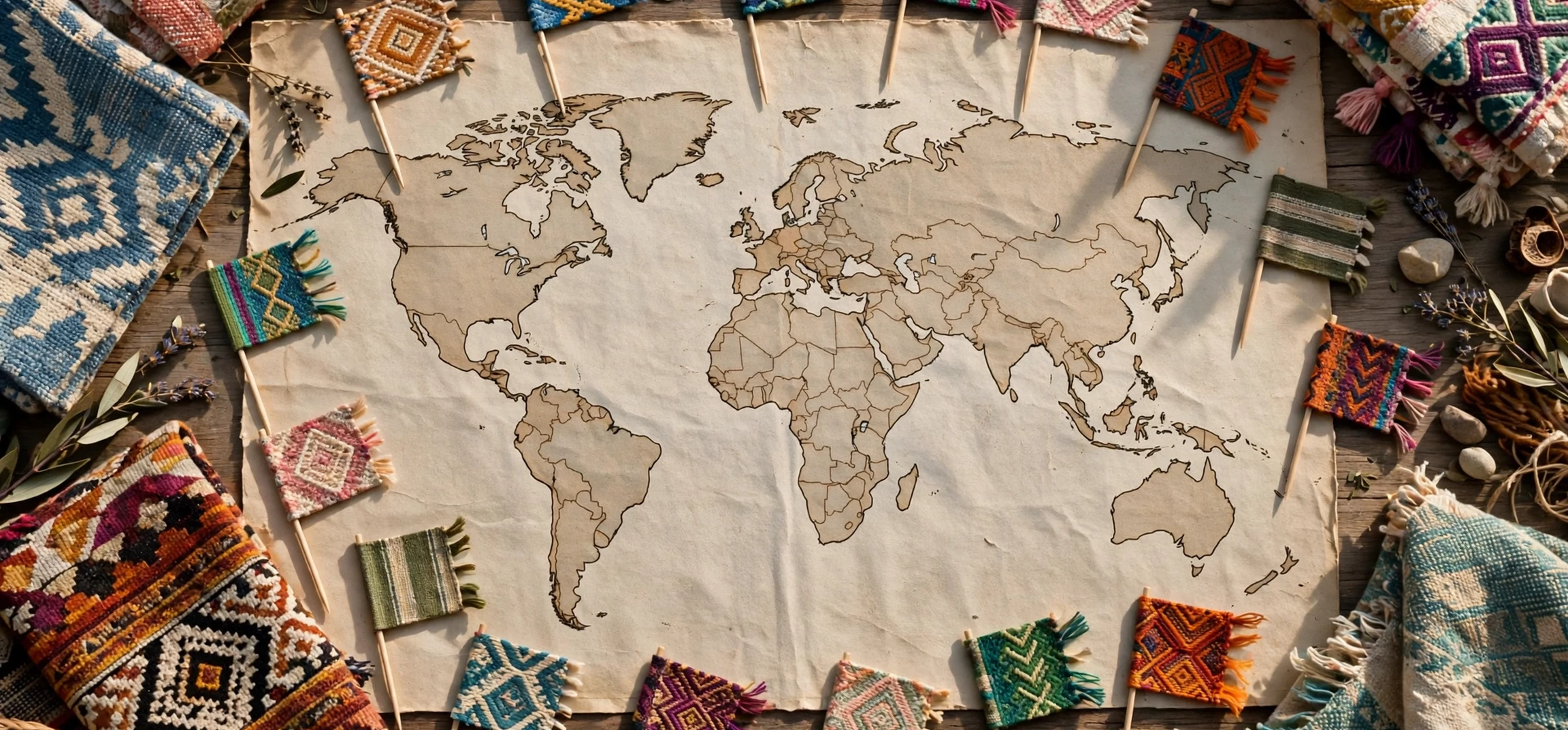
If you searched for “what do ethnicity mean”, you are asking about a word that appears on application forms, in census questions, in school lessons and in everyday conversation, yet is rarely explained clearly. In plain terms, ethnicity refers to a shared sense of identity that is often built around ancestry, culture, language, religion, traditions and a shared history. It is not a single biological fact, and it does not describe one person in the same way for everyone. This guide explains the meaning in neutral, respectful language, shows how it differs from related words such as race and nationality, and explains why forms ask about it at all.
Understanding ethnicity matters because the word is used in sensitive contexts. On a form, a tick in a box can affect how services are planned and how equality is monitored. In conversation, the same word can carry personal pride, family history and a sense of belonging. Getting the definition right helps you answer questions accurately, discuss identity with care, and avoid assumptions about other people.
What Do Ethnicity Mean in Everyday Language?
When people ask “what do ethnicity mean” in everyday language, they usually want a simple definition rather than an academic essay. Ethnicity describes the cultural group, or groups, with which a person identifies. That identity may come from family background, the community in which a person grew up, shared customs, a common language, religious practice, food, festivals, music, dress and stories passed down through generations. For many people, ethnicity is felt as belonging: a sense of being part of a wider group that shares something meaningful.
It is important to note that ethnicity is not fixed in the same way for every person. Some people feel a strong connection to one ethnic group. Others identify with more than one group, because their parents come from different backgrounds, because they were raised in more than one culture, or because their family history includes migration across several regions. Some people choose not to describe themselves by ethnicity at all. All of these positions are valid, and a respectful conversation leaves room for a person to describe themselves in their own words.
Ethnicity can also change in emphasis over a lifetime. A person may become more interested in family history as an adult, learn a heritage language later in life, or move to a new country and find that their ethnic identity becomes more visible to others. The word itself stays the same, but the personal meaning attached to it can deepen, shift or become less central, depending on experience.
What Do Ethnicity Mean on Official Forms?
On official forms, ethnicity is usually used as a statistical category. Governments, health services, schools and employers may ask about ethnic group so that they can understand who uses a service, whether different groups experience different outcomes, and whether policies are working fairly. The categories on a form are not meant to capture the full richness of a person’s identity. They are broad groupings designed for comparison over time and across regions.
Because categories are broad, they can feel unsatisfying. A form may offer a small number of options, plus a write-in box for another group. If none of the listed options fits well, many forms allow you to choose the closest option, select more than one group where that is permitted, or write in your own description. If you are unsure, the guidance notes that accompany a reputable form are the best place to check, and you should never feel pressured to choose a label that feels wrong.
It is also worth remembering that providing ethnic-group information is often voluntary. Where a form asks for it, it should explain why the information is collected, how it will be stored and who will see it. If that explanation is missing, you are entitled to ask. Privacy and dignity matter just as much as accurate statistics, and a well-designed form respects both.
Reading a form question carefully
Form questions vary from country to country, and sometimes from one organisation to another. Some ask about ethnic group, some about ethnic origin, and some about cultural background. These phrases overlap, but they are not always identical. Ethnic origin may place more emphasis on ancestry, while cultural background may place more emphasis on the traditions a person was raised with. Reading the exact wording, rather than assuming it means the same as a previous form, helps you answer consistently and honestly.
For related explanations of everyday words, you may find our guide to word meanings helpful, including a clear explanation of a commonly misunderstood term and a plain-language guide to another everyday phrase. These companion guides follow the same approach: start with the simple meaning, then explain the context in which the word is used.
Ethnicity, Race, Nationality and Culture: How They Differ
Ethnicity is often confused with race, nationality and culture, and the confusion is understandable because the ideas overlap in real life. Keeping them apart, however, makes conversation clearer and reduces the risk of stereotyping. The table below summarises the differences in simple terms.
| Term | What it usually refers to | Example of use |
|---|---|---|
| Ethnicity | Shared cultural identity, ancestry and traditions | Describing the community and heritage a person identifies with |
| Race | A social category often based on physical features, used differently across countries | Discussing how societies classify people, with care for local context |
| Nationality | Legal citizenship or national belonging | Stating the country of which a person is a citizen |
| Culture | Practices, beliefs, language, art and everyday customs | Describing traditions, celebrations and ways of life |
| Religion | Faith, belief and religious practice | Describing worship, observance and spiritual identity |
A single person can therefore have a nationality that differs from their ethnic identity. Someone may be a citizen of one country while identifying ethnically with a group whose origins lie elsewhere. Likewise, two people of the same nationality may belong to different ethnic groups, and two people of the same ethnic group may hold different nationalities. None of these facts, on its own, tells you about a person’s character, opinions or abilities.
Why the distinctions matter
Using the right word shows respect. Calling someone by their nationality when you mean their ethnic group, or assuming an ethnic identity from appearance, can feel dismissive because it replaces a person’s own description with an outsider’s guess. The simplest respectful habit is to use the description a person uses for themselves, and to ask politely when you are unsure, rather than guessing.
In research and public policy, the distinctions matter for a different reason. If ethnicity, nationality and language are mixed together in data, it becomes harder to see which factor is associated with a particular outcome. Clear categories, used consistently, produce clearer evidence, which in turn supports fairer decisions about services, funding and support.
How Ethnicity Is Formed and Shared
Ethnicity is usually learned and lived, rather than simply inherited in a narrow sense. Children often absorb language, food, stories and celebrations from family and community life. Schools, places of worship, community organisations and media can reinforce that learning, while migration, marriage and friendship can introduce new influences. Over time, ethnic identities can therefore be both rooted and open to change.
Language is one of the strongest markers of ethnicity for many people, but it is not the only one, and it is not a perfect test. A person may identify strongly with an ethnic group without speaking its heritage language fluently, especially if their family moved generations ago. Conversely, speaking a language does not by itself determine a person’s ethnic identity. The same caution applies to surnames, appearance and place of birth: each can offer a clue, but none should be treated as proof.
Shared history also plays a role. Groups often remember migration, settlement, struggle or achievement in common stories, commemorations and family records. These shared memories can strengthen belonging, particularly for communities that have experienced change or hardship. At the same time, history is interpreted differently by different members of the same group, so it is unwise to assume that every member shares the same view of the past.
Talking About Ethnicity Respectfully
Respectful conversation about ethnicity starts with listening. If a person describes their own background, accept that description rather than correcting it or offering an alternative label. Avoid asking intrusive questions such as demanding to know where someone is “really from” when they have already answered. If you are genuinely curious and the setting is appropriate, a polite, open question, such as asking what traditions a person enjoys, is usually better received than a question that treats identity as a puzzle to solve.
It is also helpful to avoid generalisations. Statements that begin with “all people from this group” almost always oversimplify. Ethnic groups are large and diverse, containing people of different ages, beliefs, occupations, political views and lifestyles. What is true of one family or community may not be true of another, even within the same broad group.
In workplaces, classrooms and public services, respectful practice means using inclusive language, providing forms that allow self-description, and challenging stereotypes when they appear. Training and guidance from reputable equality bodies can help organisations get this right, and individuals can contribute by modelling the same care in everyday conversation.
Common Misunderstandings About Ethnicity
One common misunderstanding is that ethnicity is the same as skin colour. While physical appearance is sometimes associated with ethnic categories in particular countries, ethnicity itself is about culture, ancestry and identity, not about a single visible trait. People within one ethnic group can look very different from one another.
Another misunderstanding is that a person can have only one ethnicity. In many societies, mixed heritage is common, and official statistics increasingly recognise multiple identities. A person who describes themselves with more than one ethnic background is not being inconsistent; they are describing a real family history.
A third misunderstanding is that ethnicity determines behaviour. Culture influences habits and preferences, but it does not fix a person’s choices. Treating ethnicity as a prediction about what someone will like, believe or do is a stereotype, and it often leads to unfair treatment. The fair approach is to treat each person as an individual first.
Frequently Asked Questions
Is ethnicity the same as race?
Not exactly. Race is a social category that has historically been based on physical characteristics, while ethnicity centres on shared culture, ancestry, language and traditions. The two concepts overlap in some contexts and are used differently in different countries, so it is best to follow the definitions used by the source you are reading.
Can I have more than one ethnicity?
Yes. Many people identify with more than one ethnic group because of mixed family backgrounds, migration or upbringing in more than one culture. Forms that allow multiple selections or a written description are designed to reflect this reality.
Do I have to answer an ethnicity question on a form?
It depends on the form. In many cases the question is voluntary and is asked for statistical or equality-monitoring purposes. Check the guidance on the form itself, and ask the organisation if the purpose is unclear.
What should I do if none of the categories fits me?
Choose the closest option if you wish, use a write-in box where one is provided, or select more than one group where that is allowed. You may also leave the question blank where answering is voluntary.
Conclusion
So, what do ethnicity mean in the end? At its simplest, ethnicity means a shared cultural identity shaped by ancestry, language, traditions and history, and felt as belonging to a group. It is distinct from nationality, broader than any single physical trait, and best understood through the words people use about themselves. Whether you are completing a form, studying the topic or simply trying to use the word accurately, the respectful approach is the same: define it clearly, avoid assumptions, and let individuals describe their own identity. For further reading on identity and meaning, see our guide to identity-related terms, which explores how identity language is used in different contexts.