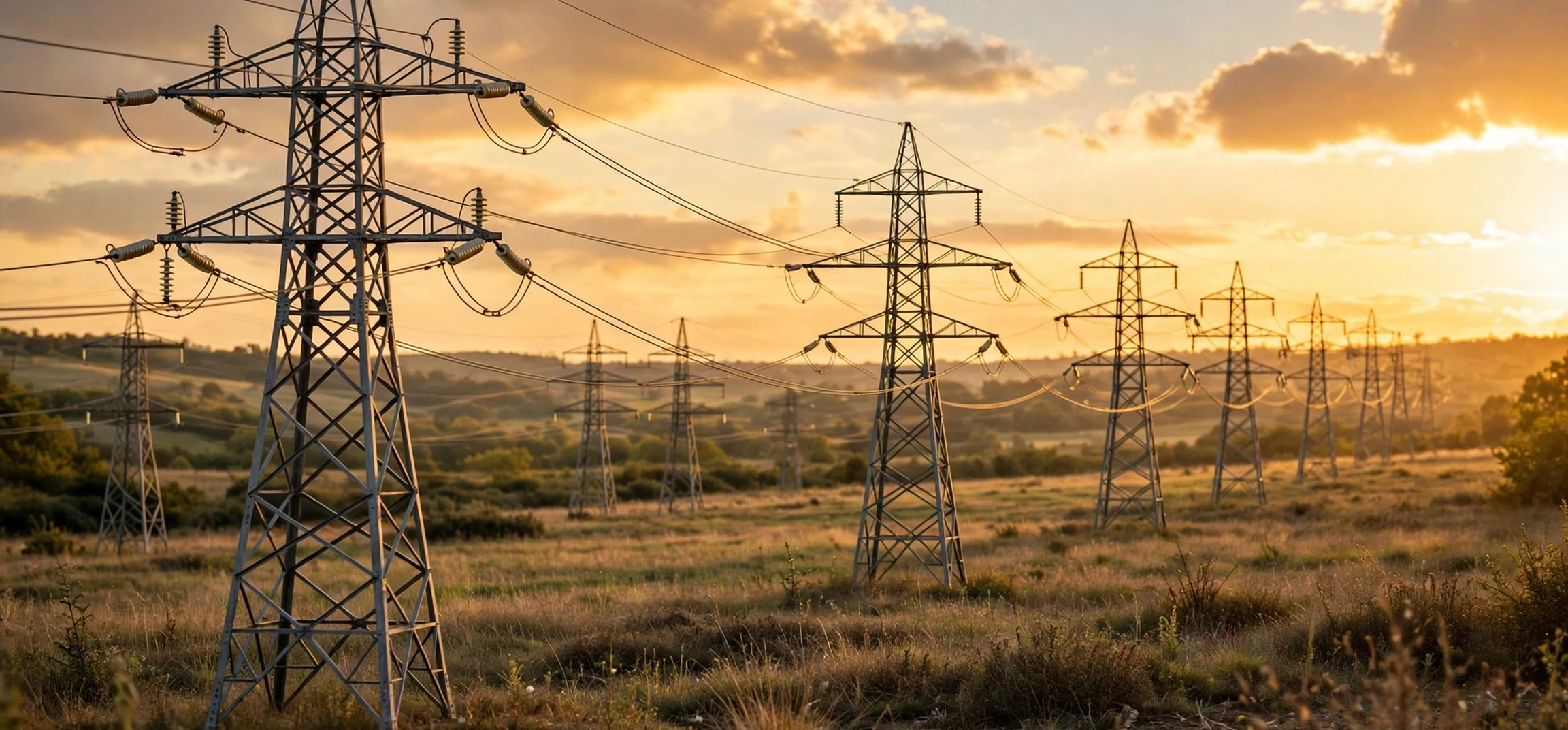
The scientific definition of electrical energy is the energy that comes from the movement of electric charge, or from the position of charged particles in an electric field. In everyday language, people often say electricity powers a light, charges a phone, or runs a refrigerator, but the scientific definition of electrical energy is more precise than that everyday shorthand. It describes a form of energy that can be stored, transferred, and converted into other forms such as light, heat, motion, and sound. When you understand the scientific definition of electrical energy, you can see why a battery, a power station, and a lightning storm are all connected by the same underlying physics, even though they look very different in daily life. This guide explains that definition in plain language, builds it up from charge, voltage, and current, and shows how it works in the objects around you.
Table of Contents
- The Scientific Definition of Electrical Energy in Simple Terms
- Charge: Where the Scientific Definition of Electrical Energy Begins
- Voltage, Current, and Power Explained
- How Electrical Energy Changes Into Other Forms
- Everyday Examples of the Scientific Definition of Electrical Energy
- Electrical Energy Compared With Other Forms of Energy
- Frequently Asked Questions
- Conclusion
The Scientific Definition of Electrical Energy in Simple Terms
The scientific definition of electrical energy can be stated in one clear sentence: electrical energy is the energy possessed by electric charges because of their motion or their position in an electric field. A charged particle that is free to move has the potential to do work, and when it moves through a circuit, that potential becomes actual work. A light bulb glows because moving charges transfer energy to its filament or to its electronic components. A motor turns because electrical energy is converted into mechanical motion. A speaker sounds because electrical energy is converted into vibrations in air. In each case, the starting point is the same: charges, an electric field, and a path along which energy can flow.
Physicists often distinguish between electric potential energy and electrical energy in use. Electric potential energy is stored energy. Think of a charge held apart from an opposite charge, like a stretched spring waiting to be released. When the charges are allowed to move toward each other, or when they are pushed through a conductor by a source of voltage, that stored energy is released and transferred. The scientific definition of electrical energy covers both sides of that story: the stored potential and the energy transferred by moving charge. This is why textbooks sometimes define it as energy associated with electric charges and their fields, and sometimes as energy carried by an electric current. Both descriptions point to the same physical quantity.
It also helps to separate energy from power. Energy is the total amount of work that can be done, measured in joules. Power is how quickly that energy is transferred, measured in watts. A small lamp and a large heater can both use electrical energy, but the heater transfers it much faster, so its power rating is higher. A useful analogy is water: energy is like the total amount of water in a tank, while power is like how fast water flows out of a tap. The scientific definition of electrical energy therefore needs both ideas. Energy tells you how much work is available in total, and power tells you the rate at which that work is being done at any moment.
Charge: Where the Scientific Definition of Electrical Energy Begins
Everything in the scientific definition of electrical energy starts with electric charge. Charge is a fundamental property of matter, carried most importantly by protons, which are positive, and electrons, which are negative. Most everyday objects are electrically neutral because they contain equal amounts of positive and negative charge. Electrical effects appear when that balance is disturbed, or when charges are made to move in an organised way. In a metal wire, for example, electrons can move relatively freely between atoms, and it is their organised drift, rather than any single electron racing through the wire, that carries energy around a circuit.
Like charges repel and opposite charges attract. That simple rule creates the electric field, an invisible region of influence around any charged object. When a charge sits in an electric field, it experiences a force, and moving it against that force stores energy, just as lifting a weight against gravity stores gravitational potential energy. Moving it with the field releases energy. This field picture is central to the scientific definition of electrical energy because it explains how energy can be stored without any visible motion. A charged capacitor, for instance, stores energy in the electric field between its plates, even though nothing is visibly moving at all.
Charge is measured in coulombs. One coulomb is a very large number of elementary charges, about six quintillion electrons. In practical circuits, engineers rarely count individual electrons. Instead, they measure current, which is the rate of flow of charge, in amperes. One ampere means one coulomb of charge passing a point every second. By linking charge, field, and flow, physics gives a complete account of where electrical energy comes from and how it moves, which is exactly what the scientific definition of electrical energy is meant to provide.
Voltage, Current, and Power Explained
Voltage, current, and resistance are the three quantities most people meet first when they study circuits, and together they make the scientific definition of electrical energy concrete. Voltage, measured in volts, is the electric potential difference between two points. It tells you how much energy each unit of charge will gain or lose as it moves between those points. A higher voltage means each coulomb of charge carries more energy. Current, measured in amperes, tells you how many coulombs pass per second. Multiply voltage by current and you get power in watts, which is the rate of energy transfer. Multiply power by time and you get total energy in joules. Those two simple relationships, power equals voltage times current, and energy equals power times time, connect the abstract definition to numbers you can measure.
A helpful comparison is a river driving a waterwheel. Voltage is like the height of a waterfall: the greater the drop, the more energy each litre of water can deliver. Current is like the flow rate: how many litres pass per second. Power is the combination of height and flow, and it determines how fast the wheel turns. Resistance is like narrowness or friction in the channel, limiting the flow for a given height. In an electric circuit, a battery or generator provides the voltage, the wires and components provide a path, and resistance in a bulb or heater turns the transferred energy into light and heat. Without resistance, or more generally without a load, the energy would have nowhere useful to go.
Direct current and alternating current are the two ways charge can flow. In direct current, charge flows steadily in one direction, as from a battery. In alternating current, charge oscillates back and forth, reversing direction many times per second, as in mains electricity in homes. Both carry electrical energy, and the scientific definition of electrical energy applies equally to both. The difference is in how the energy is delivered and transmitted. Alternating current is easier to transform to higher or lower voltages, which is why it is used for long-distance transmission, while direct current is convenient for batteries, electronics, and storage.
How Electrical Energy Changes Into Other Forms
One of the most important features of electrical energy is how easily it converts into other forms. In a light bulb, it becomes light and heat. In an electric motor, it becomes motion. In a loudspeaker, it becomes sound. In a battery being charged, it becomes chemical energy, stored for later use. In an electric heater, it becomes thermal energy. In each conversion, the total amount of energy is conserved: energy is not created or destroyed, only changed from one form to another, with some usually lost as waste heat. This principle, the conservation of energy, sits behind every practical use of electricity, and it explains why efficient devices matter. A more efficient device converts a larger share of its input electrical energy into the desired output, and wastes less as heat.
Generation is conversion in the opposite direction. A coal, gas, nuclear, hydroelectric, wind, or solar plant converts some other form of energy into electrical energy. A turbine spins a generator, moving conductors through a magnetic field, and that motion induces a voltage that drives charge around a circuit. A solar panel uses a different mechanism, the photovoltaic effect, in which light directly frees charges in a semiconductor and creates a voltage. Despite the different mechanisms, the result is the same: energy from another source becomes electrical energy that can be transmitted, stored, and used far from where it was produced. That transportability is one reason electricity dominates modern life.
Storage is the other half of the story. Batteries store electrical energy as chemical energy and release it again on demand. Capacitors store it directly in an electric field for short, rapid bursts. Pumped hydro storage and flywheels store it as gravitational or mechanical energy and convert it back when needed. Each storage method has trade-offs in capacity, speed, cost, and losses, but all of them depend on the same underlying idea in the scientific definition of electrical energy: energy associated with charge and field can be held, moved, and released in a controlled way.
Everyday Examples of the Scientific Definition of Electrical Energy
Consider a phone charging from a wall socket. Mains electricity delivers alternating current at a set voltage. A charger converts it to a lower direct-current voltage suitable for the phone battery. Inside the battery, electrical energy becomes chemical energy as ions move and chemical reactions take place. Later, when you use the phone, that chemical energy converts back into electrical energy, which then becomes light on the screen, sound from the speaker, radio energy for the signal, and a small amount of heat. Every step is an energy conversion, and the scientific definition of electrical energy is the thread that ties the steps together.
A refrigerator offers another clear example. Electrical energy drives a compressor motor, which circulates a refrigerant and moves heat from inside the cabinet to the room outside. The refrigerator does not create cold from nothing; it uses electrical energy to pump heat against its natural direction of flow, much like pumping water uphill. A washing machine, a kettle, an electric car, and a train all follow the same pattern: electrical energy in, useful work or heat out, plus some unavoidable waste. Even static electricity fits the definition. When you rub a balloon on cloth, charges separate, an electric field builds up, and the stored potential energy can later discharge as a tiny spark or attract small pieces of paper.
Lightning is nature’s most dramatic illustration. Inside a storm cloud, collisions between ice particles separate charge, building up an enormous potential difference between cloud and ground. When the field becomes strong enough, air breaks down and becomes conductive, and a huge current flows in a fraction of a second, converting stored electrical energy into light, heat, sound, and ionisation of the air. It is the same physics as a laboratory spark, scaled up enormously. Understanding the scientific definition of electrical energy therefore helps explain both the safest household circuit and the most powerful natural discharge.
Electrical Energy Compared With Other Forms of Energy
It is useful to place electrical energy alongside kinetic energy, thermal energy, chemical energy, and gravitational potential energy. Kinetic energy is the energy of motion. Thermal energy is the energy of random molecular motion, which we sense as heat. Chemical energy is stored in the bonds between atoms and released in reactions. Gravitational potential energy depends on height in a gravitational field. Electrical energy is the counterpart in an electric field: it depends on charge and position in that field, or on charge in motion. The parallel with gravity is especially helpful, because both involve a field, a force, and stored potential energy that can be released as motion.
| Form of energy | What it depends on | Typical example |
|---|---|---|
| Electrical energy | Charge and electric field, or moving charge | A battery powering a torch |
| Kinetic energy | Mass and speed | A rolling ball |
| Chemical energy | Atomic bonds | Fuel burning or a battery charging |
| Thermal energy | Temperature and molecular motion | Hot water in a kettle |
| Gravitational potential energy | Mass and height | Water held behind a dam |
The practical advantage of electrical energy is control. It can be switched on and off instantly, divided precisely between devices, transmitted over long distances through wires, and converted efficiently into light, motion, or heat. Its disadvantage is that it is not easily stored in large quantities in its pure form, which is why batteries, which convert it to chemical energy, and other storage systems are so important. That balance of advantages and limits shapes everything from household wiring to national power grids, and it all follows from the scientific definition of electrical energy and the physics of charge.
Frequently Asked Questions
What is the scientific definition of electrical energy in one sentence?
The scientific definition of electrical energy is that it is the energy associated with electric charge, either because charges are moving as a current or because they are positioned in an electric field where they have potential energy.
Is electrical energy the same as electricity?
Electricity is a broad term for phenomena involving charge, while electrical energy is the specific quantity of energy that charge carries or transfers. You can talk about electricity in general, but when you measure how much work can be done, you are talking about electrical energy in joules.
What is the unit of electrical energy?
The standard scientific unit is the joule. One joule is the energy transferred when a power of one watt acts for one second. In homes, energy is often billed in kilowatt-hours, where one kilowatt-hour equals 3.6 million joules.
Can electrical energy be created or destroyed?
No. Energy is conserved. Electrical energy is always converted from another form, such as chemical, mechanical, or light energy, and it is always converted into another form when it is used. Some of it becomes waste heat in every real conversion.
Conclusion
The scientific definition of electrical energy gives a precise foundation for a phenomenon we use every day without thinking about it. It is the energy of electric charge in motion or in an electric field, measurable in joules, delivered at a rate measured in watts, and convertible into light, heat, motion, and sound. From the drift of electrons in a wire to the discharge of a storm cloud, the same principles of charge, field, voltage, and current apply. If you remember that definition, the behaviour of batteries, motors, heaters, and power grids becomes much easier to understand, and the language of energy in science, engineering, and everyday life falls into place. For related reading, see our guide to battery meaning and the explanation of what shoes on a power line mean.