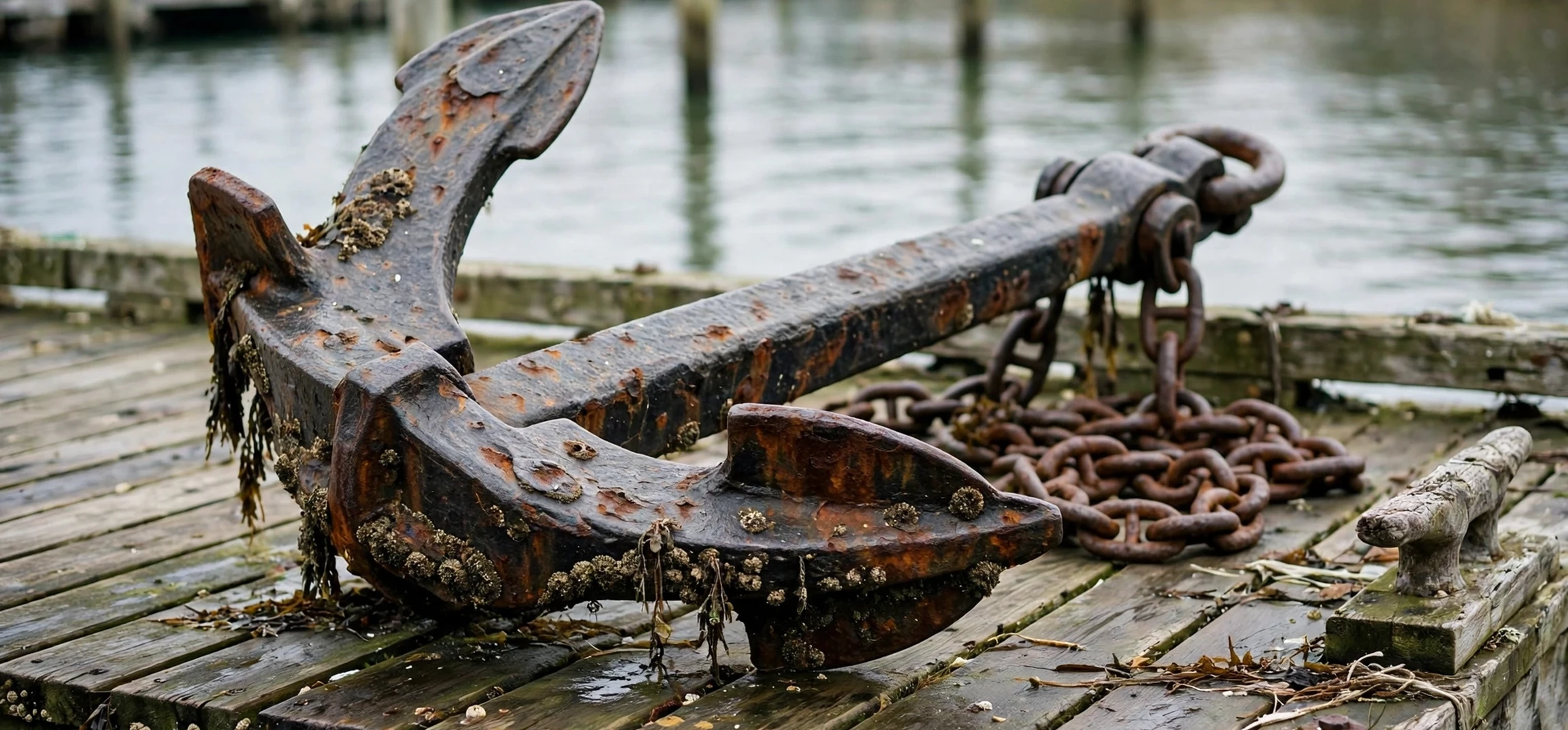
If you have typed anchors away meaning into a search box, you are asking about a phrase that sounds simple but hides a small spelling trap. The phrase most people mean is “anchors aweigh,” a traditional nautical expression that describes the moment when a ship’s anchor has been lifted clear of the seabed and the vessel is ready to get underway. The search spelling “anchors away” is extremely common, but it is not the traditional form. Understanding anchors away meaning therefore starts with sorting out that one-letter difference, because “aweigh” and “away” look alike, sound alike in casual speech, and mean quite different things. This guide explains the correct spelling, the literal nautical sense, the figurative uses, and the history behind the expression, so you can use it with confidence.
The confusion is easy to understand. In everyday English, “away” is a familiar word meaning at a distance or departed, while “aweigh” is rare outside sailing and naval language. When someone hears the phrase spoken, the two words are almost indistinguishable, and when they write it down, “away” is the natural guess. Search engines see this every day, which is why the “away” spelling appears so often in queries. The traditional phrase, however, is “anchors aweigh,” and it has been used by sailors for centuries. Once you know that “aweigh” is a genuine nautical term meaning that an anchor is raised and no longer holding the ship, the phrase clicks into place.
Anchors Away Meaning in Plain Language
In plain language, anchors away meaning comes down to readiness and departure. When a ship is at anchor, its anchor rests on the seabed and holds the vessel in place. Weighing anchor means hauling it up, and when the anchor is “aweigh,” it is off the bottom and hanging from the ship. At that point the ship is free to move, although it may not yet be moving under its own power. The phrase therefore marks a threshold moment: the vessel is no longer secured, and the voyage can begin. It is a status report as much as a celebration, telling the crew and the captain that the ship is ready.
Even experienced sailors enjoy revisiting anchors away meaning, since the phrase connects everyday language to centuries of seafaring practice.
Song lyrics are a practical shortcut for anchors away meaning, because the title of the famous naval march spells the phrase correctly every time it is printed.
Classroom discussions of anchors away meaning often pair it with other nautical idioms, showing how much of English began at sea.
This literal sense explains why the phrase feels so full of energy. It does not describe a ship already racing across the ocean; it describes the instant just before departure, when preparation ends and movement becomes possible. That is why writers, speakers, and songwriters reach for it when they want to suggest a fresh start, a bold departure, or a journey about to begin. The anchor, heavy and holding, gives way to open water, and the image carries all of that feeling in just two words. If you remember only one thing, remember this: “aweigh” describes the anchor’s position, not the ship’s destination.
Whenever doubt strikes, anchors away meaning is worth one quick check, because the correct aweigh spelling is easy to confirm and hard to forget.
Figurative uses keep anchors away meaning alive in business and travel writing, where a launch or departure borrows the energy of a ship leaving harbour.
Anyone who looks up anchors away meaning is usually trying to settle the spelling question first, and settling it early makes the rest of the phrase much easier to remember.
A careful reader checking anchors away meaning will notice that dictionaries and naval references agree on aweigh, which is strong evidence for the traditional spelling.
Anchors Away Meaning and the Spelling Aweigh
The word “aweigh” deserves a closer look, because it is the key to the whole phrase. It comes from the verb “to weigh,” in its old nautical sense of lifting or raising. Sailors “weigh anchor” when they haul it up, and an anchor that has been weighed is “aweigh.” The prefix “a-” here works like it does in words such as “aboard” or “ashore,” placing something in a state or position. So “anchors aweigh” literally means that the anchors are in the raised state, clear of the ground. It is a compact piece of seafaring shorthand, the kind of expression that develops when people need to communicate quickly and precisely in demanding conditions.
In short, anchors away meaning rewards a moment of attention: learn aweigh once, and the phrase will never trip you up again.
By contrast, “anchors away” would suggest that the anchors themselves have gone away or been thrown away, which is not what happens at all. The anchors stay with the ship, stowed and ready to be dropped again at the next anchorage. This is a useful test whenever you are unsure of the spelling: if the sentence is about a ship preparing to sail, the word you want is “aweigh.” Dictionaries of nautical terms, naval histories, and the lyrics of the famous United States Navy march all use “aweigh,” and that consistency across sources is a strong signal. The “away” spelling survives mainly in casual writing and in search queries, where it functions as a phonetic guess rather than an established variant.
Editors often flag anchors away meaning in manuscripts because the away spelling looks right at a glance, yet it quietly changes the sense of the sentence.
Part of the appeal of anchors away meaning as a search is that it connects a small spelling detail to a much larger story about ships, sailors, and departure.
Readers who look up anchors away meaning often want to know whether the spelling matters in formal writing, and the answer is yes, it does.
There is one more wrinkle worth noting. The plural “anchors” in the phrase reflects older sailing ships, which often carried more than one anchor and might raise several before departing. Modern ships usually work with a single main anchor, but the traditional phrase keeps its plural form, just as many idioms preserve older grammar. You will also sometimes see the singular “anchor’s aweigh” or the verb phrase “weigh anchor” used on its own. All of these point to the same action: lifting the anchor from the seabed so the ship can proceed.
Teachers sometimes use anchors away meaning as an example of how a single letter can change a word completely, since aweigh and away share sounds but not senses.
Where the Phrase Comes From
The phrase belongs to the age of sail, when raising an anchor was hard, coordinated work. A large anchor and its heavy chain or cable could weigh a great deal, and hauling it up required a windlass, a capstan, and a team of sailors working in rhythm. Sea shanties helped keep that rhythm, and the call that the anchor was clear of the bottom mattered to everyone on board, because it meant the ship could be manoeuvred. From that practical world, the expression passed into naval ceremony, literature, and popular culture, where its sense of departure and readiness made it useful far beyond the deck.
Its most famous public appearance is in “Anchors Aweigh,” the march associated with the United States Navy, composed in the early twentieth century. The song helped fix the phrase in the public imagination, linking it with naval pride, travel, and new beginnings. Because the song’s title is widely printed and performed, it also serves as a handy spelling reference: if you see the title written out, it will read “Anchors Aweigh.” That is a quick way to check yourself whenever the “away” spelling tempts you. Cultural references like this are one reason the phrase has stayed alive long after most people stopped sailing on wind-powered ships.
When you explain anchors away meaning to someone else, it helps to start with the anchor itself, because the whole expression is really a report on where the anchor is.
How the Phrase Is Used Today
Today the phrase appears in several distinct settings, and recognising them helps you interpret it correctly. In naval and maritime contexts, it keeps its literal meaning: the anchor is up and the ship is underway or about to be. In speeches, headlines, and writing about new ventures, it is used figuratively to signal that something is launching. A business article might describe a company as having its “anchors aweigh” when a long-planned project finally begins, and a travel writer might use it when setting off on a voyage. In each case, the figurative use borrows the literal sense of release and readiness.
It also appears in titles, team names, and event slogans, where its energy matters more than its precision. A sailing club, a charity voyage, or a farewell event might adopt the phrase to suggest adventure and departure. When you meet it in those settings, ask yourself whether the writer is describing a real ship or borrowing the image. That distinction usually resolves any confusion about meaning. If a real anchor is involved, the phrase is literal; if not, it is a metaphor for beginning, leaving, or setting out on something new.
A useful memory aid for anchors away meaning is the verb weigh: you weigh anchor, the anchor becomes aweigh, and only then does the ship move.
Common Variations and Mistakes
Several near-miss versions of the phrase circulate, and each reveals something about how language drifts. “Anchors away” is the most common mistake, driven by sound and by the familiarity of the word “away.” “Anchor away” in the singular appears too, sometimes as a command in films or games, but it is not the traditional form. Another confusion comes from the phrase “weigh anchor” itself, where “weigh” is sometimes misread as “way,” producing “way anchor,” which has no nautical sense at all. Keeping the trio straight helps: you weigh anchor, the anchor becomes aweigh, and then the ship is underway.
Writers should also be careful with punctuation. The phrase is often written without an apostrophe, as “anchors aweigh,” and that is the standard form in titles and in the naval march. Adding an apostrophe to make “anchor’s aweigh” is understandable, since the anchor is the subject, but it is less common in the fixed expression. For most writing, the safest choice is the familiar plural form with no apostrophe, exactly as it appears in the song title and in nautical references.
Writers who check anchors away meaning before publishing avoid one of the most common nautical errors in English, and their readers rarely notice the correction, which is exactly the point.
Related Nautical Words Worth Knowing
The phrase sits inside a rich vocabulary of sailing terms, and a few neighbours make its meaning clearer. When a ship is “at anchor,” it is held in place by its anchor. When it “drops anchor” or “casts anchor,” it lowers the anchor to stop. When it “weighs anchor,” it raises the anchor to leave. “Underway” means the vessel is moving through the water, which follows weighing anchor but is a separate state. “Aloft” describes something high up, such as in the rigging, and belongs to the same family of short nautical position words as “aweigh.” Learning these terms together turns a single phrase into a small map of how sailors talk about stopping and starting.
For readers who enjoy word origins, the nautical vocabulary is a good place to explore, because so many everyday expressions began at sea. Phrases about learning the ropes, showing your true colours, or being taken aback all have maritime roots, and each one preserves a piece of working life aboard ship. If you want to go further, our guide to another sailing term explains a word from the same world, and our list of ocean names gives a sense of the geography those sailors navigated. You can explore what aloft means in nautical language and browse the names of the world’s oceans for useful background.
The history behind anchors away meaning also explains why the phrase survived the age of sail, since navies, songs, and ceremonies kept it in circulation long after its working use faded.
| Form | Correct? | What it means |
|---|---|---|
| Anchors aweigh | Yes, traditional | The anchors are raised and clear of the seabed; the ship can depart. |
| Anchors away | No, common misspelling | A phonetic guess; “away” does not describe a raised anchor. |
| Weigh anchor | Yes, verb phrase | The action of hauling the anchor up. |
| Anchor’s aweigh | Understandable variant | Same sense, singular, but less standard than the plural form. |
| Way anchor | No | A mishearing of “weigh anchor” with no nautical meaning. |
Frequently Asked Questions
Is it “anchors aweigh” or “anchors away”?
It is “anchors aweigh.” The “away” spelling is a widespread misspelling caused by the two words sounding alike. The traditional nautical term is “aweigh,” meaning raised and clear of the seabed.
What does “aweigh” mean?
“Aweigh” describes an anchor that has been lifted off the seabed and is hanging from the ship. It comes from the nautical verb “to weigh,” meaning to lift or raise an anchor.
Can I use the phrase figuratively?
Yes. Figurative use is very common and well established. Saying a project or journey has its “anchors aweigh” means it is launched, released, and ready to move forward.
Why is it plural, “anchors”?
Older sailing ships often carried and raised more than one anchor, and the traditional phrase preserves that plural form even though modern ships usually work with a single main anchor.
Conclusion
Searching for anchors away meaning leads to a satisfying answer once the spelling is sorted out. The correct form is “anchors aweigh,” a nautical phrase for the moment when the anchor is raised, clear of the ground, and the ship is free to sail. The “away” spelling is an understandable mistake, but knowing the difference lets you write the phrase correctly, recognise it in songs and speeches, and appreciate the vivid image behind it. Whether you meet it on a ship, in a song, or as a metaphor for a new beginning, you now know exactly what it signals: preparation is over, the anchor is up, and the journey is about to begin.



