If you have ever searched for laminated wood stock, you were probably looking for a clear explanation of what it is, how it is made, and whether it suits your project. In simple terms, laminated wood stock is timber that has been built up from layers, strips, or veneers bonded together with adhesive to form a board, beam, or blank that is stronger and more stable than a single piece of sawn timber of the same size. It is used for worktops, shelving, furniture panels, beams, stair parts, and shaped blanks, and it appears in workshops, joinery shops, and home projects across the country. This guide explains the main types of laminated wood stock, how each one is made, where it works best, and what to check before you buy, so you can choose with confidence rather than guessing from a product label.
Laminated wood stock is not one single product. The phrase covers several related materials, and the differences matter. Some forms are made for structural strength, such as glued laminated timber beams that carry loads in roofs and floors. Others are made for appearance, such as laminated panels with an attractive hardwood face that can be cut, shaped, and finished like solid timber. Still others are made for economy and stability, using thinner layers arranged so that the finished board resists warping. Understanding which family your project needs is the first step, because a beam chosen for looks alone may be the wrong choice for a load-bearing job, while a structural product may be needlessly heavy and costly for a simple shelf.
What Is Laminated Wood Stock?
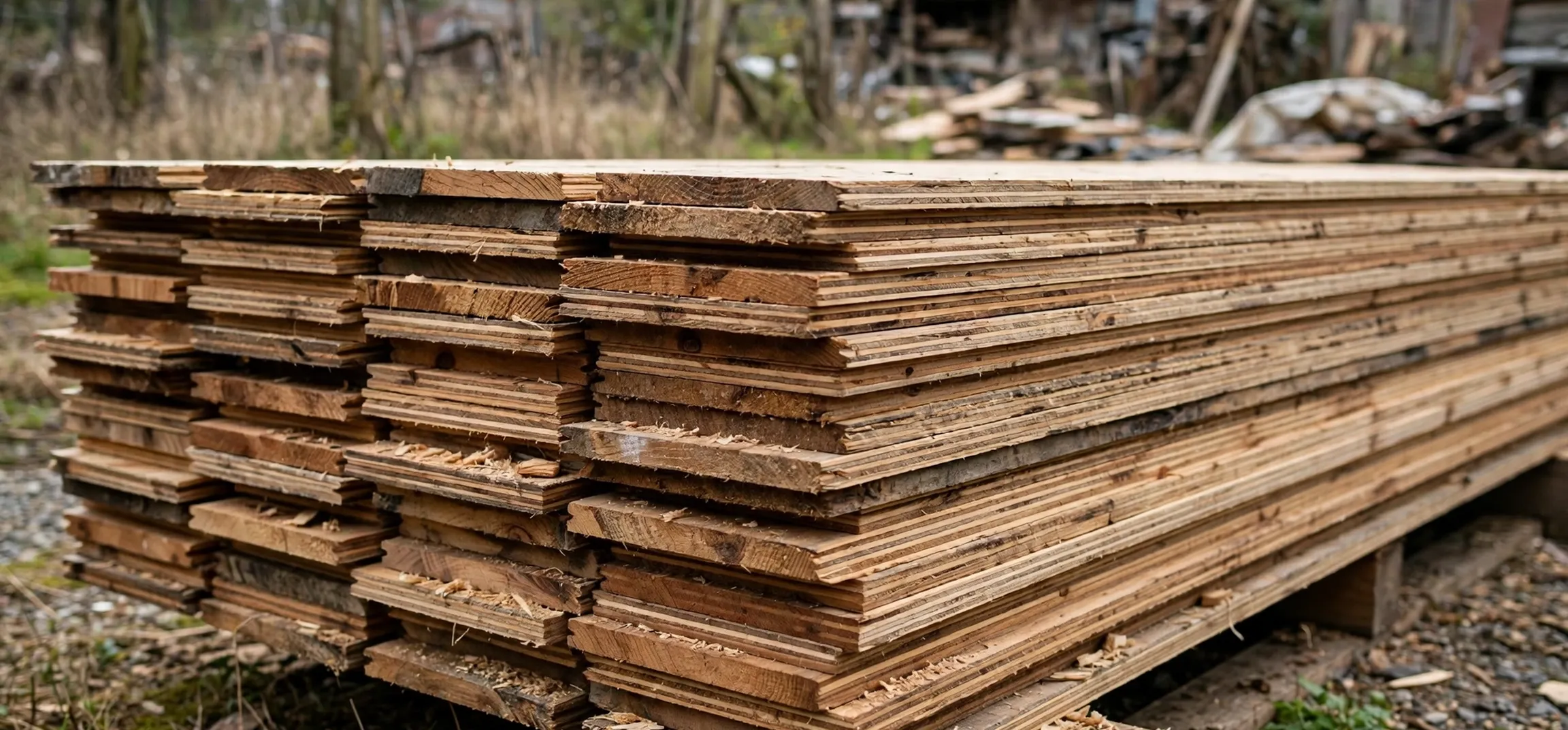
At its core, laminated wood stock is created by bonding layers of wood together under pressure. The layers may run in the same direction, as in glued laminated timber, or they may alternate direction, as in plywood. The adhesive, the thickness of each layer, the species of timber, and the way the grain is arranged all affect strength, weight, stability, and finish. When the layers are bonded well, the finished piece shares loads across the whole section, and small defects in one layer, such as a knot, are less likely to weaken the whole board. That is one reason laminated wood stock is popular for long spans and wide panels, where solid timber might twist, split, or vary in strength from board to board.
The idea is not new. Joiners and builders have glued timber together for centuries, but modern adhesives and factory pressing have made the process far more reliable and consistent. Today, laminated wood stock is manufactured to recognised standards, graded for strength, and supplied in predictable sizes. For the buyer, that consistency is a real advantage: you can order a beam or panel to a stated size and grade, and expect the next piece from the same range to behave in much the same way. It does not remove the need for care in storage and finishing, but it does reduce the surprises that can come with natural, ungraded timber.
How lamination changes timber behaviour
Solid timber moves with changes in moisture. It shrinks and swells mainly across the grain, and it can cup, bow, or twist as it dries unevenly. Lamination reduces that movement because layers restrain one another, and because the manufacturing process usually starts with timber dried to a controlled moisture content. The result is a board or beam that stays flatter and straighter in normal indoor conditions. It is still wood, however, so it is not immune to damp. Prolonged wetting, poor sealing, or storage in a damp outbuilding can still cause swelling, staining, or adhesive problems, depending on the glue used.
Types of Laminated Wood Stock Explained
The main types of laminated wood stock fall into a few clear groups, and the table below summarises them. Glued laminated timber, often shortened to glulam, bonds long laminations with the grain running in the same direction to make beams, columns, and curved members. Laminated veneer lumber, known as LVL, bonds thin veneers in the same direction to make strong, uniform beams and headers. Cross-laminated timber, or CLT, bonds layers at right angles to make large structural panels for walls and floors. Plywood bonds veneers with alternating grain for panels that are stable in both directions. Finally, laminated hardwood panels and worktop blanks bond strips or blocks edge to edge, often with a decorative face, for furniture and kitchen work.
| Type | How it is layered | Typical uses | Key strength |
|---|---|---|---|
| Glued laminated timber | Long strips, grain in one direction | Beams, columns, roof structures | Long spans and curved shapes |
| Laminated veneer lumber | Thin veneers, grain in one direction | Headers, joists, beams | Uniform strength and predictable size |
| Cross-laminated timber | Layers at right angles | Wall and floor panels | Strength in two directions |
| Plywood | Veneers with alternating grain | Panels, shelving, cabinet backs | Stability and good screw holding |
| Laminated hardwood panels | Strips or blocks edge bonded | Worktops, tables, furniture | Attractive face and workable surface |
Choosing among these types of laminated wood stock depends on the job. A structural beam needs a graded product with a stated strength class and, for a building project, advice from a qualified designer. A worktop needs a hard-wearing face, a suitable adhesive for its setting, and a finish that can be maintained. A shelf needs stiffness so it does not sag under books, plus an edge that looks tidy. Buying the cheapest panel for every job is a false economy when the wrong type sags, delaminates, or looks poor after a few months of use.
Laminated Wood Stock for Home Projects
For home projects, laminated wood stock is often the practical middle ground between solid hardwood and plain sheet materials. A laminated oak or beech panel can give the look of solid timber for a tabletop or windowsill, while remaining flatter and often more affordable than a single wide hardwood board. Because the panel is already bonded, you can cut it to size, sand the face, and apply oil, wax, or lacquer, much as you would with solid timber. The edges will show the lamination lines, so many makers add a solid lipping or choose a panel whose edge pattern suits the design.
Shelving is another common use. Laminated wood stock panels resist cupping better than wide solid boards, which matters for a shelf that must stay level under load. For best results, keep spans sensible, support the shelf at both ends, and add a centre support for long runs carrying heavy items. Screw fixing is usually reliable, but it helps to drill pilot holes near edges and to avoid over-tightening, which can crush the fibres or split a thin outer layer. A test offcut is worth keeping for trying finishes and fixings before you work on the finished piece.
Worktops, tables, and stair parts
Worktops made from laminated wood stock need extra care around water. Even a well-made panel will suffer if water sits on an unsealed edge or soaks into a cut around a sink. Seal all cut edges, re-oil oiled worktops on a regular schedule, and wipe up spills promptly. Tables benefit from the same approach, plus attention to the underside: a finish on both faces helps the panel move evenly and reduces the risk of cupping. For stair treads and handrails, choose a hard-wearing species and a finish that can be refreshed, since these parts take daily wear.
How to Choose Laminated Wood Stock
When you compare laminated wood stock for sale, start with the job, not the price. Ask whether the product is structural or decorative, whether it is rated for interior use only or for damp and exterior conditions, and what adhesive class it uses. Interior glues are fine for dry rooms, but kitchens, bathrooms, and outdoor projects need a more moisture-resistant bond. Check the species and grade: a clear, knot-free face costs more but finishes better, while a rustic grade with visible knots and colour variation may suit a farmhouse look and cost less.
Next, check dimensions and tolerances. Note the thickness, width, and length, and whether the panel is sanded ready for finishing or needs further preparation. Ask how the supplier stores the material and whether it is kept flat, dry, and protected from sunlight. Boards stored on edge in a damp yard, or stacked unevenly, may already be bowed before you buy them. If you are ordering online, read the description carefully, check the returns terms, and be ready to inspect the delivery before signing for it. A quick check for damage, warping, and delamination at the edges can save a difficult conversation later.
Questions to ask before you buy
A short checklist helps. What is the product made from, and is it graded? Is it suitable for your moisture conditions? How should it be sealed and finished? What fixing methods does the supplier recommend? How heavy is a full panel, and can you handle and transport it safely? For structural work, do you need design calculations or approval from a building professional? If a supplier cannot answer these questions, that is useful information in itself, and you may be better served by a specialist timber merchant who can.
For shaped blanks, such as those used for turned items or shaped handles, laminated wood stock offers another benefit: colour and grain contrast. Layers of different species can be bonded to create stripes or patterns that would be difficult to achieve in a single piece of timber. Makers who use such blanks should still check the bond quality and the glue type, since heat from sanding or turning can soften some adhesives. Sharp tools, light cuts, and patience give a cleaner result than forcing a dull tool through a dense, glued section.
Working With Laminated Wood Stock
Working with laminated wood stock is similar to working with solid timber, with a few adjustments. Use sharp saw blades and router cutters, since glue lines can dull edges faster than plain wood. Support the panel well during cutting to avoid chipping the face veneer, and consider a scoring cut or a strip of masking tape along the cut line on delicate faces. When sanding, work through the grits evenly and avoid sanding through a thin decorative veneer. A light touch and regular checks are better than aggressive sanding that exposes the layer beneath.
Finishing deserves the same care. Oils bring out grain and are easy to refresh, but they need several coats and time to cure. Lacquers give a harder, more protective film but are harder to repair locally. Waxes add warmth over an oiled surface but offer limited protection on their own. Whatever you choose, test it on an offcut, finish both faces where possible, and seal end grain and cut edges thoroughly. Good finishing is not decoration alone; it slows moisture movement and helps the panel stay stable for years.
Care, Storage, and Common Problems
Store laminated wood stock flat, on level bearers, in a dry place away from direct heat and damp floors. Cover it loosely to keep dust off, but allow air to circulate so moisture does not become trapped. Bring panels indoors and let them acclimatise to the room for a few days before cutting and finishing, especially if they have travelled from a cold store. Cutting a cold, damp panel and fitting it at once can lead to movement after it dries in a heated room.
The most common problems are easy to prevent. Warping usually points to uneven moisture, poor storage, or a finish applied to one face only. Delamination, where layers separate, may point to a failed bond, prolonged wetting, or the wrong glue class for the conditions. Surface checking and cracking can follow rapid drying or exposure to strong sunlight. If a small edge delamination appears, a careful repair with a suitable wood adhesive, clamping, and resealing may work, but structural members with bond failure should be assessed by a professional rather than patched and put back into service.
Related reading on this site includes a guide to timber suppliers and a look at tools used for shaped timber stocks, both of which show how timber stock is described and worked in different settings.
Laminated Wood Stock: Frequently Asked Questions
Is laminated wood stock as strong as solid timber?
It depends on the type and grade. Structural laminated products are engineered and graded to give predictable strength, and they can outperform ungraded solid timber for long spans. Decorative panels, by contrast, are made for appearance and stability, not for carrying structural loads. Always match the product grade to the job.
Can laminated wood stock be used outdoors?
Only if it is made for that purpose, with a moisture-resistant adhesive and a suitable species and finish. Standard interior panels will not last outdoors. Check the product rating, seal every cut edge, and maintain the finish regularly.
How do I finish a laminated panel?
Sand lightly, remove dust, test your chosen oil or lacquer on an offcut, and finish both faces and all edges. Reapply oil finishes on the schedule the maker recommends, and keep the surface clean and dry between coats.
Why does my panel show glue lines?
Glue lines are a normal feature of lamination, and they are more visible in some species and finishes than in others. If a seamless look matters, choose a panel with a matched face veneer, add solid lipping to the edges, or select a species where the lines blend with the grain.
Conclusion
Laminated wood stock earns its place in the workshop because it combines the warmth and workability of timber with the stability and predictability of an engineered product. The key is to choose the right type for the job, check its glue class and grade, store and finish it properly, and respect its limits in damp or structural settings. Do that, and a laminated panel, beam, or blank will give years of reliable service, whether it becomes a worktop, a shelf, a table, or part of a larger structure. Take time at the buying stage, keep an offcut for testing, and let the material, rather than the lowest price, guide your choice.