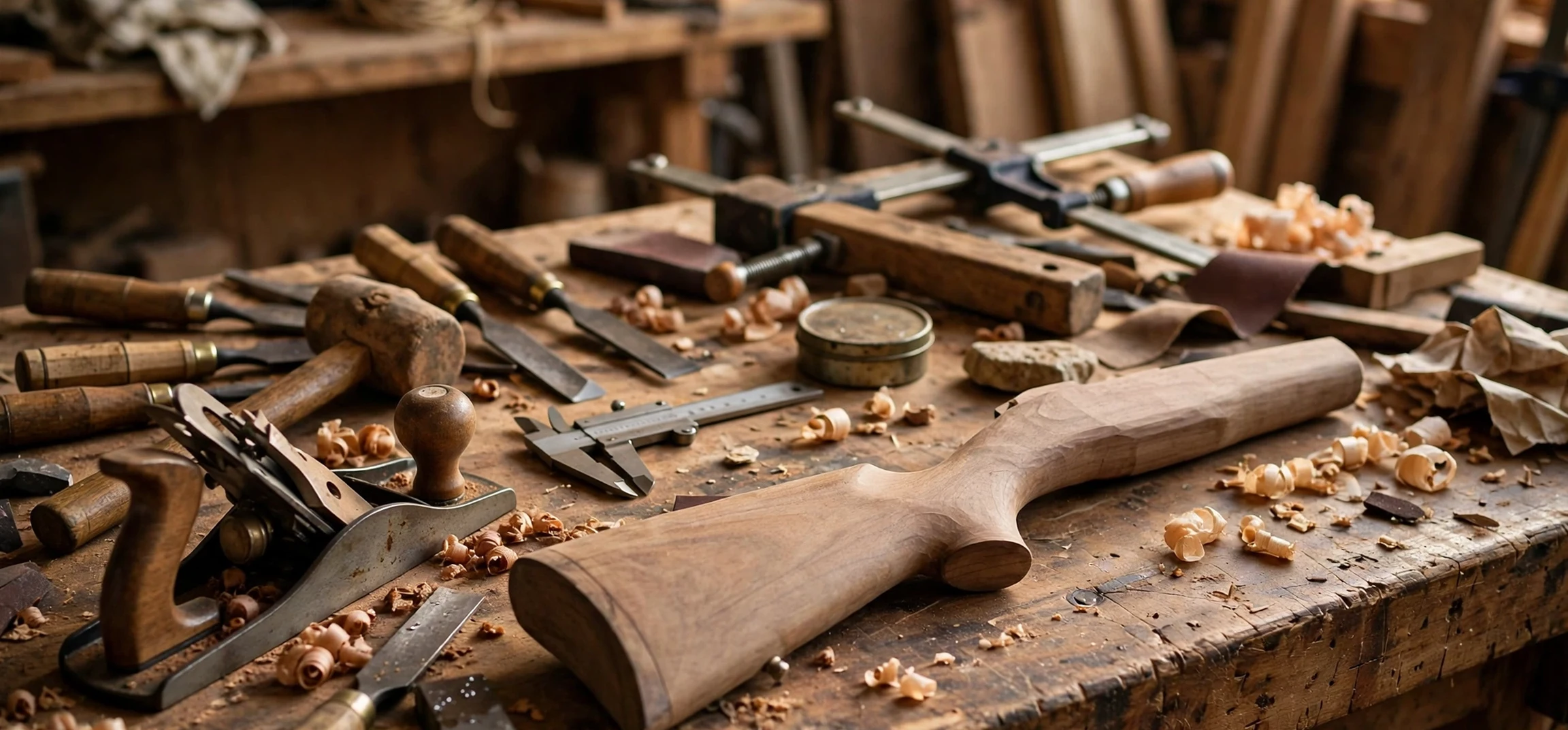
A checkering tool for gun stocks is a hand tool used by gunsmiths and stock makers to cut a pattern of small, neat diamonds into the wood of a firearm stock. The extended cut version of such a tool usually refers to a longer cutting edge, a longer handle reach, or a design that helps the user work across a wider area with fewer stops. This article explains what checkering is, how the tools work in general terms, what an extended cut design is meant to do, and how to think about safety, legality, and professional work. It is a general craftsmanship overview, not a step-by-step workshop manual, and it includes safety and legal notes throughout.
Checkering is both functional and decorative. On a functional level, the small diamonds create grip, so a hand is less likely to slip in wet or cold conditions. On a decorative level, a clean, even pattern is a sign of careful workmanship, and it is one of the details that collectors and shooters notice when they inspect a well-made stock. A poorly cut pattern, by contrast, stands out immediately, because the eye picks up uneven lines and broken diamonds. That is why gunsmiths treat checkering as a skilled finishing task rather than a quick job.
Gun stocks themselves are usually made from walnut or other hardwoods chosen for strength, stability, and appearance. The wood must be shaped, sanded, and finished before checkering, and the pattern is normally laid out carefully so it sits in the right place for the hand. The grip area and the fore-end are the most common locations, because those are the places where control matters most. Good layout respects the shape of the stock and the natural position of the fingers.
What Checkering Does
Checkering works by cutting two sets of parallel lines that cross each other at an angle. Where the lines cross, they form diamonds. The depth and spacing of the lines determine how sharp the pattern feels and how it looks. Fine checkering has many small diamonds per inch and feels smoother, while coarse checkering has larger diamonds and a stronger grip. The choice depends on the intended use of the firearm, the size of the stock, and personal preference.
The pattern also helps with consistency. When a shooter holds a stock the same way each time, a textured grip area gives a familiar reference point for the hand. That consistency matters for comfort and control, especially during long sessions. It is not a substitute for training, safe handling, or proper fit, but it is one part of a well-finished stock.
Grip and Control
A smooth wooden stock can become slippery when hands are wet, cold, or tired. Checkering adds texture without adding bulk, which is useful on a tool that must remain balanced and comfortable. The texture should be even and clean, not rough in a way that irritates the hand. Gunsmiths often test the feel as they work, checking that the pattern is uniform and that no sharp splinters remain.
Control also depends on stock fit. A stock that is too long, too short, or poorly shaped will feel awkward no matter how good the checkering is. For that reason, professional stock work usually starts with fitting and shaping, and checkering comes near the end of the process, after the main shape is settled. Rushing to checker before the shape is right can waste hours of careful work.
Appearance and Craftsmanship
Visually, checkering frames the grip area and draws attention to the quality of the wood. A clean border, straight lines, and sharp diamond points are signs of patience and practice. Many traditional stocks use a bordered panel, where the checkered area is outlined and the surrounding wood is left smooth. That contrast makes the pattern stand out and gives the stock a finished, professional look.
Collectors often judge older stocks partly by the condition of their checkering. Wear, repairs, and recutting can all change the appearance, and experts look for signs of original work versus later restoration. This interest in detail is part of why checkering remains a respected craft, even as modern manufacturing offers other grip materials and textures.
Types of Checkering Tools
Checkering tools come in several forms, but they share a basic idea: a small cutter with teeth that scores lines into wood. Some tools are single-line cutters, which cut one line at a time and give the user maximum control. Others are multi-line cutters, which cut several parallel lines at once and speed up the early stages of a pattern. There are also tools for cleaning up lines, sharpening diamond points, and working around curves and borders.
Handles vary as well. Some handles are short and compact for close work, while others are longer for leverage and reach. The cutting head may be fixed or replaceable, and different spacing options allow different numbers of lines per inch. A gunsmith may own several tools and switch between them during a single job, using one tool for layout, another for deepening lines, and another for finishing.
Single-Line and Multi-Line Cutters
A single-line cutter is the most precise option. It follows a guide line slowly and lets the user correct small errors before they spread. It is slower, but it is often used for borders and for finishing work where accuracy matters most. Beginners in stock finishing are usually advised to practise on scrap wood first, because a single misplaced line can affect the whole pattern.
A multi-line cutter covers more ground quickly, which is useful for filling a large panel. It requires steady pressure and a consistent angle, because any tilt can make the lines uneven. Experienced users often start a pattern with a multi-line tool and finish it with a single-line tool, combining speed with precision. The best choice depends on the size of the panel, the wood, and the user’s experience.
What Extended Cut Means
Extended cut generally refers to a cutter or handle design that extends the working reach or the length of cut. In practical terms, that can mean a longer cutter head that spans more of a panel, a handle that lets the user apply even pressure across a wider area, or a design that reduces the need to reposition the tool repeatedly. The benefit is smoother, more continuous lines, especially on larger grip areas.
An extended cut tool does not replace skill. It can help an experienced user work more efficiently, but it can also make mistakes longer if the user is not careful. As with any hand tool, the user should practise on scrap wood, work in good light, and stop to check progress often. A longer tool also needs safe storage, because its cutting edge should be protected when not in use.
Materials and Preparation
Most traditional gun stocks are walnut, prized for its strength, grain, and workability. Other hardwoods are also used, and each wood behaves slightly differently when cut. Hard, dense wood holds a sharp pattern well, while softer wood can tear if the tool is pushed too hard. Understanding the wood is part of the craft, and a professional will adjust pressure and technique to suit the material.
Preparation matters as much as cutting. The stock surface should be smooth, clean, and correctly shaped before layout begins. Any dents, scratches, or uneven areas should be dealt with first, because checkering will highlight rather than hide surface problems. Layout lines are usually marked lightly and checked from several angles before any cutting starts.
| Tool or feature | General purpose | Good practice |
|---|---|---|
| Single-line cutter | Precise lines and borders | Practise on scrap wood first |
| Multi-line cutter | Faster coverage of large panels | Keep pressure and angle steady |
| Extended cut design | Longer reach and smoother lines | Check progress often; protect the edge |
| Border tool | Clean panel edges | Mark layout before cutting |
| Finishing tool | Sharp diamond points | Work in good light, in short sessions |
Safety and Legal Notes
Safety comes first in any work involving firearms. Always follow local laws and regulations about firearm ownership, modification, and gunsmithing. Rules vary by country, state, and region, and some types of work may require a licence, registration, or a qualified professional. If you are unsure about the rules where you live, check with the relevant authority or a licensed gunsmith before starting any work.
Safe handling is equally important. A firearm should be treated as loaded until it has been checked and cleared by a competent person, and it should never be pointed at anything you do not intend to shoot. When a stock is removed for work, the firearm should be unloaded, cleared, and stored safely, with ammunition kept separately. Workshop safety also matters: wear eye protection, keep cutting tools sharp and stored safely, work in a well-lit area, and keep children and visitors away from tools and firearms.
When to Use a Professional Gunsmith
Many stock jobs are best left to a professional gunsmith, especially if the work involves fitting, structural repairs, or any change that could affect safety or function. A professional has training, proper tools, and experience with different woods and firearm designs. They can also advise whether a stock is suitable for checkering, whether repairs are needed first, and whether a particular pattern suits the firearm.
If a stock is valuable, historic, or damaged, professional advice is particularly important. Incorrect cutting can reduce value and may weaken the wood. A gunsmith can assess the stock, explain the options, and give a realistic idea of cost and time. For most owners, paying for skilled work is better than risking damage to a stock that is difficult or expensive to replace.
Workshop Safety Basics
Good workshop habits protect both the worker and the stock. Keep the work area tidy, clamp the stock securely, and cut away from the body. Take breaks to avoid fatigue, because tired hands make mistakes. Clean up wood dust, which can irritate the lungs and skin, and dispose of waste safely. Store sharp tools in a case or rack, not loose in a drawer, so edges stay sharp and hands stay safe.
Finishing products such as oils and varnishes also need care. Use them in a ventilated area, follow the manufacturer’s instructions, and store rags and containers safely, since some finishing materials can be flammable. Reading labels and following basic safety guidance is a simple habit that prevents most workshop accidents.
Choosing and Caring for Tools
Choosing a checkering tool starts with the job. A small grip panel needs a different approach from a large fore-end panel, and fine checkering needs different spacing from coarse checkering. Beginners should start with a basic, well-made tool and practise thoroughly, rather than buying many specialised tools at once. Quality matters: a well-made cutter holds its edge, cuts cleanly, and lasts for years with care.
Care is straightforward. Keep cutters clean and dry, protect cutting edges, and sharpen or replace them according to the maker’s guidance. A dull cutter tears wood instead of cutting it, which ruins a pattern and increases the risk of slipping. Inspect handles for cracks, and replace any tool that is damaged. Good storage, away from moisture and heavy objects, will extend the life of the tools.
Readers interested in other hands-on guides may enjoy Ploomes Org, Tech News Top Org, and Chain Guide Comedy Fun, which cover different topics in the same clear, practical style.
Frequently Asked Questions
What is checkering?
Checkering is a pattern of small diamonds cut into a gun stock to improve grip and appearance. It is made by cutting crossing lines into the wood, usually on the grip and fore-end areas.
What does extended cut mean?
Extended cut generally means a design with longer reach or a longer cutting edge, intended to help the user cut smoother, more continuous lines across a wider panel. It is a design feature, not a separate type of craft.
Can a beginner checker a stock?
A beginner can learn the basics on scrap wood, but checkering a valuable or functional stock is skilled work. Practise first, and consider a professional gunsmith for important jobs, especially where safety or value is involved.
Is checkering legal?
Stock finishing itself is a traditional craft, but firearm laws vary widely by location. Always follow local laws, and check with a licensed professional or relevant authority if you are unsure about rules for ownership, modification, or gunsmithing work.
How do I maintain a checkered stock?
Keep it clean and dry, brush out dust gently, avoid harsh chemicals, and re-oil or refinish only with products suitable for the stock. If the pattern is worn or damaged, ask a gunsmith before attempting repairs.
Conclusion
A checkering tool for gun stocks, including an extended cut design, is a specialist hand tool for a traditional craft. Its job is simple to describe and hard to do well: cut clean, even diamonds that improve grip and showcase good woodwork. The extended cut feature aims to make longer, smoother lines easier, but it does not replace practice, preparation, and patience. The best results come from careful layout, the right tool for the panel, steady work in good light, and regular checks as the pattern develops.
Above all, safety and legality must guide any firearm-related work. Follow local laws, handle firearms safely, store tools and ammunition responsibly, and use a professional gunsmith where appropriate. With those principles in place, checkering remains a rewarding example of hand craftsmanship, where a small pattern of diamonds can transform both the feel and the appearance of a well-made stock.



