If you searched for “does roku tv have built in antenna”, here is the short answer first: no, a Roku TV does not have a built-in antenna. What a Roku TV does have is a built-in tuner, which is the part that receives over-the-air television signals, but the antenna itself, the piece of equipment that actually captures those signals from the air, is separate and must be connected to the television. This distinction confuses many buyers, because marketing often describes Roku TVs as ready for free local channels, and it is easy to assume the antenna is included. This guide explains the difference clearly, shows you exactly what you need, and walks you through setup, channel scanning, and troubleshooting.
The phrase does roku tv have built in antenna is a search-query artifact: it is the question shoppers type when they are deciding whether they need to buy anything extra. The good news is that the extra purchase is usually modest, and the reward is real: with the right antenna, a Roku TV can receive free local broadcast channels, including major networks and local stations, without a cable subscription. The rest of this article explains how that works, what kind of antenna suits different homes, and how to get the best reception from your setup.
Does Roku TV Have Built in Antenna? The Short Answer
To answer does roku tv have built in antenna precisely: Roku TVs, which are televisions made by brands such as TCL, Hisense, and others that run Roku’s smart TV system, include a digital TV tuner and a coaxial antenna input on the back of the set, but they do not ship with an antenna in the box. The tuner decodes broadcast signals; the antenna collects them. Without an antenna connected to that input, the tuner has nothing to work with, and a channel scan will find no channels. This is the same arrangement as most modern televisions: the tuner is built in, the antenna is an accessory you choose based on your location.
It is worth distinguishing a Roku TV from a Roku streaming device, because the two are often confused in does roku tv have built in antenna searches. A Roku streaming stick or box connects to any television through an HDMI port and provides streaming apps; it has no tuner and no antenna input at all, so it cannot receive over-the-air broadcasts on its own. A Roku TV, by contrast, is a complete television with Roku software built in, and it combines streaming apps with a traditional live TV input. Only the Roku TV has the tuner and coaxial socket that make antenna television possible, and even then, the antenna itself is a separate purchase.
Why do manufacturers not include an antenna? The practical reason is that no single antenna suits every home. The does roku tv have built in antenna question has the same answer across brands: the tuner is built in, the antenna is not, whatever the brand on the bezel. A viewer living a few miles from broadcast towers in a city may get excellent reception from a small flat indoor antenna stuck to a window, while a viewer thirty miles away in a rural area may need a larger outdoor antenna mounted on a roof. Bundling one antenna with every television would leave many buyers with the wrong equipment, so manufacturers leave the choice to the buyer and provide the tuner and input instead. Understanding this saves you from an unpleasant surprise on setup day.
What “Does Roku TV Have Built in Antenna” Means for Your Setup
Once you know the answer to does roku tv have built in antenna, the setup becomes straightforward. You need three things: a Roku TV with its coaxial input, a digital antenna suited to your distance from local broadcast towers, and a coaxial cable, which is usually included with the antenna. Connect the antenna’s cable to the antenna input on the back of the television, position the antenna as recommended, then use the television’s Live TV input to run a channel scan. The scan searches the airwaves for available broadcasts and adds every watchable channel to your guide.
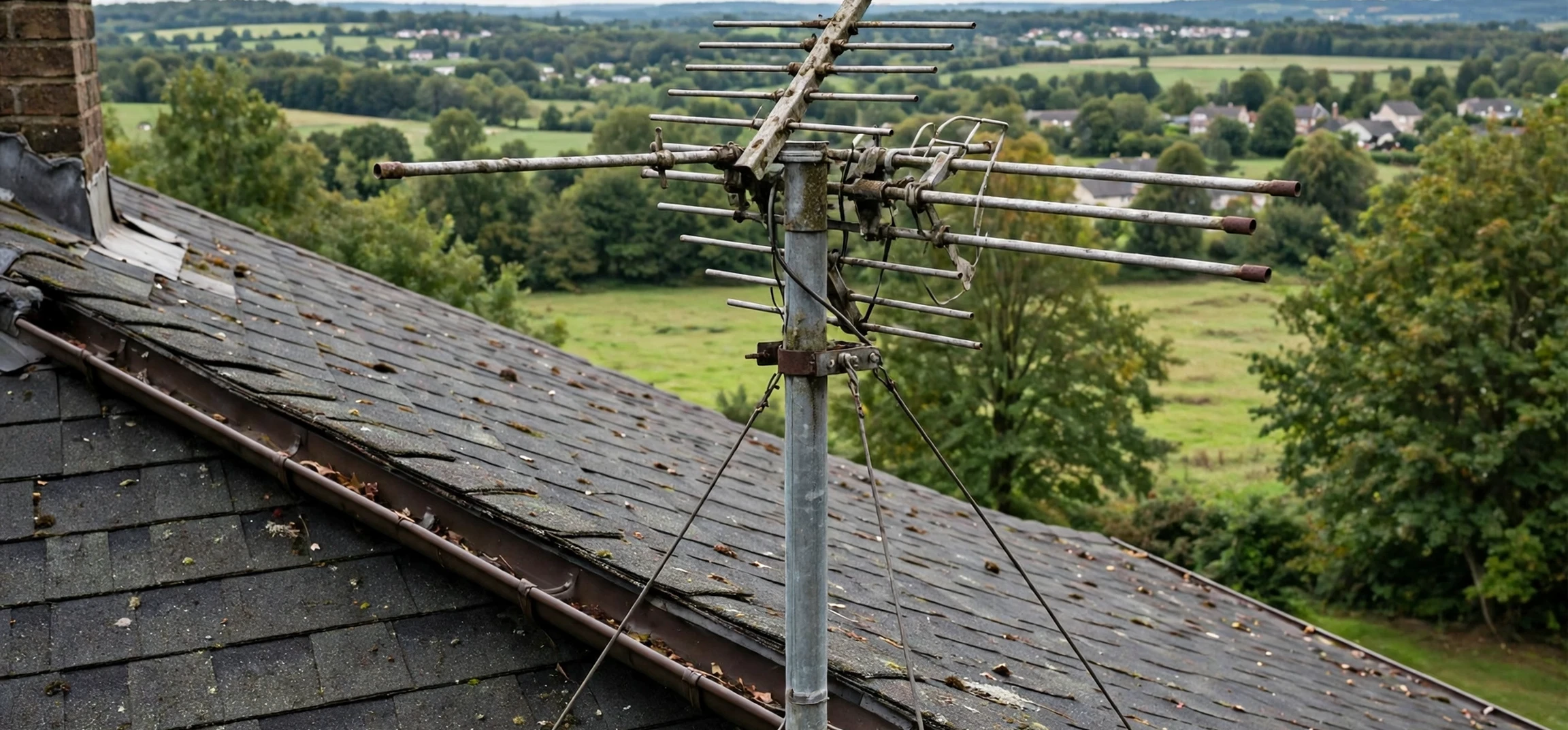
Choosing an antenna starts with distance and terrain. Indoor flat antennas are inexpensive, easy to install, and often sufficient for homes within roughly 20 to 30 miles of broadcast towers with a clear line of sight. For anyone still asking does roku tv have built in antenna while shopping, this choice is the whole point: you pick the antenna that fits your home, rather than accepting one bundled in the box. Indoor amplified antennas include a small signal booster powered through a USB port or wall outlet, which can help in marginal areas but can also overload the tuner if the signal is already strong, so amplification is not automatically better. Outdoor antennas, mounted on a roof, attic, or pole, offer the best range and are the right choice for rural homes, homes surrounded by hills, or homes more than 30 miles from towers. Before buying, you can check free online coverage tools that estimate which channels are available at your address and how strong their signals are; entering your postcode gives a far better guide than guessing.
Placement matters as much as the antenna itself. Broadcast signals travel in straight lines and are weakened by walls, metal roofs, and hills, so a window facing the direction of your local towers usually works better than a wall facing away from them. Try a few positions, running a fresh channel scan after each move, and keep a note of which position finds the most channels. If you live in a flat or rented home where an outdoor antenna is not practical, a window-mounted indoor antenna is often the best compromise, and moving it even a metre can make a noticeable difference to reception quality.
Setting Up a Digital Antenna on a Roku TV, Step by Step
Setting up an antenna on a Roku TV takes about fifteen minutes once the equipment is in hand. First, switch the television off and connect the antenna cable firmly to the coaxial input, usually labelled Antenna or Cable, on the back of the set. Next, position the antenna: near a window facing your local towers is a good starting point for an indoor model, and follow the manufacturer’s mounting instructions carefully for an outdoor model, taking care with ladders and roof work. Then switch the television on, select the Live TV input from the home screen, and choose the option to scan for channels or set up the TV tuner. The television will search for broadcasts, which can take several minutes, and then display the channels it found.
After the scan, browse the Live TV channel guide, which Roku TVs build automatically from the channels found. Remember, the does roku tv have built in antenna answer means this scan step is essential: without it, the tuner never learns which broadcasts are available at your address. This guide shows programme information for your local broadcasts alongside your streaming options, and you can hide channels you do not want or reorder favourites to taste. If the scan finds fewer channels than expected, do not assume the antenna is faulty: try repositioning it, rescanning, and checking whether any local towers are unusually distant or obstructed. Reception can also vary with weather and time of day, so a rescan on a different day sometimes finds extra channels.
One useful feature of Roku TVs is that the Live TV guide integrates antenna channels with the Roku home screen, so over-the-air television feels like part of the same system as your streaming apps rather than a separate world. You can also pause live television for a short period on some models when a USB storage device is attached, although this feature and its limits vary by model, so check your television’s manual for details. The core experience, however, is simple: free local channels, received through your antenna, listed in one guide.
Troubleshooting Roku TV Antenna Reception
Most antenna problems on a Roku TV have a small number of causes, and working through them in order usually solves the issue. If you searched does roku tv have built in antenna because a scan found nothing at all, first check the physical connection: the coaxial cable should be finger-tight on both the antenna and the television, and the television’s input should be set to Antenna or Air rather than Cable, since the wrong mode can make the tuner search the wrong frequencies. If the connection is correct, reposition the antenna and rescan, ideally near a window facing the towers.
If some channels work but others break up or freeze, the signal is probably marginal. A slightly higher position, a different window, or an outdoor antenna may help, and removing an amplifier that is overloading a strong signal can also improve matters, so try the antenna with and without amplification if your model allows it. Interference from nearby electronics, LED lighting, and large metal objects can also degrade reception, so keep the antenna away from other devices where possible. If a channel that used to work suddenly disappears, rescan: broadcasters occasionally change frequencies, a process known as repacking, and a fresh scan picks up the new frequency.
Finally, set realistic expectations. Over-the-air television gives you local broadcast channels free of charge, but it does not give you cable channels, premium networks, or streaming exclusives. Many viewers combine an antenna with streaming apps on the same Roku TV, using the antenna for local news, sport, and major-network shows, and streaming for everything else. That combination is exactly what Roku TVs are designed for, and it is why the answer to does roku tv have built in antenna matters: the television is ready for antenna television, but the antenna is the one piece you choose yourself.
Roku TV Antenna Options Compared
| Antenna type | Best for | Typical range | Notes |
|---|---|---|---|
| Flat indoor antenna | City and suburban homes near towers | Up to about 30 miles | Cheap, easy, window-mounted |
| Amplified indoor antenna | Marginal indoor reception | Up to about 50 miles | Booster can overload strong signals |
| Outdoor or attic antenna | Rural homes, hills, long distances | 50 miles or more | Best range; needs mounting |
The table above also answers the does roku tv have built in antenna question from the buying side: whichever type you choose, the antenna is the accessory and the tuner is the built-in part, so spend your money on the antenna that matches your distance from local towers.
Does Roku TV Have Built in Antenna? Frequently Asked Questions
Does Roku TV have built in antenna included in the box?
No. Roku TVs include a tuner and an antenna input, but the antenna itself is sold separately. Budget for a modest antenna purchase when you buy the television if you plan to watch over-the-air channels.
Can I use any digital antenna with a Roku TV?
Yes, any standard digital television antenna with a coaxial connector will work with a Roku TV’s antenna input. The choice is about range and placement, not brand compatibility.
Do I need the internet to watch antenna channels on a Roku TV?
No. Over-the-air channels arrive through the antenna and work without an internet connection, although the television’s streaming apps and programme guide data do use the internet.
Will an antenna give me cable channels?
No. An antenna receives free local broadcast channels only. Cable and premium channels require a subscription through a provider or streaming service.
Conclusion
So, does roku tv have built in antenna? No, but the full picture is more encouraging than that short answer suggests: every Roku TV has the tuner and input you need, and a well-chosen antenna unlocks free local television in under half an hour. Pick an antenna for your distance from local towers, position it carefully, run a channel scan from the Live TV input, and rescan whenever reception changes. Combined with the streaming apps already on the home screen, an antenna makes a Roku TV a genuinely complete television setup. If you enjoy television guides, you may also like our overview of ABC Family TV series, our retro classic guide to Airwolf, and our cast guide for According to Jim.