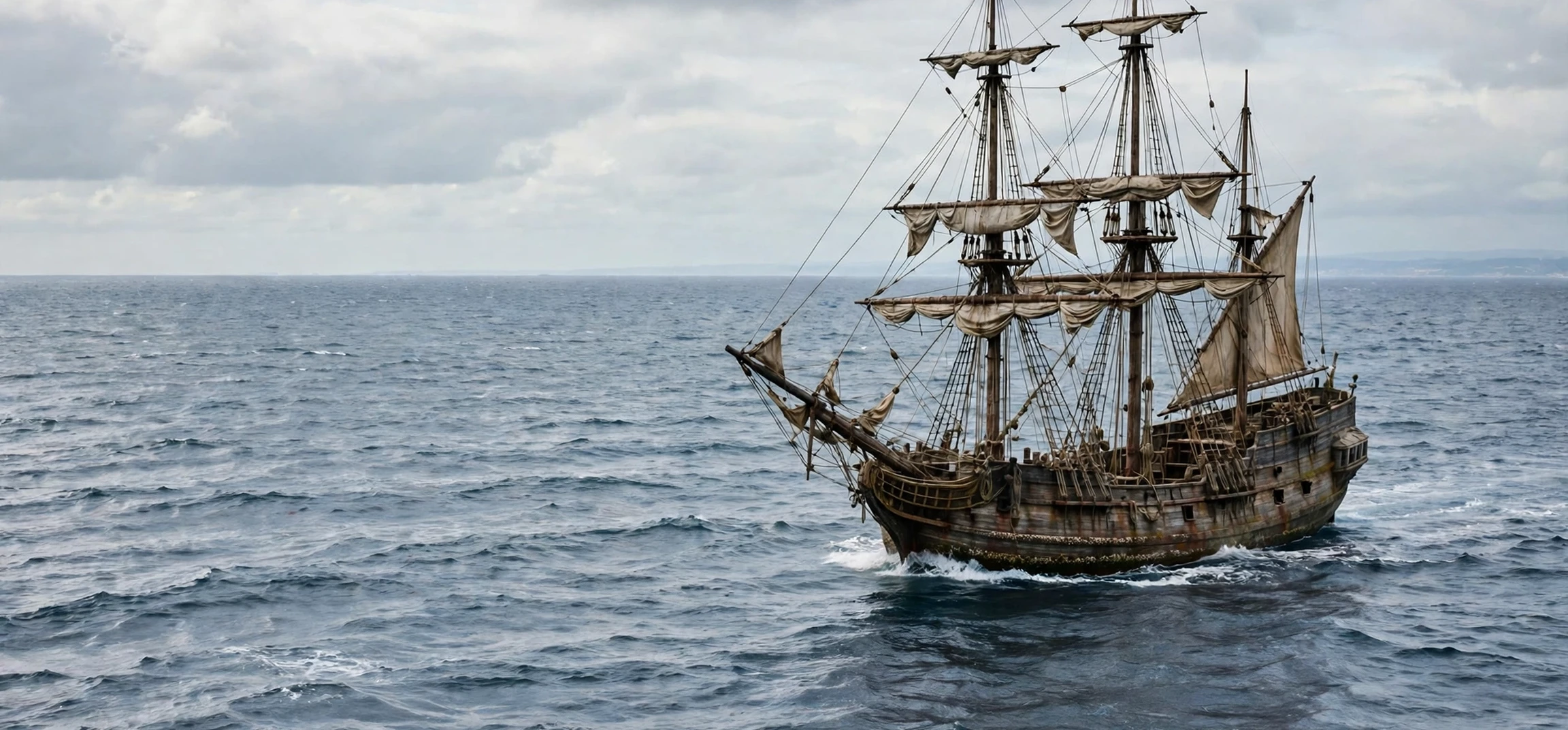
The search term argo odyssey brings together three similar-sounding pieces of ancient Greek storytelling, and it is easy to see why searchers get them tangled. The Argo was the ship that carried Jason and the Argonauts on their quest for the Golden Fleece. Argos was the faithful dog who waited twenty years for Odysseus to come home in the Odyssey. The Odyssey itself is the epic poem about that long journey home. This guide untangles the search term, explains each story on its own terms, and shows why these old tales still feel like retro classics today.
Confusion between the Argo, Argos, and the Odyssey is not a modern invention. Even in the ancient world, storytellers retold these myths in different versions, and audiences heard them in songs, plays, and poems rather than reading a single fixed text. Names were passed down by ear, so a ship, a dog, and a hero could blur together in memory. Add two thousand years of translations, films, and school summaries, and the tangle only grows. The good news is that once you separate the three threads, each one is simple to follow and rewarding in its own right.
It also helps to remember what these stories were for. Greek myths were not just entertainment. They were a way of talking about loyalty, courage, cleverness, and home. The voyage of the Argo asked what a group of heroes could achieve together. The Odyssey asked what one man would endure to get back to his family. Argos, the dog, asked something quieter and more moving: what does loyalty look like when nobody is watching? Those questions are why the stories survived, and why they keep being retold in books, films, and games.
What the Search Term Argo Odyssey Really Means
When people type argo odyssey into a search box, they are usually looking for one of three things. Some want to know whether the Argo appears in the Odyssey. Some are thinking of Argos, the dog, and want to understand his role in the story. Others have half-remembered a school lesson or a film and want to place the names in the right story. The honest answer is that the search term combines two separate traditions: the Argonautic voyage and the homecoming of Odysseus. They share a world of gods, monsters, and sea voyages, but they are different stories with different heroes.
The Argo belongs to Jason. According to the myth, Jason assembled a crew of heroes, the Argonauts, and sailed to Colchis to recover the Golden Fleece. The ship was said to have been built with the help of the goddess Athena, and it carried a talking timber in its prow. The voyage took the crew past dangers such as the clashing rocks, the harpies, and a dragon guarding the fleece. It is a story about a team, and about a leader whose success depended on the skills of others, including the sorceress Medea.
The Odyssey belongs to Odysseus, the king of Ithaca. After the Trojan War, he spent ten years trying to get home, facing the Cyclops Polyphemus, the enchantress Circe, the Sirens, the sea monsters Scylla and Charybdis, and the anger of the sea god Poseidon. When he finally reached Ithaca, he arrived in disguise, and only his old dog Argos recognised him. That recognition scene is one of the most famous moments in all of literature, and it is the part of the story most people remember even when they forget the name of the dog.
So the short version is this: the Argo is a ship, Argos is a dog, and the Odyssey is the epic of Odysseus. If you keep those three facts straight, the rest of the mythology falls into place. The rest of this article explores each thread in turn, then explains why these stories still count as retro classics.
Argo Odyssey: Two Epic Traditions in One Search
The reason the Argo and the Odyssey feel connected is that they come from the same storytelling world. Both epics are set in a Mediterranean dotted with islands, kingdoms, and gods who intervene in human affairs. Both heroes travel by sea, and both face creatures and trials that test character as much as strength. Jason must win allies and keep a fractious crew together. Odysseus must outwit enemies who are stronger than he is. In both cases, the journey matters as much as the destination, because the journey reveals who the hero really is.
There are also direct links between the traditions. The Argonauts were said to have passed through waters and past dangers that later storytellers also gave to Odysseus. The clashing rocks, for example, appear in both traditions in different forms. Ancient poets borrowed and reshaped each other’s material freely. Homer, the poet credited with the Odyssey, was working within a tradition that already knew Jason’s voyage, and later poets writing about Jason knew Homer’s work. The stories cross-pollinated, which is another reason searchers blend them today.
For readers coming to these myths for the first time, the best approach is to read them as companions rather than as one story. Start with the Odyssey for a single hero’s long road home. Then read the voyage of the Argo for a different kind of adventure, one where teamwork and negotiation matter as much as swordplay. Together they show the range of Greek storytelling, from intimate scenes of loyalty to grand set pieces of monsters and magic.
The Argo and the Argonauts
Jason’s story begins with a throne stolen by his uncle Pelias, who sent the young hero to fetch the Golden Fleece in the hope that he would never return. Jason gathered heroes from across Greece, including Heracles, Orpheus, Castor and Pollux, and Atalanta in some versions. The ship Argo was named after its builder, Argus, and it became almost a character in its own right, carrying the crew through storms and strange lands.
The voyage is a catalogue of wonders. The Argonauts rescued the blind prophet Phineus from the harpies, threaded the clashing rocks that crushed anything passing between them, and reached Colchis, where King Aeetes set Jason impossible tasks. With Medea’s help, Jason yoked fire-breathing bulls, sowed dragon’s teeth that sprouted into armed warriors, and finally took the fleece from the dragon that guarded it. The return journey was just as dangerous, and the story ends not with simple triumph but with betrayal, exile, and tragedy, as Jason and Medea’s relationship fell apart.
That darker ending is part of why the Argo story endures. It refuses to be a simple adventure. It asks whether a prize won through cleverness and outside help is really a victory, and what happens when a hero cannot live up to his own legend. Those are questions that still feel modern, and they are why writers keep returning to Jason’s voyage.
Argos, the Faithful Dog of Odysseus
Argos enters the Odyssey only briefly, but his scene has outlasted many longer episodes. When Odysseus left for Troy, Argos was a young hunting dog. Twenty years later, when Odysseus returned in the disguise of a beggar, Argos was old, neglected, and lying on a dung heap outside the palace. He lifted his head, recognised his master, wagged his tail, and died. Odysseus, who could not reveal himself, wiped away a tear in secret and walked on.
The power of the scene lies in its contrast. The palace is full of suitors feasting on Odysseus’s wealth and courting his wife Penelope, yet none of them recognises the king. The only creature who knows him at once is the dog everyone else has forgotten. Ancient audiences would have understood the point immediately: loyalty is not about fine words or grand gestures, but about recognition that survives time and neglect. It is also a test of Odysseus’s self-control, because he must keep his disguise even as his heart breaks.
Argos has become a symbol of fidelity in his own right. His name is used for loyal dogs in later literature, and the scene is quoted whenever writers want to show devotion without sentimentality. If you remember only one detail from the Odyssey, it may well be Argos, and that is no accident. Homer, or the tradition behind him, knew exactly what he was doing when he placed that quiet moment at the threshold of the hero’s return.
The Odyssey Tradition Explained
The Odyssey is one of the two great epics attributed to Homer, the other being the Iliad. It is divided into twenty-four books and tells the story of Odysseus’s ten-year journey home and his reclaiming of his household. The poem opens not with a battle but with a man in trouble: Odysseus is trapped on the island of the nymph Calypso, while back on Ithaca his wife Penelope fends off suitors and his son Telemachus searches for news of his father.
The structure of the Odyssey is famously inventive. It begins in the middle of the action, then lets Odysseus tell his own adventures in a long flashback at the court of the Phaeacians. This storytelling within storytelling lets the poem move between past dangers and present suspense. Readers hear about the Cyclops, the Sirens, and the underworld from Odysseus himself, which raises the question of how much to trust his version of events. That self-conscious storytelling is one reason the poem still feels fresh.
At its heart, the Odyssey is a poem about homecoming and identity. Odysseus must prove he is who he claims to be, first to his dog, then to his swineherd, then to Penelope through the secret of their bed, and finally to his father Laertes. Each recognition scene works differently, and each one tests a different kind of knowledge. The poem suggests that home is not just a place, but a web of shared memories and private signs that only the people who belong there can read.
For readers who want to explore how Greek words and names carry meaning into English, guides to Greek terms and their meanings can be a useful companion, and the same curiosity about words drives many of the word-meaning explainers that readers enjoy alongside mythology. Language is part of the myth, because names like Argo and Argos carry their stories with them.
Argos, Argo, and Odysseus at a Glance
The table below separates the three names that the search term blends together. Keep it in mind whenever you meet these stories in a book, a film, or a classroom discussion.
| Name | What it is | Which story | Why it matters |
|---|---|---|---|
| Argo | A ship | Jason and the Argonauts | Carried the crew to the Golden Fleece |
| Argos | A dog | The Odyssey | Recognised Odysseus after twenty years |
| Odysseus | A hero and king | The Odyssey | Endured ten years to return to Ithaca |
| Jason | A hero and leader | Jason and the Argonauts | Led the quest for the Golden Fleece |
Why These Myths Still Feel Like Retro Classics
Calling the Argo and the Odyssey retro classics is more than a label. Like a classic film or an old song, these stories have been remade so often that each generation meets them afresh. The 1963 film Jason and the Argonauts, with its stop-motion skeletons, introduced many viewers to the voyage. The Coen brothers’ film O Brother, Where Art Thou borrowed the Odyssey’s structure for a very different American setting. The Odyssey has been retold in novels, comics, and stage plays, each time finding new meaning in the old material.
Part of their staying power is that the myths are open enough to be reinterpreted. Penelope, long read as the patient wife waiting at home, has been reimagined in modern retellings as a strategist in her own right. Medea, long read as a villain, has been re-read as a woman betrayed by the hero she helped. Argos has been claimed by animal lovers as proof that the ancients understood the bond between people and dogs. Each retelling keeps the core story while changing the emphasis, which is exactly how classics stay alive.
The stories also survive because they are genuinely gripping. The Cyclops episode works as horror. The Sirens work as a warning about temptation. The clashing rocks work as pure spectacle. Teachers return to them because students respond to them, and students respond because the stakes are clear: get home, stay loyal, survive the sea. No amount of modern special effects changes the fact that a good story, well told, holds an audience.
There is also a simpler reason. These myths give us shared reference points. When someone says a journey was odyssean, or that a dog is as loyal as Argos, or that a team is a band of Argonauts, listeners understand at once. That shared language is the real legacy of the Greek epics. They gave later cultures a vocabulary for adventure, loyalty, and homecoming, and that vocabulary is still in use.
Frequently Asked Questions
Does the Argo appear in the Odyssey?
Not as a central part of the story. The Argo belongs to Jason’s voyage, while the Odyssey follows Odysseus. The two traditions share a world and some dangers, but the ship Argo is not Odysseus’s ship, and Jason is not a character in the Odyssey’s main plot.
What does the name Argos mean?
Argos is a name that appears for several figures and places in Greek myth, including a city and a many-eyed giant. In the Odyssey, Argos is Odysseus’s dog, and his name is most remembered for the loyalty shown in the recognition scene. Context tells you which Argos a writer means.
Where should a new reader start?
Start with a modern prose retelling or a well-regarded translation of the Odyssey, then move to a retelling of Jason and the Argonauts. Reading summaries first can help, because the myths come in many versions, and a clear overview makes the differences between versions easier to follow.
Conclusion
The search term argo odyssey is a useful accident, because it sends searchers to two of the greatest adventure stories ever told. The Argo carried Jason toward the Golden Fleece. Argos waited twenty years and recognised Odysseus in an instant. The Odyssey turned that homecoming into an epic about identity, loyalty, and endurance. Keep the ship, the dog, and the hero separate, and you will have the keys to a whole world of myth. For more on how words carry their histories, see this guide to broad word meanings, and then return to the epics themselves, where the stories are waiting, as they have been for thousands of years.