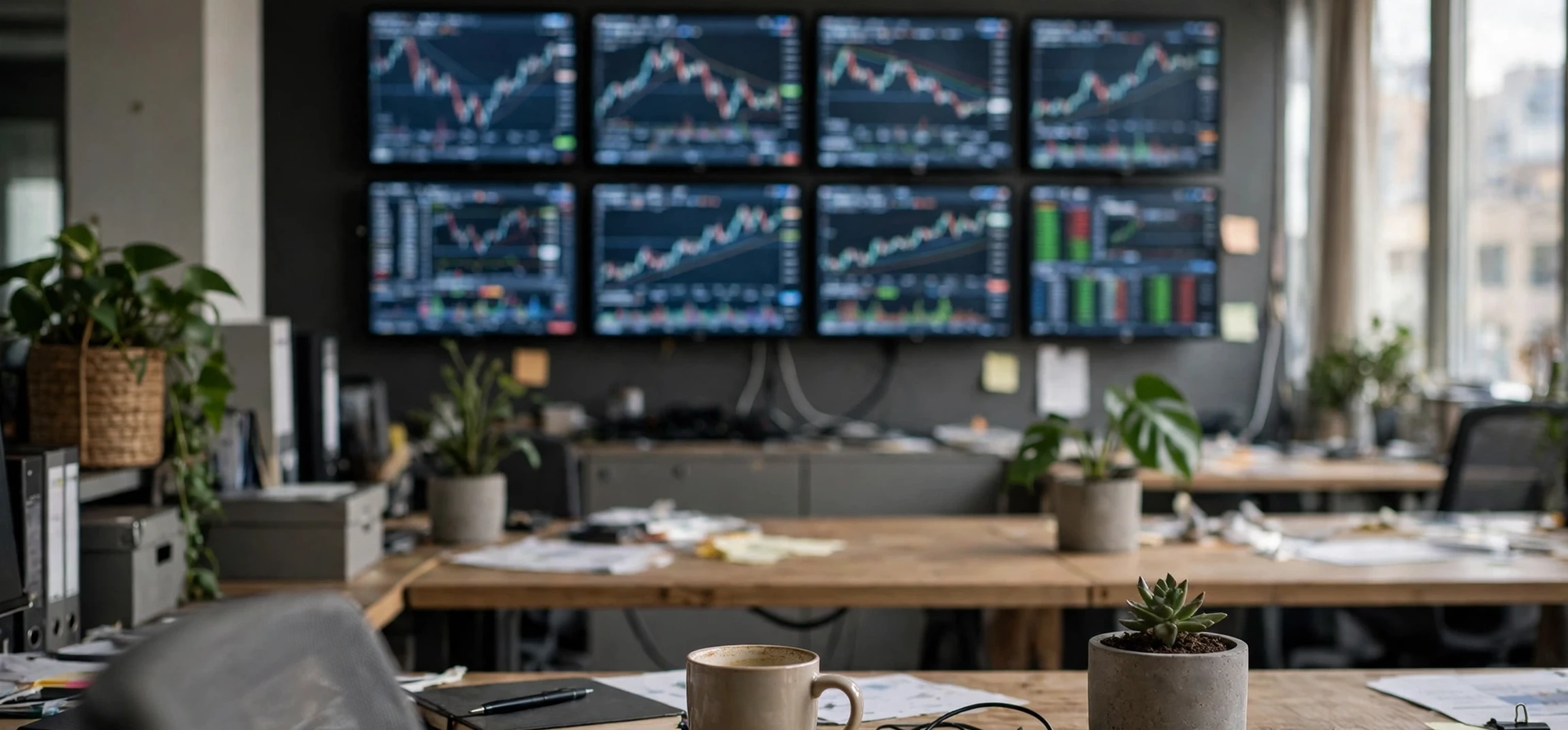
Most people picture the stock market as a place that opens in the morning, rings a bell, and closes in the afternoon. Real markets are more layered than that, and the hours outside the main session are a fascinating part of the story. This guide to the market afterhours explains what happens when the main session ends, who participates, why prices can move in the evening, and how news, earnings, and global trading fit together. It is educational only: it describes how markets work, not what any person should buy, sell, or hold.
Understanding after-hours trading helps you make sense of headlines. When a company reports earnings after the close and commentators mention a sharp evening move, that move reflects real orders in extended-hours venues, not a guess about the next morning. Equally, an evening move does not guarantee a similar move when the main session reopens, because new orders, new information, and broader participation can change the picture overnight.
Market Afterhours Defined
The market afterhours refers to trading that takes place outside the regular session on electronic venues, typically in the evening after the main close and, in many markets, in the early morning before the next open. Regular sessions are the hours when exchanges operate at full participation, with the deepest liquidity and the widest range of order types. Extended hours use electronic communication networks and alternative venues that match buyers and sellers without a physical trading floor.
Terminology varies by market and broker, so it helps to separate three concepts. Pre-market trading happens before the regular open. After-hours trading happens after the regular close. Overnight sessions, where offered, extend further into the night. Each segment has its own participation rules, eligible securities, and order-type limits, and brokers differ in which segments they offer to retail clients. Always check your own broker documentation for the exact hours and rules that apply to your account.
Futures markets add another layer. Many futures contracts trade nearly around the clock on electronic platforms, pausing briefly for maintenance and settlement. That is why futures activity is often quoted in evening news reports as a gauge of sentiment while stock exchanges are closed. Futures and stocks are different instruments with different rules, so a futures move is an indicator of sentiment among futures participants, not a direct quote for any individual stock.
Who Trades in the Market Afterhours
After-hours participants include institutional investors adjusting positions, market makers providing liquidity, and individual investors reacting to news. Companies often release earnings and major announcements after the regular close precisely so investors have time to digest the information before the next full session. That timing concentrates attention in the evening session, which is one reason evening moves around earnings can look dramatic.
Liquidity is thinner in extended hours than in the regular session. Fewer participants means fewer orders on each side, wider spreads between bid and offer prices, and larger price jumps from relatively small orders. A price move that looks large in the evening may reflect a handful of trades rather than broad agreement about value. This is a structural feature of thin markets, not evidence of manipulation or error, and it is the main reason evening prices deserve cautious interpretation.
Order types are also more restricted in extended hours. Many venues accept only limit orders, which specify a maximum purchase price or minimum sale price, rather than market orders that execute at whatever price is available. Limit orders protect traders from extreme fills in thin markets, but they also mean orders may go unfilled if the price never reaches the limit. Understanding this trade-off is essential before participating, and broker education pages explain the specific order types available in each session.
News, Earnings, and Evening Price Moves
Earnings season is the busiest period for after-hours activity. A company reports revenue, profit, and guidance after the close, and traders immediately reassess their views. Because the regular session is closed, that reassessment shows up first in extended-hours trading. Commentators then report the evening move as an early signal, but it is only the first chapter: analysts publish notes overnight, global markets react, and the regular session brings far more participants and orders the next day.
Other news moves evening markets too. Economic data released in the evening, geopolitical developments, central-bank statements from other time zones, and major corporate announcements can all prompt extended-hours orders. Global markets operate in sequence across time zones, so an event in one region evening can coincide with a trading day elsewhere. This relay across time zones is why markets feel continuous even though each individual exchange has fixed hours.
It is tempting to treat an evening move as a forecast, but that reading overstates what one thin session can tell you. Evening prices reflect the views of a smaller, self-selected group of participants at a moment when information is fresh and liquidity is limited. The regular session adds institutional flows, index activity, and a much larger order book, all of which can confirm, moderate, or reverse the evening direction. Treat evening moves as information about sentiment, not as a prediction.
Risks and Mechanics of Afterhours Trading
Thin liquidity is the central risk of extended-hours trading. Wider spreads mean the gap between what buyers will pay and sellers will accept is larger, so execution costs can be higher. Partial fills are more common, where only part of an order executes because insufficient volume exists at the limit price. Price volatility is higher for the same reason: a modest order can move the quoted price more than it would in the deep regular session.
Information risk is the second factor. Evening news is often incomplete at first, with details emerging in filings, calls, and analysis over hours. Traders acting on headlines alone may miss context that becomes clear by morning. In addition, some securities do not trade at all in extended hours, and others trade only on certain venues, so availability varies. Checking whether a specific security is eligible, and on which venue, avoids confusion when an order cannot be placed.
Operational details also matter. Settlement, corporate actions, and broker cut-off times follow their own calendars, and extended-hours trades generally settle on the same cycle as regular trades. Tax and reporting treatment does not change because a trade happened in the evening. If you participate, keep records in the same way as for regular trades, and review broker statements carefully for fills, partial fills, and any orders left open across sessions.
For readers building general market literacy, historical context helps. Our explainer on the average stock market return over the last thirty years shows why long-run patterns and single-evening moves answer very different questions, and why mixing them up leads to poor conclusions.
Futures Trading Behind the Scenes
Futures are contracts to buy or sell an asset at a future date at a price agreed today, and index futures are among the most watched overnight instruments. They trade electronically for most of the day and night, which makes them a continuous sentiment gauge while stock exchanges sleep. When evening reports mention futures pointing higher or lower, they are describing futures participants trading on the latest news and global developments.
Behind the scenes, futures trading depends on clearing houses, margin systems, and electronic matching engines. Margin is collateral that participants post to cover potential losses, and it is adjusted as prices move. Clearing houses stand between buyers and sellers, reducing the risk that one side fails to honour a contract. These systems operate on strict schedules, including brief daily pauses for maintenance, settlement, and risk checks, which is why even nearly continuous markets have short breaks.
Futures prices and stock prices are linked by arbitrage and hedging, but they are not identical. A futures contract reflects expectations about a future date, financing costs, dividends, and market sentiment, while a stock price reflects the regular-session order book for that company. The two usually move together, but gaps, basis differences, and contract expiry effects mean they can diverge temporarily. Educational coverage of futures should therefore treat them as a related but distinct market, not as a shadow stock exchange.
The Global Relay: How Markets Hand Over
One of the most elegant features of modern finance is the daily relay across time zones. As one region trading day ends, another begins, and electronic venues bridge the gaps. Asian markets open while Western markets sleep, European markets follow, and American markets pick up later. News travels instantly, but full-session liquidity arrives in waves as each region opens, which is why overnight sentiment can shift several times before any single market reopens.
Currency markets operate closest to continuous trading, with only a weekend break, while stock and futures markets follow exchange calendars with holidays and maintenance windows. Understanding this relay helps explain why a domestic headline can move overseas markets first, and why the next domestic session may open far from the previous close. The market is best imagined as a network of sessions rather than a single room with a single clock.
Technology underpins the whole relay. Electronic matching engines process orders in microseconds, market-data feeds distribute prices worldwide, and risk systems monitor positions continuously. When systems pause for maintenance or when a venue halts trading in a specific security, those pauses are part of the design, protecting orderly markets rather than signalling failure. News reports of halts and pauses usually reflect these safeguards in action.
History also offers perspective on why session structures evolved this way. Our account of the effects of the 1929 stock market crash traces how early market crises shaped modern rules, safeguards, and the separation between regular and extended trading that investors navigate today.
| Session | Typical character | What to remember |
|---|---|---|
| Regular session | Deepest liquidity, widest participation | Benchmark prices form here |
| Pre-market | Thinner, news-driven | Early reaction, not a forecast |
| After-hours | Thinner, earnings-driven | Wider spreads, limit orders common |
| Futures overnight | Nearly continuous, global | Sentiment gauge, distinct instrument |
Frequently Asked Questions
What does market afterhours mean?
It means trading outside the regular exchange session, usually in the evening after the close, on electronic venues. Participation is thinner, spreads are wider, and order types are often limited to limit orders.
Does an evening price move predict the next day?
Not reliably. Evening moves reflect a smaller group of participants in a thin market. The regular session brings far more orders and information, and it can confirm, moderate, or reverse the evening direction.
Are futures moves the same as stock moves?
No. Futures are separate contracts with their own rules, margin, and expiry. They often move with stocks, but they are a sentiment indicator, not a direct quote for any individual stock.
Can individual investors trade after hours?
Availability depends on your broker and the security. Many brokers offer extended-hours trading for eligible securities with limit orders only. Check your broker documentation for hours, eligibility, and order rules.
Conclusion
The market afterhours is best understood as the market thinking aloud between full sessions: thinner, faster to react, and easier to misread than the regular session. Evening earnings, global news, and nearly continuous futures trading all feed into it, but the deepest price discovery still happens when the full session reopens with broad participation. For the curious reader, that distinction is the whole lesson: follow evening moves as interesting information, understand the mechanics behind them, and reserve judgement until the regular session has had its say. For a single-security example of how market discussion is framed, see our piece on ATR stock coverage, which illustrates how individual names attract attention alongside broader market stories. This article is educational only and is not investment advice or a forecast of any kind.