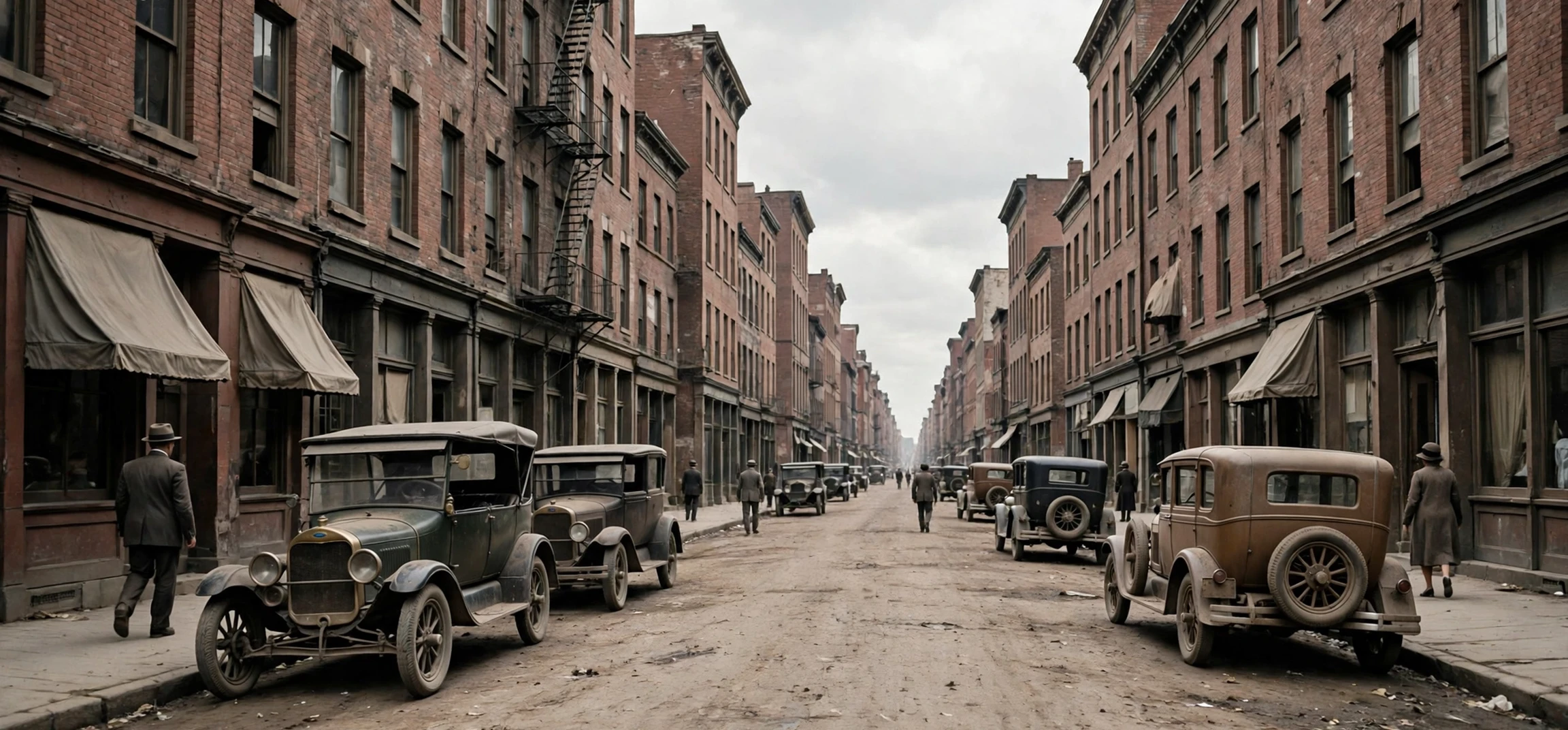
To understand what is stock market crash of 1929 in terms of its consequences, it helps to look beyond the dramatic days of falling share prices and ask what happened next: to banks, to businesses, to farms, to families, and to governments. What is stock market crash of 1929, in its simplest form, was a sharp fall in share prices on the New York stock market in the autumn of 1929. Its effects, however, lasted far longer than the crash itself, and they spread far beyond the trading floor. This article focuses on those effects and the aftermath, rather than on a day-by-day account of the crash. It is historical finance education only, and it offers no investment advice and no guidance about present-day markets.
The central point is that a stock market crash and an economic depression are not the same thing, even though they are closely connected in this case. A crash is a rapid fall in the prices of shares. A depression is a long, deep fall in overall economic activity, with falling output, rising unemployment, and widespread hardship. What is stock market crash of 1929 did not, on its own, single-handedly cause the Great Depression, but it damaged confidence, destroyed wealth on paper, weakened banks, and made an already fragile economy much harder to stabilise. Economists still debate the exact weight of each cause, and that debate itself is part of why the episode remains so widely studied.
Understanding what is stock market crash of 1929 therefore means understanding a chain of effects. First came losses for shareholders, including many ordinary people who had bought shares on credit. Then came pressure on banks, many of which had lent money for share purchases or had invested in shares themselves. Then came falling spending, because households and businesses that felt poorer, or that feared for their jobs, spent less. Then came falling production, because firms that could not sell their goods cut output and laid off workers. Each step reinforced the next, and the result was a downturn that lasted for years rather than weeks.
What Is Stock Market Crash of 1929? An Overview of Its Effects
For readers asking what is stock market crash of 1929 in terms of impact, the most immediate effect was a collapse in paper wealth. Share prices that had risen strongly through much of the 1920s fell sharply, and many shares lost a large part of their value in a short period. For wealthy investors, this meant serious losses. For smaller investors, it could mean the loss of savings, especially where shares had been bought with borrowed money. When prices fall, borrowed money still has to be repaid, and that mismatch turned market losses into personal financial distress for many households. It also turned a market event into a banking problem, because loans that could not be repaid weakened the lenders.
A second immediate effect, when asking what is stock market crash of 1929 in terms of impact, was a collapse in confidence. Confidence matters enormously in an economy because spending, lending, and hiring all depend on expectations about the future. When share prices fell so suddenly, many people concluded that harder times were coming, and they acted accordingly. Households saved more and spent less, even if their own incomes had not yet fallen. Businesses postponed investment and hiring. Banks became more cautious about lending. Each cautious decision was understandable on its own, but together they reduced demand across the economy, which is precisely what turns a financial shock into a broader downturn.
A third effect was international. The United States was already a major trading and lending nation by 1929, and the crash disrupted flows of money and trade around the world. American lending to other countries fell, which hurt countries that depended on those loans. Demand for exports fell as American consumers and businesses spent less, which hurt producers abroad. Attempts by various countries to protect their own industries by raising barriers to trade then made the problem worse, because world trade shrank further. The depression that followed was therefore global, not purely American, even though its most famous starting point was in New York.
Effects on Banks and the Financial System
Banks were among the institutions hit hardest in the aftermath, and their troubles help explain why the downturn lasted so long. In the 1920s, many banks had lent money to customers who used it to buy shares, a practice known as buying on margin. When share prices collapsed, many of those borrowers could not repay, and the banks were left with losses. Some banks had also invested directly in shares or in companies whose fortunes depended on the market. As losses mounted, depositors worried about the safety of their savings and rushed to withdraw them, and a bank that faced sudden, large withdrawals could fail even if its longer-term position might have recovered.
Bank failures then had effects of their own. When a bank failed, depositors could lose their savings, at least in part, because deposit insurance in its modern form did not yet exist in the United States. Businesses that banked with a failed institution could lose access to credit and to their working funds. Communities that lost a local bank lost a source of loans for farms, shops, and homes. As failures spread, surviving banks became even more cautious, which reduced lending further and deepened the credit squeeze. This cycle — losses, failures, caution, less lending — is one of the clearest examples of how a market crash can damage the plumbing of an entire economy.
The financial damage also changed how people thought about banks and markets for a generation. Many ordinary savers who had trusted banks or who had tried investing for the first time in the 1920s became deeply wary. That wariness affected saving behaviour, attitudes to borrowing, and political debate about regulation. It also contributed to later reforms designed to separate different kinds of banking, to supervise markets more closely, and eventually to protect depositors. Those reforms were not immediate, and they were debated fiercely, but the experience of bank failures in the early 1930s shaped financial regulation for decades afterwards.
Effects on Businesses, Workers and Families
For businesses, the aftermath meant falling demand, falling prices, and great difficulty obtaining credit. Firms that had expanded during the boom years suddenly found that customers were buying less. Factories cut production, shops reduced orders, and construction slowed sharply. Profits fell, and many firms failed. Those that survived often did so by cutting wages, shortening hours, or laying off workers. The result was a labour market in which jobs were scarce, hours were uncertain, and wages under pressure, which in turn reduced household spending further.
Unemployment rose to levels that are difficult to imagine today, and it stayed high for years. Official statistics from the period are imperfect, but historians agree that a very large share of the workforce was out of work at the worst point, and that many more were working reduced hours. Long-term unemployment had social effects as well as economic ones: families moved in search of work, young people delayed starting independent lives, and communities relied heavily on charity, mutual help, and eventually public relief. The experience left a lasting mark on attitudes to work, saving, and security.
Families adapted in many ways. Household budgets were cut to essentials, meals became simpler, clothing was mended and reused, and larger purchases were postponed indefinitely. Some families lost homes when mortgages could not be paid, and some farms were lost when debts could not be serviced and crop prices had fallen. At the same time, informal support networks mattered enormously: extended families shared housing and food, neighbours exchanged labour, and community organisations provided meals and assistance. These adaptations do not soften the scale of the hardship, but they are an important part of the human story of the aftermath.
Effects on Farming and Rural Communities
Farming communities were already under pressure before 1929, because crop prices had been weak through much of the 1920s after the wartime boom faded. The crash and the depression that followed made that pressure far worse. As incomes fell in towns and cities, demand for food fell, and farm prices fell further. Farmers who had borrowed to buy land or equipment found that their debts stayed fixed while their incomes shrank, which is a particularly cruel combination. Many faced foreclosure, and rural banks, which depended heavily on farm loans, were especially vulnerable to failure.
The rural story also shows how economic shocks interact with environmental ones. In parts of the American plains, drought and soil erosion in the 1930s compounded the economic crisis, forcing families to leave land they could no longer farm profitably. Migration within the United States increased as people sought work elsewhere, and that movement reshaped communities both where people left and where they arrived. The farming experience is a reminder that the effects of the crash were not confined to cities or to people who owned shares; they reached deep into rural life.
Effects on Government Policy and the World Economy
Governments initially responded in ways that, with hindsight, often made matters worse, and later responded with far more active policies. Early responses in several countries emphasised balanced budgets and tight money, on the theory that confidence would return if public finances looked sound. In practice, cutting public spending during a depression reduced demand further. Attempts to protect domestic producers by raising tariffs reduced world trade and hurt exporters everywhere, including the countries that imposed the tariffs. These policy mistakes are now a standard part of the history, and they are studied precisely because they show how understandable intentions can produce harmful results in a downturn.
Later policy responses were much more interventionist. In the United States, the New Deal programmes of the 1930s introduced public works, relief for the unemployed, support for farmers, and new regulation of banks and markets. Other countries tried different combinations of public spending, currency changes, and social protection. None of these programmes ended the depression quickly, and historians debate their effectiveness, but together they marked a lasting shift in expectations about what governments should do during an economic crisis. The idea that the state has a responsibility to support demand and to protect citizens from the worst effects of a downturn owes much to this period.
Internationally, the depression strained political systems as well as economies. Mass unemployment and hardship fuelled discontent, strengthened extremist movements in some countries, and weakened international cooperation at a time when it was badly needed. That political legacy is one of the most sobering effects of what is stock market crash of 1929 and its aftermath, and it is a reason why the episode is studied by historians and political scientists as well as economists. Economic shocks do not stay economic; they shape politics, institutions, and international relations for years.
| Area affected | Main effect after the 1929 crash | Why it lasted |
|---|---|---|
| Shareholders | Sharp loss of paper wealth, especially for margin buyers | Borrowed money still had to be repaid after prices fell |
| Banks | Loan losses, depositor runs, widespread failures | No modern deposit insurance; failures cut credit further |
| Businesses | Falling demand, falling prices, closures | Weak spending and tight credit reinforced each other |
| Workers and families | High, long-lasting unemployment and hardship | Jobs recovered slowly while demand stayed weak |
| World trade | Collapsing exports and lending | Tariffs and falling demand shrank trade further |
| Government policy | Shift towards intervention and regulation | The crisis changed expectations of the state |
What Is Stock Market Crash of 1929? Lessons From the Aftermath
One lasting lesson concerns the danger of buying assets with large amounts of borrowed money. Margin buying magnified gains during the boom, but it magnified losses during the crash, and it transmitted those losses to banks. Modern rules on margin and lending are stricter in many respects, though debates about leverage never disappear, because borrowing can make any market move larger in both directions. The 1929 experience remains the classic warning about that two-sided effect, and it is taught for that reason.
A second lesson concerns confidence and demand. Economies depend on people spending, lending, hiring, and investing, and all of those decisions depend on expectations. A sharp shock can change expectations quickly, and cautious behaviour by millions of individuals can add up to a deep downturn even when no single decision is unreasonable. Policymakers therefore pay close attention to confidence, credit conditions, and demand, rather than focusing only on prices in one market. That broader view owes much to the 1930s.
A third lesson concerns the global nature of modern economies. Trade, lending, and investment link countries together, so a shock in one large economy can spread quickly. Policies that try to shield one country by shutting others out can backfire if every country does the same, because world demand shrinks for everyone. International cooperation during crises is therefore treated as valuable, even when it is politically difficult. The collapse of world trade in the 1930s is the historical example most often cited for that point.
It is equally important to note what the aftermath does not prove. It does not prove that every market fall leads to a depression, because most market falls since 1929 have not done so. It does not prove that share prices alone determine the health of an economy, because economies depend on production, employment, trade, and policy as well. And it certainly does not provide a guide to present-day investing: historical education describes what happened in a particular set of circumstances, and it cannot predict future market movements or guarantee any outcome. Readers who want to understand finance more broadly may find our business guides useful, including our finance guide, our explanation of business functions and founder roles, and our guide to total gross income meaning.
Frequently Asked Questions: Effects of the 1929 Crash
Did the 1929 crash alone cause the Great Depression?
No single cause explains the Great Depression. The crash damaged wealth, confidence, and banks, and it made an already fragile economy worse, but weak farm prices, fragile banks, tight policy responses, falling world trade, and other factors also played major roles. Historians weigh these causes differently.
How long did the effects last?
The sharpest market falls happened in 1929, but unemployment stayed high and economic hardship lasted through much of the 1930s in many countries. Recovery was uneven and slow, which is why the period is remembered as a depression rather than a brief recession.
Why did so many banks fail after the crash?
Many banks had lent money for share purchases or had invested in shares, so they suffered losses when prices fell. Worried depositors then withdrew savings in large numbers, and banks without modern deposit protection could fail under that pressure. Each failure then reduced credit for businesses and households.
Was every country affected in the same way?
No. The depression was global, but its timing, depth, and political consequences varied. Countries depended differently on American lending and trade, and they responded with different policies, so experiences diverged even though the shock was shared.
Does this history offer investment advice?
No. This article is historical education only. It describes events from nearly a century ago under very different institutions and rules, and it offers no investment advice, no prediction, and no guarantee about any market or return.
Conclusion: The Aftermath of the 1929 Crash
Answering what is stock market crash of 1929 through its effects means looking at a chain that ran from falling share prices to bank failures, falling spending, mass unemployment, collapsing world trade, and lasting changes in government policy. The crash was the trigger that many people remember, but the depression that followed was the product of many interacting weaknesses, and its human cost was felt far beyond the stock exchange. That breadth is why the episode still matters: it shows how financial shocks can spread through banks, businesses, farms, families, and nations, and why confidence, credit, and cooperation matter so much when a crisis strikes. Studied carefully, and without turning history into a prediction about today, it remains one of the most instructive episodes in modern economic history.



