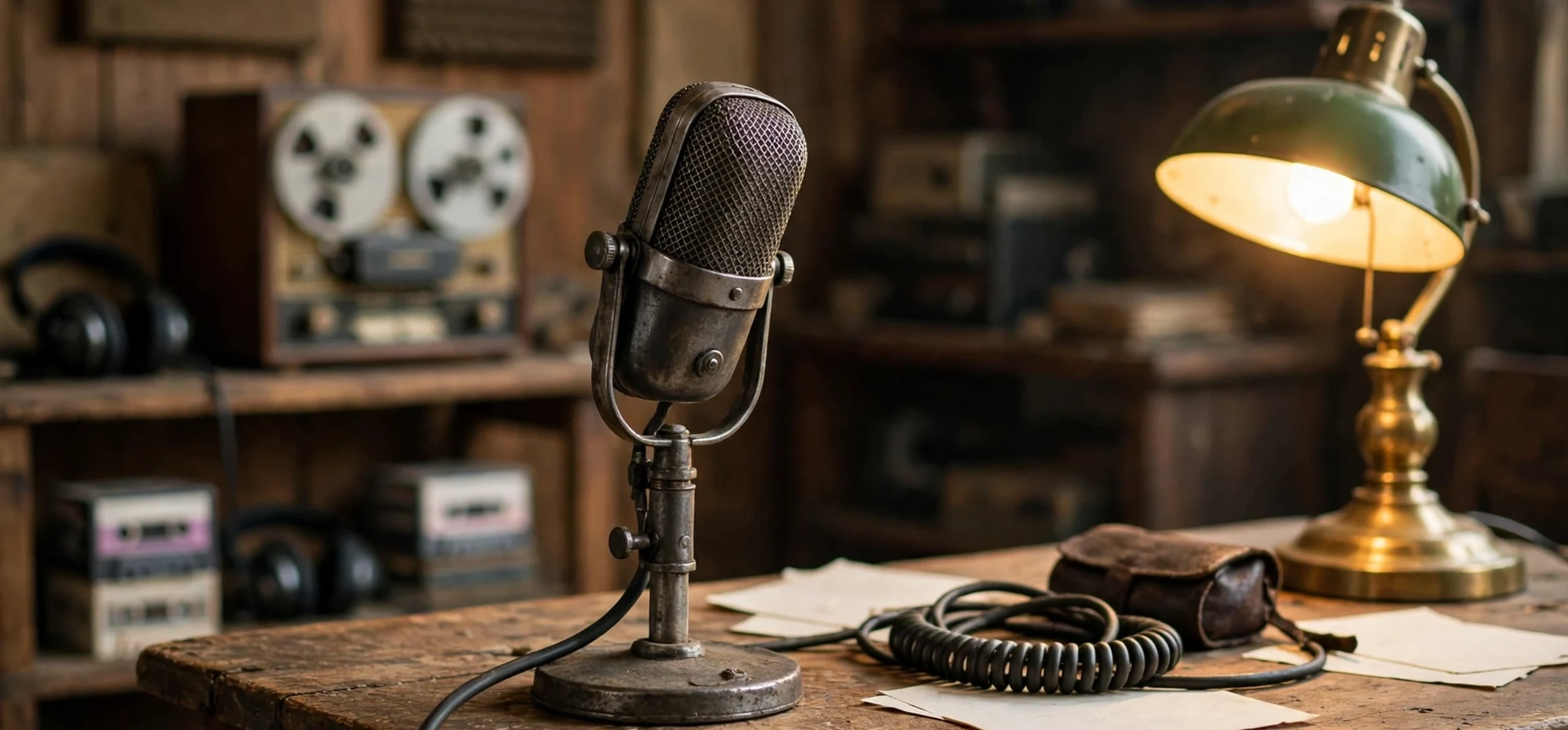
If you have typed what is alastor’s full name into a search engine, you deserve a straight answer: in official Hazbin Hotel canon, Alastor does not have a revealed human surname. He is known simply as Alastor, and by his demonic title, the Radio Demon. No episode, official comic, creator statement or licensed material released so far has given him a last name from his human life, and any surname you see attached to him online comes from fan works, not from canon. That single fact answers what is alastor’s full name more accurately than any invented surname could. This guide explains exactly what is known about him, what is fan speculation, and why the mystery persists, so you do not mistake a popular fan invention for an official fact.
The short version of what is alastor’s full name is therefore “Alastor, the Radio Demon”, with no surname attached. That answer can feel unsatisfying, especially when fan fiction and fan art use surnames so confidently that they start to look official, but it is the honest one. The rest of this guide separates the confirmed facts from the speculation: his life as a 1930s radio host, his death and arrival in Hell, his power as an overlord, and the various fan theories about his human identity, each clearly labelled as speculation rather than canon.
what is alastor’s full name: the canonical answer
Canon is the material that counts as official story: the Hazbin Hotel pilot, the television series, official shorts, and statements from the show’s creator, Vivienne Medrano, known as Vivziepop. Across all of that material, Alastor is consistently called Alastor, and his fullest official designation is Alastor, the Radio Demon. His first name is therefore confirmed, his title is confirmed, and a human surname is simply absent. That absence is not an oversight in this guide; it is the state of the official record, and any guide that supplies a surname as fact is filling a gap that canon has deliberately left open.
It is worth understanding why a missing surname matters to fans. In most stories, a character’s full name is a basic fact, so its absence feels like a puzzle waiting to be solved, and fans naturally try to solve it. The show, however, treats Alastor as a figure defined by his persona rather than his past: he introduces himself through his radio voice, his smile and his power, not through a family history. The mystery of who he was before Hell is part of his character, and the creators have so far chosen to keep that part of his life in shadow. Until an official source reveals otherwise, the correct answer remains that he has no known surname. Anyone asking what is alastor’s full name should therefore expect a short canonical answer and a longer story about fan invention.
Why fan surnames look official
Fan surnames look convincing for a simple reason: they are repeated so often, in so many fan stories, artworks and videos, that repetition starts to feel like confirmation. A reader who encounters the same invented surname in ten different fan works may reasonably assume it must come from somewhere official, especially if none of those works label it as fan invention. Search engines can amplify the effect, because a popular fan theory can outrank a careful canonical answer, and video titles do not always distinguish between theory and fact. That is why this guide labels speculation explicitly: the goal is to give you the tools to recognise a fan invention when you meet one, rather than to repeat it as though it were canon.
A useful test is to ask for a source. If a surname is claimed to be official, it should be traceable to a specific episode, an official character sheet, a licensed book or a creator interview, with a scene or quotation you can check. If the only sources are fan fiction archives, fan wikis without citations, or social media posts, the name is fan speculation, however popular it may be. Fan wikis can be helpful for episode summaries, but their articles sometimes blend canon and fanon, so always check whether a claim carries a citation to an official source before accepting it.
what is alastor’s full name: what canon actually tells us
What canon does tell us about Alastor is vivid, even without a surname. In life, he was a radio host in the 1930s, during the golden age of radio broadcasting, and his voice, mannerisms and love of old-fashioned entertainment all reflect that era. He died in the 1930s and arrived in Hell, where he rapidly became one of its most feared overlords, a demon powerful enough to challenge established rulers and to broadcast his influence, quite literally, through radio-themed imagery and sound. His design reinforces that identity: a tall, smiling figure with deer-like features, a vintage suit, a microphone cane and a voice that shifts between a cheerful broadcaster’s tone and something far more menacing.
His personality is central to his appeal. Alastor is polite, theatrical and perpetually smiling, even when he is threatening someone, and that contrast between old-fashioned courtesy and genuine menace makes him memorable. He offers to help Charlie Morningstar with her Hazbin Hotel project, but his motives remain ambiguous, and other characters treat him with a mixture of admiration, fear and caution. He is not a straightforward hero or villain, and the show uses that ambiguity to keep viewers guessing about what he wants. All of that characterisation is canonical and well documented, and none of it requires a surname to work.
Alastor’s role in Hazbin Hotel
Within the story, Alastor serves as both an ally and a source of tension. His power and reputation give Charlie’s hotel credibility in Hell, because his involvement signals that the project is serious, while his unpredictable nature means that help may come with strings attached. His relationships with other characters, particularly his rivalry with Vox, a television-themed demon who represents a newer form of media, play on the contrast between old radio and modern screens. That rivalry is one of the show’s most popular dynamics, and it deepens the theme that Alastor belongs to an earlier media age, a point that his 1930s origins make concrete.
His backstory is deliberately limited in the series so far. Viewers learn that he was a radio host, that he died in the 1930s, and that he rose quickly in Hell, but details of his human family, his life before broadcasting, and the circumstances of his death are not spelled out in canon. Some fans read hints into his dialogue or design, and those readings can be interesting as interpretation, but they are not confirmed facts. Keeping that boundary clear is important: an interpretation is a way of reading the show, not a piece of information the show has given you. Keeping that distinction clear is essential whenever what is alastor’s full name comes up in discussion.
Fan speculation about Alastor’s human name, clearly labelled
This section is speculation, not canon, and it is included so you can recognise these ideas when you encounter them elsewhere. Fans have proposed various surnames for Alastor over the years, often choosing names that sound 1930s American, French-influenced, or connected to radio and broadcasting. Some theories link him to historical radio figures, others invent a family background to explain his manners or his accent, and still others borrow surnames from unrelated characters with similar traits. None of these proposals has been confirmed by the show’s creators, and different fan communities favour different versions, which is itself a sign that no official answer exists.
Another strand of speculation concerns his human life more broadly: whether he came from a particular region, what kind of radio programme he hosted, and how he died. Fans have built elaborate theories from small details, such as his clothing, his speech patterns and his deer imagery, and some of those theories are creative and fun to read. They should be enjoyed as fan creativity, not treated as hidden canon waiting to be confirmed. The show’s creators have occasionally commented on fan theories in general, but they have not endorsed a specific human surname for Alastor, and until they do, every such theory remains unofficial.
How to enjoy fan theories without confusing them with canon
The healthiest way to enjoy fan theories is to treat them as “what if” stories. If a fan work gives Alastor a surname and a backstory, enjoy it as that author’s invention, in the same way you would enjoy an alternate-universe story. Problems only arise when a fan invention is copied without attribution into a summary, a video or a search result that presents it as fact, because new fans then inherit the confusion. When you share information about Alastor, a simple habit helps: say “in canon, he is Alastor, the Radio Demon, with no revealed surname” and then, if you mention a fan idea, add “fans sometimes speculate that” before it. That single phrase keeps the boundary visible.
It is also worth remembering that a missing surname does not make a character incomplete. Many fictional characters are known by a single name, a title or a nickname, and their stories work perfectly well without a full legal name. Alastor’s identity in the show is his radio persona, his power and his smile, and those are fully established. The search for a surname is understandable, but it should not distract from what the show actually gives us, which is a richly drawn character whose past is intentionally mysterious.
| Claim about Alastor | Status | Source type |
|---|---|---|
| First name is Alastor | Canon, confirmed | Series and pilot |
| Title is the Radio Demon | Canon, confirmed | Series and pilot |
| Human life as a 1930s radio host | Canon, confirmed | Series backstory |
| Demon overlord in Hell | Canon, confirmed | Series |
| Any specific human surname | Not revealed; fan speculation only | Fan works, not official sources |
Frequently asked questions
Does Alastor have a last name in Hazbin Hotel?
No. As of the officially released material, no human surname for Alastor has been revealed. He is known as Alastor, the Radio Demon, and any surname you see online is a fan invention unless an official source confirms it.
Will the show ever reveal his full name?
Possibly, since creators sometimes reveal backstory details in later seasons, but there is no official promise or announcement of a surname reveal. Until such a reveal happens, the honest answer remains that his surname is unknown.
Why do some websites list a surname for him?
Because fan theories spread widely and are sometimes copied without checking. Popularity is not evidence: a surname repeated across fan works is still speculation unless it can be traced to an episode, an official publication or a creator statement. That test settles what is alastor’s full name in every case examined so far.
Conclusion
So, what is alastor’s full name? In canon, it is Alastor, the Radio Demon, and no human surname has been officially revealed. That answer may be shorter than fans would like, but it is accurate, and it protects you from mistaking a creative fan theory for an official fact. What canon does give us is more than enough to enjoy the character: a 1930s radio host turned powerful overlord, a theatrical smile that never quite reaches his intentions, and a mystery about his past that the show has chosen, for now, to leave unsolved. The canonical answer therefore stands for now. If a future season reveals more, this answer will change, and that reveal will be exciting precisely because it has been withheld for so long. For more character name guides, see Ghostbusters character names, new Paw Patrol character names and Afton family names.



