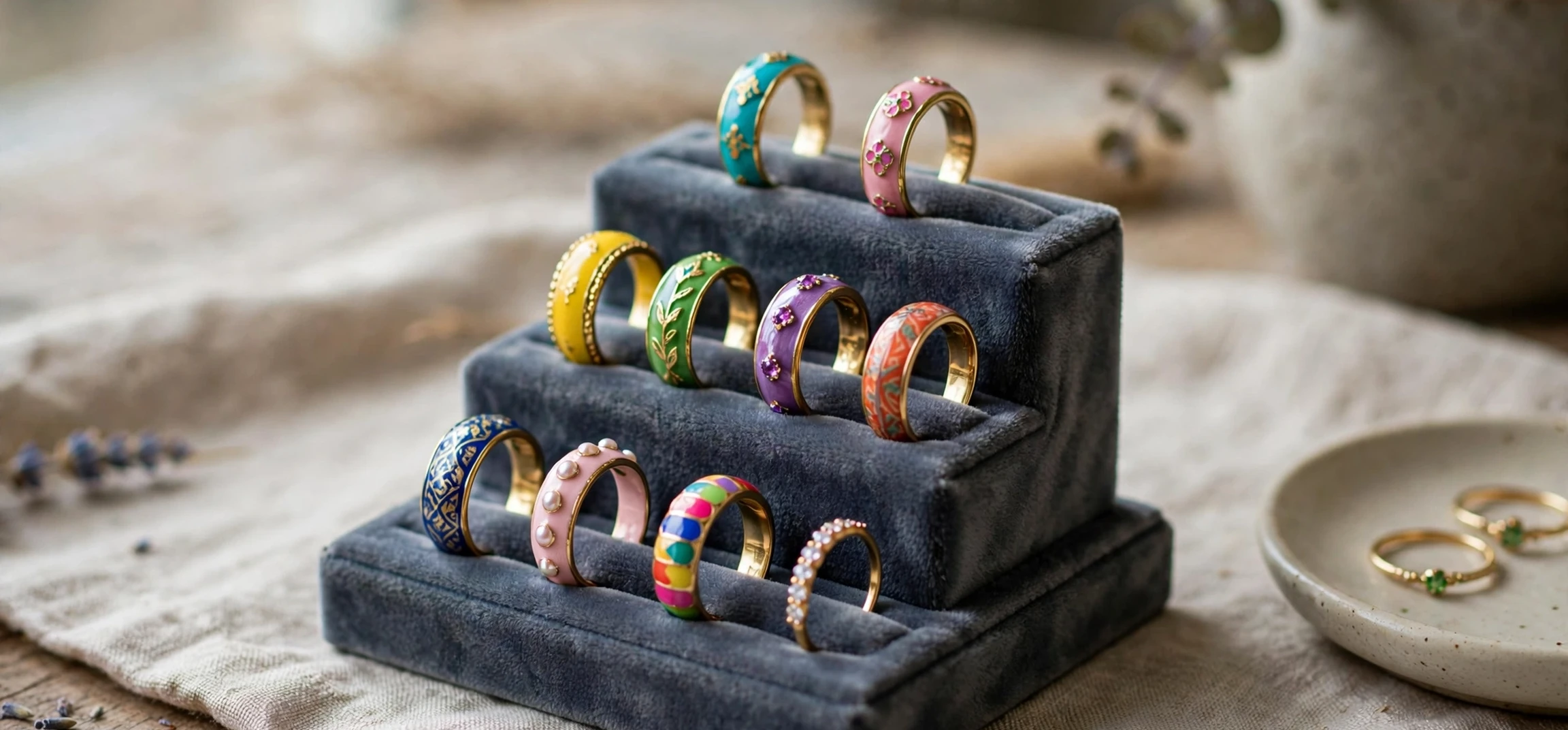
If you have ever wondered what does the blue mean on a mood ring, the scientific answer is refreshingly simple: it means the skin under your ring is warm. Mood rings do not read emotions. They read temperature. Inside the stone is a material that changes colour as it warms up or cools down, and blue appears when your finger reaches the warmer part of that material’s range. So what does the blue mean on a mood ring from a science point of view? It means your finger is warm enough to push the ring’s crystals into their blue phase — nothing more, and nothing less.
This article takes a different path from a simple colour chart. Instead of listing folklore meanings, it explains how mood rings actually work, what thermochromic materials are, why blue shows up when it does, and what else can change the colour. By the end, you will understand exactly what your ring is measuring, why it changes colour through the day, and why blue is so common on warm hands. You will also see why the old idea that a ring can read your mood, while charming, does not survive a scientific look.
How Mood Rings Work: The Thermochromic Science
A mood ring stone is usually made of glass or quartz with a thin layer of thermochromic liquid crystals sealed underneath. Thermochromic means “colour-changing with heat”. Liquid crystals are unusual materials that sit between liquids and solid crystals: their molecules can twist and rearrange as temperature changes. When light hits the twisted crystals, different wavelengths are reflected at different temperatures, and your eye sees that as a change of colour. At cooler temperatures the crystals reflect longer wavelengths, which we see as darker colours; as the material warms, the reflected light shifts towards shorter wavelengths, which we see as green, then blue, then violet.
The whole process is physical, not emotional. That is the key to answering what does the blue mean on a mood ring: it is a temperature reading, not an emotion reading. The ring has no way of knowing whether you are happy, stressed or relaxed. It only knows the temperature of the skin touching it. That temperature is affected by room temperature, blood flow, activity, the weather and even how tightly the ring fits. A ring worn during a brisk walk on a cold day may show dark colours, while the same ring worn indoors after a hot drink may glow blue or violet. Anyone who asks what does the blue mean on a mood ring should therefore check the room temperature first. The science is elegant, but it measures warmth, not feelings.
Liquid Crystals Explained in Plain Language
Liquid crystals were first studied in the nineteenth century, but they became famous in the twentieth century through thermometers, display screens and, of course, mood rings. In a mood ring, the crystals are sealed in a tiny capsule so they cannot leak or dry out. As temperature rises, the crystals twist more tightly, and the colour they reflect shifts step by step. Makers calibrate the mixture so that the colour changes happen around normal skin temperature, roughly between the mid-twenties and the high-thirties in degrees Celsius. That is why the ring responds to your hand rather than to the air: it is tuned to the range of human skin.
The same technology appears in other everyday objects. Colour-changing thermometers for foreheads, novelty mugs that reveal a picture when filled with a hot drink, and some battery testers all use thermochromic materials. Mood rings simply packaged the idea as jewellery. When the craze took off in the 1970s, the science was already well understood — but the marketing added a layer of emotional storytelling that the science never supported.
What Does the Blue Mean on a Mood Ring, Scientifically?
Scientifically, what does the blue mean on a mood ring? It means the thermochromic layer is at a temperature in the upper-middle part of its range. Published guides for mood ring materials typically place blue at around 32 to 35 degrees Celsius at the skin surface, though the exact range varies by maker. In plain terms, blue appears when your finger is comfortably warm. That often happens when you are indoors, relaxed and at rest, which is why the question what does the blue mean on a mood ring is so often asked by people sitting comfortably at home — which is probably why the folklore meaning of calm and happy became attached to blue in the first place. Warm, relaxed hands really do tend to show blue, but the ring is responding to the warmth, not to the relaxation itself.
This distinction matters because warmth and mood do not always go together. You can be warm and stressed, for example after exercise or in a heated room, and your ring will still show blue. You can be perfectly content but cold, after walking outside in winter, and your ring will show dark colours. Stress can also change blood flow to the hands, which can cool the fingers slightly, but that is an indirect and unreliable effect. A mood ring is, at best, a very rough thermometer for one finger — it is not a mood detector, a stress monitor or a lie detector.
Temperature Ranges and Colours
While makers use slightly different mixtures, the general pattern of a mood ring is consistent. The table below shows typical published ranges, rounded for simplicity. Treat the temperatures as approximate, since every ring differs a little.
| Colour shown | Approximate skin temperature | What it actually indicates |
|---|---|---|
| Black or grey | Below about 26 degrees Celsius | Cool skin, often in cold surroundings |
| Brown or amber | About 26 to 28 degrees Celsius | Cooling or cool skin |
| Green | About 28 to 30 degrees Celsius | Average, everyday skin temperature |
| Blue-green | About 30 to 32 degrees Celsius | Warming skin |
| Blue | About 32 to 35 degrees Celsius | Comfortably warm skin |
| Violet | Above about 35 degrees Celsius | Very warm skin |
Notice that blue sits near the warm end of the scale, which explains why what does the blue mean on a mood ring is such a common question: blue is the colour most wearers see most often. That is why it appears so often: most people indoors, at rest, have finger temperatures in the low thirties. Blue is not rare or special from a physics point of view — it is simply the colour for a normal warm hand. The folklore that blue means calm probably grew from the observation that relaxed people sitting indoors often have warm hands, but the ring itself cannot tell relaxation from a warm room.
What Does the Blue Mean on a Mood Ring at Different Times of Day?
Once you understand the science, the daily behaviour of a mood ring makes perfect sense. In the morning, after a cool night, your hands may be cooler and the ring may show green or amber. After a shower, a hot drink or time indoors, the ring warms and shifts towards blue. Outdoors in cold weather, it darkens again. Exercise can warm your hands and push the ring towards blue or violet, while sitting still in an air-conditioned room can cool it towards green. Even washing your hands changes the colour for a few minutes, as water cools the skin and then the skin rewarms. If you have just asked what does the blue mean on a mood ring after washing up, the answer is simply that your hands have warmed up again.
The fit of the ring matters too. A snug ring stays in close contact with the skin and responds quickly, while a loose ring that slides around may respond more slowly or unevenly. The finger you choose matters as well: some fingers run slightly warmer than others, and your dominant hand, which moves more, may be warmer than the other. None of this reflects your mood. It reflects heat transfer, which is why two rings on the same person can show different colours at the same moment.
When Mood Rings Stop Changing Colour
Over time, mood rings can lose their colour-changing ability. The liquid crystal layer can degrade with age, heat, moisture or damage, and the seal can weaken. A ring that stays black, or stays one colour permanently, has usually suffered damage to its thermochromic layer rather than developed a permanent mood. Water damage is a common cause: despite being jewellery, many mood rings are not designed for swimming or long soaking. Keeping a mood ring dry, avoiding extreme heat, and storing it at room temperature will help it last longer — but even well-kept rings eventually fade, since the materials are not permanent.
Readers curious about colour in other contexts may enjoy our colour guide and our piece on the first colour television, which shows how colour technology developed in a very different field. For a look at how meanings are attached to symbols more generally, see our guide to 888 tattoo meaning.
The History of Mood Rings and the Mood Myth
Mood rings were invented in the mid-1970s by two American jewellers, Marvin Wernick and Joshua Reynolds, who combined thermochromic technology with a simple emotional chart. The idea caught on immediately: within a year, mood rings were a fashion sensation, selling in huge numbers and appearing in magazines, shops and playgrounds everywhere. The chart gave each colour an emotional meaning, and wearers enjoyed comparing colours and discussing what they meant. The marketing was brilliant, and the product was genuinely fun — but the emotional claims were never backed by research.
Scientists and sceptics pointed out the flaw early on: the rings measure temperature, and temperature is only loosely related to emotion. Stress can affect circulation, and strong emotions can change skin temperature slightly, but the effect is small, inconsistent and swamped by ordinary factors such as room temperature and activity. Modern wearable devices that claim to track stress use far more sophisticated sensors — heart rate, skin conductance and movement — and even they are careful about their claims. A 1970s novelty ring, charming as it is, cannot compete with that, and was never designed to.
Frequently Asked Questions About Mood Ring Science
Can a mood ring really read emotions?
No. A mood ring reads the temperature of the skin beneath it. Emotions can sometimes affect skin temperature indirectly, but the link is far too weak and unreliable for the ring to serve as a mood reader.
Why is my ring almost always blue?
Blue corresponds to comfortably warm skin, which is the normal state for most people indoors. That is the scientific reply to what does the blue mean on a mood ring. If your hands run warm, or you spend most of your time in heated rooms, blue will be your ring’s most common colour.
Does blue mean I am calm?
Not scientifically. Blue means your finger is warm. That single fact answers what does the blue mean on a mood ring more honestly than any folklore chart. Warm hands often go with feeling relaxed, which is how the folklore meaning arose, but a warm room, exercise or a hot drink can produce blue just as easily.
Are mood rings safe to wear?
Yes, for normal wear. The liquid crystals are sealed inside the stone and are not in contact with the skin. As with any jewellery, stop wearing the ring if it is damaged, cracked or causes irritation, and keep it away from small children if parts could come loose.
Conclusion
So what does the blue mean on a mood ring, once the science is separated from the story? It means your finger is warm — warm enough for the ring’s liquid crystals to reflect blue light, typically in the low thirties Celsius. The folklore meaning of calm and happy grew from a real observation, since relaxed people indoors often have warm hands, but the ring measures heat, not happiness. Enjoy your mood ring for what it truly is: a clever piece of 1970s thermochromic science, and a neat demonstration of what does the blue mean on a mood ring in physical terms, a beautiful piece of novelty jewellery, and a reminder that a simple colour change can hide some genuinely interesting physics. And the next time someone asks what does the blue mean on a mood ring, you can give them the scientific answer with confidence.