If you want a structured home programme for building muscle, the body beast workout guide is one of the most searched starting points, and for good reason. It is a 90-day strength programme built around progressive weight training, split routines, and a simple nutrition framework, designed to be done at home with dumbbells or a bench. This guide explains how the programme works, what equipment you need, how the workouts are organised, and how to follow it safely without guessing.
A quick note before you begin: this guide is general fitness information, not personal medical advice. If you have an injury, a health condition, or you are new to heavy lifting, check with a qualified health or fitness professional before starting a demanding strength programme. Good form matters more than heavy weight, especially in the first few weeks, and the best programme is the one you can follow consistently without getting hurt.
Table of Contents
- The Body Beast Workout Guide at a Glance
- How the Body Beast Workout Guide Is Structured
- The Three Phases: Build, Bulk and Beast
- Equipment You Need for Body Beast
- A Typical Body Beast Weekly Schedule
- Nutrition Basics That Support the Programme
- Common Mistakes and How to Avoid Them
- Frequently Asked Questions About the Body Beast Workout Guide
- Conclusion
the body beast workout guide at a glance
The body beast workout guide centres on a simple idea: muscles grow when they are challenged with progressively heavier resistance and given enough food and rest to recover. The programme runs for 90 days and is divided into three blocks, each with a different emphasis. Workouts typically last around 30 to 50 minutes, and most days focus on one or two muscle groups, which allows you to train hard while other muscles recover.
Unlike general fitness routines that mix a little of everything, Body Beast is a dedicated muscle-building programme. Cardio is kept to a minimum and is treated as a supporting activity rather than the main event. That focus is deliberate: if your goal is visible muscle growth, most of your training time should be spent lifting with good technique, tracking your weights, and eating enough to support recovery.
The programme was created by trainer Sagi Kalev and is built around classic bodybuilding methods adapted for home training. It uses concepts such as supersets, where two exercises are performed back to back, drop sets, where you reduce the weight and continue, and progressive overload, where you gradually increase the weight, reps, or sets over time. You do not need to master every technique on day one; the programme introduces them gradually as you move through the phases.
how the body beast workout guide is structured
The body beast workout guide uses split training. Instead of working the whole body every session, you split the body across the week. A chest and triceps day, for example, lets you push those muscles hard, then rest them while you train back and biceps the next day. Legs, shoulders, and abs each get their own focus too. This split approach is popular with muscle-building programmes because it allows higher volume per muscle group without making every session exhaustingly long.
Each workout follows a familiar pattern. It starts with a warm-up, then moves into the main lifting blocks, and finishes with a cool-down or short ab section. Within the main blocks, exercises are grouped into sets with planned rest periods. The trainer demonstrates form and tempo, and the on-screen guidance helps you pace each set. Tempo matters: lowering the weight slowly, pausing briefly, and lifting with control creates more muscle tension than rushing through reps, even if rushing lets you lift heavier.
Tracking is essential. Keep a simple log of each exercise, the weight you used, and the reps you completed. When you can complete all planned reps with good form, increase the weight slightly at the next session. This steady progression, rather than any single heroic workout, is what drives results over 90 days. Many people find that a notebook or a phone note is enough; the tool matters less than the habit of recording every session.
Supersets, Drop Sets and Progressive Overload Explained
A superset pairs two exercises with little rest between them, often for opposing muscle groups such as chest and back, or for the same group to increase fatigue. A drop set means that when you can no longer complete reps at one weight, you immediately switch to a lighter weight and continue. Both techniques increase training volume in less time. Progressive overload is the principle behind both: over weeks, your muscles must face a slightly bigger challenge than before, whether that means more weight, more reps, or more sets.
Beginners should treat these techniques with respect. Use them as programmed, but never sacrifice form to chase extra reps. If your back rounds during a row or your shoulders shrug during a press, the weight is too heavy or you are too tired. Reduce the load, reset your position, and finish the set cleanly. Clean reps build muscle; sloppy reps build bad habits and injuries.
The Three Phases: Build, Bulk and Beast
Phase one is called Build and lasts around three weeks. Its goal is to lay a foundation: learn the movements, build work capacity, and establish your starting weights. Workouts in this phase use moderate weights and a mix of single sets and supersets. Do not rush this phase. The strength and technique you build here make the heavier phases possible, and skipping ahead usually leads to stalled progress or soreness that derails your schedule.
Phase two is called Bulk and lasts around six weeks. This is the main muscle-building block, with heavier weights, higher volume, and more drop sets. Expect workouts to feel demanding and expect some muscle soreness, especially in the first week of the phase. Eating enough becomes particularly important here, because your body needs energy and protein to repair the muscle fibres you break down in training. Sleep matters too: most muscle repair happens during rest, not during the workout itself.
Phase three is called Beast and lasts around three weeks. It combines the methods from the earlier phases at higher intensity, with the goal of pushing your limits while maintaining good form. This is where many people see their best strength gains, but it is also where fatigue accumulates. Listen to your body, keep your rest days, and do not add extra heavy sessions on top of the programme. More is not always better; recovered muscles grow, exhausted ones stall.
Equipment You Need for Body Beast
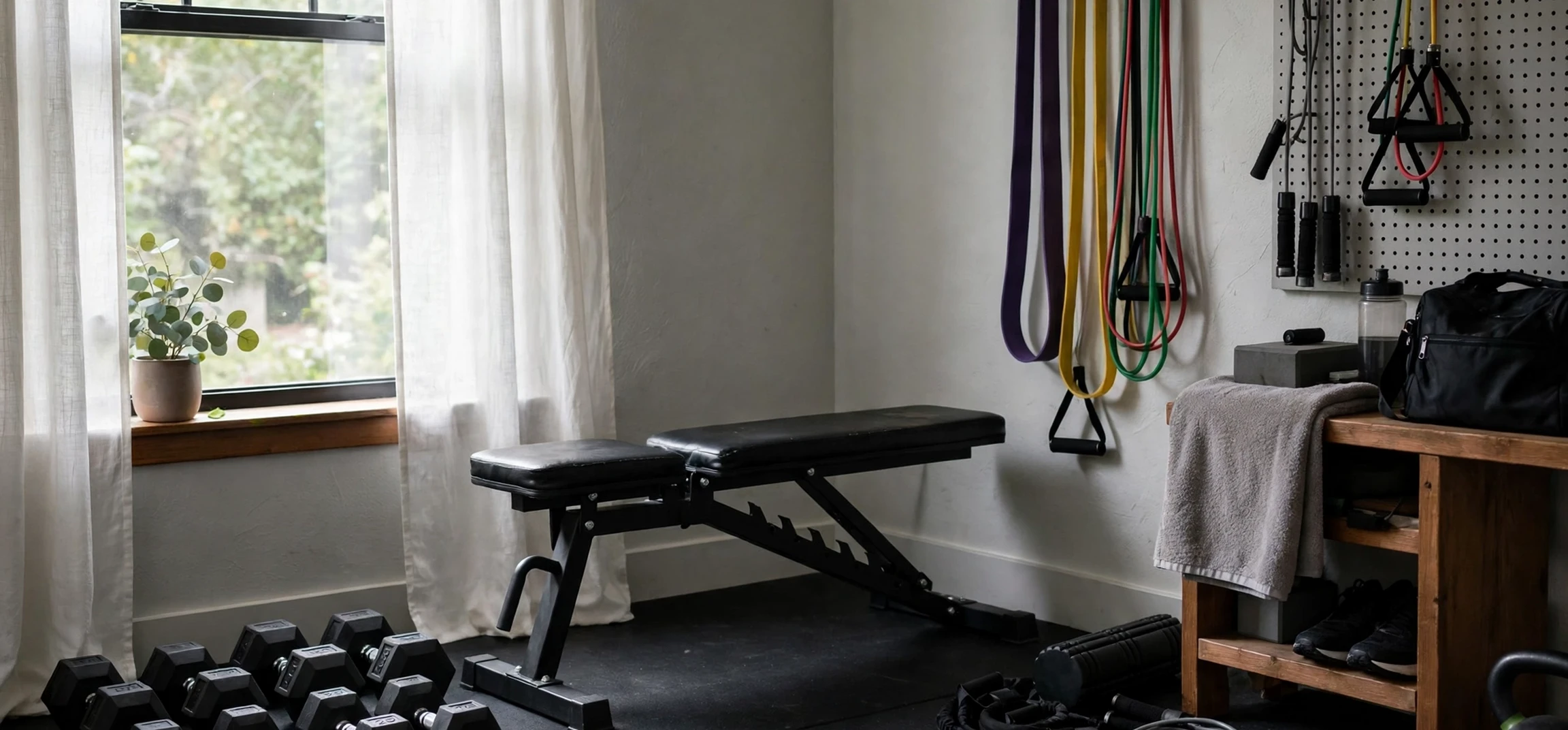
The core requirement is a set of dumbbells heavy enough to challenge you. Adjustable dumbbells are ideal for home training because they let you change weights quickly between exercises and as you get stronger. A bench is very helpful for presses and rows, and a pull-up bar is used for back workouts, with resistance bands as a common alternative if you cannot do pull-ups yet. An exercise mat adds comfort for floor work and ab training.
How heavy should your dumbbells be? It depends on your current strength, but a useful rule is that the last two reps of a set should feel hard while your form stays clean. If you can breeze through every rep, the weight is too light. If your form breaks down early, it is too heavy. Most people progress best with a range of weights rather than a single pair, because legs need heavier loads than shoulders, and chest presses need more than lateral raises. Adjustable sets solve this problem neatly.
Your training space does not need to be large or fancy. You need enough floor space to lie on a bench, step back for lunges, and move safely around your weights. Keep water nearby, wear supportive shoes, and store weights where you will not trip over them. A small, consistent setup beats an impressive home gym that you rarely use.
A Typical Body Beast Weekly Schedule
| Day | Focus | What to expect |
|---|---|---|
| Monday | Chest and triceps | Presses, flyes and triceps extensions |
| Tuesday | Back and biceps | Rows, pull-ups or band pulls, curls |
| Wednesday | Legs | Squats, lunges and calf work |
| Thursday | Shoulders | Presses, raises and shrugs |
| Friday | Chest and triceps or total body | Varies by phase; often a second push day |
| Saturday | Back, biceps and abs | Pulling movements plus core work |
| Sunday | Rest or light activity | Walking, stretching, full recovery |
Exact schedules vary by phase, and rest days are part of the programme, not a sign of laziness. If you miss a day, simply continue with the next scheduled workout rather than doubling up. Doubling up compresses recovery and often leads to a worse week overall. Consistency across 90 days beats perfection in any single week.
Nutrition Basics That Support the Programme
Muscle building needs fuel. The programme pairs training with a nutrition plan that emphasises eating enough protein across the day, getting sufficient total calories, and timing meals sensibly around workouts. Protein supports muscle repair, carbohydrates supply training energy, and healthy fats support overall health and hormone function. You do not need a perfect diet, but you do need a consistent one: undereating is the most common reason home lifters train hard and see little growth.
A practical approach is to eat three main meals plus one or two snacks, with a protein source at each meal, such as eggs, chicken, fish, dairy, beans, or tofu. Add vegetables and fruit for micronutrients, and drink water throughout the day. After training, a balanced meal with protein and carbohydrates helps recovery. Supplements are optional; a basic protein powder can help if you struggle to reach your protein target from food alone, but it is not a substitute for real meals. For general healthy eating ideas around your training, a guide to healthy snacks can help with snack choices, and if you notice persistent aches, reading about muscle knots may help you tell normal soreness from something worth resting.
Be cautious with supplement marketing. Many products promise dramatic gains, but the foundations remain training, food, sleep, and time. If you consider any supplement, research it carefully and discuss it with a professional if you have health concerns. A guide to health supplement product names is a reminder that product names are easily confused, so always check labels and ingredients rather than trusting a familiar-sounding name.
Rest, Sleep and Recovery
Recovery is where growth happens. Aim for regular sleep, keep rest days in your schedule, and use light activity such as walking or gentle stretching on recovery days. Soreness in the first weeks is normal, especially after leg days, but sharp pain, joint pain, or pain that worsens over days is not normal soreness. Rest that area and seek professional advice if it persists. Stretching after workouts and a proper warm-up before them both reduce injury risk, and neither needs to take long.
Common Mistakes and How to Avoid Them
The first mistake is starting too heavy. Ego lifting leads to poor form, missed reps, and injuries that cost weeks. Start with weights you can control, learn the movements, and progress steadily. The second mistake is skipping leg and back days. A balanced physique and a strong foundation need lower body and pulling work, not just chest and arms. The third mistake is changing the programme every week. Muscle building rewards patience; give each phase its full duration before judging it.
The fourth mistake is ignoring nutrition and sleep while expecting training alone to deliver results. You can train perfectly and still stall if you undereat or sleep poorly. The fifth mistake is comparing your week two to someone else’s week twelve. Progress photos, strength logs, and how your clothes fit are better measures than social media comparisons. Take a starting photo and measurements, then repeat them monthly under the same conditions to see real change.
Frequently Asked Questions About the Body Beast Workout Guide
How long does Body Beast take each day?
Most workouts last around 30 to 50 minutes, depending on the phase and the muscle groups trained. Add a few minutes for warm-up and cool-down. The total weekly commitment is usually six days of training with one rest day.
Can beginners do Body Beast?
Beginners with some basic fitness can start it, but complete newcomers to lifting should first learn basic movements with light weights, perhaps for a few weeks, before tackling the full programme. Good form and gradual progression matter more than starting fast.
Do I need a gym membership?
No. The programme is designed for home training with dumbbells, a bench, and a pull-up bar or bands. A gym can work too, since the same movements can be done with gym equipment, but it is not required.
Will Body Beast help me lose fat as well?
It can support fat loss indirectly by building muscle, which increases daily energy use, but the programme is primarily designed for muscle gain. If fat loss is your main goal, your nutrition plan matters more than the workout choice, and a calorie deficit with strength training is the usual approach.
What results can I expect in 90 days?
Results vary widely with starting point, consistency, nutrition, and sleep. Many people report noticeable strength gains and visible muscle growth over the full programme, while others see slower but steady progress. Judge the programme after completing all three phases, not after two weeks.
Conclusion
The body beast workout guide works because it is simple, structured, and progressive: split training, three clear phases, classic muscle-building techniques, and a nutrition framework that supports recovery. Success comes from the unglamorous habits: logging your weights, adding load gradually, eating enough protein, sleeping well, and showing up for leg day as reliably as for chest day. Set up your equipment, start with weights you can control, and give the full 90 days a fair chance. Your future self, measurably stronger than today, will be glad you did.



