If you have searched for the meaning of low bun, you are almost certainly asking about a hairstyle, not a single word with a dictionary definition. The meaning of low bun is simple in practice: it is a bun worn low on the head, usually at or just above the nape of the neck, rather than high on the crown or in the middle of the back of the head. That low placement is the whole point. It changes the silhouette, it changes how formal or relaxed the style looks, and it changes how comfortable the style feels over a long day. The meaning of low bun therefore combines placement, shape, and occasion, and once you understand those three things, every variation becomes easy to recognise.
The meaning of low bun is also worth clearing up in one other respect. You may see the phrase attached to extra words in a page address, such as a trailing tag that reads like a label. Those extra words are not part of the hairstyle itself. They are simply part of how a page is filed or titled online, and they do not change what a low bun is. A low bun is still a bun gathered low, twisted or wrapped into a rounded shape, and secured at the nape. Keeping that distinction in mind helps you ignore noisy search results and focus on the style itself.
What a Low Bun Is
A low bun sits low because the hair is gathered at the nape rather than pulled upward. The ponytail base, if one is used at all, is low. From there, the hair is twisted, looped, braided, or folded and pinned into a bun shape. The finished bun can be neat and smooth, soft and slightly loose, or deliberately textured and undone. All of those are still low buns, because the defining feature is position, not polish.
That is why the meaning of low bun can feel broad. Two low buns can look very different: one might be a sleek, centre-parted bun for a wedding, while another might be a messy, low, twisted bun for a weekend at home. The first is formal and controlled, the second is casual and relaxed, but both share the same low anchor point. When stylists talk about a low bun, they are usually describing that anchor point first and the finish second.
It also helps to compare a low bun with its neighbours. A high bun sits on top of the head and draws the eye upward, giving height and drama. A mid bun sits around the middle of the back of the head and feels balanced and everyday. A low bun sits at the nape and tends to look softer, calmer, and more elegant. It frames the face from below rather than lifting it, which is one reason it suits formal occasions, professional settings, and anyone who prefers a quieter silhouette.
The Meaning of Low Bun in Everyday Language
In everyday language, the meaning of low bun is almost always literal. People use it when they are looking for instructions, inspiration, or a name for a style they have seen. A friend might say, “I wore a low bun to the wedding,” and everyone understands the picture: hair gathered low, twisted into a bun, neat enough for photographs but not stiff. A stylist might write “low bun” on an appointment note as shorthand for that placement, then add details such as “sleek,” “textured,” or “with face-framing pieces.”
The phrase is not slang and it does not carry a hidden second meaning in normal use. It is a descriptive hairstyling term, built from two ordinary words: “low,” meaning near the bottom, and “bun,” meaning hair gathered into a rounded knot. That plain construction is part of its usefulness. You do not need insider knowledge to decode it, and you do not need to guess whether it refers to something else. If the bun is low, it is a low bun.
Occasionally, people confuse “low bun” with other bun names. A low chignon is a close cousin, and in many salons the two terms overlap. A chignon traditionally refers to a knot or roll at the nape, often with a slightly more structured or classic finish, while a low bun is the broader term that covers chignons, twisted buns, braided buns, and looser versions as well. Knowing that overlap is useful when you are searching for tutorials, because a tutorial labelled “chignon” may show exactly the low bun you had in mind.
Low Bun Variations You Will See Most Often
Once you know the basic meaning of low bun, the variations are easy to sort. The sleek low bun is smoothed down with a centre or side part, gathered tightly at the nape, and twisted into a compact shape. It is a favourite for weddings, interviews, and formal dinners because it stays tidy, photographs well, and keeps hair completely out of the face. The textured low bun uses waves, backcombing, or gentle pulling to add volume and softness, so the bun looks fuller and less severe. The messy low bun is intentionally loose, with a few strands left out around the face and a softer, less exact shape.
Other variations change how the bun is built rather than how neat it is. A twisted low bun wraps two or more sections around each other before coiling them into place. A braided low bun starts with a braid, or several braids, that are then coiled at the nape. A knotted low bun loops sections over one another to create a knot-like texture. A low bun with a wrap uses a section of hair, or a scarf, wrapped around the base to hide pins and elastic. Each method gives a different texture, but the low placement stays constant.
Face-framing pieces are another common variation. Some low buns leave two soft strands at the front to soften the face, while others pull everything back cleanly. Neither choice changes the meaning of low bun, but it does change the overall impression. Soft front pieces make the style feel romantic and relaxed, while a fully pulled-back finish feels sharper and more formal. Choosing between them is mostly a matter of face shape, occasion, and personal taste.
When to Wear a Low Bun
A low bun is one of the most versatile hairstyles because it works across occasions that would normally call for very different looks. For formal events, a sleek low bun pairs well with earrings, a defined neckline, and structured clothing, because it keeps attention on the face and outfit rather than on the hair itself. For work, a neat low bun is practical: it stays in place, survives a long day, and looks polished without needing constant adjustment. For everyday wear, a looser low bun is comfortable and quick, especially for medium to long hair that would otherwise fall forward.
The low bun is also practical for physical reasons. Because the weight sits low, it can feel more comfortable than a high bun, which pulls upward and can cause tension over time. People who find high styles uncomfortable, or who wear hats, headphones, or head coverings, often prefer a low bun for that reason. It also works well under a veil, a hood, or a collar, because there is no bulk on top of the head to interfere with what sits above it.
Season and hair type matter too. In warm weather, a low bun keeps hair off the neck while still looking intentional. In cooler weather, it sits neatly under a coat collar without being crushed. For fine hair, a textured or braided low bun can create the impression of fullness. For thick hair, a twisted or knotted low bun distributes weight more evenly. For curly or wavy hair, a low bun can showcase natural texture while keeping the overall shape controlled.
How to Create a Basic Low Bun
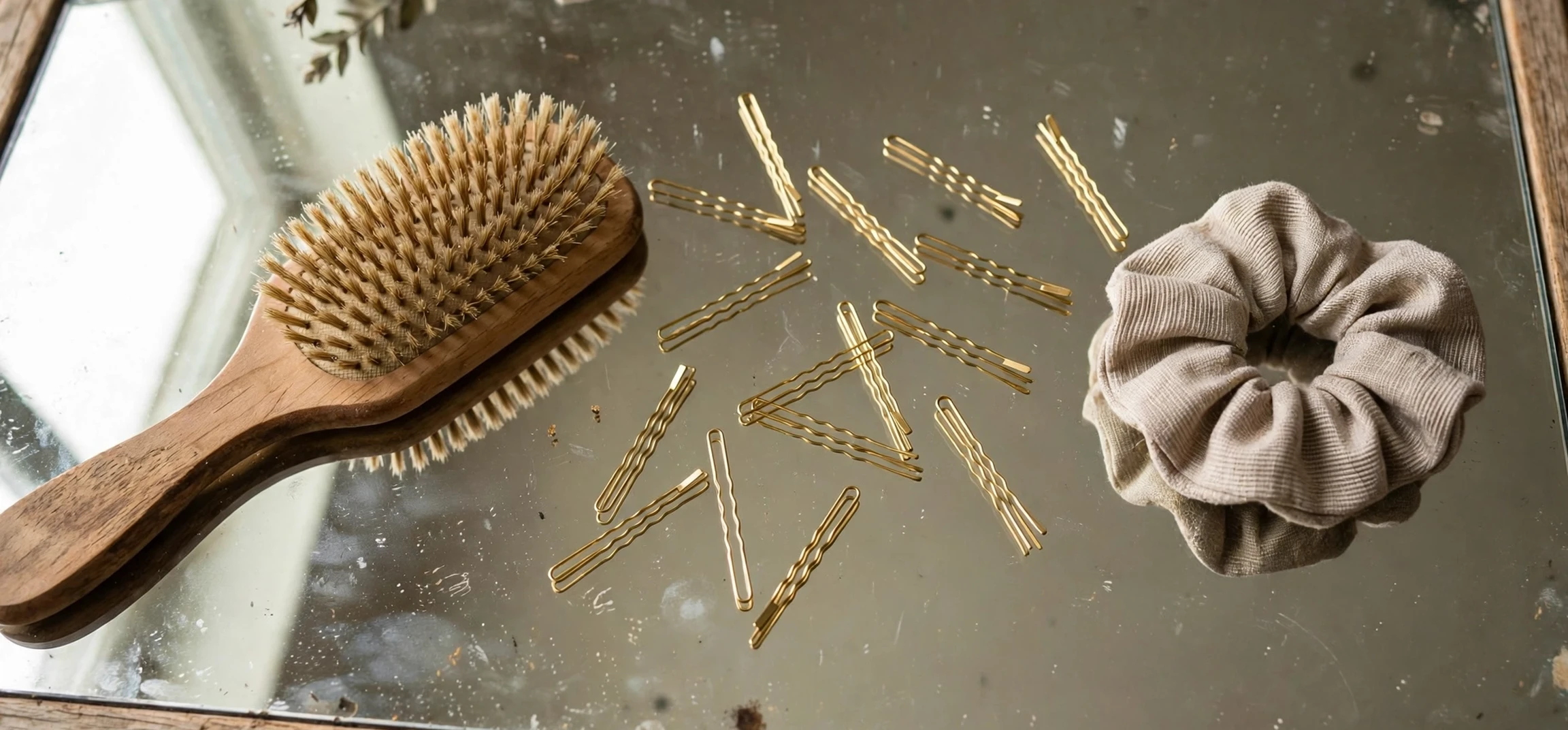
Creating a basic low bun does not require professional tools, although a few pins and a good elastic help. Start with hair that is brushed or lightly textured, depending on the finish you want. Smooth hair gives a sleeker result, while hair with some wave or texture gives more grip and volume. Part the hair as you prefer, then gather it at the nape. Secure it loosely with an elastic if you want extra hold, or skip the elastic and work directly with pins if your hair is long enough to coil securely.
Next, twist the gathered hair gently, then coil it around its own base to form a bun shape. Tuck the ends underneath and pin them in place, working around the bun rather than driving every pin into the same spot. Check the shape from the side and from behind if you can, because a low bun is mostly seen from behind and from the side. Adjust by gently pulling small sections outward for softness, or smoothing them down for neatness. Finish with pins placed where the bun meets the head, since those are the pins that carry the weight.
Common mistakes are easy to fix. If the bun slides downward, the base was probably too loose or the pins were placed only in the bun itself rather than anchoring it to the hair beneath. If the bun looks flat, a little gentle pulling at the crown or at the bun edges can add shape without rebuilding the style. If short layers keep escaping, a light hold product or a few extra pins at the nape usually solve the problem. The goal is a secure, comfortable bun, not a perfect one, and a low bun forgives small imperfections better than a high, sculptural style.
Low Bun Styles at a Glance
| Style | Finish | Best for | Difficulty |
|---|---|---|---|
| Sleek low bun | Smooth, neat, polished | Weddings, work, formal events | Easy |
| Textured low bun | Soft, full, slightly tousled | Everyday wear, photographs | Easy to moderate |
| Messy low bun | Loose, relaxed, undone | Casual days, weekends | Easy |
| Twisted low bun | Roped, defined texture | Medium to long hair | Moderate |
| Braided low bun | Detailed, secure, decorative | Special occasions, thick hair | Moderate |
| Low chignon | Classic, rolled, elegant | Brides, formal dinners | Moderate |
The table shows why the meaning of low bun covers so many looks. The position is fixed, but the finish, texture, and construction can all change. That flexibility is the reason the style has lasted so long: it can be adapted to almost any hair type, occasion, or skill level without losing its identity.
Low Buns for Different Hair Types and Lengths
Short hair can still form a low bun, although the result is usually smaller and may need more pins. A low mini bun, or a low bun made from two twisted sections pinned together, can work well for shoulder-length hair. Medium hair is often the easiest length for a low bun, because there is enough length to coil without excessive bulk. Long hair gives the fullest low buns, but it also needs stronger anchoring, since the weight of the bun pulls downward over time.
Fine hair benefits from texture. A little wave, gentle backcombing at the roots, or a braided base can all make a low bun look fuller. Thick hair benefits from sectioning: dividing the hair into two or three sections, twisting each one, and then combining them at the nape gives more control than trying to coil all the hair at once. Curly hair often needs less preparation, because natural texture already provides grip and volume, but smoothing the very front can help if a neater finish is wanted.
Accessories can change a low bun without changing its meaning. A simple pin or clip adds a small focal point. A scarf wrapped around the base adds colour and hides the elastic. A decorative comb suits a formal low bun. The key is restraint: because a low bun is already a quiet, elegant shape, one accessory usually has more impact than several competing ones.
Frequently Asked Questions About the Meaning of Low Bun
Is a low bun the same as a chignon?
They overlap, but they are not identical in every salon. A chignon is a specific kind of low knot or roll at the nape, often with a classic finish. A low bun is the broader term, covering chignons as well as twisted, braided, messy, and textured buns worn low. If you ask for a low bun, you will usually get a version of a chignon unless you specify otherwise.
Is a low bun formal or casual?
It can be either, which is part of its appeal. A sleek, smooth low bun reads as formal. A loose, textured low bun reads as casual. The occasion is set by the finish, the parting, and the accessories, not by the low placement alone. That is why the same basic style appears at weddings, in offices, and on ordinary days.
Is a low bun comfortable for all-day wear?
For many people, yes, because the weight sits low and does not pull upward. Comfort depends on how tightly the hair is gathered and how well the bun is anchored. A very tight low bun can still cause tension, so a slightly looser gather and well-placed pins usually feel better over a long day.
Can you do a low bun with short hair?
Shoulder-length hair can usually form a small low bun, and shorter hair can be styled into a low twisted or pinned shape that reads as a low bun. More pins and a little texture help, and the finished bun will be smaller than one made from long hair, but the low placement and rounded shape remain recognisable.
Meaning of Low Bun: Quick Answers
Still unsure about the meaning of low bun? These short answers repeat the core idea in different situations, so you can check your understanding at a glance. The meaning of low bun is a bun worn low at the nape, and every answer below returns to that placement. If you remember the low anchor point, you have understood the meaning of low bun, whatever the finish or occasion.
What is the meaning of low bun for a wedding? For a wedding, the meaning of low bun is a sleek, low, elegant bun at the nape, often with a centre part and smooth finish. What is the meaning of low bun for everyday wear? For everyday wear, the meaning of low bun is a looser, comfortable bun gathered low, quick to make and easy to wear all day. Does the meaning of low bun change with hair texture? No, the meaning of low bun stays the same across straight, wavy, and curly hair; only the texture and volume of the finished bun change. Is the meaning of low bun the same as a low ponytail? No, the meaning of low bun requires the hair to be coiled or twisted into a bun shape, while a low ponytail simply hangs down from a low gather. Can the meaning of low bun include braids? Yes, the meaning of low bun includes braided versions, because a braid coiled low at the nape is still a bun worn low. In short, whenever you ask about the meaning of low bun, check the placement first: if the bun sits low, the meaning of low bun applies.
Conclusion
The meaning of low bun is refreshingly straightforward: a bun worn low at the nape of the neck, shaped by twisting, coiling, or braiding the hair into a rounded form. Its variations, from sleek to messy and from twisted to braided, all share that low anchor, and that anchor is what gives the style its calm, elegant character. Whether you need a formal finish for a special occasion, a polished style for work, or a quick, comfortable option for an everyday, a low bun adapts without losing its identity. If you are exploring other style and screen guides, you may also enjoy this style guide, this look at beauty on screen, and this classic television cast guide. Start with a low, secure gather, coil with confidence, and let the finish match the occasion.



