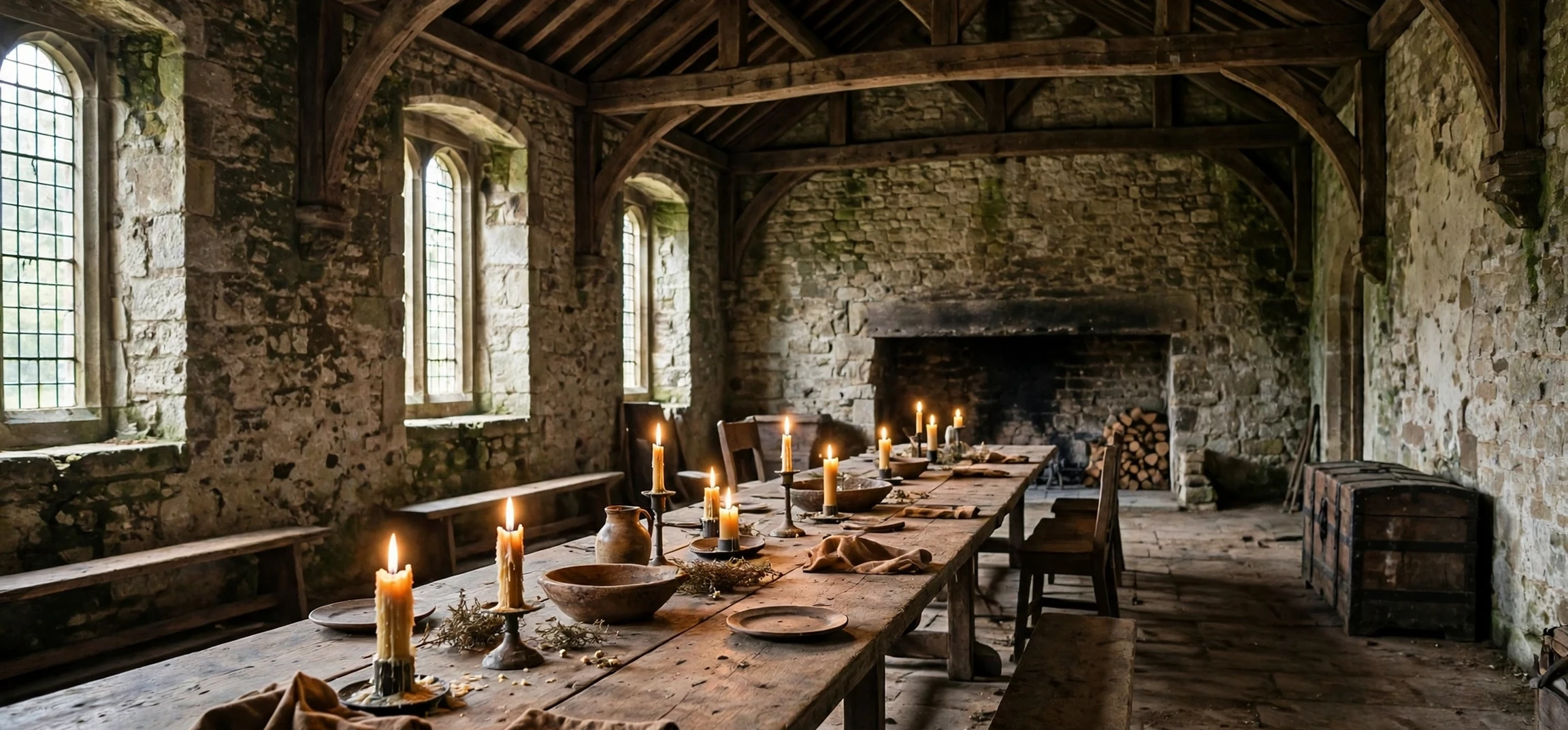
The origin of surname Butler is a clear example of how many English surnames began as job titles. Butler comes from the Old French word bouteillier, meaning the person in charge of the bottles, and in medieval England it described a household officer responsible for the wine cellar and the serving of drinks. Over time, that occupational title became a hereditary family name, passed from parents to children long after the original job had been left behind. Today, Butler is one of the most familiar surnames in the English-speaking world, carried by families with no connection to the medieval role at all.
Surnames of this kind tell us a great deal about medieval society. Before surnames became fixed, people were often identified by their father’s name, their place of origin, a physical characteristic, or their trade. Occupational surnames such as Smith, Baker, Taylor, and Butler were practical labels in small communities where several people might share the same first name. A butler in a great household was not a lowly servant, however. In a large medieval estate, the butler held a position of considerable trust, controlling valuable stores of wine and ale and overseeing other servants involved in food and drink.
Origin of Surname Butler: From French Bouteillier to English Butler
The word entered English after the Norman Conquest of 1066, when French became the language of the English court and administration. The Old French bouteillier derived from bouteille, meaning bottle, and the role it described was already well established in Norman households. As the word was adopted into Middle English, its spelling simplified to butler, and its meaning broadened slightly to cover the chief servant in charge of the pantry, the wine cellar, and the dining arrangements of a great house.
It is worth noting that the medieval butler’s duties went beyond pouring drinks. He kept accounts of stores, supervised the purchase and storage of wine, and ensured that food and drink were served in the correct order at formal meals. In royal and noble households, the office could be hereditary and highly prestigious, and some families took the title as their surname precisely because it signalled status and trust. That prestige is part of why the name survived and spread, even as the household structure that created it faded.
Butler as a Hereditary Surname
By the thirteenth and fourteenth centuries, surnames in England were becoming hereditary, passed down through families rather than chosen afresh in each generation. A man known as John the Butler might have a son who was also called Butler, even if the son became a farmer, a merchant, or a craftsman. Over several generations, the link between the name and the occupation disappeared entirely, leaving a family name that recorded an ancestor’s role rather than the bearer’s own work.
This process explains why the same occupational surname can be found in many unrelated families. Not every Butler descends from a single medieval butler. Instead, the name arose independently in different households and regions, wherever a man held that office and his descendants kept the label. That is true of most occupational surnames, and it is why surname research usually traces a specific family line through parish records, wills, and property documents, rather than assuming all bearers of a name share one ancestor.
The Butler Name in Ireland and Beyond
The Butler name also has a distinct and important history in Ireland, where the Anglo-Norman Butler family became one of the great landowning dynasties. Theobald Walter, appointed Chief Butler of Ireland in the late twelfth century, took Butler as a hereditary title, and his descendants, the Earls of Ormond, played a major role in Irish history for centuries. Many Irish Butlers descend from this family or from later settlers, while others adopted the name independently. The Irish connection is why Butler is especially common in counties such as Kilkenny and Tipperary.
Emigration then carried the name around the world. Irish, English, Scottish, and Welsh Butlers emigrated to North America, Australia, New Zealand, and elsewhere during the eighteenth, nineteenth, and twentieth centuries, and the name is now widespread in all of those countries. In the United States, Butler is also a place name in several states, usually named after a local family or a notable bearer of the surname, which can confuse family researchers who mistake a place of residence for a place of origin.
Spelling Variants and Related Names
Like most old surnames, Butler has spelling variants that appear in historical records. These include Buttler, Butlar, and the Latinised Pincerna, which was sometimes used in formal documents because pincerna was the Latin word for a cup-bearer. Scribes spelled names phonetically, so the same person might appear under different spellings in different records. Modern researchers should therefore search flexibly, trying several spellings and checking dates, places, and family connections rather than relying on an exact match.
Related occupational names include Steward, Chamberlain, and Pantler, each describing a different household office. The pantler, for example, looked after bread, while the steward managed the household as a whole. Together, these names paint a picture of the large, organised households of the medieval elite, where dozens of servants each had a defined role. Understanding those roles helps explain why some occupational surnames, such as Butler, carried prestige, while others described more ordinary trades.
Tracing the Origin of Surname Butler in Your Own Family History
If you carry the Butler surname and want to trace your own family, start with what you know: parents, grandparents, places of birth, and any family stories or documents. Work backwards one generation at a time, using civil registration records, census returns, parish registers, and, where available, wills and land records. Be cautious with online family trees, which often repeat errors, and verify each link with a primary source before moving further back.
DNA testing can add another layer of information, but it cannot, on its own, tell you which medieval butler you descend from, or whether your line connects to the Irish Ormond family. It is most useful when combined with documentary research and when shared with other researchers working on the same lines. Whatever your starting point, the Butler name offers a rewarding research path, because its occupational origin is clear, its records are plentiful, and its history spans England, Ireland, and the wider English-speaking world.
| Period | Development | What it tells us |
|---|---|---|
| Before 1066 | Old French bouteillier in Norman households | The role predates English use of the word |
| After 1066 | Word adopted into Middle English as butler | Norman influence on court and household language |
| 1200s–1300s | Surnames become hereditary | Occupational labels become family names |
| 1100s onwards | Butler family prominent in Ireland | Hereditary office becomes a dynasty name |
| 1700s–1900s | Emigration spreads the name worldwide | Name becomes common across English-speaking countries |
Butler in Literature and Popular Culture
The figure of the butler has a long life in literature and popular culture, and that cultural image often shapes what people assume about the surname. In nineteenth-century novels, butlers frequently appear as dignified, discreet figures who know more about a household than anyone else, and in twentieth-century film and television that image hardened into a familiar character type: calm, formal, loyal, and quietly competent. Writers have used the butler both as a symbol of an older social order and, in detective fiction, as a figure whose very unobtrusiveness makes him easy to overlook, which is why the phrase about the butler became a cliché of the genre.
It is important not to confuse these fictional butlers with the historical office, or with the surname itself. A fictional butler is a character created for a story, while a historical butler was a real household officer with accounts to keep, stores to manage, and staff to supervise. The surname, meanwhile, belongs to families whose ancestors may have held the office centuries ago, or may have adopted the name for entirely different reasons in a different place. Keeping those three things separate — the job, the character, and the family name — helps avoid the common mistake of assuming that everyone called Butler descends from a grand household, or that the name itself tells you anything about a person’s character or occupation today. Names record history; they do not predict it.
Modern usage has also softened the word. People now speak of butler service in hotels, meaning personalised guest service, and of digital assistants as virtual butlers, meaning software that manages tasks on your behalf. Those uses borrow the old associations of discretion, organisation, and service, and they show how durable the image remains. For family historians, however, the most useful association is the simplest one: the name began as a job title in a medieval household, and tracing it means following documents, places, and generations, not fictional stereotypes.
Frequently Asked Questions
Does Butler mean someone who was a servant?
Originally, yes, but in a senior and trusted sense. A medieval butler managed the wine cellar and dining service of a great household, a role that carried responsibility and often status, rather than being a lowly position.
Are all Butlers related?
No. The name arose independently in many households, and in Ireland it also comes from a specific Anglo-Norman family. Most Butler families are unrelated to one another, and only documentary research can establish a particular line.
Why does Butler appear with different spellings?
Historical scribes spelled phonetically, and Latin forms such as Pincerna were sometimes used in formal records. Researchers should search several spellings and verify matches with dates and places.
Conclusion
The origin of the surname Butler lies in the medieval household, in the French word bouteillier and the trusted officer who managed wine and dining. From that occupational beginning, the name became hereditary, gained prestige through the Irish Butler dynasty, and spread worldwide through emigration. It is a reminder that surnames are small pieces of social history, recording not only who our ancestors were, but also how the societies they lived in were organised. For related reading, see our guides on name meanings and origins, more surname histories, and word origins explained.



