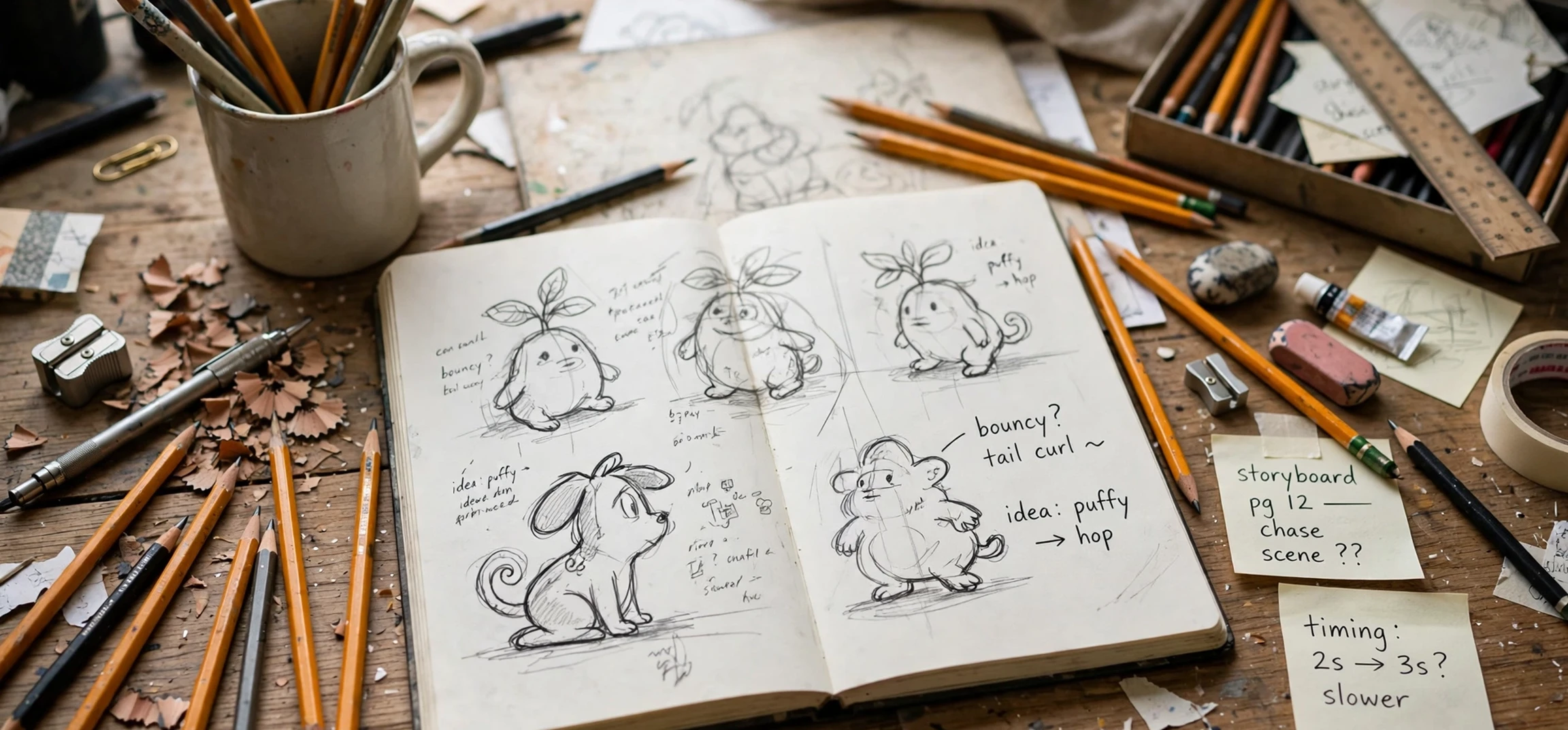
A big chin cartoon character is recognisable in a single frame, often before the character has spoken a word. The chin does the storytelling: it juts forward with confidence, squares off a hero, softens a comedy lead, or turns a villain into a caricature you can read from across the room. Animators have used that shorthand for almost a century, because a face in animation is a design problem as much as a drawing problem. With only a few lines, a designer must tell the audience who this person is, how they behave, and whether they should be trusted, feared or laughed at. A big chin cartoon character solves that problem loudly, and audiences remember the result long after the plot has faded.
This guide looks at why the big chin works, which kinds of characters wear it, and how the same feature can mean completely different things depending on the rest of the design. A strong jaw on a hero reads as determination. The same jaw on a braggart reads as self-importance. On a villain, it can read as stubbornness or brute force. On a child character, it can be pure comedy, because the proportions are wrong in a funny way. The chin is never just a chin. It is part of a system that includes the forehead, the nose, the eyes, the posture and the voice, and changing any one of those elements changes what the chin means. That is why two characters with similarly large chins can feel like opposites.
It is also worth saying what this guide is not. It is not a ranking of every animated chin ever drawn, and it is not a medical discussion of jaw shapes. It is a design guide for viewers, fans and aspiring artists who want to understand a visual trick when they see it. The examples chosen are widely known, long-running or especially clear illustrations of a principle, and the focus stays on how the design functions on screen. If you have ever paused a cartoon and wondered why a character looks heroic, ridiculous or oddly familiar, the answer often starts with the lower half of the face. A big chin cartoon character is a lesson in visual economy: one exaggerated feature, used with intent, can carry a whole personality.
Why Big Chin Cartoon Character Design Works
Animation works by exaggeration. Real faces are subtle, and subtlety is hard to read at speed, at small sizes, or in a fast-moving scene. Animators therefore push one or two features past realism so the audience can read emotion and character instantly. A big chin cartoon character is a textbook case. The jaw is enlarged, squared, rounded or thrust forward, and the rest of the face is simplified around it. The result is a silhouette that survives a distant shot, a quick cut and a merchandise thumbnail, which is exactly what a commercial cartoon needs.
The chin also anchors expression. When a character clenches their jaw, the chin moves with it, and a large chin makes that movement visible. When a character grins, pouts, sulks or shouts, the mouth and chin work together, and a prominent chin gives the animator more room to show the shape of the mouth. That is a practical advantage in comedy, where a reaction shot may last less than a second. A big chin turns a small expression into a readable one, and readable expressions are what make a joke land. For a big chin cartoon character, the face is not a portrait; it is a performance space, and the chin is the stage.
There is a cultural layer too. In Western visual storytelling, a strong jaw has long been associated with decisiveness, physical strength and old-fashioned heroism, from comic-book heroes to film stars drawn in profile. Cartoonists borrowed that association and then played with it. Give a hero a huge chin and the audience accepts their courage before they act. Give a coward the same chin and the audience laughs at the gap between appearance and behaviour. Give a villain a jutting chin and the audience reads stubbornness, or a refusal to back down. The same shape, placed on different personalities, produces different jokes, which is why the device has lasted so long.
The Big Chin Cartoon Character as Hero
Heroic animation leans on the big chin more than any other genre, because heroes need to look capable in a single poster image. A square, forward jaw suggests someone who will not flinch, and when it is paired with broad shoulders, a steady gaze and an upright posture, the whole design says “protagonist” without a word of dialogue. Superhero cartoons, action series and adventure films all use this language, often without the audience noticing. The hero does not need to explain their bravery; their face has already done it.
That heroic chin can be drawn in several ways. A squared chin with clean, angular lines reads as modern and disciplined. A rounded, heavy chin reads as older, warmer or more working-class, like a hero who has earned their strength rather than been born with it. A chin with a cleft adds a comic-book flourish, a small detail that signals a classic hero design. In each case, the chin works with the rest of the body. A heroic big chin cartoon character usually stands tall, moves with purpose and holds eye contact, and if any of those elements were removed, the chin alone would not carry the heroism. Design is a team effort, even on a single face.
Children’s adventure cartoons use a softer version of the same idea. A young hero may have a chin that is slightly too large for their face, which reads as enthusiasm and stubbornness rather than adult authority. The audience understands that this character will keep trying, will argue with adults, and will not give up when a plan fails. That reading is useful in stories where the hero’s main quality is persistence rather than power. The chin promises that the character will push forward, literally and figuratively, and young viewers pick up that promise immediately.
The Big Chin Cartoon Character in Comedy
Comedy is where the big chin becomes a joke in its own right, and no discussion of the big chin cartoon character is complete without the comedy tradition. The classic example is the muscle-bound braggart whose chin is almost as large as his ego. Johnny Bravo, from the Cartoon Network series of the late 1990s, is the clearest case: a towering chin, a pompadour, sunglasses and a confidence that never survives contact with reality. The design tells the joke before the dialogue does. Johnny looks like a hero from a poster, behaves like a man who has misunderstood every social cue, and the gap between the two is the comedy. Remove the chin and the joke weakens; the character would still be vain, but he would not look like a parody of heroism.
Another famous comedy chin belongs to the Crimson Chin, the superhero within the world of The Fairly OddParents. Here the joke is in the name itself: the character’s defining feature is so large that it becomes his identity. The Crimson Chin is a parody of golden-age comic heroes, drawn with an enormous square jaw, a heroic cape and a earnest manner that treats every small problem as a battle for justice. Children in the show idolise him, adults find him absurd, and both reactions are correct. The design works because it commits fully to the exaggeration rather than apologising for it. A half-sized chin would be a design choice; a chin that dominates the face is a statement.
Comedy chins also appear in family and workplace cartoons, where a large jaw can mark a character as blustering, self-important or comically stubborn. A boss, a rival or a neighbour with a jutting chin and a puffed chest reads instantly as someone who will not listen, which lets the writer skip exposition and go straight to the argument. The audience does not need to be told that this character is difficult; the face has already introduced them. That efficiency is why comedy animation returns to the device again and again, across decades and styles, from hand-drawn television to computer-animated film. A big chin cartoon character in comedy is often the fastest way to establish a foil.
Villains, Antiheroes and the Threatening Chin
On a villain, a big chin changes meaning again. A jutting, heavy jaw can suggest brute force, a refusal to negotiate, or a face that has been set in a permanent scowl. Villains in action cartoons often have chins that are angular and shadowed, paired with heavy brows and a downward gaze, so the lower face looks like a wall. The hero may be drawn with a clean, open jaw; the villain gets a jaw that looks carved from rock. The contrast is deliberate, and it lets young audiences tell the sides apart even in a chaotic battle scene.
Antiheroes complicate the picture. A character who is neither fully heroic nor fully villainous may carry a large chin that reads differently in different scenes: heroic when they stand up for someone, threatening when they lose their temper, comic when they are embarrassed. That flexibility is valuable in long-running series, where a character needs to grow without being redesigned. The chin stays the same; the context around it changes. Viewers who follow a big chin cartoon character across many episodes learn to read those shifts, and that learning is part of the pleasure of following a series.
There is also a tradition of the gentle giant with a large chin: a character who looks intimidating but behaves kindly. The visual joke is the mismatch, and it works best for younger audiences, who are learning not to judge by appearance. A huge, square-jawed character who is shy, artistic or afraid of mice teaches the same lesson as the braggart in reverse: the face promised one thing, the personality delivered another, and the audience enjoys discovering the difference. In that tradition, the chin is not a warning; it is a red herring, and a kind one.
How Animators Draw a Big Chin Cartoon Character
For artists, the practical question is how large is too large. The answer depends on the style of the show. In a realistic adventure series, a chin enlarged by a modest amount reads as strong. In a comedy series, the chin can be enlarged far beyond realism and still read as a character rather than a mistake, because the whole world is exaggerated: eyes are larger, heads are larger, bodies are simplified. The rule is consistency. If every character in a show has a slightly enlarged jaw, then a big chin cartoon character needs an even larger one to stand out. If only one character has the feature, a smaller exaggeration will do the work.
Shape matters as much as size. A square chin reads as firm and modern. A rounded chin reads as friendly or stubborn, depending on the mouth. A pointed chin reads as sly or sharp, and is often given to tricksters rather than heroes. A chin that juts forward reads as aggressive or confident, while a chin that recedes reads as weak or nervous, which is why villains and heroes are rarely given receding chins unless the story wants to undermine them. Animators also consider the chin in profile, because a character who looks fine from the front can look odd from the side if the jawline has not been planned. Good character sheets show the head from several angles for exactly this reason.
Colour and line weight finish the effect. A heavy outline around the jaw makes it look solid; a lighter line makes it look softer. Shading under the chin can suggest weight and age, while a clean, unshaded jaw looks younger and more graphic. In modern digital animation, these choices are made in the model and rig, so the chin must work when the character turns, talks and emotes, not just in a single drawing. That is one reason the big chin cartoon character remains a useful test for students: if you can make a large chin look natural in motion, you understand the difference between a drawing and a design. For more on how cartoon worlds are built, see our guides to Cartoon Network games and characters and Clarence from Cartoon Network, and for the scheduling side of classic cartoons, see Boomerang television schedules.
| Chin style | Usual reading | Example type |
|---|---|---|
| Square and clean | Heroic, disciplined, determined | Superhero and adventure leads |
| Rounded and heavy | Warm, stubborn, working-class strength | Family and adventure heroes |
| Hugely exaggerated | Comic braggart or parody hero | Johnny Bravo; the Crimson Chin |
| Angular and shadowed | Threatening, unyielding | Action villains and enforcers |
| Large but gentle | Intimidating look, kind personality | Gentle giants in children’s stories |
Big Chin Cartoon Character at a Glance
To sum up, a big chin cartoon character works because animation communicates through exaggeration, and the jaw is one of the clearest places to exaggerate. A square chin can promise heroism, a huge chin can deliver a comedy joke, and a heavy, shadowed chin can warn of a villain, all depending on the posture, voice and story around it. The most memorable examples, from Johnny Bravo to the Crimson Chin, commit fully to the design rather than apologising for it, which is why audiences remember them. When you spot a big chin cartoon character in a new show, look at the whole face and body before judging the chin alone, because the same feature means different things in different hands. That habit turns a big chin cartoon character from a passing visual gag into a lesson in how character design really works.
Frequently Asked Questions About Big Chin Cartoon Characters
Why do so many cartoon characters have big chins?
Because animation reads through exaggeration. A large chin makes character, confidence and expression readable instantly, even in a fast scene or a small image, and it gives the animator more room to show mouth movement and emotion.
Does a big chin always mean a character is a hero?
No. The same feature can signal heroism, comedy, stubbornness or menace depending on the rest of the design, the posture and the voice. Context decides the meaning, which is why the device works across genres.
Who is the most famous big chin cartoon character?
Johnny Bravo is probably the most famous comedy example, because his chin is central to the joke about misplaced confidence. The Crimson Chin is the most literal example, since the feature is in the character’s name.
Is a big chin a realistic design choice?
Not in a literal sense. Cartoon chins are pushed beyond realism on purpose, to make personality readable. The exaggeration is a storytelling tool, not an attempt to copy a real face.
How can I draw a big chin without making a character look odd?
Keep the rest of the design consistent, plan the head in profile as well as from the front, and choose a chin shape that matches the personality: square for firm, rounded for warm, exaggerated for comic. Consistency matters more than size alone.
Conclusion
A big chin cartoon character endures because the device is simple, flexible and instantly readable. One exaggerated feature can promise heroism, deliver a joke, threaten an opponent or mislead an audience, and it can do all four in different shows without changing shape. From heroic leads with square jaws to comedy braggarts whose confidence outruns their competence, from shadowed villains to gentle giants, the chin has carried more personality than most dialogue. The next time a cartoon face makes you laugh, trust a character or brace for trouble before a word is spoken, look at the lower half of the face. Chances are, the chin told you first.



