When viewers search for the stars of 77 sunset strip, they are usually looking for more than a list of names. They want to know who played the detectives at the centre of the show, who stole scenes as the supporting players, and why a late-1950s detective series still has fans today. 77 Sunset Strip, which ran on American television from 1958 to 1964, was one of Warner Bros.’ most successful early television dramas. It combined private-detective stories with glamour, humour, and a Los Angeles setting, and it made stars of its leading players while giving supporting characters a popularity that sometimes rivalled the leads.
This guide introduces the main stars of 77 sunset strip, explains their characters and their place in the show, and places the series in its historical context. It focuses on the fictional characters and their broadcast roles, rather than on unverified personal details about the performers’ private lives.
Stars of 77 Sunset Strip: The Leading Detectives
The stars of 77 sunset strip at the heart of the series were Efrem Zimbalist Jr. as Stuart Bailey and Roger Smith as Jeff Spencer. Together they ran a private detective agency with offices at the show’s famous address, 77 Sunset Strip in Los Angeles. Bailey was the senior partner: polished, articulate, and worldly, often handling cases that involved wealthy clients, international intrigue, or sophisticated criminals. Spencer was younger, more impulsive, and more likely to be drawn into trouble through charm, curiosity, or a personal connection to a case.
The partnership worked because the two characters complemented each other. Bailey provided steadiness and experience; Spencer provided energy and unpredictability. Episodes often split the investigation between them, so that one detective followed a glamorous lead while the other uncovered a grittier truth. That structure gave the show variety within a familiar formula: each week brought a new client, a new mystery, and a new corner of Los Angeles, from nightclubs and film studios to docks, hotels, and desert roads.
Zimbalist’s performance set the tone for the series. Bailey was a detective who could move comfortably between high society and the criminal underworld, and the character’s calm authority became a template for later television detectives. Smith’s Spencer, meanwhile, gave the show its lighter, more romantic edge. His storylines often involved women in trouble, old friends, or cases that began as favours and turned dangerous. When Smith’s time on the show was reduced in later seasons, the balance of the series shifted, and the producers introduced new characters to fill the gap, a common pattern in long-running television of the period.
It is worth remembering that 1950s television was still learning how to sustain a drama series over many seasons. Contracts, schedules, and studio priorities changed, and casts evolved. The stars of 77 sunset strip therefore changed shape across the show’s run, even while the central idea — two detectives, one famous address, and a new case each week — remained recognisable.
Stars of 77 Sunset Strip: Kookie and the Supporting Cast
No discussion of the stars of 77 sunset strip is complete without Edd Byrnes as Gerald Lloyd “Kookie” Kookson III. Kookie began as a parking attendant at Dino’s Lodge, the nightclub next door to the detective agency, and became one of the most popular characters on American television. His slang, his hairstyle, and his habit of combing his hair became cultural talking points, and his catchphrases entered everyday speech. Kookie was eventually hired by the agency, giving the show a younger, hipper detective-in-training who could go places Bailey and Spencer could not.
Kookie’s popularity illustrates how supporting characters could break out in early television. Audiences, especially younger viewers, identified with his style and attitude, and the show responded by giving him larger storylines, musical moments, and eventually his own spin-off associations. His success also showed Warner Bros. that a detective series could appeal to teenagers as well as adults, a lesson that shaped later youth-oriented programming.
The supporting cast around the leads included Louis Quinn as Roscoe, the racetrack tout and informant who supplied tips, comic relief, and occasional unexpected wisdom. Roscoe’s knowledge of the city’s underworld made him useful to the detectives, and his humour kept the show from becoming too solemn. Other recurring figures included the nightclub staff, police contacts, and a rotating cast of clients, suspects, and romantic interests, played by guest stars who were often established film actors or rising television performers.
Guest stars were an important part of the show’s appeal. A single episode might feature a well-known character actor as a villain, a singer as a nightclub performer, or a young actor who would later become famous in their own right. For modern viewers, spotting guest stars is one of the pleasures of rewatching the series: an episode becomes a snapshot of Hollywood talent at a particular moment.
Dino’s Lodge, the Address, and the Los Angeles Setting
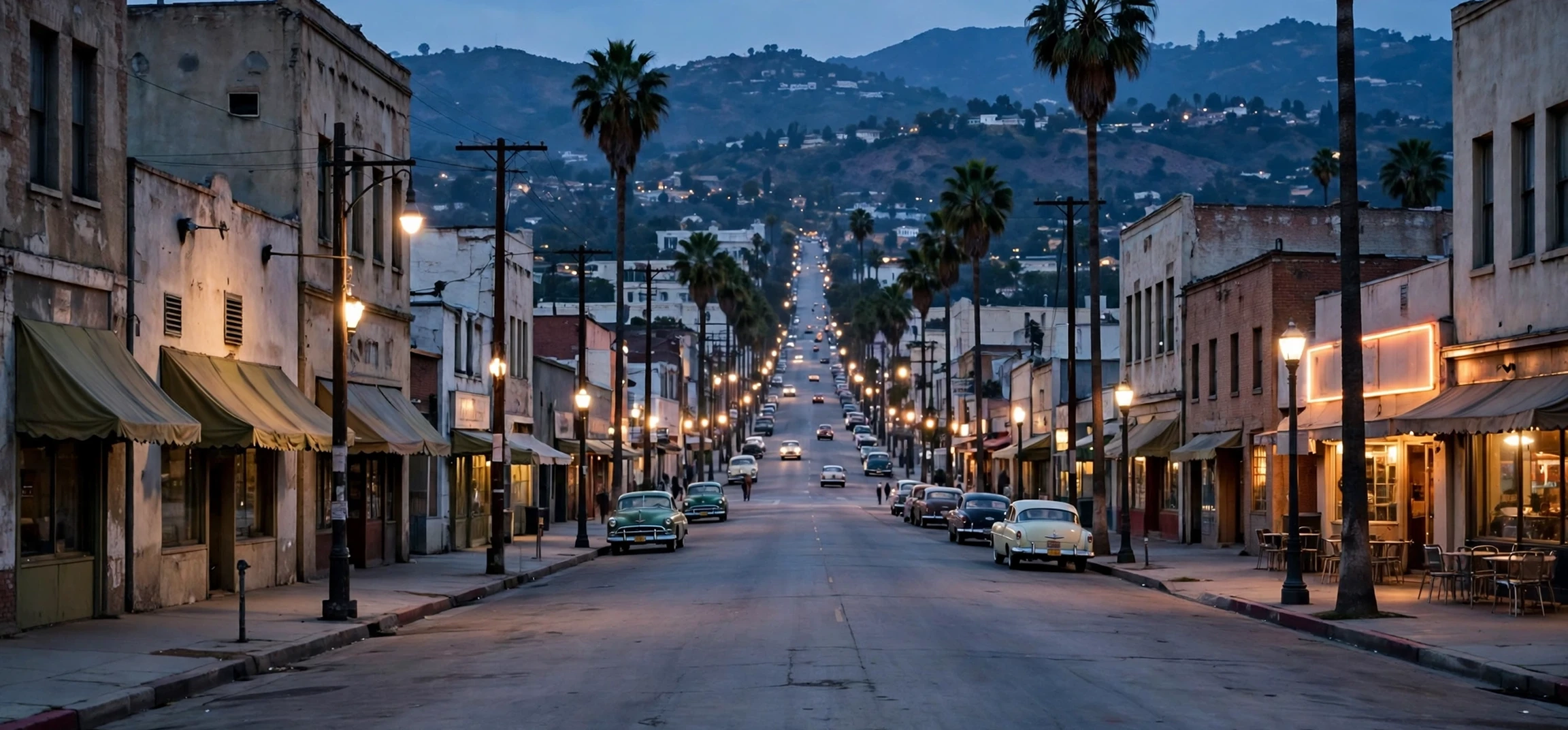
The fictional address itself became a star. “77 Sunset Strip” sounded glamorous and specific, and the show used its Los Angeles setting as more than a backdrop. Sunset Strip in the late 1950s and early 1960s was associated with nightclubs, music, film people, and nightlife, and the series borrowed that atmosphere freely. Dino’s Lodge, the nightclub in the show, was based on a real establishment and gave the detectives a social base: a place to meet clients, hear gossip, and encounter trouble without leaving their own street.
The setting also allowed the show to mix genres. A single episode could include a nightclub performance, a car chase, a society party, and a quiet interrogation. That variety kept the detective formula fresh across more than 200 episodes. Modern detective series still use the same trick: a strong base location, a mix of glamour and grit, and cases that move between social worlds.
Stars of 77 Sunset Strip: Changes in Later Seasons
As the series progressed, the cast changed. Roger Smith appeared less frequently, and new regulars were introduced, including Robert Logan as J.R. Hale and later Troy Donahue in a different role, as the producers tried to refresh the show for a new audience. These changes are sometimes confusing for new viewers, because the show’s opening titles, cast listings, and episode guides do not always make the timeline clear. A useful rule is to check the season: early seasons centre on Bailey and Spencer with Kookie in support, while later seasons distribute the detective work more widely.
The final season also changed the show’s format significantly, moving away from the light, glamorous tone towards a darker, more serious style. That shift divided audiences at the time and remains a talking point among fans. Some viewers prefer the early, breezy episodes, with their nightclub scenes and witty banter. Others appreciate the later attempt to modernise the series, even if it did not save it from cancellation. Both views are understandable: a long-running show is rarely one show, but several shows sharing a title and an address.
Behind the scenes, 77 Sunset Strip was part of Warner Bros.’ television factory, which produced a string of westerns, detective shows, and adventure series using shared sets, contract players, and a house style. That system explains why faces recur across Warner Bros. shows of the period, and why the studio could launch spin-offs and crossovers efficiently. It also explains the show’s polished look: film-studio craftsmanship applied to weekly television.
Why the Stars of 77 Sunset Strip Still Matter
The stars of 77 sunset strip matter for television history as well as for nostalgia. The series helped establish the private-detective format on television, proved that a Los Angeles setting could carry a long-running drama, and showed how a supporting character could become a youth-culture phenomenon. Its theme music, its title sequence, and its address became instantly recognisable, and its influence can be traced in later detective shows that mix glamour, humour, and location.
For modern viewers, the show also offers a window into late-1950s and early-1960s America: its cars, clothes, slang, music, and attitudes to wealth, crime, and romance. Some of those attitudes now feel dated, and some storylines reflect the assumptions of their time. Watching with that historical awareness makes the series more interesting, not less: it becomes both entertainment and a record of how television imagined Los Angeles at a particular moment.
Rewatching is easier than it once was, thanks to reruns, licensed releases, and streaming catalogues that rotate classic series. Episode availability varies by region and by rights holder, so fans often check several legitimate sources before settling on a viewing route. The site’s guides to finding older television, including the overview of best TV streams for fans and the guide to where to watch the Marie Antoinette series, illustrate the same practical point: availability changes, so check current listings rather than assuming a show is permanently in one place.
For viewers interested in how television ensembles evolve, the site’s guide to TV shows with Rodger Corser offers a modern comparison: a performer moving between very different series and roles, just as the Warner Bros. contract players once did. The industry has changed, but the audience habit of following familiar faces from show to show has not.
| Character | Played by | Role in the series |
|---|---|---|
| Stuart Bailey | Efrem Zimbalist Jr. | Senior partner in the detective agency |
| Jeff Spencer | Roger Smith | Junior partner, energetic and romantic |
| Kookie (Gerald Lloyd Kookson III) | Edd Byrnes | Parking attendant turned detective associate |
| Roscoe | Louis Quinn | Informant and comic relief |
| J.R. Hale (later seasons) | Robert Logan | Younger detective associate |
Stars of 77 Sunset Strip: Frequently Asked Questions
Who were the main stars of 77 sunset strip?
Efrem Zimbalist Jr. as Stuart Bailey and Roger Smith as Jeff Spencer led the series, with Edd Byrnes as Kookie and Louis Quinn as Roscoe in key supporting roles.
When did 77 Sunset Strip run?
The series ran from 1958 to 1964 on American television, producing more than 200 episodes across six seasons.
Who was Kookie?
Kookie, played by Edd Byrnes, began as a parking attendant at Dino’s Lodge and became a detective associate. His slang, hairstyle, and popularity made him a breakout character.
Why did the cast change in later seasons?
Long-running series of the period often changed casts as contracts, schedules, and studio priorities evolved. Later seasons introduced new regulars and shifted the show’s tone.
Is 77 Sunset Strip a real address?
The address is fictional as a detective agency, but it evokes the real Sunset Strip in Los Angeles, famous in that era for nightclubs, music, and film-industry nightlife.
Which episode is best for meeting the stars of 77 sunset strip?
An early-season episode is the best introduction to the stars of 77 sunset strip, because Bailey and Spencer share the investigation and Kookie appears in his original nightclub setting. Later episodes are enjoyable too, but they assume the audience already knows the partnership.
Did the stars of 77 sunset strip stay the same throughout the run?
The stars of 77 sunset strip changed across the run, as later seasons reduced some roles and introduced new detectives. Checking the season before watching avoids confusion when a familiar face appears less often or a new regular takes on cases.
Conclusion
The stars of 77 sunset strip created more than a detective show: they created a place. Bailey’s authority, Spencer’s energy, Kookie’s style, and Roscoe’s street knowledge combined into a Los Angeles that viewers wanted to revisit each week. The cast changed, the tone shifted, and the format evolved, but the central appeal remained: smart detectives, glamorous cases, and a famous address that promised a new story every episode. For new viewers, the best starting point is the early seasons, where the original partnership is at its sharpest and Kookie’s rise is still unfolding. For returning fans, the later seasons offer a fascinating contrast, showing how a successful series tried to reinvent itself. Either way, the show’s stars remain its greatest asset, and their work is why 77 Sunset Strip is still remembered more than sixty years after it first aired.