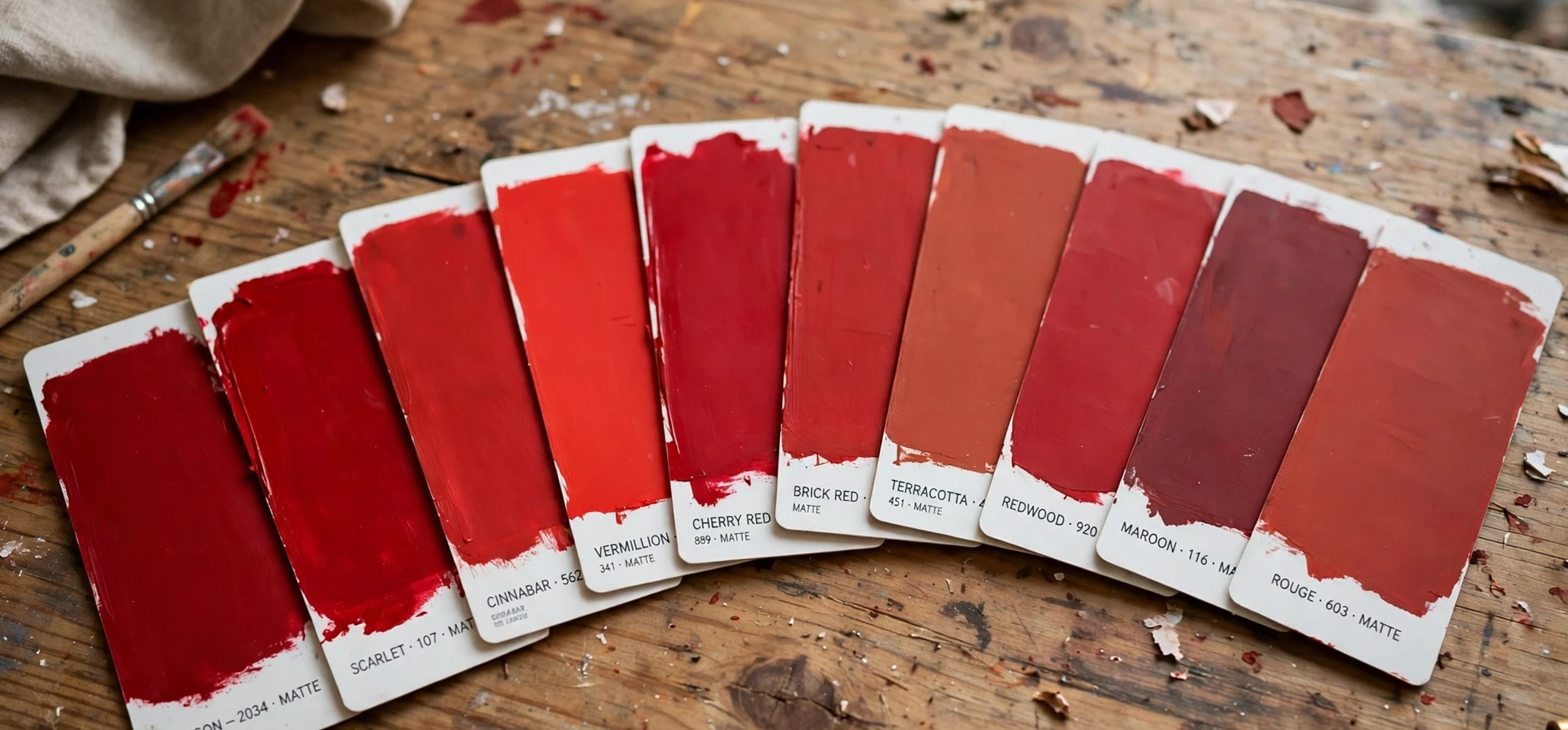
If you searched for “another name for the color red”, you probably need a synonym for writing, design, or a quiz, and the good news is that red has one of the richest vocabularies of any colour. Another name for the color red can be a simple everyday synonym such as crimson or scarlet, a softer shade name such as rose or coral, or a deeper, darker name such as burgundy or maroon. This guide explains the most useful alternatives, how they differ in shade and feeling, and when to use each one, so you can pick the right red word for your sentence, your design, or your exam answer.
The first point to grasp about another name for the color red is that there is no single perfect synonym. Red is a family of colours, not one flat shade, and different names point to different parts of that family. Crimson leans toward a deep, slightly bluish red, while scarlet leans toward a bright, slightly orange red. Ruby suggests the gemstone’s rich glow, while cherry suggests a fresh, juicy brightness. Choosing among them is therefore less about finding a word that means exactly “red” and more about finding the shade and mood you want to convey.
Another Name for the Color Red: Everyday Synonyms
When people ask for another name for the color red in everyday writing, they usually want a word that can replace “red” without changing the meaning too much. Crimson is the classic literary choice, and it works well in descriptive writing, from poetry to product descriptions. Scarlet is another strong choice, with a brighter, bolder feeling, and it has a long history in English, from scarlet letters in literature to scarlet uniforms in history. Ruby is also widely used, especially for rich, glowing reds, because it borrows the beauty of the gemstone.
Other everyday options for another name for the color red include cherry, rose, and coral, each with its own nuance. Cherry suggests a vivid, slightly dark red, like the fruit at its ripest. Rose suggests a softer, pinkish red, like the flower, and it often feels romantic or gentle. Coral sits on the boundary between red, pink, and orange, and it feels warm, summery, and light. If you need a neutral replacement in a plain sentence, crimson or scarlet is usually safest; if you need a specific mood, cherry, rose, or coral gives you more control.
Context matters when you choose another name for the color red. In a formal report, “crimson” may sound elegant, while in a casual message, “cherry red” may sound clearer. In fashion writing, shade names carry extra meaning, because readers picture a fabric or a lipstick shade. In a quiz or crossword, the expected answer may be a single short word such as “ruby” or “rose”, so think about the length and the clue as well as the colour itself. The best synonym is the one your reader will picture correctly.
Another Name for the Color Red: Shades from Light to Dark
Another name for the color red can also be organised by lightness and darkness, which helps designers and artists choose precisely. At the light end, you find names such as rose, pink-red, coral, and salmon, where red is softened with white or orange. In the middle, you find cherry, scarlet, vermilion, and ruby, where red is at its most vivid and saturated. At the dark end, you find burgundy, maroon, wine, oxblood, and brick, where red is deepened with brown or purple.
Each of these shade names tells a small story about where the colour comes from. Burgundy takes its name from the wine region of France, and it suggests a deep, wine-like red. Maroon takes its name from the French word for chestnut, and it suggests a dark, brownish red. Vermilion takes its name from a pigment once made from a mineral, and it suggests a brilliant orange-red used in art and decoration. Oxblood suggests a very dark, brownish red, like dried blood, and it is popular in fashion for leather goods. Knowing these origins helps you remember the shades and use them with confidence.
For designers, the difference between these names is practical, not just poetic. A scarlet button on a website draws the eye urgently, while a burgundy heading feels calm, premium, and serious. A coral accent feels friendly and modern, while an oxblood leather chair feels traditional and rich. When you specify another name for the color red in a design brief, pair the name with a visual sample or a colour code where possible, because names alone can be interpreted differently by different people. The name guides the feeling; the sample confirms the exact shade.
Another Name for the Color Red at a Glance
| Name | Shade character | Best used for |
|---|---|---|
| Crimson | Deep, slightly bluish red | Literary writing, formal design |
| Scarlet | Bright, bold, slightly orange red | Attention-grabbing headlines and fashion |
| Ruby | Rich, glowing red | Jewellery, luxury, vivid description |
| Cherry | Vivid, fresh red | Casual writing, food, bright design |
| Rose | Soft, pinkish red | Romantic, gentle, floral contexts |
| Coral | Warm red-pink-orange blend | Summer fashion, friendly branding |
| Burgundy | Deep wine red | Premium, formal, autumn fashion |
| Maroon | Dark brownish red | School colours, traditional design |
This table answers another name for the color red in a practical way: pick the row whose shade character matches the picture in your mind, then use the name in that row. If you are writing, you can also combine a shade name with “red” itself, as in “crimson red” or “cherry red”, to make the meaning unmistakable. That combination is common in everyday English and avoids confusion when a shade name alone might be read as pink or brown.
Another Name for the Color Red in Culture and Language
Another name for the color red also appears in idioms, place names, and cultural phrases, which is why the vocabulary feels so familiar. People speak of “seeing red” when angry, of “red-letter days” for special occasions, and of “rolling out the red carpet” for honoured guests. In those phrases, red itself is rarely replaced, because the idiom depends on the exact word. In descriptive writing, however, shade names take over, and a writer might describe a “scarlet sunset” or a “crimson dress” to paint a more vivid picture than plain “red” would.
Different languages and cultures also have their own rich red vocabularies, and English has borrowed several of them. The word “crimson” traces back through older languages to a word for a red dye made from insects, while “vermilion” traces to a Latin word for a small worm once linked to red pigment. These histories remind us that colour words are not abstract: they come from dyes, gemstones, wines, fruits, and flowers that people handled every day. That is why so many red names sound like things you can touch, taste, or wear.
In branding and marketing, another name for the color red is chosen carefully, because red carries strong associations with energy, urgency, love, and warning. A fast-food brand might use a bright scarlet to feel energetic and appetising, while a luxury brand might use burgundy to feel refined and expensive. A charity campaign might use a soft rose to feel caring, while a sports team might use a bold scarlet to feel fierce. The shade name in the brand guidelines therefore does real work: it tells designers, writers, and printers which red the brand means, every time.
How to Choose Another Name for the Color Red
Choosing another name for the color red starts with a simple question: how light or dark is the red you mean? If it is light and soft, lean toward rose or coral. If it is bright and vivid, lean toward scarlet, cherry, or ruby. If it is deep and dark, lean toward burgundy, maroon, or wine. That one decision narrows the list dramatically and prevents the most common error, which is using a dark shade name for a bright colour, or vice versa.
Next, ask what feeling you want. For romance or softness, rose is a natural choice. For boldness or urgency, scarlet is stronger. For luxury or richness, ruby or burgundy works well. For freshness or playfulness, cherry or coral feels right. For tradition or seriousness, maroon or oxblood fits better. Matching feeling to shade name is what turns a correct synonym into a good one, and it is the skill that separates flat writing from vivid writing.
Finally, think about your reader. A general reader will understand crimson, scarlet, ruby, cherry, and rose without any explanation. A design or fashion reader will also understand burgundy, maroon, coral, and vermilion. A very specialised term such as carmine or cochineal may need a brief explanation, because fewer readers know it. When in doubt, use the familiar shade name, and add “red” after it if clarity matters more than style.
Another Name for the Color Red: Frequently Asked Questions
What is the most common synonym for red?
Crimson and scarlet are the most common literary synonyms for red, while ruby and cherry are also widely used in everyday writing.
Is burgundy another name for red?
Yes, burgundy is another name for a deep, wine-like shade of red, darker than scarlet and richer than maroon in most descriptions.
Is coral red or pink?
Coral sits between red, pink, and orange, and it is usually described as a warm, light reddish-pink. It is best used when you mean that in-between shade.
What is a dark red called?
Dark reds are commonly called burgundy, maroon, wine, or oxblood, depending on whether they lean toward purple or brown.
Conclusion
Another name for the color red is never just one word: it is a whole family of names, from the bright boldness of scarlet to the deep richness of burgundy, from the soft romance of rose to the fresh vividness of cherry. The right choice depends on shade, feeling, and reader, and this guide gives you the tools to make that choice with confidence. Start with light, bright, or dark, then match the mood, then pick the familiar name your reader will picture correctly. Whether you are writing a story, naming a design colour, or answering a quiz, you now have a strong set of alternatives to plain red. For more colour and meaning guides, see our articles on the American Spirit colour guide and the meaning of analogous colours.



