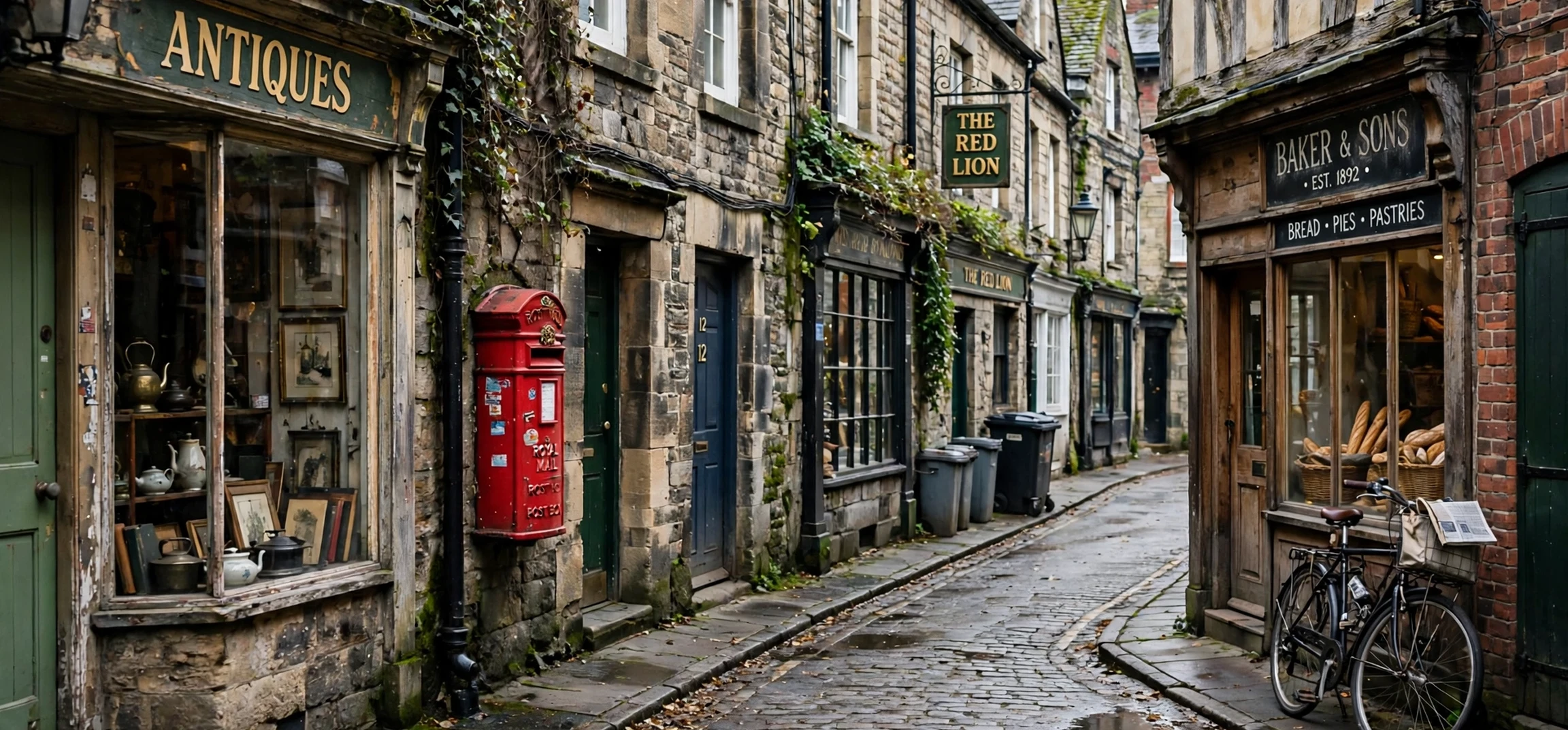
When people look up common last names in britain, they are usually curious about the surnames they hear every day: Smith, Jones, Taylor, Brown, Williams, and the many other names that appear again and again in schools, workplaces, and phone books. Britain has a long and layered naming history, shaped by occupations, places, family relationships, and nicknames, and its most familiar surnames tell that story in miniature. This guide explains common last names in britain in plain terms, where they came from, why some names became so widespread, and how spelling and regional variation work, without focusing on any individual person or private family history.
A surname, also called a last name or family name, is a name shared by members of a family and passed down through generations. In Britain, hereditary surnames became common over several centuries, beginning in the medieval period. Before that, most people were known by a single given name, sometimes with a descriptive addition, such as a job or a place, to tell two people with the same first name apart. Over time, those descriptive additions hardened into fixed family names. That is why so many common last names in britain still sound like jobs, places, or descriptions: they began as practical labels, not as invented brand names.
Common Last Names in Britain: The Most Familiar Surnames
The most familiar common last names in britain include Smith, Jones, Taylor, Brown, Williams, Wilson, Johnson, Davies, Evans, Thomas, Roberts, Walker, Wright, Thompson, and White. Smith is traditionally the most widespread surname in Britain, and its popularity is easy to explain: a smith was a metalworker, and almost every village and town needed one. Blacksmiths, goldsmiths, silversmiths, and other metalworkers were essential trades, so the name Smith arose independently in many different places, rather than spreading from a single family. That pattern, where the same occupational name appears in many towns at once, is one reason occupational surnames dominate the top of the list.
Jones, Williams, Wilson, Johnson, Davies, Evans, and Thomas belong to a different group: patronymic names, which are formed from a father’s given name. Jones originally meant John’s son, or a family associated with John, while Williams came from William, Wilson from Will, Johnson from John, and Davies and Evans from Welsh forms of David and Evan. Because John, William, and David were extremely popular given names in medieval Britain, the surnames derived from them also became extremely common. In Wales in particular, patronymic naming remained strong for a long time, which is why Jones, Davies, Evans, and Williams are especially familiar in Welsh communities and across Britain as a whole.
Taylor, Walker, and Wright are occupational names of a different kind. A taylor, in the older spelling, was a tailor, someone who cut and sewed clothing. A walker was someone who walked, or trod, cloth in the process of fulling, which thickened and cleaned woollen fabric. A wright was a maker or worker, most often a wheelwright or a millwright, someone who built and repaired wooden machinery. Brown and White, by contrast, are descriptive names, originally referring to hair colour, complexion, or clothing, and they too arose in many places independently. Together, these groups account for most of the names at the top of any list of common last names in britain.
Common Last Names in Britain and Where They Came From
Historians usually divide British surnames into four broad origin groups, and understanding those groups makes common last names in britain much easier to interpret. The first group is occupational, as described above: Smith, Taylor, Baker, Cook, Fisher, Mason, and Shepherd all began as job titles. The second group is locational, where a surname comes from a place, a landscape feature, or a direction. Names such as Hill, Wood, Ford, Moore, and Brooks refer to hills, woods, river crossings, moors, and streams. Other locational names come from village or town names, and they often mark a family that moved away from its home place and was identified by where it came from.
The third group is patronymic and matronymic, where a surname comes from a parent’s name. As noted, Jones and Williams are patronymic, while names derived from a mother’s name are rarer but do exist. The fourth group is nicknames, where a surname began as a description of appearance, character, or habit. Brown, White, Black, Short, Long, Young, and Armstrong all began in this way. Armstrong, for example, suggests physical strength, while Young may have distinguished a younger person with the same given name as an older relative. Over centuries, these descriptive labels lost their literal meaning and became ordinary family names, which is why a person named Armstrong is not necessarily strong, and a person named Brown does not necessarily have brown hair.
Regional history adds another layer. Norman French influence after 1066 brought names of Norman origin, and later migration brought names from Ireland, Scotland, Wales, and further afield. Scottish surnames often begin with Mac, meaning son of, or use clan associations, while Irish surnames often begin with O or Mac as well, with different spelling traditions. Welsh surnames, as noted, show a strong patronymic pattern. English surnames show a mix of all four groups, with occupational and locational names especially prominent. The result is a surname landscape that reflects centuries of work, movement, language change, and local custom.
Why Some Names Became So Common
Several forces pushed a small number of surnames to the top. First, the jobs and given names behind them were themselves extremely common. Every community needed a smith, a tailor, a baker, and a cook, so those occupational names appeared everywhere. Similarly, John, William, Thomas, and Robert were among the most popular given names for centuries, so patronymic surnames derived from them multiplied quickly. Second, spelling was not standardised for a long time. The same surname could be written in several ways, and over time some spellings became dominant while others faded, concentrating the count under a few forms.
Third, population growth and urbanisation spread common names further. As people moved from villages to towns and cities for work, they carried their surnames with them, and the most common rural names became the most common urban names as well. Fourth, administrative record-keeping, including parish registers, tax records, and later civil registration, helped fix spellings and pass names down consistently. Once a surname was written in official records, children tended to inherit exactly that spelling, which preserved the name across generations even when its original meaning was forgotten.
It is also worth remembering that a common surname does not mean a single shared ancestor. Two people named Smith are very unlikely to be closely related simply because they share the name, because Smith arose independently in hundreds of places. The same is true of Jones, Taylor, and Brown. Common surnames are better understood as common words that became names, rather than as markers of one family tree. That distinction matters for anyone interested in family history: a shared surname is a starting clue, not proof of a relationship.
Spelling Variations and Regional Differences
Spelling variation is one of the most confusing parts of British surnames, and it is also one of the most interesting. Smith is usually spelled Smith, but older records may show Smyth or Smythe. Taylor may appear as Tayler in older documents. Davies and Davis are related forms, with Davies more common in Wales and Davis more common in England, although both forms appear in both places today. Thompson and Thomson are both widespread, with Thomson more common in Scotland and Thompson more common in England, again with plenty of overlap.
These variations arose because, before standardised spelling, clerks wrote names as they heard them, and regional accents shaped the written form. A name pronounced one way in Yorkshire might be written differently in Kent, even for the same family. Over time, families settled on one spelling, often the one used in their parish register or on a legal document, and that spelling was passed down. That is why family historians are advised to search several spellings of a surname, rather than assuming that a single spelling covers every record.
Regional differences also show up in which surnames are most common in a particular area. A surname that is very common in one county may be rare in another, because it began as a local place name or a local trade. Conversely, occupational names such as Smith and Taylor are common almost everywhere, because the trades behind them existed everywhere. Looking at a regional distribution map of surnames can therefore reveal migration patterns, local industries, and historical settlement, all from a simple list of names.
Common British Last Names at a Glance
The table below groups some of the most familiar common last names in britain by their general origin. The meanings given are the traditional explanations for the name type, not a claim about any particular family today.
| Surname | General origin group | Traditional meaning or source |
|---|---|---|
| Smith | Occupational | Metalworker, especially a blacksmith |
| Jones | Patronymic | Family of John |
| Taylor | Occupational | Tailor, a maker of clothing |
| Brown | Descriptive nickname | Brown hair, complexion, or clothing |
| Williams | Patronymic | Family of William |
| Walker | Occupational | Worker who fulled woollen cloth |
| Hill | Locational | Someone who lived on or near a hill |
| White | Descriptive nickname | Fair hair, complexion, or clothing |
How to Research a British Surname Responsibly
If a surname in this guide is your own family name, or a name you are curious about, the best way to research it is through general surname dictionaries and historical records, rather than through personal data about living people. Surname dictionaries explain the origin, early spellings, and regional distribution of a name, and they are a good starting point. Parish registers, census records, and civil registration records can then show how a particular family used the name over time, but those records should be handled with care, especially for recent generations, and private details about living individuals should not be shared publicly.
A useful approach is to start broad and narrow gradually. First, learn the general origin group of the name: occupational, locational, patronymic, or nickname. Second, look at its regional distribution: where was the name most common in earlier centuries, and where is it common now? Third, search variant spellings, because a family may appear under different spellings in different records. Finally, use first names, dates, and places together to distinguish between different families who share the same surname, rather than assuming that every person with the name belongs to the same tree. That method is slower than a simple surname search, but it is far more reliable.
It is also helpful to remember that surnames change. People have changed surnames on marriage, on migration, by deed poll, or simply by adopting a new spelling. A name that looks English today may have an earlier form in another language, and a name that looks unusual today may once have been a common occupational term. Surname history is therefore a story of language change as much as a story of families, and that is part of what makes common last names in britain such a rewarding topic.
Frequently Asked Questions
What is the most common British surname?
Smith is traditionally regarded as the most common surname in Britain, because metalworking was an essential trade in almost every community, and the name arose independently in many places.
Why are Jones and Davies so common?
Jones and Davies are patronymic names derived from John and David, two of the most popular given names in British history, and they are especially familiar in Wales, where patronymic naming remained strong.
Do people with the same common surname share an ancestor?
Not necessarily. Common occupational and descriptive surnames arose independently in many places, so a shared surname alone is not proof of a close family relationship.
Why do surnames have different spellings?
Spelling was not standardised for centuries, and clerks wrote names as they heard them. Regional accents and local record-keeping produced variants such as Thomson and Thompson, or Davies and Davis, which were then passed down.
Common Last Names in Britain: A Quick Recap
When you look up common last names in britain, the names at the top of the list are usually occupational, patronymic, locational, or nickname names that arose independently in many places. That is why common last names in britain such as Smith, Taylor, Jones, and Williams appear in almost every town: the trades and given names behind them were common everywhere, and official records fixed their spellings over time. Remembering those four origin groups makes any surname list easier to understand.
It is also useful to remember that common last names in britain do not, by themselves, prove that two people are related. A shared surname is a clue for family research, not a conclusion, and the best research combines the surname with first names, dates, places, and variant spellings. If you keep that caution in mind, a list of common last names in britain becomes a starting point for learning about work, language, and migration, rather than a source of mistaken family connections.
Students and family historians often begin with common last names in britain because common last names in britain illustrate how language, work, and place shaped everyday names. A classroom discussion of common last names in britain can start with Smith and Taylor, move to Jones and Williams, and then explore how common last names in britain vary by region, with some names far more familiar in Wales or Scotland than in England. That regional angle makes the topic vivid and concrete.
Writers and quiz setters also draw on common last names in britain, because common last names in britain are instantly recognisable and easy to use in examples. Whether you are writing a story set in Britain, preparing a quiz, or simply curious about your own name, a grounding in common last names in britain helps you choose names that feel authentic. Use the origin groups in this guide to check whether a name fits the period and place you have in mind.
Conclusion
Common last names in britain are far more than a list of familiar words: they are a record of medieval jobs, places, family relationships, and nicknames, preserved in the names people carry today. Smith, Jones, Taylor, Brown, Williams, and their neighbours at the top of the list became common because the trades and given names behind them were common, because they arose independently in many communities, and because official records fixed their spellings over generations. Understanding those origins makes everyday names more interesting, and it also helps anyone researching family history to search more wisely, using variant spellings, regional patterns, and first names alongside surnames. For more name explainers, see our guides to common English last names and family name lists.