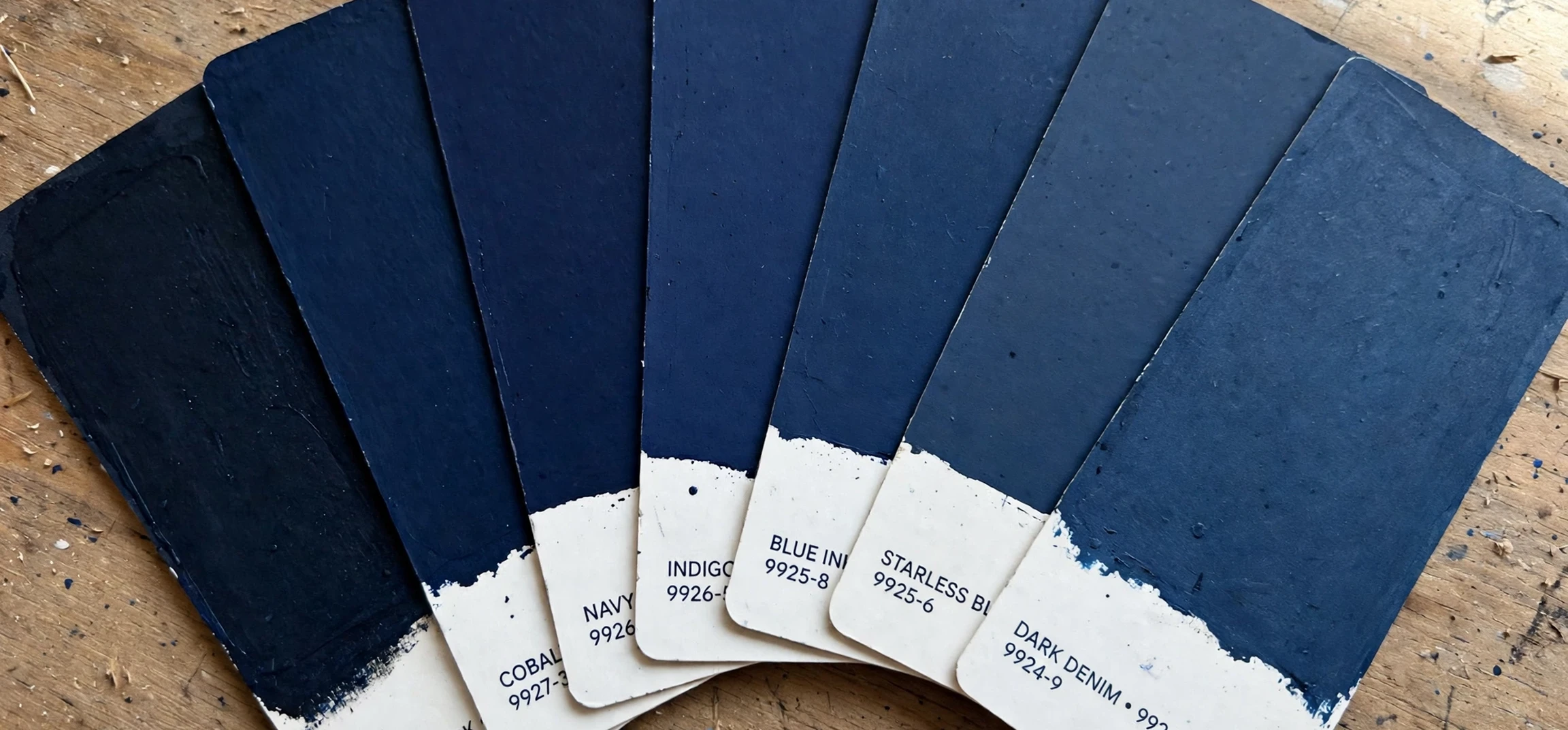
If you are searching for names for deep blue, you are probably trying to pin down one exact shade among many that look similar on screen but feel very different in real life. Deep blue is not a single colour. It is a family of dark, rich blues that range from almost black navy to vivid sapphire, and each name carries a slightly different mood, history, and best use. This guide to names for deep blue collects the most useful names, explains what makes each one distinct, and helps you choose the right word when you are describing paint, fabric, a brand colour, or a design project.
The reason so many names for deep blue exist is that people have named dark blues after places, minerals, uniforms, oceans, and night skies for centuries. A painter, a sailor, a soldier, and a fashion designer can all mean something slightly different when they say deep blue, yet they are all pointing toward the same dark end of the blue spectrum. Learning the names gives you precision. Instead of saying dark blue and hoping the other person pictures the same shade, you can say midnight blue, Prussian blue, or Oxford blue and be understood much more clearly.
What Are Names for Deep Blue and Why So Many Exist
At its simplest, names for deep blue are the labels used for blues that are dark in value but still clearly blue rather than black, purple, or grey. A deep blue keeps enough blue character to read as blue in daylight, even when it looks almost black in a dim room. That balance is what makes the family so popular for suits, evening wear, car paint, front doors, and bedroom walls. It feels serious and calm without feeling flat.
Colour naming is partly science and partly culture. On the science side, a deep blue reflects less light than a mid blue or sky blue, and it often contains a touch of black, purple, or green that shifts its temperature. On the culture side, names such as navy blue come from naval uniforms, while sapphire comes from a gemstone and midnight blue comes from the night sky. Those stories help us remember the shades, but they also explain why two brands can use the same name for slightly different colours. Always check a swatch or a colour code when an exact match matters.
When you browse names for deep blue for a practical job, it helps to sort them into three groups. First are the near-black blues, which are useful when you want drama without true black. Second are the classic dark blues, which are the workhorses for clothing, interiors, and branding. Third are the vivid deep blues, which still feel dark but carry more energy and saturation. Keeping those groups in mind makes a long list much easier to use.
Classic Names for Deep Blue Everyone Should Know
Navy blue is the most familiar of all names for deep blue, and for good reason. It is a dark, slightly desaturated blue associated with uniforms, business suits, and school colours. True navy is restrained and dependable, which is why it works in almost every setting. If you only learn one name from this guide, navy is the safest choice, because almost everyone will picture roughly the same shade.
Midnight blue is darker than navy and closer to black, with a hint of purple in many versions. It gets its name from the sky at midnight, and it suits evening wear, luxury packaging, and dramatic interiors. In a small room or on a small screen, midnight blue can look black, so pair it with lighter tones or metallic accents if you want the blue to remain visible.
Royal blue in its deep form is richer and more saturated than navy. Traditional royal blue can be brighter, but deep royal blue keeps the regal feeling while adding depth. It is a strong choice for sports colours, formal dresses, and branding that needs to feel confident rather than quiet. Sapphire is close to this group too, named for the gemstone, and it usually reads as a vivid, jewel-like deep blue with a slight violet lean.
Indigo sits on the border between blue and violet. Deep indigo is darker and moodier than a bright indigo dye, and it has a long history in textiles, from denim to traditional dyeing. Prussian blue, by contrast, is a very dark, green-leaning blue first made as a pigment, and it remains a favourite name among painters because it mixes beautifully and creates deep shadows. Oxford blue, another classic, is a very dark navy associated with university colours and formal clothing.
A Longer List of Names for Deep Blue by Character
Beyond the classics, many other names for deep blue describe useful variations. Cobalt blue in a deep version is intense and almost electric, while still darker than a bright cobalt. Aegean blue suggests the deep water of the Mediterranean, often with a slightly green or teal undertone. Petrol blue, sometimes called peacock blue in darker forms, leans toward teal and suits modern interiors and fashion when a plain navy feels too safe.
Other names worth knowing include steel blue in its dark form, which adds a grey, metallic coolness, and slate blue, which is muted and dusty. Ink blue and ink navy describe blues so dark they resemble writing ink. Denim blue in a deep wash looks like dark jeans, while washed indigo is softer. For a warmer deep blue, look for names such as deep azure, which keeps a clear sky-blue character even at a darker value, or dusk blue, which captures the blue-grey light just after sunset.
When you compare names for deep blue side by side, pay attention to undertone more than to the name alone. A blue with a purple undertone will feel warmer and more luxurious. A blue with a green undertone will feel cooler and more modern. A blue with a grey undertone will feel softer and more muted. Two shades can share the word deep in their description and still clash if one leans violet and the other leans teal, so always view samples together in the light where they will be used.
| Deep blue name | General character | Best used for |
|---|---|---|
| Navy blue | Classic, restrained, slightly desaturated | Suits, uniforms, branding, walls |
| Midnight blue | Very dark, near black, hint of violet | Evening wear, luxury packaging, feature walls |
| Sapphire | Vivid, jewel-like, violet-leaning | Jewellery, dresses, statement interiors |
| Prussian blue | Very dark, green-leaning pigment blue | Painting, art prints, traditional interiors |
| Indigo | Dark blue-violet, textile heritage | Denim, textiles, bohemian interiors |
| Oxford blue | Very dark navy, formal | Formal wear, academic and heritage looks |
| Aegean blue | Deep sea blue, slight green lean | Coastal interiors, summer fashion |
| Steel blue (dark) | Cool, grey-leaning, metallic feel | Modern rooms, office design, menswear |
How to Choose Among Names for Deep Blue
Start with the feeling you want. For calm and trust, names for deep blue such as navy and Oxford blue are hard to beat. For luxury and drama, midnight blue and sapphire work better. For creativity and warmth, deep indigo or a violet-leaning deep blue adds character without losing depth. For a coastal or modern look, a green-leaning deep blue such as Aegean or petrol blue may suit the space better than a traditional navy.
Next, test the shade in context. A colour that looks perfect on a phone screen can shift badly under warm indoor lighting or beside a wooden floor. Paint a large sample, drape the fabric in daylight and evening light, or print the brand colour and view it on paper. This step matters more with deep blues than with light colours, because deep blues change a lot between bright and dim light.
Also think about contrast. Deep blues need a lighter partner to stay readable. White, cream, pale grey, soft gold, and light wood all lift a deep blue and stop a room or an outfit from feeling heavy. In print and on screen, white text on deep blue is usually clear, while dark grey text on deep blue is not. If you are choosing names for deep blue for a logo or a website, check the contrast before you commit.
For more colour and naming inspiration, see our guide to American Spirit colour ideas and our list of character name collections, which show how a clear naming system helps readers find exactly what they mean.
Frequently Asked Questions About Names for Deep Blue
Is navy blue the same as deep blue?
Not exactly. Navy is one member of the deep blue family, but deep blue is the wider group. All navy blues are deep blues, yet not every deep blue is navy. Midnight, sapphire, indigo, and Prussian blue are also deep blues with their own characters.
What is the darkest blue that still looks blue?
Midnight blue and Oxford blue are often cited as the darkest blues that still read as blue in good light. In very dim light they can look black, so use lighting and lighter accents if you want the blue to stay visible.
Which deep blue suits a small room?
A deep blue can work in a small room if you use it on one feature wall, balance it with white trim and mirrors, and keep the lighting bright. A grey-leaning deep blue often feels less heavy than a very saturated one in a compact space.
Conclusion: Pick the Deep Blue Name That Matches Your Project
The best approach to names for deep blue is to treat the list as a toolkit, not a test. Learn the classics, note the undertones, test samples in real light, and choose the name that describes the shade you actually see. Whether you need navy for a suit, midnight for an evening look, sapphire for a statement piece, or Prussian blue for a painting, the right name saves time, avoids confusion, and helps everyone involved picture the same rich, dark blue. Keep this guide handy the next time a colour choice matters, and let the shade, not just the word deep, guide your final decision.



