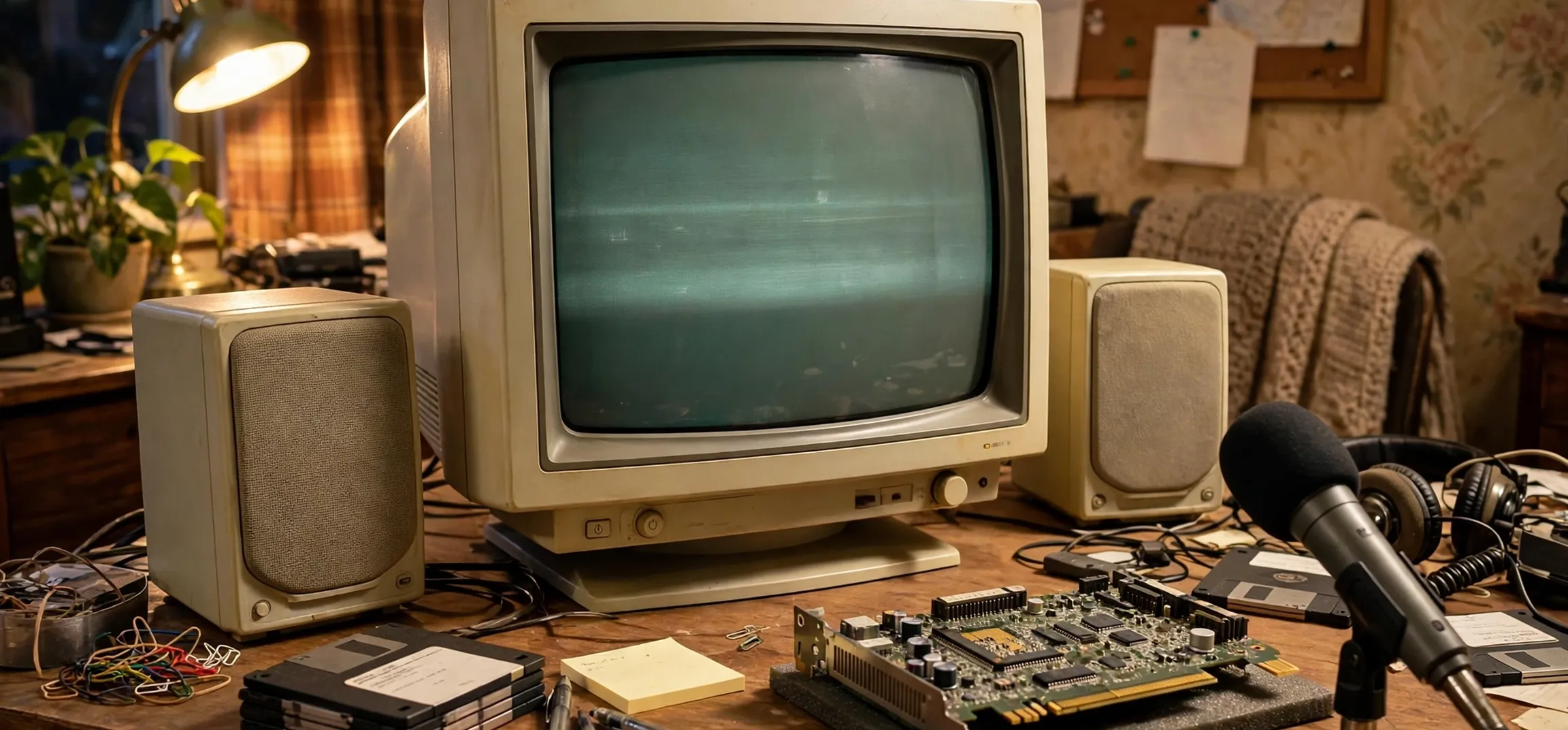
Anyone who owned a home computer in the early 1990s may still be able to hear dr sbaitso text to speech in their head: a flat, robotic voice reading typed sentences aloud, cheerfully mangling long words and pausing in odd places. dr sbaitso text to speech was not polished, and it was certainly not natural, but for many families it was the first time a computer had ever spoken back.
Dr. Sbaitso was a small talking program from Creative Labs, the company behind the Sound Blaster sound cards that brought proper sound to many home PCs. It was part demonstration, part toy and part pretend therapist, and it showed off what a new sound card could do at a time when most computers only beeped. Understanding it is really understanding a turning point, when speech became something ordinary software could attempt.
This article explains what the program was, how its speech synthesis worked in simple terms, why people remember it so fondly, and how its ideas echo in the far smoother voices on phones, computers and accessibility tools today.
What Dr. Sbaitso was and where it came from
Dr. Sbaitso arrived with Sound Blaster cards in the early 1990s, in the era of DOS, floppy disks and chunky desktop machines. Creative Labs needed programs that proved a sound card was worth buying, and a talking doctor was a memorable proof. The name itself is usually explained as a playful acronym built from Sound Blaster, artificial intelligence and text to speech, which tells you exactly what the program wanted to be: an artificial character who spoke.
On screen, the experience was simple. You typed your name, the program greeted you by speaking, and then you held a conversation by typing sentences and listening to the replies read aloud in that unmistakable electronic voice. The doctor asked questions, responded to what you typed and tried to keep the chat going, much like a friendly interviewer who had read a script about feelings. Sessions often became family entertainment, with everyone taking turns typing sillier and sillier lines just to hear how the voice would handle them.
The program also included playful extras that are commonly remembered, such as a parrot style mode where it repeated what you typed, so children could hear their own jokes, names and tongue twisters spoken back. That repeat mode may be its purest form: type anything, hear the machine say it, laugh at the pronunciation, and type something harder.
A doctor in an older tradition
The doctor character was not a random choice. In the 1960s, a famous early program called ELIZA imitated a therapist by reflecting a user’s words back as questions, and its DOCTOR script showed how easily people treat a responsive program as if it understands them. Dr. Sbaitso borrowed that friendly therapist shape and added a voice. Where ELIZA printed text, dr sbaitso text to speech spoke its replies aloud, and that single change made the illusion, and the comedy, far stronger.
How dr sbaitso text to speech worked
The speech in dr sbaitso text to speech was formant style synthesis, an early method of building a voice from electronic ingredients rather than playing back recordings of a real person. Software of this kind does not store a human saying every word. Instead it works from rules: it breaks written words into smaller sound units, decides how those units should be pronounced, and shapes an artificial buzz and hiss into something the ear accepts as speech, adding rough pitch changes so sentences rise and fall a little.
That approach explains both the charm and the limits. Because the voice was generated by rules, the program could attempt any word you typed, including names, nonsense and deliberate gibberish. Because the rules were crude, unusual words came out wrong, emphasis landed in strange places, and every sentence carried the same cheerful robot tone. Modern listeners hear dr sbaitso text to speech as comedy, but at the time simply getting an affordable home machine to pronounce free text at all felt like a glimpse of the future.
| Feature | Dr. Sbaitso era | Typical modern speech |
|---|---|---|
| Voice source | Generated by pronunciation rules | Often built from large voice models and recordings |
| Sound quality | Robotic, flat and clearly artificial | Much smoother, with natural pauses and tone |
| Vocabulary | Could attempt any typed word, often badly | Handles names and new words far more reliably |
| Conversation | Simple pattern matching replies | Systems can follow context across a longer chat |
| Main purpose | Demonstrating a new sound card | Accessibility, assistants, reading and media |
The conversation side was simpler than it sounded, too. Like other early chat programs, Dr. Sbaitso matched patterns in what you typed and answered with prepared lines, sometimes reusing your own words inside its reply. It did not understand problems the way a person does, and it could be led into loops or nonsense, which users found funny rather than disappointing. In dr sbaitso text to speech sessions, the real product was not advice. It was the experience of a two-way exchange with a machine that had a voice and a personality, however thin.
Why people remember dr sbaitso text to speech
Nostalgia explains part of the affection for dr sbaitso text to speech, but not all of it. Many owners remember the program because it arrived at a specific moment in their lives: a first sound card, a first family computer, an afternoon typing jokes with siblings. Technology that arrives at a first moment tends to be remembered out of proportion to its importance, and Dr. Sbaitso was often the first speaking software a household ever tried.
The voice itself is unforgettable in a way smoother voices are not. Its mistakes were entertainment. Families tested it with tongue twisters, song lyrics, rude words it politely resisted, and the names of everyone they knew, ranking which names it pronounced worst. Because dr sbaitso text to speech read everything in the same earnest tone, even a shopping list could sound like a serious announcement, and that contrast still makes people smile when old recordings are shared online.
A shared first experience
There is also a social reason. Speech turned a solitary computer into a group toy. One person typed, everyone else listened and suggested the next line, so the program fitted family rooms and school computer corners in a way silent software did not. Retrospective articles, videos and emulation projects keep returning to dr sbaitso text to speech because so many people share the same memory of gathering around a screen to hear a computer talk, and each retelling sends a few more readers off to try the voice again in an emulator.
Finally, it is remembered because it was honest about being a demonstration. It never promised real therapy or real understanding, despite its title. It was a shop window for sound hardware dressed as a character, and users understood the joke.
Modern echoes of the talking doctor
The clearest descendants of dr sbaitso text to speech are the text to speech tools people now use without thinking. Screen readers speak web pages and documents for blind and partially sighted users, phones read messages and directions aloud, and e-book and article apps offer listening as a standard option. The voices have changed beyond recognition, built with far richer methods and far more data, but the basic promise is the one Dr. Sbaitso made: type or select text, and the machine will say it.
Voice assistants carry the other half of the inheritance, the conversation. Dr. Sbaitso paired a speaking voice with simple pattern-matched replies; modern assistants pair far better voices with systems that can follow requests, search for information and control other software. Comparing the two shows how uneven progress can be: speech quality leapt forward, while truly understanding a person remains the harder problem, just as it was when a pretend doctor answered typed worries with scripted questions.
There is a playful lineage too. Robotic voices are now a deliberate style in games, videos and internet humour, chosen precisely because audiences recognise the sound of early synthesis. When a creator uses a flat machine voice for a joke, part of the joke is shared memory, and dr sbaitso text to speech is one of the places that memory was made. The same sound that once meant cutting edge now means retro, which is perhaps the surest sign that the technology succeeded and moved on.
For anyone curious today, the safest way to explore this history is through reputable emulation and museum style projects that run old software inside a modern, sandboxed program, rather than downloading unknown old files. A few minutes with the flat voice and the limited chat makes an excellent history lesson in how far speech tools have come.
Frequently asked questions
What was Dr. Sbaitso? Dr. Sbaitso was a talking demonstration program from Creative Labs that came with Sound Blaster sound cards in the early 1990s. It chatted in the style of a friendly therapist and read its replies aloud in a robotic voice, showing owners what their new sound hardware could do.
How did the voice in dr sbaitso text to speech work? It used rule-based speech synthesis. The program broke typed words into sound units, applied pronunciation rules and shaped an artificial voice electronically, instead of playing recordings of a real speaker. That is why it could attempt any word, yet often pronounced unusual words in a funny, incorrect way.
Was Dr. Sbaitso real artificial intelligence? Only in the simple, early sense. Its conversation relied on matching patterns in typed sentences and replying with prepared lines, in the tradition of the older ELIZA program. It did not understand users like a person, which is why chats could loop or drift into nonsense, to the amusement of most users.
What replaced programs like Dr. Sbaitso? Modern text to speech in screen readers, phones and reading apps replaced the speech side, while voice assistants and modern chat systems replaced the conversation side. Both do the same jobs with far better voices and understanding, though the robotic sound of dr sbaitso text to speech remains a loved retro style.
Conclusion
Dr. Sbaitso was a small program with an outsized afterlife. As a sound card demonstration it did its job, but as a first speaking computer for thousands of households it became a memory people keep retelling. Revisiting dr sbaitso text to speech today is part history lesson and part comedy show, and it sets modern voices in context: the smooth assistant on a phone is the polished descendant of a flat-voiced pretend doctor typing back at a family gathered around a desk.
To keep exploring how speech tools have changed, read about Chromebook text to speech features for everyday reading, or compare the other direction of the technology in this guide to Google Cloud speech to text.