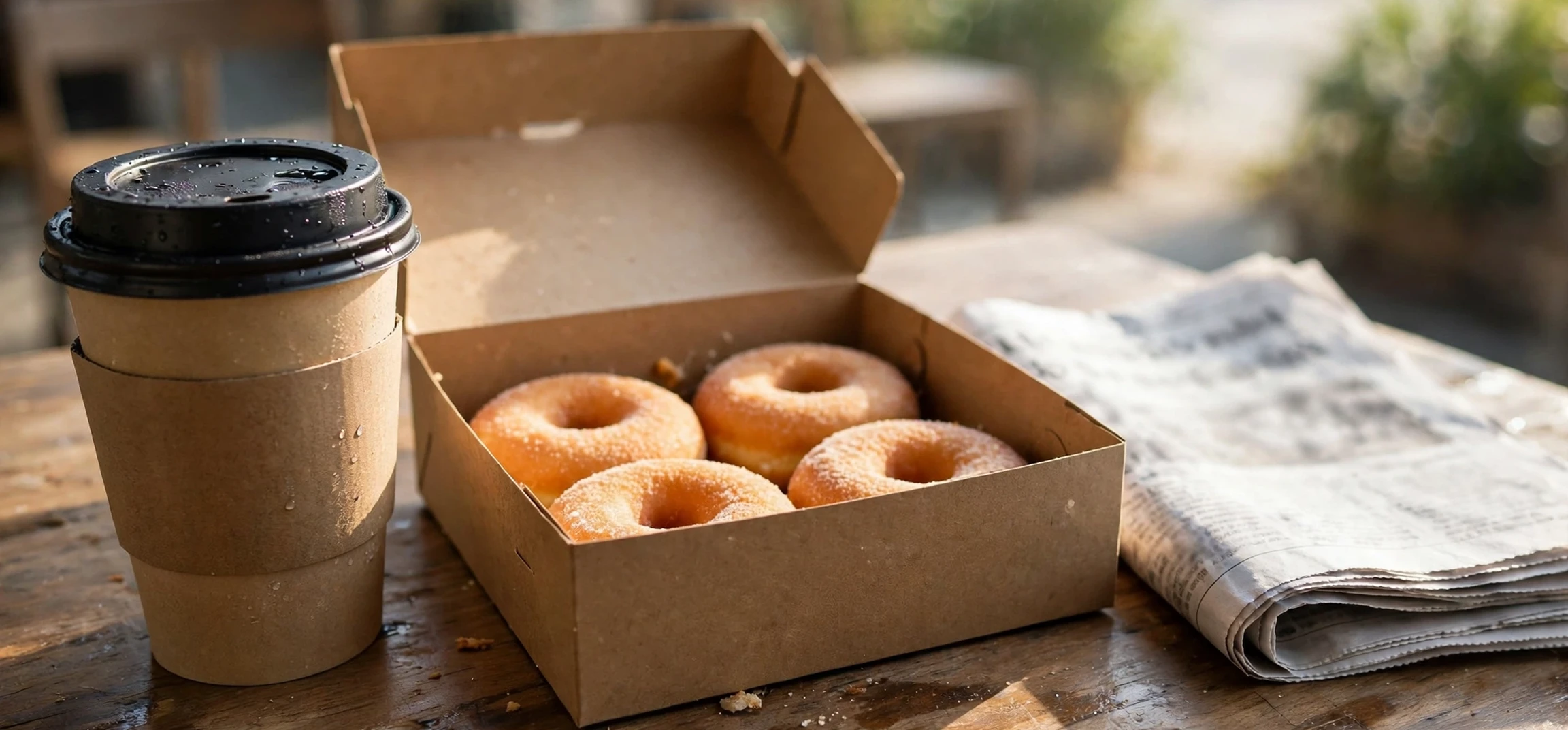
If you have ever wondered whether you can buy shares in the company behind your morning coffee and doughnuts, you are asking a very common question. So, is dunkin donuts a publicly traded company? The short answer is no, not today as a standalone company. Dunkin’ was publicly traded for several years under the ticker DNKN, but it was acquired in late 2020 by Inspire Brands, a private company, and its shares were delisted. This guide explains the is dunkin donuts a publicly traded company question in full, covering the company’s history, its time on the stock market, what “private” means in practice, and how to research restaurant companies generally, without offering investment advice or quoting any current share price as fact.
Understanding this question matters because company names, shopfront brands, and listed companies are not always the same thing. A brand you see on every high street may be owned by a parent company with a different name, listed under a different ticker, or held privately by an investment group. Dunkin’ is a perfect example of how those layers work, and tracing them is a useful lesson in how modern franchising and corporate ownership operate.
Is Dunkin Donuts a Publicly Traded Company Today?
To answer is dunkin donuts a publicly traded company as things stand today: no. Dunkin’ itself is not listed on a stock exchange as an independent public company, and you cannot buy shares that trade under a Dunkin’-only ticker. The Dunkin’ brand is owned by Inspire Brands, which is a privately held company. Private ownership means that the company’s shares are not offered to the general public on a stock exchange; instead, they are held by private investors, including the investment firm Roark Capital, which founded Inspire Brands. That structure is common in the restaurant industry, where private equity firms acquire well-known brands and operate them alongside sister brands.
This does not mean Dunkin’ has closed, shrunk, or disappeared. Far from it: Dunkin’ continues to operate thousands of restaurants, most of them franchised, across the United States and internationally, and it remains one of the world’s best-known coffee and baked-goods brands. The change is at the ownership level, not at the shopfront level. Customers still order the same coffee and doughnuts; the difference is that the financial ownership of the brand sits with a private parent rather than with public shareholders. If you are researching this topic for a school project, a business study, or simple curiosity, that distinction between brand, franchise system, and owning company is the key insight to carry away.
It is also worth clarifying the name. The company now styles itself as “Dunkin'”, dropping the word “Donuts” from its brand name in 2019 to reflect its broader focus on coffee and beverages, though many people still say “Dunkin’ Donuts” out of habit. The legal and corporate history still references Dunkin’ Donuts and Dunkin’ Brands, the former parent company, so older articles, stock-market records, and news reports will use those names. When you search for information, trying both “Dunkin'” and “Dunkin’ Donuts” will return a fuller picture.
Is Dunkin Donuts a Publicly Traded Company: The Stock Market History
The history behind the is dunkin donuts a publicly traded company question explains why so many people still assume the answer is yes. Dunkin’ Brands Group, the former parent company of Dunkin’ Donuts and Baskin-Robbins, held an initial public offering (IPO) in 2011 and listed on the NASDAQ stock exchange under the ticker symbol DNKN. For roughly nine years, public investors could buy and sell Dunkin’ Brands shares, follow its quarterly earnings, and read analyst coverage of the company, just as they could for other listed restaurant groups.
During its public years, Dunkin’ Brands pursued the strategies familiar to listed restaurant companies: expanding the franchise network, remodelling restaurants, pushing into coffee and all-day beverages, and competing intensely with other coffee chains. Its financial reports, which are still available in archives, tracked same-store sales, franchise revenue, and international growth, and business journalists covered its results each quarter. For investors and students of the restaurant industry, DNKN became a well-known case study in franchising, because almost all Dunkin’ restaurants were franchised rather than company-owned, which gave the parent company a distinctive, asset-light revenue model.
In October 2020, Inspire Brands announced an agreement to acquire Dunkin’ Brands, and the transaction completed in December 2020. Under the terms of the acquisition, Dunkin’ Brands shareholders received cash for their shares, the company ceased to be listed, and Dunkin’ joined Inspire Brands’ portfolio alongside brands such as Arby’s, Buffalo Wild Wings, Sonic Drive-In, Jimmy John’s, and Baskin-Robbins, which had been part of Dunkin’ Brands. Since then, Dunkin’ has been operated as a private subsidiary brand, and there has been no standalone Dunkin’ ticker. Anyone offering to sell you “Dunkin’ shares” today on a public exchange is not describing the current structure, and you should treat such a claim with caution and verify it through official company sources.
| Period | Ownership structure | What it meant for the public |
|---|---|---|
| 1950 to 2011 (broadly) | Private ownership, various owners | No public shares in Dunkin’ available |
| 2011 to December 2020 | Dunkin’ Brands Group listed on NASDAQ as DNKN | Public investors could buy Dunkin’ Brands shares |
| December 2020 to today | Owned by Inspire Brands, a private company | No standalone Dunkin’ shares traded publicly |
What Private Ownership Means for Dunkin’
Private ownership changes how a company reports, raises money, and makes decisions, even when the customer experience looks unchanged. A public company must publish detailed quarterly financial reports, hold earnings calls, and disclose executive pay and major risks, all under securities regulation. A private company still reports to its owners and lenders, but it is not required to publish the same level of public financial detail, and its strategic plans are discussed behind closed doors. That is why you will find far less recent financial data for Dunkin’ as a standalone brand than you would for a listed competitor: the numbers are now consolidated inside Inspire Brands’ private reporting.
For franchisees, private ownership can mean a different rhythm of investment and support. Inspire Brands operates a shared-services model, in which its brands can draw on common expertise in areas such as supply chain, technology, marketing, and development. Supporters of this model argue that it lets each brand benefit from scale without the quarterly pressure of public markets, allowing longer-term investments in restaurant design, digital ordering, and menu innovation. Critics of private equity ownership more generally argue that debt taken on to fund acquisitions can constrain a company, and that private owners may prioritise returns over other goals. Both perspectives are part of the broader debate about restaurant ownership, and Dunkin’s recent history is often cited in that discussion.
For employees and customers, the practical effects are usually indirect. Menu changes, restaurant refurbishments, loyalty programmes, and app features are driven by brand management and franchise economics, not by whether the parent is public or private. What private ownership does affect is transparency: if you are writing about Dunkin’ today, you will rely more on press releases, franchise disclosure documents, industry reporting, and Inspire Brands’ own announcements than on the detailed public filings that DNKN once produced. That is a normal feature of private-company research, and it is worth noting in any project so that readers understand why recent standalone figures are scarce.
How to Research Restaurant Companies Like Dunkin’
Whether you are studying business, considering franchising, or simply curious, there is a reliable method for answering questions like is dunkin donuts a publicly traded company for any brand. Start with the brand’s own website and its “about us” or company pages, which usually name the parent company. Then check the parent company’s site to see whether it describes itself as public or private. For formerly public companies, securities regulators’ archives and reputable financial news sources will confirm the IPO date, the ticker, and the delisting or acquisition date. Cross-checking two or three independent sources protects you against outdated articles, which are the most common source of confusion on this topic.
Be careful with stock-market websites and apps. A ticker that once existed may still appear in historical data, charts, and old articles, and some sites display a “last price” that is actually the final traded price before delisting, not a live price. If a site shows a price for DNKN, check the date attached to it: if it dates from December 2020, you are looking at history, not a current quote. Similarly, be wary of social media posts or forums claiming that a private brand has “gone public again” or can be bought through an obscure route. A genuine return to public markets would be announced by the company itself and covered widely by financial press; the absence of such coverage is itself informative.
If your interest is investment rather than curiosity, the educational point is broader. You cannot invest directly in a private company through a standard brokerage account, and the listed restaurant sector instead offers other companies, such as large public coffee and fast-food groups, whose shares do trade publicly. This article does not recommend any investment, and it deliberately states no current share price, because prices change constantly and any figure quoted here would quickly become outdated. Anyone considering an investment should read official filings, understand the risks, and, where appropriate, seek independent financial advice from a qualified professional rather than relying on a general guide.
Dunkin’, Franchising, and the Brand Today
One reason the ownership question confuses people is that Dunkin’ is overwhelmingly a franchise business. The vast majority of Dunkin’ restaurants are owned and operated by independent franchisees, who pay fees and royalties to the brand owner in return for the right to use the Dunkin’ name, recipes, systems, and marketing. A franchisee owns their individual restaurant business, but they do not own shares in Dunkin’ or Inspire Brands, and buying a franchise is a completely different transaction from buying shares. That distinction matters for anyone exploring either route, and franchise opportunities are governed by disclosure documents and agreements that are separate from stock-market investing.
The brand itself has continued to evolve under private ownership, with an emphasis on coffee, cold beverages, and convenience, including drive-through, mobile ordering, and loyalty rewards. Internationally, Dunkin’ operates in dozens of markets, adapting menus to local tastes while keeping its core coffee and doughnut identity. Baskin-Robbins, which was acquired alongside Dunkin’, remains a sister brand within Inspire, and the two are sometimes co-located in the same restaurant, a strategy that predates the acquisition and continues under the new ownership. For customers, the visible story is continuity and gradual modernisation; for business observers, it is a case study in how a mature franchise system adapts under private ownership.
Is Dunkin Donuts a Publicly Traded Company FAQ
Is dunkin donuts a publicly traded company right now? No. The is dunkin donuts a publicly traded company answer today is that Dunkin’ is privately owned by Inspire Brands and is not listed as a standalone public company.
Was Dunkin’ ever publicly traded? Yes. Its former parent, Dunkin’ Brands Group, listed on NASDAQ under the ticker DNKN from its 2011 IPO until its acquisition by Inspire Brands completed in December 2020.
Can I buy Dunkin’ shares today? Not as a standalone listed stock. There is no current Dunkin’-only ticker on a public exchange, and any claim to the contrary should be verified against official company announcements.
Who owns Dunkin’ now? Inspire Brands, a privately held restaurant company founded by Roark Capital, owns the Dunkin’ brand along with several sister restaurant brands.
Does private ownership affect my local Dunkin’ restaurant? In day-to-day terms, very little. Restaurants are mostly franchised, and customers experience the brand through menus, service, and stores, while ownership sits at the parent-company level.
Why do so many people still ask “is dunkin donuts a publicly traded company”? Because Dunkin’ was publicly traded for nine years, and the is dunkin donuts a publicly traded company question still appears in old articles, historical stock data, and search suggestions that predate the 2020 acquisition.
Is Dunkin Donuts a Publicly Traded Company: Common Mix-Ups
Several common mix-ups keep the is dunkin donuts a publicly traded company question alive. The first is confusion with listed competitors: because large coffee and fast-food chains are publicly traded, people assume Dunkin’ must be too, but the is dunkin donuts a publicly traded company answer depends on Dunkin’s own ownership, not on its rivals. The second mix-up is historical data: old DNKN charts and articles still circulate online, and a reader who finds them without checking dates can easily conclude that Dunkin’ is still listed. Always check the date on any price chart or article before drawing a conclusion.
The third mix-up involves franchise ownership. Someone who owns a Dunkin’ franchise, or works in a Dunkin’ restaurant, does not own shares in Dunkin’ itself, and the is dunkin donuts a publicly traded company question is separate from franchising entirely. Franchisees own their local businesses under licence from the brand owner; shareholders, when the company was public, owned a stake in the parent company. Keeping those two ideas apart clears up most of the confusion around this topic, and it is a useful distinction for anyone studying how modern restaurant chains are structured.
If is dunkin donuts a publicly traded company is answered “no”, can that change? In principle, yes: a private company can later list on a stock exchange through an IPO, and the is dunkin donuts a publicly traded company answer would then change. As of the latest widely reported position, however, Dunkin’ remains privately owned by Inspire Brands, and any future listing would be announced publicly by the company.
Does the is dunkin donuts a publicly traded company answer affect gift cards or loyalty points? No. The is dunkin donuts a publicly traded company status concerns share ownership at the parent-company level, not customer programmes, which continue to operate under the brand regardless of whether the owner is public or private.
Conclusion
So, is dunkin donuts a publicly traded company? It was, from 2011 to December 2020, when Dunkin’ Brands traded on NASDAQ as DNKN, but it is not today. Since its acquisition by Inspire Brands, Dunkin’ has operated as a privately held brand within a larger private restaurant group, and the shopfront experience has continued unchanged even as the ownership structure has changed completely. Remember the layers when researching any famous brand: the shop you visit, the franchise system behind it, and the company that owns the brand are three different things, and only by separating them can you answer the is dunkin donuts a publicly traded company question accurately. That is the clearest way to settle whether is dunkin donuts a publicly traded company is true today, or was true in the past. For more on how companies and stock tickers work, see our guides to the Mars company stock symbol question, ATR stock explained, and Bass Pro stock explained. This article is educational only and is not investment advice.



