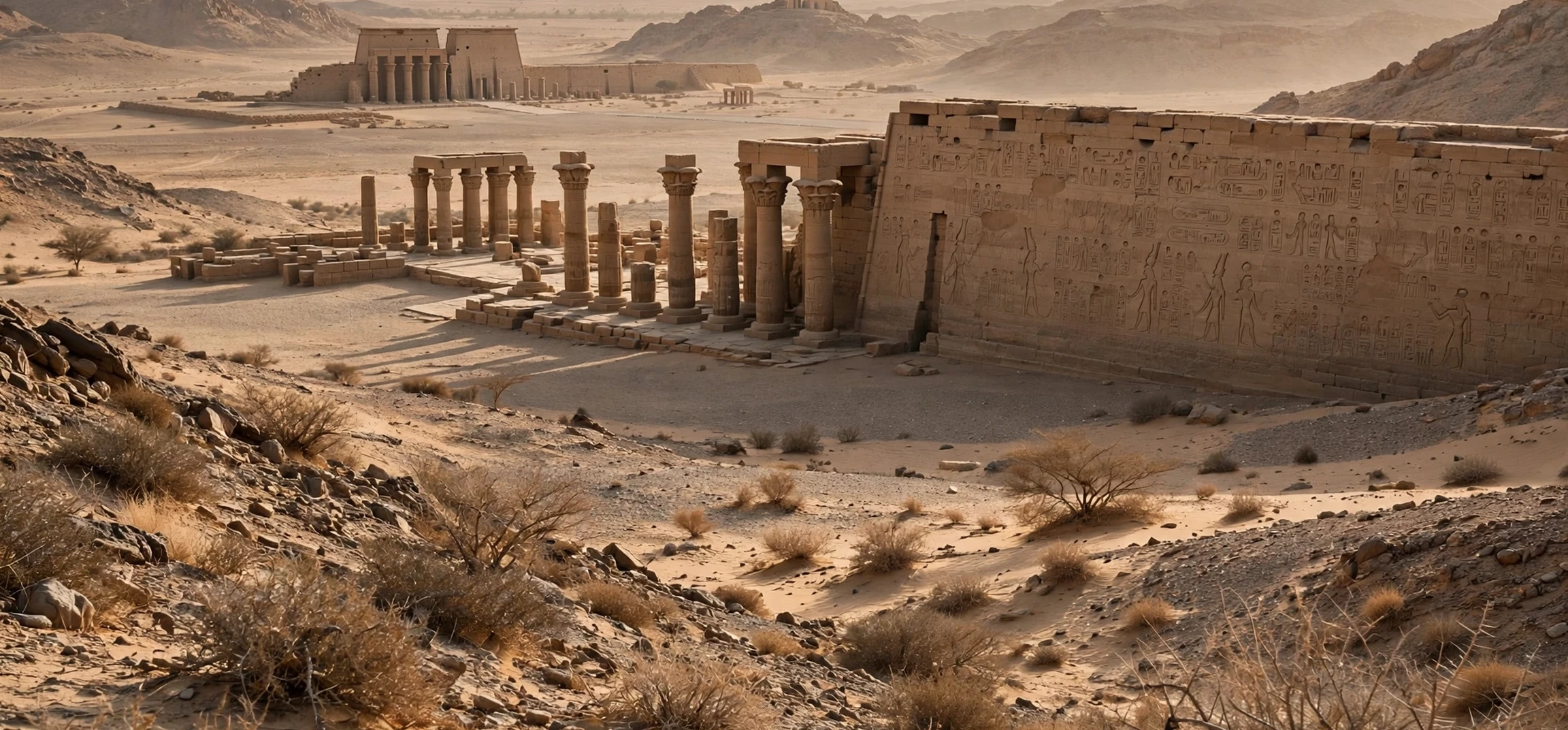
Among the most fascinating naming traditions in history, pharaoh names stand out for their grandeur, their symbolism, and their sheer staying power. When we talk about pharaoh names, we are not just listing rulers of ancient Egypt — we are opening a window onto three thousand years of history, religion, and politics, in which a name was never merely a label. For an Egyptian king, a name was a statement of divine authority, a political programme, and a prayer for eternity, all at once. This guide explains how pharaoh names worked, who the most famous bearers were, and why these ancient names still capture our imagination today.
A note on the word itself: “pharaoh” comes from the Egyptian phrase per-aa, meaning “great house,” originally a reference to the royal palace. Only later did it become a title for the king himself. The Egyptians themselves more often called their ruler nswt, meaning “king,” and a full royal titulary — the formal set of names a king adopted on taking the throne — could contain five distinct names, each with its own purpose.
Pharaoh Names: The Fivefold Royal Titulary
The most important thing to understand about pharaoh names is that a king did not have just one. Upon accession, an Egyptian ruler adopted a formal titulary of up to five names, each introduced by a title and each expressing a different aspect of kingship:
- The Horus name. The oldest part of the titulary, identifying the king with Horus, the falcon god of kingship. It presented the ruler as the earthly embodiment of divine order.
- The Nebty name. The “Two Ladies” name, associating the king with the protective goddesses of Upper and Lower Egypt, Nekhbet and Wadjet, and thus with the unity of the kingdom.
- The Golden Horus name. A more symbolic name, often interpreted as referring to the king’s divine and eternal nature, with gold symbolising incorruptibility.
- The prenomen (throne name). The name taken on accession, written in a cartouche and usually beginning with a reference to Ra, the sun god — for example, Tutankhamun’s prenomen was Nebkheperure, meaning “Lord of the manifestations of Ra.”
- The nomen (birth name). The king’s personal name, given at birth, also written in a cartouche — Tutankhamun itself is a nomen, meaning “living image of Amun.”
In everyday modern usage, we usually refer to a pharaoh by either the prenomen or the nomen, whichever became most famous. That is why the same ruler can seem to have two names: Ramesses II, for instance, had the prenomen Usermaatre Setepenre (“The justice of Ra is powerful, chosen of Ra”) and the nomen Ramesses (“Ra has fashioned him”). Both are correct; they simply come from different parts of the titulary.
Pharaoh Names: The Most Famous Rulers
Certain pharaoh names have become household words, and each tells a story about its era.
Tutankhamun
Tutankhamun, the boy king of the Eighteenth Dynasty, is the most famous pharaoh of all — not because his reign was the longest or most powerful, but because his tomb was discovered almost intact in 1922. His nomen means “living image of Amun,” a pointed choice: he restored the worship of Amun after his predecessor’s religious revolution, and his name advertised that restoration. His prenomen, Nebkheperure, reinforced the message by linking him to Ra.
Ramesses II
Ramesses II, often called Ramesses the Great, ruled for over six decades in the Nineteenth Dynasty and built on a scale few rulers in history have matched: vast temples, colossal statues, and the great temple complex at Abu Simbel. His name, meaning “Ra has fashioned him,” suited a king who presented himself as divinely made for greatness. He is also the pharaoh most often associated in popular culture with the biblical Exodus story, though historians debate that identification and no firm evidence links him to it.
Hatshepsut
Hatshepsut, one of the few women to rule as pharaoh in her own right, took a full male royal titulary, including the prenomen Maatkare (“Truth is the soul of Ra”). Her reign in the Eighteenth Dynasty was marked by trade expeditions, building projects, and a careful propaganda programme presenting her kingship as divinely ordained. Her story is a reminder that pharaoh names were political tools: Hatshepsut’s titulary worked hard to legitimise a reign that broke convention.
Cleopatra VII
Cleopatra VII, the last active ruler of ancient Egypt, bore a Greek name from the Ptolemaic dynasty that followed Alexander the Great’s conquest. “Cleopatra” means “glory of the father” in Greek. She was a shrewd political operator who allied with Rome’s most powerful men, and her fame has often overshadowed the fact that she was a capable administrator who took the trouble to learn the Egyptian language — something her predecessors had rarely bothered to do.
Pharaoh Names Across the Periods of Egyptian History
Egyptian history is conventionally divided into the Old, Middle, and New Kingdoms, separated by intermediate periods, and pharaoh names reflect the character of each era.
The Old Kingdom (roughly 2686–2181 BCE) gives us the pyramid builders: Djoser, whose Step Pyramid at Saqqara was the first monumental stone building in Egypt; Sneferu, who experimented with pyramid design; and Khufu, builder of the Great Pyramid at Giza. Their names are associated with the confident, centralised state that could organise labour on a staggering scale.
The Middle Kingdom (roughly 2055–1650 BCE) is the era of the great Senusrets and Amenemhats — names that repeat across generations, since sons often honoured fathers and grandfathers by reusing name elements. Amenemhat means “Amun is at the forefront,” and its popularity reflects the rising importance of the god Amun in this period.
The New Kingdom (roughly 1550–1070 BCE) is the imperial age, and its pharaoh names are the most famous: Ahmose, who expelled the Hyksos; Thutmose III, the great conqueror; Akhenaten, the religious revolutionary who changed his own name from Amenhotep (“Amun is satisfied”) to Akhenaten (“effective for the Aten”) to advertise his new monotheistic faith; and the Ramesside kings who followed. Akhenaten’s renaming is the clearest possible proof that, in Egypt, changing your name meant changing your politics.
| Period | Notable pharaoh names | What the names reflect |
|---|---|---|
| Old Kingdom | Djoser, Sneferu, Khufu | Pyramid building and centralised power |
| Middle Kingdom | Amenemhat I–IV, Senusret I–III | Devotion to Amun and dynastic continuity |
| New Kingdom | Hatshepsut, Thutmose III, Akhenaten, Tutankhamun, Ramesses II | Empire, religious change, and restoration |
| Late and Ptolemaic | Nectanebo II, Ptolemy I–XV, Cleopatra VII | Foreign dynasties ruling as pharaohs |
What Pharaoh Names Meant: Gods, Power, and Eternity
Look closely at pharaoh names and a pattern emerges: the gods are everywhere. Ra, Amun, Ptah, Set, and Thoth all appear as name elements, and each choice was a theological statement. A king who put Ra in his throne name was claiming the sun god’s endorsement; a king who put Amun in his birth name was advertising his devotion to the god of Thebes, the imperial capital.
Names were also written with care. The prenomen and nomen were enclosed in a cartouche — an oval ring that originally represented a loop of rope and symbolised eternity, encircling and protecting the name forever. Defacing a cartouche was a serious act: later rulers sometimes erased a predecessor’s name from monuments in an attempt at damnatio memoriae, the condemnation of memory. Hatshepsut’s images and names suffered this treatment after her death, as did Akhenaten’s. The fact that enemies attacked names first shows how much power Egyptians believed a name held.
That belief extended beyond death. Egyptians held that a person’s name, the ren, was an essential part of the soul, and that to speak a name was to keep its bearer alive. Inscribing a pharaoh’s names on temple walls, statues, and tombs was therefore not vanity — it was a survival strategy for eternity. In a very real sense, the fact that we still say “Tutankhamun” and “Ramesses” today means the system worked.
Pharaoh Names in Modern Culture
Pharaoh names remain remarkably alive in modern culture. Tutankhamun’s treasures tour the world’s museums; Ramesses’ colossal statues gaze out from guidebook covers; Cleopatra has been played on stage and screen more times than almost any other historical figure. Baby-name lists sometimes borrow pharaoh names too — Ramses, in particular, has found modest modern use — though parents should know that most ancient royal names are grand, weighty choices that carry three thousand years of history with them.
For readers interested in how names carry meaning more generally, our guides to the meaning of the name Cassian, the meaning of the name Mariana, and the meaning of the name Angelica explore the same idea — that a name is a small piece of history — in a modern context.
There is also a scholarly caution worth repeating: dates, reign lengths, and even the order of some lesser-known rulers remain debated by Egyptologists. The broad outline of Egyptian chronology is secure, but details shift as new evidence emerges. Any article that presents disputed dates as settled fact should be read with that caveat in mind, and the famous names above are best understood as the secure landmarks in a history that still holds surprises.
Frequently Asked Questions About Pharaoh Names
What does the word “pharaoh” mean?
“Pharaoh” comes from the Egyptian per-aa, meaning “great house,” originally referring to the royal palace. It later became the standard title for the king of Egypt.
How many names did a pharaoh have?
A full royal titulary had five names: the Horus name, the Nebty name, the Golden Horus name, the prenomen (throne name), and the nomen (birth name). In practice, we usually know a ruler by the prenomen or nomen.
What does Tutankhamun’s name mean?
Tutankhamun means “living image of Amun.” His throne name, Nebkheperure, means “Lord of the manifestations of Ra.” Both names advertised his restoration of traditional religion.
Were there female pharaohs?
Yes, though they were rare. Hatshepsut is the most famous, ruling in her own right in the Eighteenth Dynasty; others include Sobekneferu and, much later, Cleopatra VII.
Why were pharaoh names written in ovals?
The oval, called a cartouche, symbolised eternity and protection. Enclosing a royal name in a cartouche was believed to protect it forever — and to keep the king’s memory alive.
Conclusion: Pharaoh Names, Three Thousand Years On
Pharaoh names endure because they were designed to endure. Each one was a compressed statement of faith, politics, and ambition, wrapped in a ring that promised eternity — and, remarkably, the promise largely held. From Djoser’s pioneering pyramid to Cleopatra’s final stand, these names still anchor our picture of the ancient world, and they still reward a closer look. Whether you came here out of curiosity, for a school project, or because a museum visit sparked a question, the key insight is the same: in ancient Egypt, a name was never just a name. It was an argument about who should rule, which gods mattered, and how a person might live forever. That the argument still echoes, thousands of years later, is the finest tribute the pharaohs could have wished for.



