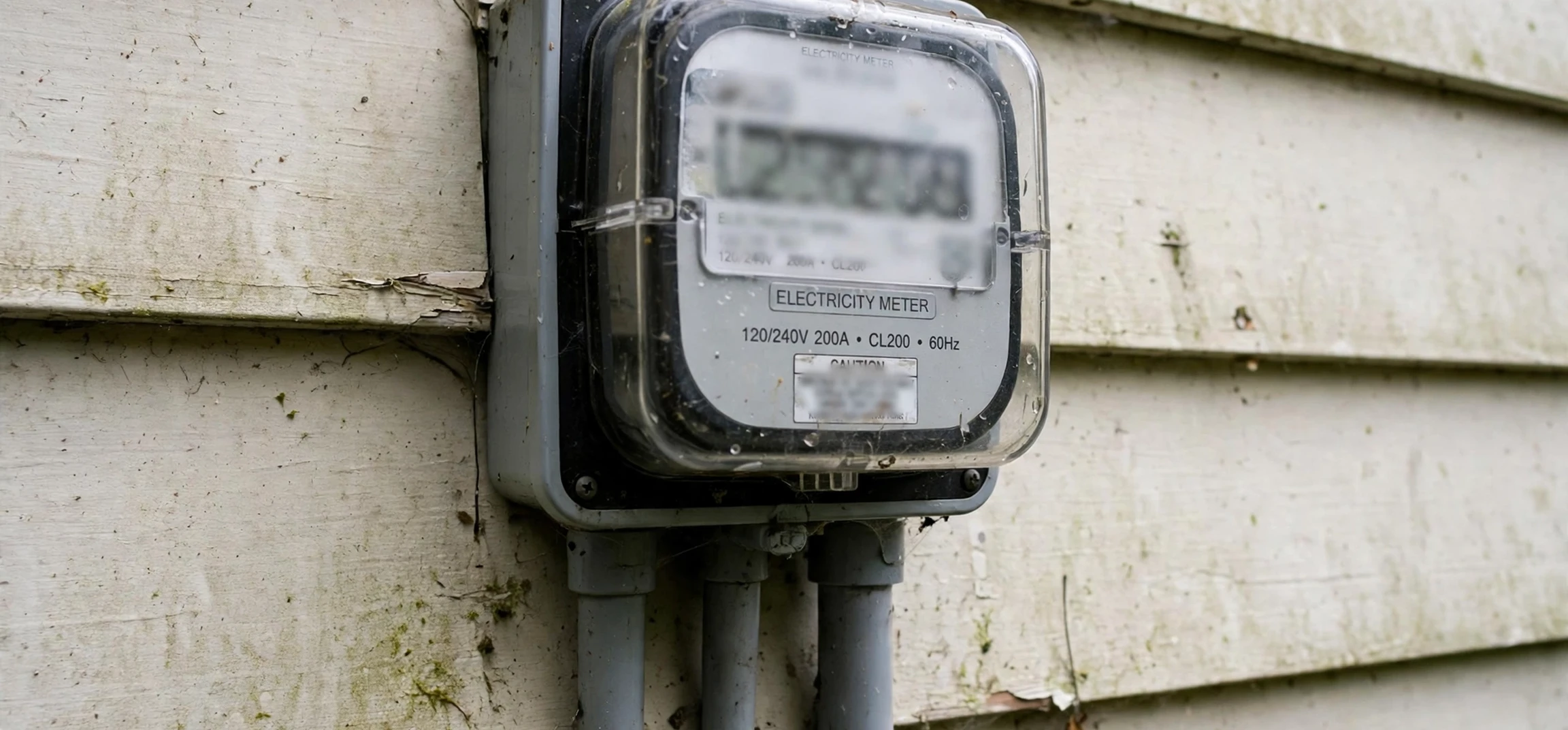
The scientific definition of electrical energy is the energy carried by moving electric charge, or stored by charges positioned in an electric field. That definition matters at home, because it explains what your meter measures, what your bill charges for, and where your savings can actually come from. The scientific definition of electrical energy is not just a textbook phrase: it is the reason a kilowatt-hour on your bill is a quantity of energy, not a quantity of power, and why two appliances with the same wattage can cost very different amounts depending on how long they run. This practical guide turns that definition into household decisions, covering units, meters, bills, and the most effective ways to use less without giving up comfort.
Table of Contents
- The Scientific Definition of Electrical Energy Applied at Home
- Units That Matter: Watts, Joules, and Kilowatt-Hours
- How Your Home Meter Measures Electrical Energy
- How the Scientific Definition of Electrical Energy Shapes Your Bill
- Where Homes Use the Most Electrical Energy
- Practical Ways to Save Electrical Energy at Home
- Frequently Asked Questions
- Conclusion
The Scientific Definition of Electrical Energy Applied at Home
Start with the physics, because it prevents the most common billing confusion. The scientific definition of electrical energy describes energy, the total capacity to do work, while power describes the rate at which that energy is used. Your home receives energy through wires, and appliances convert it into heat, light, motion, or sound. A kettle rated at 2,000 watts uses energy twice as fast as a 1,000-watt microwave, but if the kettle runs for only three minutes and the microwave runs for twenty, the microwave will use more total energy. Bills charge for total energy used, not for the highest power rating in your home, and that distinction is the practical heart of the scientific definition of electrical energy.
Think of it like distance and speed. Power in watts is like speed, while energy in kilowatt-hours is like distance travelled. A fast car for a short trip may cover less distance than a slower car on a long journey. In the same way, a powerful appliance used briefly can cost less than a modest appliance left running all day. Once you see your home through that lens, the advice to switch things off, shorten running times, and choose efficient appliances stops sounding like generic frugality and starts looking like arithmetic. Every saving is either a lower power draw, a shorter running time, or both, applied to the scientific definition of electrical energy in your own rooms.
It also helps to know that energy is conserved, not created by your appliances. A heater does not invent warmth; it converts electrical energy into thermal energy. A fan converts it into motion of air. An LED lamp converts most of it into light, with far less waste heat than an older incandescent bulb. The efficiency of that conversion is what separates a good appliance from a wasteful one. Two heaters can both warm a room, but if one loses more energy to unwanted places, or heats an empty room for hours, it will consume more of the energy you pay for to deliver the same comfort.
Units That Matter: Watts, Joules, and Kilowatt-Hours
Three units cover almost everything a householder needs. The watt measures power, or the rate of energy use. The joule measures energy itself in scientific work. The kilowatt-hour measures energy in the unit most bills use. One kilowatt is 1,000 watts, and one kilowatt-hour is the energy used by a 1,000-watt appliance running for one hour. It is also 3.6 million joules, because one watt for one second is one joule, and one hour contains 3,600 seconds. You do not need to do joule conversions at home, but knowing the relationship helps you see that a kilowatt-hour is a substantial amount of energy, enough to run a modern LED lamp for many days or a kettle for roughly half an hour of continuous boiling.
The formula for estimating any appliance is simple: energy in kilowatt-hours equals power in kilowatts multiplied by hours used. A 100-watt bulb, which is 0.1 kilowatts, running for 10 hours uses 1 kilowatt-hour. A 2-kilowatt heater running for 30 minutes, which is 0.5 hours, also uses 1 kilowatt-hour. A phone charger drawing 10 watts for 3 hours uses only 0.03 kilowatt-hours, which is why charging a phone costs very little even though it feels like a daily habit. With that formula, you can estimate any device from its label, its manual, or a plug-in energy monitor, and you can check whether a surprising bill is plausible or whether something in the home is running far longer than you thought.
Labels deserve a careful look. The wattage printed on an appliance is often its maximum draw, not its average. A washing machine may draw high power while heating water and much less while tumbling. A refrigerator cycles on and off, so its average power over a day is well below its peak rating. An air conditioner varies with outdoor temperature and thermostat setting. For accurate estimates, a plug-in monitor that records kilowatt-hours over a day or a week is far more reliable than multiplying a peak label by 24 hours. That measurement habit turns the scientific definition of electrical energy from an abstract idea into a number you can act on.
How Your Home Meter Measures Electrical Energy
Your electricity meter exists to apply the scientific definition of electrical energy to your home. It does not count how many appliances you own, and it does not measure voltage alone or current alone. It measures the energy transferred over time, usually in kilowatt-hours, by combining voltage, current, and time, and by accounting for the way alternating current behaves in real circuits. Older dial meters did this mechanically, with a spinning disc whose speed reflected power. Modern digital and smart meters do it electronically, recording consumption in intervals that can be as short as half an hour, and many display current usage, daily totals, and historical patterns.
To read a meter usefully, take readings at the same time on different days and note the difference. That difference is your consumption in kilowatt-hours for that period. If you take a reading before bed and another in the morning, you learn your overnight baseline, which is the energy used by fridges, standby devices, routers, and anything left on. If the overnight baseline is high, standby loads and always-on equipment are worth investigating. If a single day jumps sharply, check for a heater, dryer, or water heater running longer than usual, or a newly added appliance. A meter reading habit, even once a week, is one of the cheapest energy-saving tools available, because it replaces guessing with evidence.
Smart meters and supplier apps can make this easier, but they are not essential. A notebook, a phone note, or a simple spreadsheet with dates and readings will reveal weekly patterns, seasonal changes, and the effect of a new habit, such as shorter showers, lower thermostat settings, or switching to LED lighting. The goal is not to become obsessed with every watt. It is to know your normal range, so that an unusual bill prompts a quick check of the meter and the home, rather than a shrug. In that sense, the meter is the household translator of the scientific definition of electrical energy.
How the Scientific Definition of Electrical Energy Shapes Your Bill
Most household bills have two main parts: a charge for the energy used, and fixed or standing charges for connection, metering, and network costs. The energy charge is your kilowatt-hours multiplied by the price per kilowatt-hour under your tariff. If your tariff has different rates at different times, such as cheaper overnight electricity, then the same kilowatt-hour can cost different amounts depending on when it is used. That is why running a dishwasher, washing machine, or water heater during a cheaper period can reduce a bill even if total energy use stays the same. The scientific definition of electrical energy explains the quantity; the tariff explains the price applied to that quantity at each time.
Fixed charges explain why a bill never falls to zero even in a month when you use very little energy, and why comparing bills across months needs care. If you were away for two weeks, fixed charges continued, while energy charges fell. Taxes, levies, and discounts also sit on top of the basic multiplication. To compare tariffs fairly, look at the price per kilowatt-hour, the daily fixed charge, and any time-of-use structure together, and estimate the total for your typical monthly kilowatt-hours rather than comparing headline rates alone. A tariff with a low energy price but a high daily charge can be expensive for a low-use home, while the opposite can suit a high-use home.
Estimated bills are another common source of confusion. If a supplier has no recent meter reading, it estimates your use from past patterns, and the estimate can be too high or too low. A later actual reading corrects the balance, which can produce a surprisingly large bill or credit. Regular readings, or a smart meter that sends them automatically, prevent that swing. If a bill looks wrong, check the reading on the bill against your meter, check whether it is marked as estimated, and check whether the period covered is longer or shorter than usual. Those three checks resolve most billing puzzles without needing to dispute the underlying physics of the scientific definition of electrical energy.
Where Homes Use the Most Electrical Energy
In most homes, heating and cooling, water heating, refrigeration, laundry, cooking, and lighting dominate consumption, though the order varies with climate, home size, and habits. Space heating is often the largest single use in cold climates, especially with electric resistance heaters, which convert each kilowatt-hour directly into heat. Heat pumps are far more efficient for the same comfort, because they move heat rather than creating it from scratch, delivering several units of heat for each unit of electrical energy. Water heating is similar: a tank kept hot all day loses heat continuously, so insulation, thermostat setting, and timing matter as much as the heater itself.
Refrigeration runs all day, so even a modest average power adds up over a month. An old, poorly sealed, or overstuffed fridge uses more than a modern efficient model, and placing it next to a cooker or in a hot room makes its compressor work harder. Laundry and dishwashing use most of their energy heating water, so cooler washes and full loads reduce consumption sharply. Cooking varies widely: an oven heating a large cavity for a small meal uses more than a hob, microwave, or air fryer for the same food. Lighting, once a major cost, has fallen dramatically with LEDs, which is why replacing remaining old bulbs is usually one of the quickest wins, even though lighting is no longer the largest category in most homes.
| Household use | Typical driver of cost | Simple check |
|---|---|---|
| Space heating | Power multiplied by hours, plus heat loss | Thermostat setting and draughts |
| Water heating | Tank losses and shower length | Tank insulation and timer |
| Refrigeration | Continuous running, 24 hours a day | Door seals and location |
| Laundry and dishes | Heating water per cycle | Full loads and cooler cycles |
| Lighting | Old bulbs left on for hours | LED replacements |
Standby power deserves a separate mention. Many devices draw a small amount of power when apparently off, to power a display, a remote sensor, or a network connection. Individually, each draw is tiny, often a few watts or less. Collectively, across televisions, consoles, chargers, routers, and older equipment, standby can add a noticeable amount over a year. It rarely explains a huge bill on its own, but switching off at the wall, using a switched power strip for entertainment equipment, and unplugging chargers when not in use are free habits that reduce it without any loss of convenience.
Practical Ways to Save Electrical Energy at Home
The most effective savings come from the largest uses, not from obsessing over the smallest ones. Start with heating: lower the thermostat by one or two degrees if comfortable, heat only rooms in use, close curtains at night, seal obvious draughts, and use timers so heating runs when people are home and awake. For water heating, insulate the tank and pipes, set a sensible temperature, use a timer, and shorten showers. Those steps attack the two biggest categories directly, and they apply the scientific definition of electrical energy in the most useful way: less power, for less time, delivering the same comfort.
Next, look at appliances and habits. Wash clothes at cooler temperatures with full loads, air-dry when possible, and avoid half-empty dishwasher cycles. Use lids on pans, match pan size to hob ring, and choose smaller cooking appliances for small meals. Replace any remaining incandescent or halogen bulbs with LEDs, and use task lighting rather than lighting a whole room brightly for one activity. When buying a replacement appliance, compare energy labels and estimated annual kilowatt-hours, not just purchase price. A cheaper appliance that uses far more energy every year can be the expensive choice over its lifetime.
Behavioural changes are free and often larger than people expect. Turning off lights in empty rooms, closing the fridge door promptly, not leaving the oven preheating for far longer than needed, and using a laptop rather than a desktop for light tasks all reduce total kilowatt-hours. A plug-in monitor can turn this into a game for a week: measure the fridge, the television setup, and the washing machine, then decide where a change is worth the effort. Avoid chasing savings that harm comfort or safety, such as turning off a fridge, blocking ventilation, or using unsafe heaters. The goal is efficient use, not hardship, and the scientific definition of electrical energy supports that goal: the same useful work, with less input energy wasted.
Finally, consider timing and generation if they suit your home. If your tariff offers cheaper overnight rates, shift flexible loads such as laundry, dishwashing, and water heating into that window where practical. If you have solar panels, use larger appliances during daylight when generation is high, so more of your own generation is used directly. Neither step changes the physics of energy, but both change what you pay for each kilowatt-hour, or how much grid energy you need at all. Combined with efficiency and habit changes, timing turns a technical understanding into a lower, more predictable bill.
Frequently Asked Questions
What does the scientific definition of electrical energy mean for my bill?
It means your bill charges for total energy, in kilowatt-hours, not for power alone. The scientific definition of electrical energy links power and time, so both how powerful an appliance is and how long it runs determine its cost.
How do I calculate the cost of running an appliance?
Multiply its power in kilowatts by hours used to get kilowatt-hours, then multiply by your price per kilowatt-hour. A 1-kilowatt appliance running for 2 hours uses 2 kilowatt-hours.
Why is my bill high if I switched off most lights?
Lighting is now a small share of most bills because of LEDs. Heating, water heating, refrigeration, laundry, and cooking usually dominate, so a high bill often points to one of those categories running longer or harder than expected.
Does leaving a charger plugged in waste much energy?
A modern charger with nothing connected draws very little, often well under a watt, but older chargers and devices on standby can draw more. Unplugging or switching off at the wall is a simple habit, though it is rarely the largest saving in a home.
How does the scientific definition of electrical energy help you save money?
The scientific definition of electrical energy helps you save money because it links power, time, and total use. When you apply the scientific definition of electrical energy to a heater, a dryer, or a water heater, you can see whether cost comes from high power, long running time, or both. The scientific definition of electrical energy also explains why a small standby load matters over a year, and why the scientific definition of electrical energy is the right starting point for any home energy audit. Use the scientific definition of electrical energy, measure in kilowatt-hours, and target the largest loads first.
Conclusion
At home, the scientific definition of electrical energy becomes a practical tool: energy is what you use in total, power is how fast you use it, and a kilowatt-hour is the unit that ties them together on your bill. Measure with your meter, estimate with power multiplied by time, focus on heating, water heating, and large appliances first, and use timing and efficiency to cut waste without cutting comfort. Small habits compound over weeks and months, and a home that understands its energy use is far easier to run cheaply than one that only reacts to bills. For related reading, see our guide to battery meaning and our home guide to property preservation.