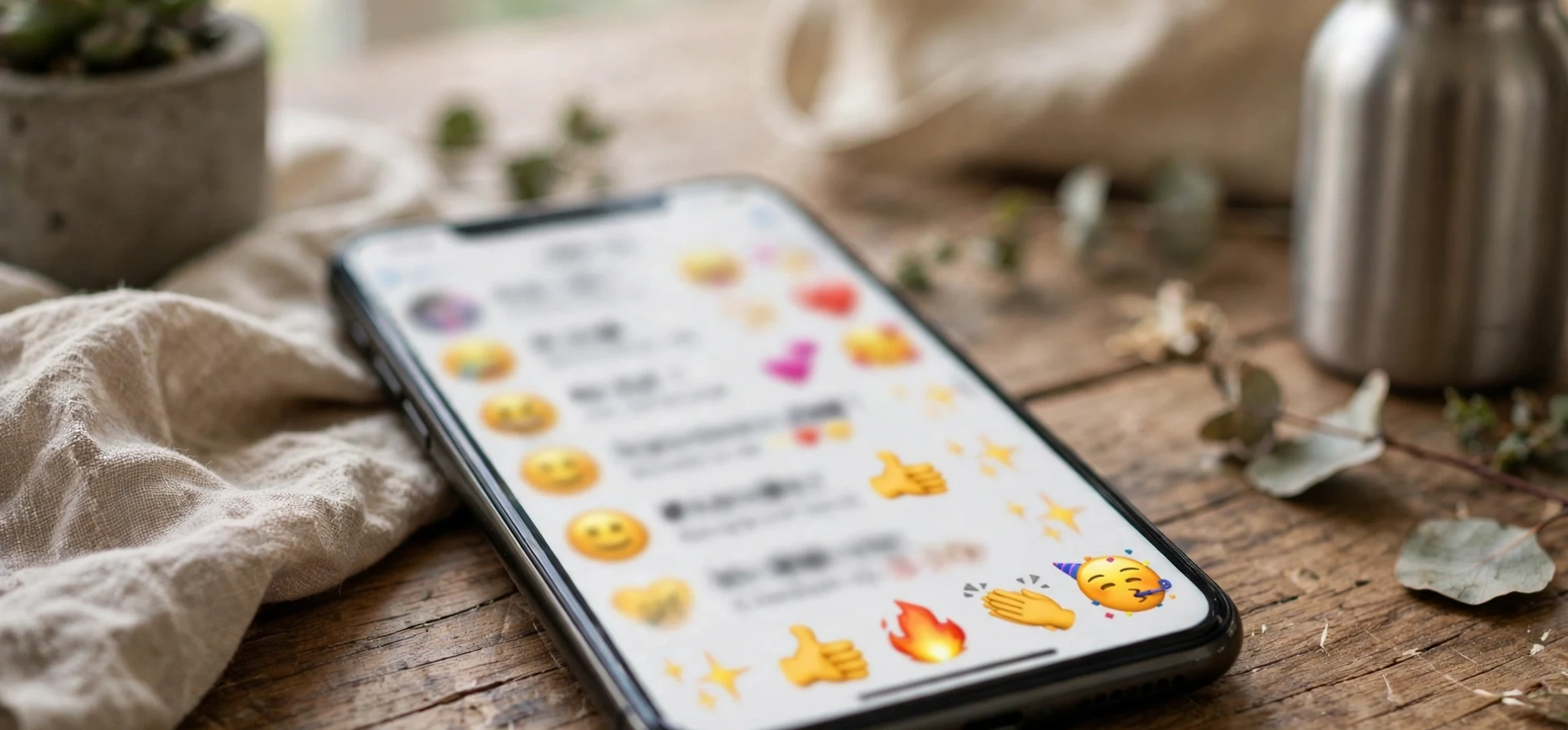
Those small yellow faces that punctuate every modern conversation carry more meaning than their size suggests. The phrase face in chat covers emoji faces, emoticons, stickers, and reaction faces — the visual shorthand that replaces tone of voice, facial expression, and gesture in text messaging. Understanding what these faces mean, how they differ across platforms and generations, and when they help or hinder communication is now a basic digital literacy skill. This guide explains the major families of chat faces, their common meanings, and the etiquette of using them well.
Face in Chat: From Emoticons to Emoji
The story of the face in chat begins with emoticons: text characters arranged to suggest a face, such as 🙂 for a smile and 🙁 for a frown. Proposed in the early 1980s as a way to mark jokes in online messages, emoticons spread through email, forums, and early chat systems, growing into a large vocabulary — 😉 for a wink, 😀 for a big laugh, 😛 for a stuck-out tongue, and dozens more. Their genius was economy: a few keystrokes added emotional context that plain text lacked, reducing misunderstandings in a medium with no tone of voice.
Emoji, the colourful pictographs that largely replaced emoticons, originated in Japan in the late 1990s, a history traced in digital culture explainers in the late 1990s, when designer Shigetaka Kurita created a set of 176 simple icons for a mobile phone service. The word “emoji” itself comes from Japanese “e” (picture) + “moji” (character), and is unrelated to “emotion”, despite the happy coincidence. Emoji spread globally with smartphones, and the Unicode Consortium now standardises them, so that a face sent from one phone appears — with slight design differences — on another. Today there are thousands of emoji, but faces remain the most used category by far, because faces are what human communication is built around.
Common Chat Faces and What They Mean
The most used chat faces form a rough emotional vocabulary. The smiling face with smiling eyes (😊) signals warmth and friendliness; the grinning face (😀) signals open happiness; the face with tears of joy (😂) signals something very funny and was, for years, the most used emoji in the world. The winking face (😉) signals joking, flirtation, or shared understanding. The thinking face (🤔) signals puzzlement or consideration. The face with rolling eyes (🙄) signals exasperation or sarcasm, and is risky in professional messages. The loudly crying face (😭) now often signals overwhelming emotion — laughter, joy, or sadness — rather than literal tears, a shift driven by younger users that confuses older readers.
Context changes meaning more than any dictionary can capture. A thumbs-up (👍) is friendly acknowledgement in most Western contexts but can feel curt or dismissive as a reply to a long, heartfelt message. A skull (💀) among younger users often means “I died laughing”, not death. The upside-down face (🙃) signals irony, awkwardness, or passive frustration depending on the conversation. The lesson is to read faces in context — who sent them, what the conversation is about, and what generation they belong to — rather than treating any face as having a single fixed meaning. Generational differences are real: what reads as friendly to one age group can read as sarcastic or outdated to another, and the same face can age in meaning within a few years.
Platform differences
The same emoji can look different on Apple, Google, Samsung, and other platforms, and those design differences occasionally change meaning. A pistol emoji, once a realistic gun, is now a water pistol on most platforms. A peach or eggplant can carry innuendo that their innocent fruit-and-vegetable origins do not suggest. Faces are less prone to such shifts than objects, but subtle differences — the angle of an eyebrow, the size of a smile — can soften or sharpen a face’s tone. When a message matters, checking how it renders on the recipient’s platform is a small courtesy, though in practice most people simply accept the variation.
Face in Chat: Using Chat Faces in Different Contexts
In personal messages, faces are the norm, and their absence can itself send a signal — a bare “okay” without a face can read as cold, while “okay 😊” reads as warm. Close friends develop private face vocabularies, where a particular face becomes an in-joke. In professional messages, restraint is wise: one friendly face in an otherwise professional email can warm the tone, but a string of faces undermines credibility, and faces should never carry the main content of a work message. In customer service, a single warm face can humanise an automated reply, but overuse feels insincere.
Across cultures, faces need care. A gesture that is friendly in one country can be offensive in another — the “okay” hand sign, for example, is insulting in parts of South America and the Middle East — and while faces are more universal than hand gestures, their interpretations still vary. Skin-tone modifiers, introduced to let users choose emoji skin tones, add representation but also raise questions about when and how to use tones other than one’s own. The general guidance is simple: use faces as you would facial expressions in person — warmly, sparingly, and with attention to your audience.
Faces, Accessibility, and the Future of Chat Faces
Accessibility is an often-overlooked aspect of chat faces. Screen readers read emoji aloud by their official names, so a message packed with faces becomes a long, tedious recitation for blind users — “grinning face, face with tears of joy, red heart” — that can bury the actual message. Best practice is to use faces sparingly, place them at the ends of sentences rather than in the middle, and avoid using faces as the sole carriers of meaning. Similarly, people with certain cognitive or neurological conditions may find dense emoji use hard to parse, so clarity should win over decoration when the message matters.
The future of chat faces includes animated emoji, personalised avatars (such as Apple’s Memoji and similar systems), and reaction faces that attach to individual messages rather than standing alone. Stickers — larger, more detailed images — have become a parallel vocabulary, especially in Asian messaging apps, where sticker sets function as emotional shorthand and even as collectibles. Whatever the format, the underlying need remains the same: text alone strips out the face, and humans, being face-reading animals, will always invent ways to put it back. The face in chat is not a frivolous decoration; it is a restoration of something essential to human communication.
| Face | Common meaning | Use with care when |
|---|---|---|
| 😊 Smiling face | Warmth, friendliness | Delivering serious news |
| 😂 Tears of joy | Something very funny | Someone is genuinely upset |
| 😉 Winking face | Joke, shared understanding | Professional or formal messages |
| 🙄 Rolling eyes | Exasperation, sarcasm | Almost always at work |
| 🤔 Thinking face | Considering, puzzled | You need a clear answer, not a shrug |
| 😭 Loudly crying face | Overwhelming emotion, often laughter | Older readers may take it literally |
Frequently Asked Questions About Faces in Chat
What is the difference between emoticons and emoji?
Emoticons are faces made from text characters, like :-). Emoji are standardised pictographs, like 😊, designed as images rather than typed characters.
What does 😂 mean?
Traditionally, laughing very hard. Among younger users it can also signal overwhelming emotion of many kinds, including joy and disbelief.
Should I use emoji in work messages?
Sparingly. One warm face can soften a message, but faces should not carry the main content or appear in formal communications.
Why do emoji look different on different phones?
Unicode defines the meaning, but each platform designs its own artwork, so the same emoji renders slightly differently on Apple, Google, Samsung, and other systems.
When Chat Faces Cause Misunderstandings
Chat faces prevent many misunderstandings, but they also cause some. A face meant as light teasing can read as mockery without vocal tone to soften it. A face sent by an older user with one meaning can be read by a younger user with another — the classic example being the thumbs-up, which older users send as friendly acknowledgement while some younger users read as passive-aggressive dismissal. Sarcasm is especially risky: a winking face does not reliably signal sarcasm to everyone, and ironic faces like the upside-down smile can confuse readers who take them literally. When a message is important, sensitive, or ambiguous, words should carry the meaning and faces should only decorate it, never replace the crucial sentence.
Repairing a face-based misunderstanding is usually simple: a follow-up message clarifying intent, without defensiveness, resolves most cases. Saying I meant that warmly, sorry it landed oddly costs nothing and preserves the relationship. The broader lesson is humility about a medium that strips out most of the cues humans evolved to read. Faces restore some of those cues, but only some, and the wisest digital communicators treat them as helpful approximations rather than perfect substitutes for tone, expression, and presence.
Conclusion
The face in chat — from the humble 🙂 to today’s vast emoji libraries — exists because human communication needs faces, and text alone does not provide them. Used thoughtfully, chat faces add warmth, clarity, and humour; used carelessly, they confuse, offend, or bury the message. The best approach is contextual: know your audience, match the face to the relationship and the moment, keep work messages restrained, and remember accessibility. Faces will keep evolving, but the principle will not: in any medium, how something is said matters as much as what is said. For more digital communication guides, explore the writing and messaging explainers on this site.