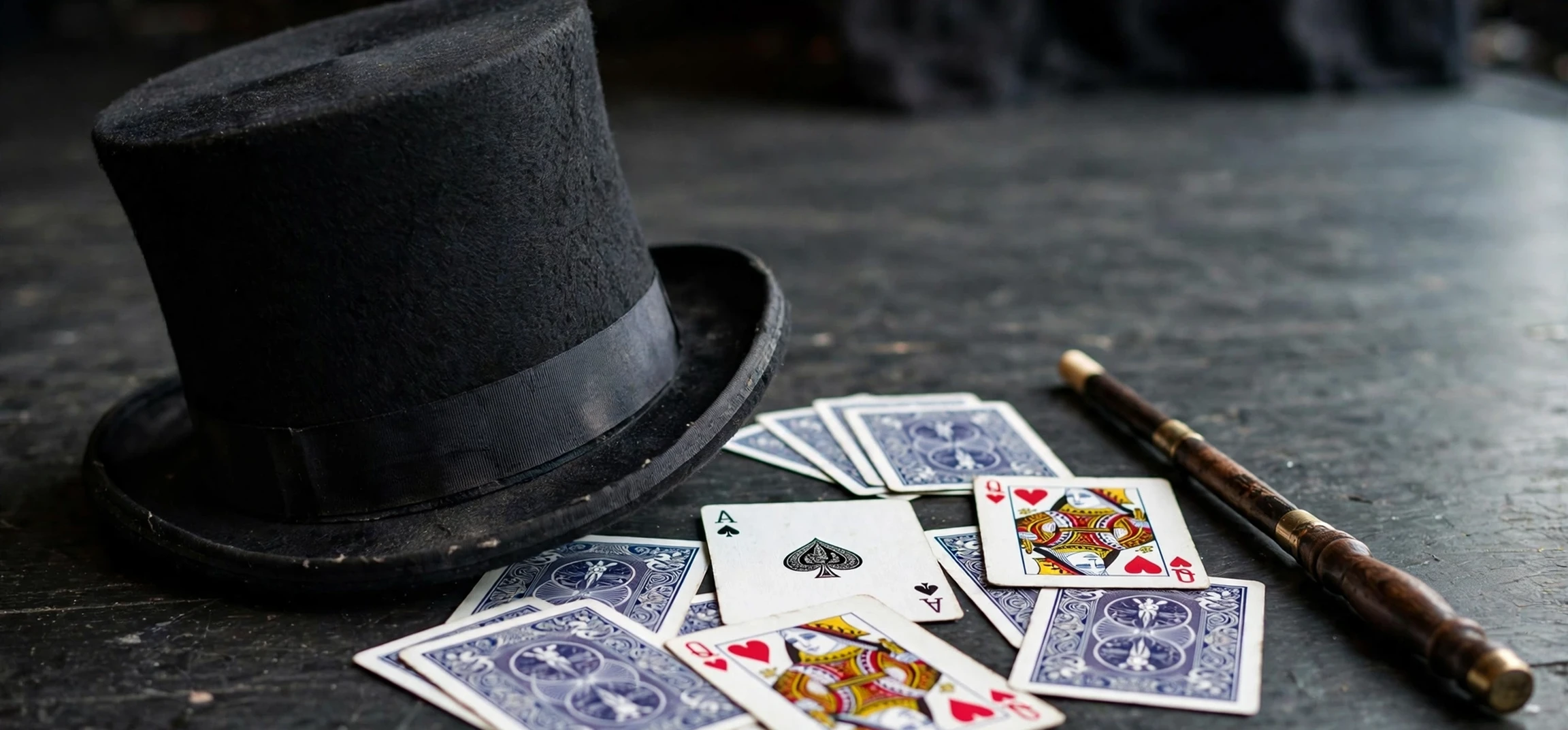
The most famous magician names belong to performers who turned sleight of hand into legend, and this guide introduces the greatest of them, from the escape artist who defined the art to the television illusionists who filled stadiums. When people search for famous magician names, they usually want more than a list: they want to know what each performer did, why audiences remembered them, and how magic changed from stagecraft to spectacle. This guide gives you that story, organised by era, with the famous magician names that every fan should know and the acts that made them immortal.
Magic has always mixed skill, psychology, and showmanship. A great magician is not only technically skilled; they understand attention, timing, and storytelling, and they build a persona that audiences trust and fear in equal measure. The performers below did that in different ways, in different centuries, and for different media, from music-hall stages to television specials to arena tours. Together, they show how magic evolved while keeping its core promise: that what you just saw cannot possibly have happened, even though it did, right in front of you.
Famous Magician Names: Harry Houdini
No list of famous magician names can begin anywhere but with Harry Houdini, born Erik Weisz in Budapest in 1874 and raised in America. Houdini began as a card magician and trapeze performer, but he became immortal as an escape artist. Handcuffs, straitjackets, locked boxes, milk cans filled with water, and the famous Chinese Water Torture Cell, in which he was suspended upside down in a locked tank of water, all became part of his legend. Audiences came to see whether he would survive, and he almost always did, with a mixture of strength, flexibility, lock-picking skill, and brilliant publicity.
Houdini also matters because he policed magic itself. He exposed fraudulent spiritualists who claimed to contact the dead, and he wrote books debunking their tricks, arguing that the public deserved honest entertainment rather than exploitation. His death in 1926, after a burst appendix, only deepened the legend, and his name became a byword for escape itself. To call someone “a Houdini” still means they can get out of any situation, which is a rare tribute for any performer.
Golden Age Stage Magicians
Before Houdini, and alongside him, a golden age of stage magic filled theatres on both sides of the Atlantic. Howard Thurston, the American “King of Cards”, succeeded the great Alexander Herrmann and toured with a spectacular show featuring floating ladies, vanishing elephants in later acts, and the famous “Thurston’s Levitation”. Jean Eugène Robert-Houdin, a French clockmaker turned magician in the nineteenth century, is often called the father of modern magic, because he moved magic from fairgrounds into elegant theatres, dressed as a gentleman rather than a wizard, and built automata and ingenious mechanical illusions that still impress historians.
Other golden-age famous magician names include Harry Blackstone Sr., whose touring show brought large-scale illusions to American towns for decades, and his son Harry Blackstone Jr., who carried the tradition into television. Dai Vernon, known as “The Professor”, never sought mass fame but became the most respected card magician among magicians themselves, after famously fooling Houdini with a card trick. These performers built the technical and artistic foundations on which later stars stood, and their books and routines are still studied by students of magic today.
Famous Magician Names: Television Era
Television changed magic by bringing close-up illusion into living rooms and by allowing grand illusions to be filmed from impossible angles. David Copperfield became the defining television magician of his generation, making the Statue of Liberty vanish on live television, walking through the Great Wall of China, and flying across a stage in a routine that combined wires, lighting, and storytelling. Copperfield’s shows were romantic and cinematic, and his long Las Vegas residency made him one of the highest-earning entertainers in the world. His name is now synonymous with large-scale illusion itself.
Doug Henning, a Canadian magician of the 1970s and 1980s, brought a gentler, wonder-filled style to television, with colourful costumes and a sense of childlike amazement that won over family audiences. Siegfried and Roy, the German-American duo, combined magic with white tigers and spectacular Las Vegas production, creating a show that ran for decades until a tiger accident ended it tragically. Lance Burton, another Las Vegas headliner, won the top international magic prize and became known for elegant dove magic and classical stagecraft. Each of these famous magician names represents a different answer to the same question: how do you make wonder work on a new medium?
Modern Street and Psychological Magic
The next revolution was street magic and close-up magic filmed for television. David Blaine pioneered the modern street-magic special, performing card tricks and levitations for passers-by whose genuine reactions became part of the show. His endurance stunts, including being buried alive, frozen in ice, and standing on a pillar for days, extended the Houdini tradition of physical endurance into performance art. Blaine’s quiet, intense style influenced a generation of magicians who valued intimacy over spectacle.
Derren Brown, in Britain, took a different path, blending magic with psychology, suggestion, and mentalism, and building television shows around the idea that the mind itself is the trick. His work raises ethical questions that he addresses openly, and it has made psychological magic a respected genre in its own right. Dynamo, the British street magician Steven Frayne, brought close-up magic to a younger, social-media audience, performing for celebrities and crowds with a casual style that made impossible tricks feel spontaneous. Penn and Teller, the American duo, took yet another route, revealing how some tricks work while still fooling audiences, and using comedy and scepticism as part of the act.
Women and International Magicians
Magic history has often overlooked women, but several famous magician names belong to women who broke barriers. Adelaide Herrmann, known as the “Queen of Magic”, took over her husband Alexander’s show after his death and toured successfully for decades, performing the bullet catch and other dangerous illusions. Dorothy Dietrich became the first woman to perform the bullet catch and built a career as an escape artist and historian of magic. In the modern era, performers such as Lucy Darling, a comedy magician, and the duo of female illusionists in large Las Vegas productions, continue to expand who audiences expect a magician to be.
Internationally, magic has its own stars in every tradition. In India, P. C. Sorcar and his son P. C. Sorcar Jr. became national icons, with the famous “Indrajal” show and the sawing-a-woman-in-half illusion performed for enormous audiences. In Japan, Cyril Takayama and other television magicians blended street magic with Japanese variety-show culture. In Spain, Juan Tamariz is revered among card magicians worldwide for his theory of misdirection. Magic is a global art, and its famous magician names reflect that breadth, even when English-language lists focus on American and British stars. For other performance histories, see our guide to a magic academy guide and our explainer on cooking terms explained.
Famous Magicians at a Glance
| Magician | Era | Known for |
|---|---|---|
| Harry Houdini | 1900s–1920s | Escapes, water torture cell |
| Jean Eugène Robert-Houdin | 1800s | Modern stage magic |
| Howard Thurston | 1900s–1930s | Large stage illusions |
| David Copperfield | 1970s–present | Television grand illusions |
| David Blaine | 1990s–present | Street magic, endurance |
| Derren Brown | 2000s–present | Psychological magic |
| Penn and Teller | 1980s–present | Comedy, sceptical magic |
Frequently Asked Questions
Who is the most famous magician of all time?
Harry Houdini is the most famous magician of all time by almost any measure: his name entered everyday language, his escapes remain legendary, and his influence on magic, publicity, and scepticism is still felt a century after his death.
Who is the most famous living magician?
David Copperfield is often cited as the most famous living magician, thanks to decades of television specials and a long Las Vegas residency, with David Blaine and Dynamo also widely recognised by younger audiences.
How do magicians learn their craft?
Through books, magic clubs, mentors, and years of practice. Most magicians start with card tricks and sleight of hand, join a local magic society, and gradually build a repertoire and a stage persona, with ethics about not revealing secrets taken seriously in the community.
Famous Magician Names for New Fans to Explore
If you are new to magic, the famous magician names in this guide give you a perfect watchlist. Start with Houdini documentaries to understand escapes, then watch Copperfield specials for grand illusion, then try Blaine street magic for close-up wonder, and finish with Penn and Teller for comedy and scepticism. Each of those famous magician names represents a different school of magic, and together they show the full range of the art. The famous magician names also lead to books: Houdini’s own writings, Robert-Houdin’s memoirs, and modern guides by working magicians all explain how the craft is learned. Following the famous magician names in order, from the golden age to the present day, is the fastest way to understand why magic has survived every new entertainment medium, from music hall to television to streaming video, without losing its power to astonish.
Live magic is worth seeking out too, because the famous magician names all built their reputations on stage, where there is no camera trick to hide behind. Local magic societies, theatre shows, and close-up performances in small venues let you see the craft at close range, and they often feature the next generation of famous magician names before they become famous. Support those shows, and you keep the tradition alive that Houdini, Thurston, Copperfield, and Blaine all inherited.
Conclusion
The famous magician names in this guide span centuries, continents, and styles, from Houdini’s escapes to Copperfield’s spectacles, from Blaine’s street corners to Brown’s psychological theatre. What unites them is not a single trick but a single promise: to make audiences feel wonder, however briefly, in a world that usually explains everything away. That promise is why magic endures, and why these names will be remembered long after their final bows.