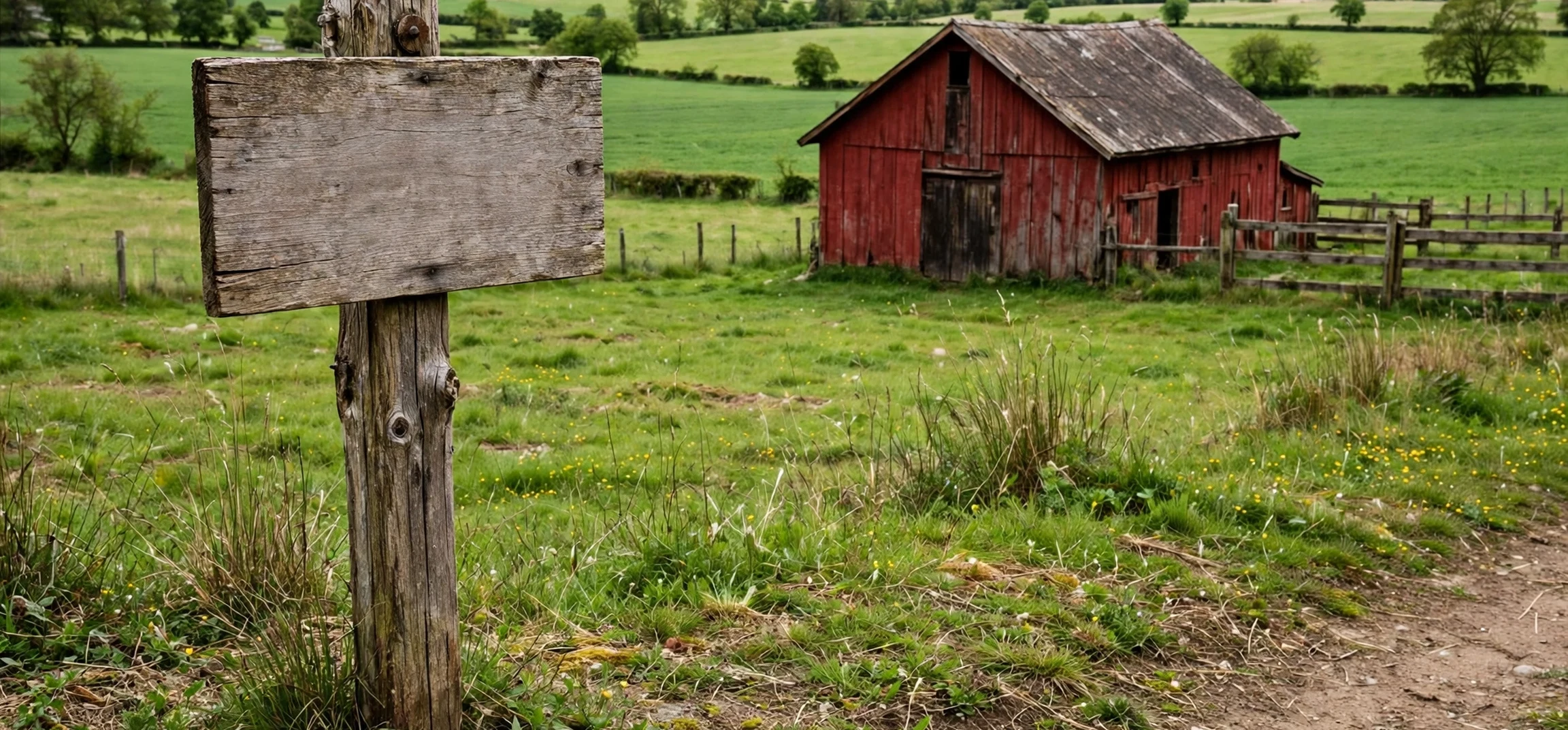
Good farm naming is part poetry and part practicality. The right name should sound good when spoken aloud, look good on a sign at the end of a long driveway, and still make sense on a market stall, a website, and a delivery box. Whether you are naming a working farm, a smallholding, a homestead, or a hobby plot, farm naming deserves more than a few minutes of guesswork, because the name you choose will follow every egg box, jam jar, and invoice you ever produce. This guide walks through how to choose a name that fits your land, your work, and your plans, with plenty of farm naming ideas organised by style so you can shortlist with confidence.
The best farm names tend to share a few qualities. They are easy to say and spell, they give a hint about what the farm produces or where it sits, and they avoid sounding like a joke that will wear thin after the first season. A name that feels charming on day one should still feel right in year ten, when you are explaining it to a wholesaler or painting it on a barn. Good farm naming also works best when it reflects something real: a landscape feature, a family story, a local place name, or a value such as sustainability or heritage breeds. Borrowed grandeur, by contrast, can feel hollow if the farm itself is a modest vegetable patch.
Farm Naming Basics: What Makes a Name Work
Start with the practical tests before you fall in love with a clever phrase. Say the name out loud as if you were answering the phone. Spell it to someone who cannot see it written down. Imagine it on a roadside sign read at speed, and on a small label where space is tight. If people consistently mishear it, misspell it, or ask you to repeat it, the name is working against you. Short names, or names with a clear rhythm, usually pass these tests more easily than long, ornate ones. Two or three words are often enough, and one strong word plus a farm descriptor such as Farm, Acres, Hollow, or Meadow can be very effective.
Consider also how the name will grow with the business. A name tied only to one crop can become awkward if you diversify, while a name tied to the land itself stays relevant whatever you grow. For example, a name built around a river, a hill, an old oak, or a valley will still fit if you move from vegetables to livestock, or from livestock to farm stays. Farm naming is therefore a decision about the future as well as the present. Ask yourself what you might be doing in five years, and whether the name still describes that farm honestly.
It is also worth checking for clashes before you commit. Search for the name locally and online, check whether another farm, food business, or brand already uses it, and think about trademarks if you plan to sell products widely. You do not need to hire a lawyer to do a first pass, but a careful search now can save an expensive rebrand later. If a name is already in use nearby, choose something more distinctive rather than risking confusion with a neighbour. A good farm name should be yours alone in your area.
Farm Naming by Landscape and Place
Landscape names are among the most enduring choices in farm naming, because they anchor the farm to a real place that customers can picture. Think about the features that define your land: a winding creek, a stone wall, a stand of pines, a wildflower meadow, a ridge with a view, or a bend in the road. Names such as Willow Creek Farm, Stonebridge Acres, High Meadow Farm, Cedar Hollow, Foxglove Field, and Old Oak Farm all work because they paint a picture in a few words. They also travel well, since a customer who has never visited can still imagine the place.
Local history can provide the same kind of anchor. An old field name, a former mill, a railway halt, a chapel, or a family surname connected to the land can all give a name depth. If your farm sits on land once known as Miller’s Field or Chapel Hill, reviving that name honours the past and gives your brand a story to tell. Just be careful to use such names respectfully and accurately, and avoid claiming a history that is not yours. A name with a genuine story behind it is far more persuasive than one invented purely for effect.
Seasonal and natural imagery also works well, provided it is not too generic. Names built around dawn, harvest, blossom, or the first frost can feel warm and inviting, but they need a distinctive second word to avoid blending into a crowd of similar farms. Pairing a seasonal word with a place word often solves this: Dawn over Willow Creek is too long, but Willow Dawn Farm or Harvest Hollow Farm keeps the feeling while staying practical. The goal is a name that feels specific to your farm, not a name that could belong to any farm anywhere.
Farm Naming by What You Grow or Raise
Produce-based names are useful when your main product is the heart of the business. A dairy farm, an orchard, a vineyard, a flower farm, or a market garden can all benefit from a name that signals what customers will find. Names such as Berry Hill Farm, Honeybrook Apiary, Sunnyvale Orchard, Golden Yolk Farm, Lavender Row, and Heritage Hog Farm tell a shopper immediately what to expect. This clarity can be a real advantage at a farmers market, where a customer scanning a row of stalls decides in seconds where to stop.
The risk with produce names is narrowness, so build in a little room to grow. If you grow berries now but might add cut flowers later, a name such as Berry Hill Farm still works if the hill is real, whereas a name such as Strawberry Only Farm would box you in. Similarly, a name that celebrates a single breed can become awkward if you change breeds. The safest produce names combine the product with a place or a family name, so the farm identity survives even if the product range changes. That balance between clarity and flexibility is one of the most valuable skills in farm naming.
| Farm type | Naming approach | Example style |
|---|---|---|
| Vegetable and market garden | Place plus fresh, field, or garden word | Meadow Field Market Garden |
| Dairy or livestock | Heritage, pasture, or breed hint | Pasture View Dairy Farm |
| Orchard or vineyard | Tree, fruit, or hillside word | Old Orchard Hill Farm |
| Flowers or herbs | Botanical or scent word | Wildflower Row Farm |
| Mixed or hobby farm | Landscape or family name | Hollow Brook Homestead |
| Farm stay or agritourism | Welcome, view, or rest word | Sunny Ridge Farm Stay |
Farm Naming Styles: Rustic, Modern, and Playful
Rustic names lean on tradition: old barns, hand tools, heritage breeds, and words such as homestead, hollow, and creek. They suit farms that sell tradition, craft, and slow food, and they pair well with wooden signs and muted packaging. Modern names, by contrast, are shorter and cleaner, often using a single landscape word plus Farm or Acres, and they suit farms with a strong online shop or a contemporary brand. Neither style is better in itself; the right choice is the one that matches how you actually farm and sell. A rustic name on a high-tech vertical farm would feel mismatched, just as a sleek modern name might feel cold on a heritage smallholding.
Playful names can work, but they need restraint. A gentle pun or a witty animal reference can make a farm memorable at a market, yet a name that depends entirely on a joke can be hard to take seriously when you are negotiating with a retailer. If you love a playful name, test it in a serious sentence: imagine it on an invoice, a food safety certificate, or a wholesale price list. If it still feels professional, it may be a keeper. If it makes you wince, keep the joke for a product line instead and give the farm itself a steadier name. Many successful farms do exactly this, with a classic farm name and playful names for individual products.
Family names are another strong route in farm naming, especially for multi-generational farms. A surname plus Farm, Acres, or Homestead immediately signals ownership and accountability, which customers value when buying food. If your surname is difficult to spell or pronounce, consider pairing it with a place word so customers have two ways to remember you. You can also honour a grandparent or a founder by using a first name, provided the family is comfortable with that public use. A family name carries a promise, so only use it if you are happy for the farm’s reputation and the family’s reputation to travel together.
Farm Naming Mistakes to Avoid
One common mistake in farm naming is choosing a name that is hard to find online. If the name is a common phrase, your farm may be buried under unrelated results, and customers may struggle to find your website or social pages. A quick search for your shortlisted names, including common misspellings, will reveal whether you can own the name in search results. Adding a county, valley, or distinctive landscape word often solves this problem and makes the name more memorable at the same time. A name that is easy to search for is a name that is easy to buy from.
Another mistake is copying a famous farm, brand, or fictional place too closely. Even if no law is broken, customers may assume you are trading on someone else’s reputation, and you lose the chance to build your own identity. Similarly, avoid names that promise something you cannot deliver, such as calling a small plot a ranch or a valley when neither is true. Customers notice the gap between the name and the reality, and trust is hard to rebuild once it is lost. Honesty in farm naming is not just good ethics; it is good marketing, because a name that matches the place feels authentic rather than staged.
Finally, avoid names that are difficult for your customers to pronounce in your region, names with awkward initials, and names that could be misread in an unfortunate way. Read the initials aloud, check the name without spaces as it would appear in a web address, and ask a few honest friends to say it back to you. These small checks catch problems that the owner, who has stared at the name for weeks, can no longer see. If several people stumble over the same part of the name, simplify it before you print anything.
How to Build Your Farm Naming Shortlist
A practical way to finish your farm naming shortlist is to brainstorm in batches rather than hunting for one perfect name. Write down your landscape features, your products, your family names, your values, and words you associate with the farm’s atmosphere. Combine them freely, aiming for thirty or more rough ideas, then filter ruthlessly: remove anything hard to spell, already in use nearby, too narrow, or too generic. You should be left with five or six strong candidates. Live with those for a week, saying each one aloud and imagining it on your sign, your packaging, and your market stall banner.
Then test your farm naming shortlist with real people. Ask neighbours, market customers, and friends which names they remember a day later, and which ones make them want to visit. Their answers often differ from your own instincts, and that difference is valuable. A name you love but nobody remembers is less useful than a name that sticks in people’s minds after a single hearing. Also check the practical details for your finalists: whether a suitable web address is available, whether social handles are free, and whether the name fits comfortably on your labels. The best farm naming decisions balance feeling with these unglamorous checks.
For more naming inspiration, see our guide to character and story names and our curated family name list, which show how a distinctive name can be built from a theme rather than chosen at random. The same principle applies here: pick a theme that is true to your farm, then choose the strongest name within it.
Farm Naming: Frequently Asked Questions
How long should a farm name be?
Two or three words usually work best. One word can be striking but hard to find online, while four or more words become awkward on signs and labels. If your ideal name is long, consider a short version for everyday use and keep the full name for formal documents.
Should a farm name mention the product?
It helps if your product is the main reason customers visit, but it is not essential. A landscape or family name can work just as well, especially if you plan to diversify. The key is that the name should not mislead customers about what you sell.
Can I change a farm name later?
Yes, but rebranding costs time, money, and customer recognition, so it is worth choosing carefully now. If you must change, keep customers informed, redirect your old web address, and explain the story behind the new name so loyal buyers follow you.
Do I need to register a farm name?
Rules vary by country and region, so check local requirements for trading names, food business registration, and trademarks. Even where registration is not required, a quick search for existing users of the name is a wise first step before you invest in signage.
Conclusion
Thoughtful farm naming, done with the care this guide describes, is a small investment that pays off every time a customer remembers you, finds you online, or recommends you to a friend. Start from what is real about your land and your work, test names aloud and in writing, check for clashes, and choose a name that will still fit in ten years. The perfect name is not the cleverest one you can invent; it is the one that sounds like your farm, looks right on the gate, and gives customers a reason to stop, buy, and return. Shortlist with care, test with honest friends, and then commit to the name fully, on every sign, label, and listing, so it becomes the farm itself in people’s minds.